


Athletics and Swimming
Athletics and Swimming are widely accessible, inclusive sports for persons who are Deaf or Hard of Hearing. Both sports are open to anyone who wishes to participate at any level – social, Club, Provincial level, as well as at International level
While there is no official category for the Deaf in the Paralympics, deaf athletes have been known to compete in the Olympic Games in both Athletics and Swimming.
Both sports offer significant physical, mental, and social benefits. Supporting cardiovascular fitness, strength, coordination, discipline, confidence, and independence, while also creating opportunities for social connection and national representation.
With appropriate access and support, Deaf and hearing-impaired athletes can compete, excel, and represent South Africa at every level of athletics and swimming — including the Olympic Games.
What assistance are you looking for?
A. Athletics
1. About Athletics
2. Classification
3. International Athletics
4. Performance Pathways
5. South African Deaf Sport Federation
B. Swimming
1. About Swimming
2. Classification
3. Pathways to Participation
4. Eligibility
5. Rules
6. Governance
Athletics
Athletics (track and field) is a highly accessible sport for persons who are Deaf or Hard of Hearing. Because performance in athletics is not dependent on hearing ability, Deaf athletes can compete equitably with appropriate communication and starting adaptations.
In South Africa, Deaf and hearing-impaired athletes participate across the full spectrum of the sport, from recreational and developmental levels through to elite national and international competition.
Athletics promotes physical fitness, discipline, coordination, confidence, and social inclusion, while also offering athletes the opportunity to represent their province or country at the highest levels of sport.
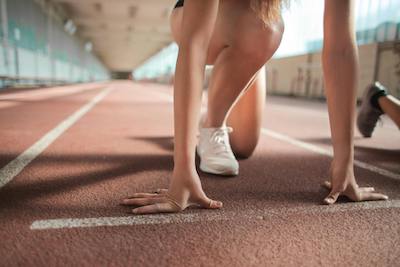
Athletics for Deaf and hearing-impaired athletes follows World Athletics rules, with limited but important adaptations to ensure equal participation.
The most significant adaptation is the use of visual starting signals instead of auditory cues, including Starter lights, flags and hand signals.
No rule changes are made to distances, equipment, or performance standards.
Field events such as long jump, shot put, discus, javelin, and high jump are conducted under standard rules, with communication support provided where needed. Safety, fairness, and equal competition remain central to all events.
The other noteworthy difference between Open events and Deaf events is:
– The level of noise. During deaf events it is customary for spectators not to cheer or clap, but rather to wave – usually with both hands.
– The race is started by the wave of a flag, instead of a shot of a gun.
Classification
Deaf and hearing-impaired athletes are not classified by functional ability in the same way as Paralympic athletes. Instead, eligibility is based on hearing loss. They are also are not classified under the Paralympic classification system, as hearing loss alone does not constitute a physical impairment under Paralympic sport rules.
Instead, Deaf athletes may compete through:
– Mainstream athletics, including the Olympic pathway, where no hearing-based classification applies and athletes must meet standard qualification criteria; and
– Deaf-specific sport, where eligibility is based on hearing loss.
For Deaf-specific competitions, athletes must have a permanent hearing loss of at least 55 decibels (dB) in the better ear, without the use of hearing aids or cochlear implants during competition. This standard is set internationally to ensure fair competition within Deaf sport.
International Athletics
Athletes who are Deaf or Hard of Hearing may compete through multiple pathways, depending on their goals and performance level.
At grassroots, community and developmental level, Deaf athletes commonly train and compete within mainstream athletics clubs, schools, and provincial structures, with reasonable accommodations such as visual cues, clear signage, and clear communication methods.
At elite level, Deaf athletes may pursue:
– The Olympic and World Athletics pathway, by qualifying through Athletics South Africa and meeting the same performance standards as hearing athletes; or
– The Deaf sport pathway, by competing in Deaf-specific events and championships.
At a competitive Deaf sport level, athletes compete through Deaf-specific structures and events. To do so, athletes must:
– Meet the minimum hearing loss criteria
– Be registered with a recognised Deaf sports body
– Undergo audiological verification
– Be affiliated with an athletics club or provincial structure
Performance Pathways
Deaf and hearing-impaired athletes are not classified by functional ability in the same way as Paralympic athletes. Instead, eligibility is based on hearing loss. They are also are not classified under the Paralympic classification system, as hearing loss alone does not constitute a physical impairment under Paralympic sport rules.
Instead, Deaf athletes may compete through:
– Mainstream athletics, including the Olympic pathway, where no hearing-based classification applies and athletes must meet standard qualification criteria; and
– Deaf-specific sport, where eligibility is based on hearing loss.
For Deaf-specific competitions, athletes must have a permanent hearing loss of at least 55 decibels (dB) in the better ear, without the use of hearing aids or cochlear implants during competition. This standard is set internationally to ensure fair competition within Deaf sport.
South African Deaf Sport Federation
SASCOC is South Africa’s national multi-coded sporting body responsible for the preparation, presentation and performance of teams to all multi-coded events, namely the Olympic Games, Paralympic Games, Commonwealth Games, World Games, All Africa Games, Olympic Youth Games, Commonwealth Youth Games and Zone VI Games.
At SASCOC they look after all our various National Federations who are affiliated to them, together with the various provincial sports councils. They are also responsible for the awarding for National Protea Colours to athletes/officials who have met the criteria to represent South Africa in different sporting codes and arenas and endorse the applications for Bidding and Hosting of international events, providing these criteria are all met.
South African Deaf Sport Federation sits under SASOC and currently promotes 10 sport codes, including Athletics.
Most of these codes have their own structures and constitutions and are, as provided for in the SADSF Constitution, affiliated to the SADSF which is a National controlling body that facilitates the administration and coordination of each of these 10 Sport Codes to the highest level of excellence
SADSF further has 9 constituted Provincial structures that are responsible for the identification and development of sporting talent for Deaf at grassroots level and also for the administering and coordination of sport for the Deaf at a Provincial level.
Their mission: To continually strive for the development of world-class standards of Deaf sport in South Africa.
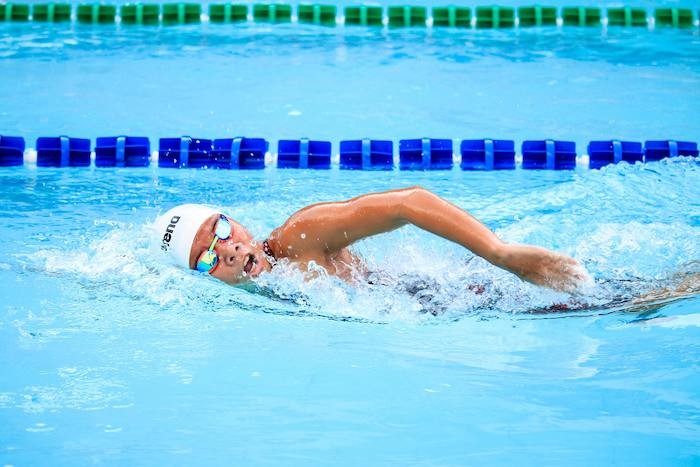
Swimming is one of the most accessible and inclusive sports for persons who are Deaf or Hard of Hearing. Because swimming performance is not dependent on hearing ability, Deaf and hearing-impaired swimmers can enjoy the sport and participate at recreational, competitive, and elite levels, with minimal adaptations.
In fact career pathways for athletes with hearing impediments extends to provincial, national, and international competition.
Beyond the accessible, inclusive and fun for all aspect of the sport – Swimming promotes cardiovascular fitness, coordination, strength, discipline, and confidence, while also providing opportunities for social inclusion and high-performance achievement.
Classification
Deaf and hearing-impaired swimmers are not classified under Paralympic swimming, as hearing loss alone is not recognised as a physical impairment within the World Para Swimming classification system.
Instead, Deaf swimmers may compete through:
– Mainstream swimming, including the Olympic pathway, where no hearing-based classification applies; and
– Deaf-specific swimming competitions, where eligibility is based on hearing loss criteria.
For Deaf-specific competitions, swimmers must have a permanent hearing loss of at least 55 decibels (dB) in the better ear, measured without the use of hearing aids or cochlear implants during competition.
Pathways to Participation
Deaf and hearing-impaired swimmers in South Africa can begin their swimming journey at multiple entry points. Participation commonly starts in learn-to-swim programmes, school swimming, or community and club-based swimming structures. From there, swimmers may progress to provincial competitions and, with continued development and performance, to national championships.
Swimming is widely accessible within mainstream structures, allowing Deaf and hearing-impaired swimmers to train and compete alongside hearing peers with appropriate communication accommodations.
At competitive and elite levels, Deaf and hearing-impaired swimmers may follow one of two recognised pathways.
– The mainstream / Olympic pathway: allows Deaf swimmers to compete alongside hearing swimmers under Swimming South Africa and World Aquatics structures. In this pathway, athletes must meet the same qualifying times and performance standards as all other swimmers in order to progress to provincial teams, national championships, African and World Aquatics events, and ultimately the Olympic Games.
– Alternatively, swimmers may follow the Deaf sport pathway: which provides Deaf-only competitions at national and international level. This pathway includes participation in National Deaf Swimming Championships, World Deaf Swimming Championships, and the Deaflympics, which represents the highest level of international competition for Deaf athletes.
Eligibility
Deaf and hearing-impaired swimmers are not classified under Paralympic swimming, as hearing loss alone is not recognised as a physical impairment within the World Para Swimming classification system.
For Deaf-specific competitions, eligibility is determined by audiological criteria rather than functional classification. Athletes must have a permanent hearing loss of at least 55 decibels (dB) in the better ear, measured without the use of hearing aids or cochlear implants during competition. Eligibility also requires audiological assessment and registration with recognised Deaf sport organisations.
Rules
Swimming for Deaf and hearing-impaired athletes follows World Aquatics (formerly FINA) rules, with minor accessibility adaptations that do not affect performance standards.
The only adaptations made to accommodate deaf/hearing impaired swimmers are:
– Visual starting signals, such as flashing lights or hand signals, instead of or in addition to an audible start signal
– Clear visual communication from officials and coaches
All strokes, distances, turns, and finishes follow standard international swimming rules.
Governance
All elite and high-performance swimming pathways in South Africa operate under the oversight of SASCOC (South African Sports Confederation and Olympic Committee) through recognised national federations. This ensures that Deaf and hearing-impaired swimmers have access to structured development, fair competition, and representation opportunities at national and international level.