


Accessible Travel, Transport and Accommodation
Welcome to our Accessible Travel, Transport & Accommodation page helps travellers with disabilities find reliable information & accessible services.
South Africa is a beautiful country, offering both domestic and international tourists a wide variety of options, including Picturesque Natural Landscapes; Beautiful Beaches; Tours; Trails & Botanical Gardens; World Renowned Game Reserves; Highly Regarded Wines and Wine Farms and so much more.
Traveling and going to new places can be daunting for persons with disabilities, but rest assured, the more you travel the easier it gets.
On the page below you will find everything you need to help you plan your trip – including where to go and what to do, useful links and travel tips, as well as specialised resources you might need and companies and web sites that can assist you enjoy the best holiday possible.
On the page below, we will address all the considerations, needs and challenges you will face when travelling, just click on the links to the right, or read the information below.
What Are You Looking For?
Accessible Travel, Transport and Accommodation: Who can Help?
1. Unpacking Accessible Travel, Accommodation and Transport in South Africa
A. Travel and Transport
B. Hotels Accommodation
C. Safaris, Tours Trails and Beaches
2. How Do I Become Accessible and Inclusive?
– a. Unpacking Accessibility
i. Physical ii. Attitudinal iii. Information iv. Support Services
– Making your venue accessible. Who Can Help?
– How to plan an accessible holiday. Who Can Help?
– Restaurants and Entertainment
– Equipment for Hire
– Hiring Nurses and Caregivers
The vast majority of people live within a comfort zone that is relatively small. The comfort zone is defined by fear & our perception of our limitations.
We are occasionally willing to take small steps outside it, but few of us dare to expand it.
Those who dare sometimes fail & retreat, but many experience the satisfaction of moving into a larger comfort zone & the joyful anticipation of more success”- A quote from ‘Still Me’ by Christopher Reeve.


Accessible Travel, Transport and Accommodation: Who can Help?
While South Africa is a beautiful country, offering both domestic and international tourists with a wide variety of attractions, Traveling is not always accessible for some people with disabilities. However various companies and organisations such as the National Council of and for Persons with Disabilities (NCPD), Bradshaw LeRoux Consulting, Universal Access Collective, Able2Travel, DAATS and DiSA offer various services to people with disabilities to make travelling accessible and also offer access services to various service providers to help them become more accessible to people with disabilities. – Thereby helping South Africa become more inclusive to all tourists.
Training is done by an expert well trained team of persons with disabilities and is inclusive of all impairments and addresses definitions, an inclusive workplace, reasonable accommodation, terminology and much more!
The sessions are at least 3 hours but can be up to two days (depending on the needs of the client).
“Training is done in inter – actively, using multimedia and is not “heavy”!!! Training is tailor made for every sector, including: Tourism, Tertiary Education, Banking, Mining and more.”
For references, contact:
Leanne Channer, Schenker SA: W + 27 11 971 8400 | Switchboard or Email: Leanne.Channer@dbschenker.com
Alison Jänicke at Endangered Wildlife Trust on: Tel: 011 372 3600 | Ext 70 or Email: alisonj@ewt.org.za
Contact Fanie Swanepoel or Thuli Witbooi for more information: fanies@ncpd.org.za or thuli@ncpd.org.za or Tel: 011 452 2774.
Read More about NCPD Disability Equity Training
Bradshaw LeRoux have proposed a focused training approach aimed at raising awareness about disability as a value adding form of diversity.
Facilitated by Lesa Bradshaw, who is a recognised international disability inclusion specialist with over 23 years experience, these practically applicable courses focus on the critical success factors needed to create a transformative, inclusive and safe environment in which persons with a disability feel confident to compete and succeed.
Our training is designed to equip organisations and their stakeholders with relevant tools to drive the disability inclusion agenda with impact and effectiveness.
For more information, please feel free to send any queries to Contact: 031 765 2547 via Email: lesa@bradshawleroux.co.za Website: www.bradshawleroux.co.za
Read More about Bradshaw LeRoux and the Disability Awareness Training that they provide
Turn accessibility challenges into opportunities with inclusive design that actually works.
Whether you’re a business owner, facility manager, or someone navigating personal accessibility needs, most environments still create barriers instead of being accessible and welcoming.
Universal Access Collective (UAC) solves the accessibility puzzle for businesses and individuals across Africa, turning compliance requirements and personal challenges into practical solutions that work.
For Businesses: We assist to create a Universal Access environment including National Building regulations as well as International Best practices spaces that welcome more customers. Our built environment audits, digital accessibility reviews, and staff training don’t just tick boxes—they unlock new revenue streams and reduce liability risks.
For Families, Individuals and the Elderly: Adapting your home or navigating new accessibility needs shouldn’t feel overwhelming. Our coaching and universal design advisory services provide practical guidance that transforms challenges into confidence.
What makes us different? We’re a women-led consultancy combining technical expertise with lived experience. Mandy Latimore (globally recognised universal design specialist) brings both compliance knowledge and real-world understanding to every project.
Our comprehensive services include:
– Built environment and digital access audits
– Universal design advisory for residential and commercial spaces
– Family coaching and caregiver support
– Staff disability confidence training
– Inclusive communication and content development
– Assistive technology recommendations
Beyond consulting, we’re building a supportive community where businesses, families, and professionals share knowledge and drive change together.
Ready to transform accessibility from obstacle to opportunity? Contact us to discover how inclusive design creates better outcomes for everyone—and better business results for you.
You can contact Universal Access Collective:
Cell: +27 83 283 3370,
E mail: info@ua-collective.com,
Website: www.universalaccesscollective.com, LinkedIn: https://www.linkedin.com/company/universal-access-collective.

Disability Accessible Accommodation Travel & Supply (DAATS) was established in 2018 under the visionary leadership of Caroline Khomisani Malatji. Our unwavering commitment is to provide comprehensive and transparent solutions to a diverse clientele, while simultaneously championing the cause of universal accessibility.
At DAATS, innovation is at our core. We continually expand our product offerings, ensuring you have access to the latest advancements in adaptive solutions. Our online store is regularly updated with new products, reaffirming our unwavering commitment to universal accessibility.
Beyond our product catalogue, DAATS offers adaptive transportation services for individuals with disabilities and special needs. Our reliable and compassionate transportation services facilitate seamless journeys from clients’ homes to healthcare facilities, workplaces, airports, railway stations, and other important events.
At DAATS, we’ve set the standard for accessible solutions. Join us in our mission to promote universal access and explore our extensive product range through our user-friendly online store. Experience the DAATS difference today.
DAATS are based in Johannesburg but can provide products throughout South Africa.
You can contact them at: Tell 011 395 5189, Cell 067 744 9729, Email info@daats.co.za, or visit our website at: www.daats.co.za.


Travel Without Limits
Accessible travel. Curated experiences. Total peace of mind.
At Able2Travel, we turn “Can I?” into “When do we go?”
Based in South Africa, we are an accessible travel concierge designing seamless, wheelchair-friendly journeys for our guests across the globe.
From hand-picked accessible accommodation and transport to restaurants, attractions and experiences you can actually enjoy — we’ve done the research, so you don’t have to.
No guesswork.
No awkward surprises.
Just confident, inclusive travel.
Because accessibility isn’t a luxury — it’s a right.
Why Travel with Able2Travel?
✔ Verified, real-world accessibility
✔ Personalised trip planning
✔ Honest, practical recommendations
✔ Trusted local and international partners
✔ Travel designed around you
Whether you’re visiting South Africa, planning an overseas adventure, or booking travel anywhere in the world, Able2Travel makes it possible — and enjoyable.
Find Your Freedom
We believe travel should be about freedom, dignity and joy — not barriers.
That’s why every experience we recommend is carefully assessed with accessibility in mind, so you can explore with confidence, wherever your journey takes you.
Explore more. Stress less. Travel free.
Call us to start planning your accessible journey.
Able2Travel Accessible Travel Concierge
Info@able2travel.co.za
+27 789261232
www.able2travel.co.za
📍 Based in Cape Town | 🌍 Booking accessible worldwide
DiSA provides a One-Stop Solution specialising in Accessibility for persons with Disabilities. This includes Easy Access to Information and advocating and providing services to insure Access to the built and digital environment.
This includes but is not limited to Disability Awareness & Sensitization Training and Universal Access Services:
Disability Awareness & Sensitization Training
Disability Awareness & Sensitization Training is an ongoing programme to ensure the successful integration of persons with disabilities into society and the workplace. The aim of the programme is to equip employers and employees the skills and knowledge required to interact with persons with disabilities with confidence.
This training enables employers and employees to have a better understanding of the variety of disabilities they may encounter and how to deal with this in a sensitive and practical manner; it will help them to overcome the natural fear we may have when we interact with people with disabilities and give tips on awareness and etiquette in these situations.
The training defines and describes disability, unpacks many of the myths which are associated with disabilities, provides a list of some do’s and don’ts and touches on the language of disability.
Read more about disability Awareness and Sensitisation Training that we provide.
Universal Access Services & Solutions
Disability Info South Africa (DiSA) offers Accessibility Audits, Reporting and Implementation Plans through Igor Rix, a qualified access consultant and co-founder of Disability Info South Africa (DiSA).
Igor Rix specialises in conducting Accessibility Audits and providing detailed reports on barriers within physical spaces and services.
He develops practical Implementation Plans to address these challenges, ensuring compliance with both national accessibility standards and international best practices. Thereby fostering inclusivity for all individuals to fully participate and contribute to society in a meaningful way.
Read more about the Universal Access solutions and services that we provide.
When deciding to take a trip, whether it is for a holiday or for business, it is important to start organizing and planning your transportation and travel arrangements a couple of weeks or months before departure.
With the assistance to specialists and service providers listed below, as well as links to web-sites and articles, this page will assist you to choose the best destinations, accommodation, travel style and entertainment for you – putting you in contact with the companies, organisations and people who can help make your journey not only possible, but painless.
Simply select your area of interest below, and let’s get going!
A. Travel and Transport
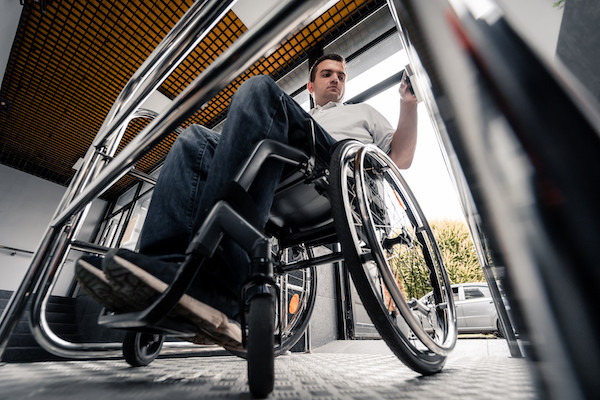
If you are planning on travelling through South Africa in a Wheelchair or Scooter there are some important questions you need to ask yourself first. For example, Where do you want to go? Will you Fly / Drive / Rent? What help / tools. / resources will you need? And who can help?
B. Hotels & Accommodation
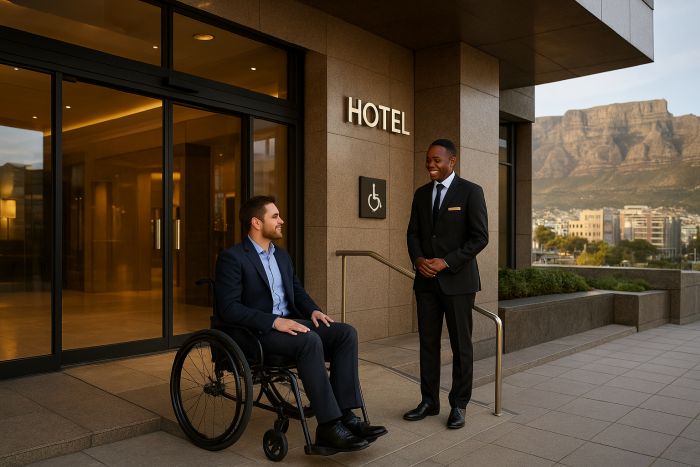
People with disabilities, particularly people with physical Impairments often encounter difficulties in finding Accessible Accommodation, Restaurants, Activities and Entertainment, due to inaccessible environments.
Click here to find out what is available and accessible to you in South Africa.
C. Safaris, Tours, Trails & Beaches
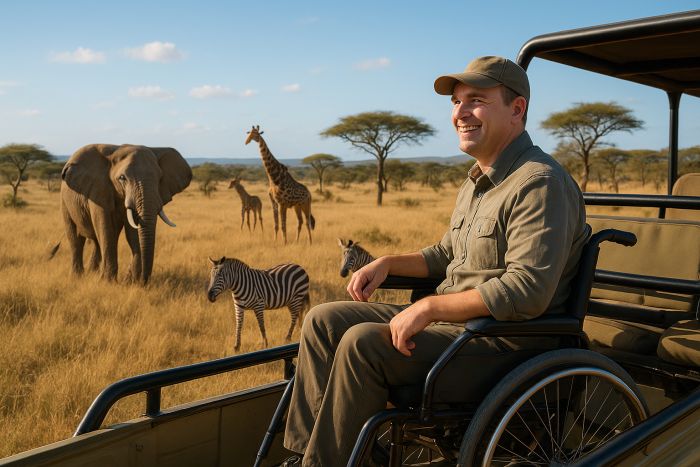
SA has many world renowned game reserves, beautiful beaches, and highly regarded wine farms. Unfortunately not all of these places are accessible. Please click HERE to find out more about these companies, tourist attractions and services that cater for people with disabilities in South Africa.
Modern society is becoming increasingly aware of the concept of the integration of persons with disabilities. The National Department of Tourism (NDT) has been focusing on Accessible Tourism and making more South African attractions universally accessible to all travelers. They have recently engaged with various organisations that represent persons with disabilities, to explore how the tourism industry can serve them better and to ensure that tourist destinations, products and services are accessible to all people, regardless of their physical limitations, disabilities or age.
Accessible Tourism encompasses publicly and privately owned tourist locations and enables persons with all disabilities to function independently and with equity and dignity, through the delivery of universally designed tourism products, services and environments. Steps have been taken to promote guidelines, and major resources are now dedicated to Accessible Tourism which includes:
Accessible Tourism in South Africa is built on four key aspects:
– Physical Accessibility: – ensuring transport, accommodation, and attractions are barrier-free
– Attitudinal Accessibility: – promoting disability awareness and respectful service
– Information Accessibility: – providing clear, accessible travel information in multiple formats.
– Affordability & Support Services: – ensuring inclusive tourism experiences are practical, safe, and sustainable for all travelers.
Unpacking Accessibility
South Africa is a very popular and relatively accessible tourist destination. While some companies aim to ensure that all aspects of tourism are accessible to all people, regardless of their physical limitations, disabilities or age, this is not the case for all companies. One of the biggest obstacles still faced by many travellers with Mobility Impairments, is finding suitable Accessible Travel and Transport which can cater for persons who use Mobility Aids such as Wheelchairs or Scooters. Persons who rely on this type of equipment traditionally face many obstacles when traveling, they not only require extra space to maneouver and store their Mobility Aids and other equipment, but many of these people also have difficulty transferring to and from their Mobility Aids into a seat or into a vehicle.
While there are various regulations promoting access in South Africa, the majority of the public transport services, tours and accommodation are not accessible to everyone.
But thanks to the companies/organisations, regulations and innovations, listed on this page, travelling by Air, Sea, Rail or Road for persons with Mobility Impairments is possible, with a little preperation.
Government Regulations
Government Regulations have been put in place in South Africa and around the world to make public places such as city streets, public buildings and restrooms more accessible for persons with disabilities, including persons with Mobility Impairments.
These government regulations are known as Accessible Features and include making provision for Accessible Toilets; Accessible Parking Bays and Accessible Seating in Movie Theaters, Sports stadiums and Music Concerts. They also include the installation of elevators, automatic doors, wide doors and corridors, transit lifts, wheelchair ramps, curb cuts, and the elimination of unnecessary steps, allowing persons in wheelchairs access to use public sidewalks and public transit more easily and safer.
Many of these laws also encourage companies to accommodate persons with disabilities when Traveling or been Transported, thus giving equal opportunities and rights to persons with disabilities who want to travel or enjoy nature and the outdoors.
Read More about Accessible Features and Goverment Regulations
Making Your Venue Accessible – Who can help?
There are also various Organizations and Companies that specialize in Universal Design and Access to make sure that persons with disabilities are not excluded from any events, services, information, communication, products and venues.
These Organizations and Companies that can assist in different ways include The National Council of and for Persons with Disabilities (NCPD), Bradshaw LeRoux Consulting, Universal Access Collective and DiSA.
Training is done by an expert well trained team of persons with disabilities and is inclusive of all impairments and addresses definitions, an inclusive workplace, reasonable accommodation, terminology and much more!
The sessions are at least 3 hours but can be up to two days (depending on the needs of the client).
“Training is done in inter – actively, using multimedia and is not “heavy”!!! Training is tailor made for every sector, including: Tourism, Tertiary Education, Banking, Mining and more.”
For references, contact:
Leanne Channer, Schenker SA: W + 27 11 971 8400 | Switchboard or Email: Leanne.Channer@dbschenker.com
Alison Jänicke at Endangered Wildlife Trust on: Tel: 011 372 3600 | Ext 70 or Email: alisonj@ewt.org.za
Contact Fanie Swanepoel or Thuli Witbooi for more information: fanies@ncpd.org.za or thuli@ncpd.org.za or Tel: 011 452 2774.
Read More ….
In order to develop and create awareness in the organisation for persons with a disability which aligns to the organisation’s D&I strategy, Bradshaw LeRoux have proposed a focused training approach aimed at raising awareness about disability as a value adding form of diversity. Facilitated by Lesa Bradshaw, who is a recognised international disability inclusion specialist with over 23 years experience, these practically applicable courses focus on the critical success factors needed to create a transformative, inclusive and safe environment in which persons with a disability feel confident to compete and succeed. Our training is designed to equip organisations and their stakeholders with relevant tools to drive the disability inclusion agenda with impact and effectiveness.
Read More ….
Turn accessibility challenges into opportunities with inclusive design that actually works.
Whether you’re a business owner, facility manager, or someone navigating personal accessibility needs, most environments still create barriers instead of being accessible and welcoming.
Universal Access Collective (UAC) solves the accessibility puzzle for businesses and individuals across Africa, turning compliance requirements and personal challenges into practical solutions that work.
For Businesses: We assist to create a Universal Access environment including National Building regulations as well as International Best practices spaces that welcome more customers. Our built environment audits, digital accessibility reviews, and staff training don’t just tick boxes—they unlock new revenue streams and reduce liability risks.
For Families, Individuals and the Elderly: Adapting your home or navigating new accessibility needs shouldn’t feel overwhelming. Our coaching and universal design advisory services provide practical guidance that transforms challenges into confidence.
What makes us different? We’re a women-led consultancy combining technical expertise with lived experience. Mandy Latimore (globally recognised universal design specialist) brings both compliance knowledge and real-world understanding to every project.
Our comprehensive services include:
– Built environment and digital access audits
– Universal design advisory for residential and commercial spaces
– Family coaching and caregiver support
– Staff disability confidence training
– Inclusive communication and content development
– Assistive technology recommendations
Beyond consulting, we’re building a supportive community where businesses, families, and professionals share knowledge and drive change together.
Ready to transform accessibility from obstacle to opportunity? Contact us to discover how inclusive design creates better outcomes for everyone—and better business results for you.
You can contact Universal Access Collective:
Cell: +27 83 283 3370,
E mail: info@ua-collective.com,
Website: www.universalaccesscollective.com, LinkedIn: https://www.linkedin.com/company/universal-access-collective.
Disability Awareness & Sensitization Training is an ongoing programme to ensure the successful integration of persons with disabilities into society and the workplace. The aim of the programme is to equip employers and employees the skills and knowledge required to interact with persons with disabilities with confidence.
This training enables employers and employees to have a better understanding of the variety of disabilities they may encounter and how to deal with this in a sensitive and practical manner; it will help them to overcome the natural fear we may have when we interact with people with disabilities and give tips on awareness and etiquette in these situations.
The training defines and describes disability, unpacks many of the myths which are associated with disabilities, provides a list of some do’s and don’ts and touches on the language of disability.
ii. Attitudinal Accessibility – Who can help?
Disability Equity Training
Many public and private sector bodies have gradually realised that their work practices and policies fall far short of fulfilling the needs, rights and aspirations of people with disabilities who are their clients, customers and co-workers and that, in order to change this situation, they need to turn to disabled people for education and guidance. From this realisation has grown the demand for Disability Equality Training (DET) run by disabled people, which aims to help people understand the meaning of disability, identify changes in work practice, and plan strategies to implement change.
Disability Equality Training courses have been organised and run by people with disabilities and organisations to address the need for information about reality of disability. A DET course will enable participants to identify and address discriminatory forms of practice towards disabled people. Through training they will find ways to challenge the organisational behaviour which reinforces negative myths and values and which prevents disabled people from gaining equality and achieving full participation in society.
There are various Companies and Organizations who offer these Disability Equality Training courses and workshops, they include the National Council of and for Persons with Disabilities (NCPD), Bradshaw LeRoux Consulting and Universal Access Collective and DiSA.
Training is done by an expert well trained team of persons with disabilities and is inclusive of all impairments and addresses definitions, an inclusive workplace, reasonable accommodation, terminology and much more!
The sessions are at least 3 hours but can be up to two days (depending on the needs of the client).
“Training is done in inter – actively, using multimedia and is not “heavy”!!! Training is tailor made for every sector, including: Tourism, Tertiary Education, Banking, Mining and more.”
For references, contact:
Leanne Channer, Schenker SA: W + 27 11 971 8400 | Switchboard or Email: Leanne.Channer@dbschenker.com
Alison Jänicke at Endangered Wildlife Trust on: Tel: 011 372 3600 | Ext 70 or Email: alisonj@ewt.org.za
Contact Fanie Swanepoel or Thuli Witbooi for more information: fanies@ncpd.org.za or thuli@ncpd.org.za or Tel: 011 452 2774.
Read More about NCPD and the services that they provide
In order to develop and create awareness in the organisation for persons with a disability which aligns to the organisation’s D&I strategy, Bradshaw LeRoux have proposed a focused training approach aimed at raising awareness about disability as a value adding form of diversity. Facilitated by Lesa Bradshaw, who is a recognised international disability inclusion specialist with over 23 years experience, these practically applicable courses focus on the critical success factors needed to create a transformative, inclusive and safe environment in which persons with a disability feel confident to compete and succeed. Our training is designed to equip organisations and their stakeholders with relevant tools to drive the disability inclusion agenda with impact and effectiveness. Read More ….
Disability Awareness & Sensitization Training is an ongoing programme to ensure the successful integration of persons with disabilities into society and the workplace. The aim of the programme is to equip employers and employees the skills and knowledge required to interact with persons with disabilities with confidence.
This training enables employers and employees to have a better understanding of the variety of disabilities they may encounter and how to deal with this in a sensitive and practical manner; it will help them to overcome the natural fear we may have when we interact with people with disabilities and give tips on awareness and etiquette in these situations.
The training defines and describes disability, unpacks many of the myths which are associated with disabilities, provides a list of some do’s and don’ts and touches on the language of disability.
Information accessibility in the tourism sector ensures that travel information is easily accessible, clear, accurate, and available in accessible formats. DiSA plays a key role by providing reliable, disability-focused tourism information that empowers travelers to plan and travel with confidence.
a. How To Plan Your Holiday
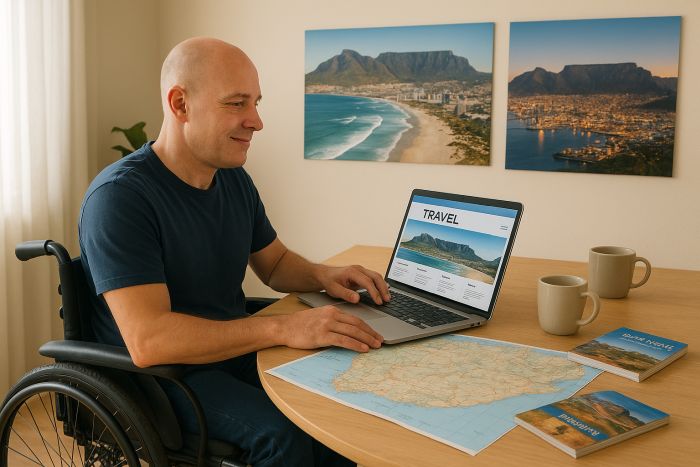
If you are not a regular traveler, or are going to a new destination, it is advisable to start looking for accessible accommodation and planning all your traveling requirements two to three months in advance. While going on holiday should be relaxing, it can be stressful.
There are a wide variety of different things to consider including how you will be traveling, what type of holiday you would prefer and the type of accommodation you would require, as well as, whether you will need to hire Nurses and Specialized Transport at your place of destination and what entertainment, tours or trails you would like to enjoy. If you are traveling with an Assistant dog, you would also need to make arrangements for this with the Airline and Hotel.
While traveling can be extremely stressful, it often becomes easier, as we gain experience, learn from our mistakes and learn from others. The more we live outside our comfort zone, the more comfortable we become and ultimately, we end up doing things that we never thought was possible. On this page you will find everything you need to get started… let the adventure begin.
b. Useful Resources
If you still cannot find what you’re looking – or require more information when it comes to finding accessible accommodation or restaurants, you are welcome to Contact Us.
Alternatively, we would. recommend you visit some of the websites featured to your right. These are well-known, reputable sites providing additional, up to date information about Accessible Restaurants, Safaris, Hotels and Holiday Destinations in South Africa and around the world.
Some of them allow you to list your disabilities and needs, so that they can better accommodate you in one of their accessible rooms and suites.Others offer packages for accessible Traveling, Tours and Accommodation which can be booked online.
These Websites make holidays and traveling easier and take some of the stress out finding Restaurants, Safaris, Hotels and Holiday Destinations that suits your disability needs, thus making traveling a pleasure again.
Click the links alongside to learn more and find the resource/hotel/restaurant you need to make traveling easier and accessible to you.
Useful Resources: General Tip and Advice
– A-Z Guide: Air Travel and Power Wheelchairs
– Flying, Car Rental + Booking Hotel
– 8 Tips for Confident Travel for Quadriplegics
– Manual Wheelchair Travel Tips
– Luggage Tips for Wheelchair Travel – Packing to Carrying
– Packing Plan for People with Limited Mobility
– Managing Anxiety Tips for Wheelchairs Travellers
– Air Travel Tips for Power Wheelchairs
– Airplane Travel with a Disabled Child
– Flying with a Wheelchair: Airplanes + Airports
– Staying Overnight + Wheelchair Access
There are various options when traveling in South Africa or overseas, including traveling by Air, Sea, Rail or Road, which are all possible to some degree for persons with Mobility Impairments.
Each person is different and each form of travel offer its own pro’s and cons.
Read More about available Air, Sea, Rail or Road options here
Persons with Mobility Impairments who you use a Wheelchair or Scooters and who are traveling within South Africa may need to rent an accessible minivan with a wheelchair accessible lift, or a vehicle with Hand Controls.
There are however private companies & organisations such Able2Travel, QASA, DAATS and NCPD, who also specialize in the transport of persons with disabilities in South Africa, they offer services such as an Airport shuttle service, Charter Service or some include a Self-Drive option.
Please read the information below about these companies and organisations that provide these Transport Services, or click on the button below to find out more about various travel options:
Training is done by an expert well trained team of persons with disabilities and is inclusive of all impairments and addresses definitions, an inclusive workplace, reasonable accommodation, terminology and much more!
The sessions are at least 3 hours but can be up to two days (depending on the needs of the client).
“Training is done in inter – actively, using multimedia and is not “heavy”!!! Training is tailor made for every sector, including: Tourism, Tertiary Education, Banking, Mining and more.”
For references, contact:
Leanne Channer, Schenker SA: W + 27 11 971 8400 | Switchboard or Email: Leanne.Channer@dbschenker.com
Alison Jänicke at Endangered Wildlife Trust on: Tel: 011 372 3600 | Ext 70 or Email: alisonj@ewt.org.za
Contact Fanie Swanepoel or Thuli Witbooi for more information: fanies@ncpd.org.za or thuli@ncpd.org.za or Tel: 011 452 2774.
Read More about NCPD Disability Equity Training
Disability Accessible Accommodation Travel & Supply (DAATS) was established in 2018 under the visionary leadership of Caroline Khomisani Malatji. Our unwavering commitment is to provide comprehensive and transparent solutions to a diverse clientele, while simultaneously championing the cause of universal accessibility.
At DAATS, innovation is at our core. We continually expand our product offerings, ensuring you have access to the latest advancements in adaptive solutions. Our online store is regularly updated with new products, reaffirming our unwavering commitment to universal accessibility.
Beyond our product catalogue, DAATS offers adaptive transportation services for individuals with disabilities and special needs. Our reliable and compassionate transportation services facilitate seamless journeys from clients’ homes to healthcare facilities, workplaces, airports, railway stations, and other important events.
At DAATS, we’ve set the standard for accessible solutions. Join us in our mission to promote universal access and explore our extensive product range through our user-friendly online store. Experience the DAATS difference today.
DAATS are based in Johannesburg but can provide products throughout South Africa.
You can contact them at: Tell 011 395 5189, Cell 067 744 9729, Email info@daats.co.za, or visit our website at: www.daats.co.za.
Travel Without Limits
Accessible travel. Curated experiences. Total peace of mind.
At Able2Travel, we turn “Can I?” into “When do we go?”
Based in South Africa, we are an accessible travel concierge designing seamless, wheelchair-friendly journeys for our guests across the globe.
From hand-picked accessible accommodation and transport to restaurants, attractions and experiences you can actually enjoy — we’ve done the research, so you don’t have to.
No guesswork.
No awkward surprises.
Just confident, inclusive travel.
Because accessibility isn’t a luxury — it’s a right.
Why Travel with Able2Travel?
✔ Verified, real-world accessibility
✔ Personalised trip planning
✔ Honest, practical recommendations
✔ Trusted local and international partners
✔ Travel designed around you
Whether you’re visiting South Africa, planning an overseas adventure, or booking travel anywhere in the world, Able2Travel makes it possible — and enjoyable.
Find Your Freedom
We believe travel should be about freedom, dignity and joy — not barriers.
That’s why every experience we recommend is carefully assessed with accessibility in mind, so you can explore with confidence, wherever your journey takes you.
Explore more. Stress less. Travel free.
Call us to start planning your accessible journey.
Able2Travel Accessible Travel Concierge
Info@able2travel.co.za
+27 789261232
www.able2travel.co.za
📍 Based in Cape Town | 🌍 Booking accessible worldwide
ii. Accessible Parking Permits
If you are a visitor to South Africa and will be driving a vehicle or will be driven in a vehicle, an Accessible Parking Permit (Disabled Parking Badge) could be useful to allow you to park within dedicated parking spaces reserved for persons with disabilities who have satisfied requirements to receive the permit.
If you have an international Blue Badge parking permit, this would be acceptable to use for a period up to a month, but if you are staying for more than a month, you should apply for a temporary Accessible Parking Permits.
Click Here to Learn More About Accessible Parking Permits
One of the obstacles that some persons with Mobility Impairments often encounter when traveling to new destination in and around South Africa and overseas, is finding Accessible Accommodation especially if they use Wheelchairs or Scooters.
This accommodation should not only have ramps, but also specially adapted rooms and bathrooms big enough to not only accommodate the person in wheelchair, but also spacious enough to allow them to move around and store their assistive devices.
Government Regulations and the increasing awareness of the needs of persons with disabilities have ensured that there are more and more companies who offer different types of this accommodation for travelers with Mobility Impairments, including Bed and Breakfast Accommodation Game Reserves and Bush Lodge Accommodation; Hotel and Holiday Resort Accommodation.
Unfortunately these adapted rooms are often limited to one or two rooms per hotel, resort, safari or guest lodge and should therefore be booked in advance to avoid disappointment. Some companies offer online booking via their web site and some websites allow you to list your disabilities and needs, so that they can better accommodate you in one of their accessible rooms. There are also a variety of websites that list places that offer accessible accommodation and some Events Companies in South Africa can organise or book accessible accommodation for larger groups travelling around South Africa, such as disabled sports teams.
ii. Restaurants, Activities and Entertainment
There are a wide variety of things to do that are accessible to persons with Mobility Impairments if they are living or traveling in South Africa. Most Restaurants, Botanical Gardens, Tourist Attractions, Movie and Sports Stadiums in and around South Africa are fairly wheelchair friendly and happy to accommodate persons with but it would be best to confirm this with the Event or Transport Companies listed on this page, as some venues who describe themselves as wheelchair friendly may have ramps but do not necessarily have accessible toilets or may not be wheelchair accessible to all persons in wheelchairs.
Alternatively you can Contact Us, or view the links below to find out what is available and accessible to you.
South Africa is a popular tourist destination for both domestic and international tourists, as well as tourists with disabilities. Thanks to initiatives such as “Accessible Tourism”, persons with disabilities, including persons with Mobility Impairments can now enjoy the picturesque natural landscapes and beautiful Botanical Gardens, as well as the world renowned game reserves, beautiful beaches, and highly regarded wine farms in and around South Africa.
There are also a variety of companies such as QASA, NCPD, DAATS and Able2Travel that offer or can organize some of these accessible tours and adventures, these companies specialize in catering for persons with disabilities, so that they can visit and enjoy some of the most popular and accessible publicly and privately owned tourist locations in South Africa including several national parks, such as the expansive Kruger National Park, the coastlines and beaches of the KwaZulu-Natal and Wine Farms in the Western Cape. Many of which have become accessible for persons in Wheelchairs, thanks to various Accessible Transport and Tour companies.
For many people with disabilities, travel requires a little preparation, but there are also various support services to help you on your journey,whether its: Someone To Help You Plan Your Journey; Equipment for Hire; Nursing Assistance or Travelling Caregivers or Accessible, Vehicles, there are services and organisations available to help:
A. Event Planners and Travel Concierges
Event Planners and Travel Concierges are available that can organize any events, including Disabled Sports Events, as well as your Traveling, Accommodation and Tours. These companies take the stress out of planning your trip or event and leave you time to enjoy yourself, with the knowledge that everything will run smoothly.
These Event Organization Companies include companies such as Bradshaw LeRoux Consulting and Able2Travel – Accessible Travel Concierge, they can assist you to organize your trip, event and accommodation.
Bradshaw LeRoux Consulting conducts Campaigns and Events.
Our Disability Inclusive campaigns and events are designed to raise awareness around barriers to inclusion of persons with a disability, to highlight the value of workplace adjustments, and to showcase the value of the diversity of disability to business and the economy in general.
Entertaining, inclusive and impactful, these campaigns include communication content and events coordination which are disability accessible and inclusive.
Read More: ….
Travel Without Limits
Accessible travel. Curated experiences. Total peace of mind.
At Able2Travel, we turn “Can I?” into “When do we go?”
Based in South Africa, we are an accessible travel concierge designing seamless, wheelchair-friendly journeys for our guests across the globe.
From hand-picked accessible accommodation and transport to restaurants, attractions and experiences you can actually enjoy — we’ve done the research, so you don’t have to.
No guesswork.
No awkward surprises.
Just confident, inclusive travel.
Because accessibility isn’t a luxury — it’s a right.
Why Travel with Able2Travel?
✔ Verified, real-world accessibility
✔ Personalised trip planning
✔ Honest, practical recommendations
✔ Trusted local and international partners
✔ Travel designed around you
Whether you’re visiting South Africa, planning an overseas adventure, or booking travel anywhere in the world, Able2Travel makes it possible — and enjoyable.
Find Your Freedom
We believe travel should be about freedom, dignity and joy — not barriers.
That’s why every experience we recommend is carefully assessed with accessibility in mind, so you can explore with confidence, wherever your journey takes you.
Explore more. Stress less. Travel free.
Call us to start planning your accessible journey.
Able2Travel Accessible Travel Concierge
Info@able2travel.co.za
+27 789261232
www.able2travel.co.za
📍 Based in Cape Town | 🌍 Booking accessible worldwide
B. Equipment for Hire
Persons with Mobility Impairments sometime rely on a variety of Assistive Devices to do something that they are unable to do without assistance. Some of these Assistive Devices are small items such as Adapted Eating Utensils; Hand Braces & Wheelchair Gloves, while other assistive devices include bigger equipment such as Wheelchairs, Hoists, Ramps, Commodes, Adjustable Beds, Pressure Care Mattresses, etc. Some of these bigger Assistive Devices are available to be rented or hired from companies & Organisations such as Mobility Aids, Solutions Medical, be-Able Solutions and Pro Mobility in certain provinces in South Africa.
This comes in very handy for persons with Mobility Impairments who are travelling or who’s impairment is only temporary and so can hire the equipment as they need it. Persons with Mobility Impairments who travel and rely on these larger Assistive Devices cannot always transport this equipment with them when travelling. When flying on SAA for example, persons with Mobility Impairments are only entitled to transport one Mobility Aid free of charge in addition to their standard baggage allowance, while persons flying to and from the EU are entitled to travel with two Mobility Aids.
Transporting all your Assistive Devices with you while travelling can work out very expensive and can also be an unnecessary hassle. Click the link below or the “Equipment For Hire” button on the menu on the left, to view more information about the equipment that is available for hire here in South Africa and overseas, as well as the companies such as Mobility Aids, Solutions Medical, be-Able Solutions and Pro Mobility that provide this service in South Africa. Read More about Equipment for Hire
C. Hiring Nurses and Care Givers while Travelling
In recent years more and more persons with Mobility Impairments are looking to travel both locally and abroad, South Africa is a popular tourist destination for all persons with or without or without disabilities. Some of these tourists with disabilities, may rely on assistance from Nurses or Caregivers while they are traveling away from home. This can work out very expensive to take the Caregivers with them, especially if they are traveling overseas and would need to pay the extra traveling costs for the Caregiver.
There are however some Organizations, Agencies or Companies, who hire Caregivers out as the client requires them, this is ideal for travelers with Mobility Impairments needing assistance. One Organization that offers this Service in Cape Town is the PlumRus Community Service Centre:
Disclaimers and References
Simplified Summary
The Accessible Travel, Transport and Accommodation page helps travellers with disabilities find reliable information, practical tips, and accessible, trusted services for moving around and staying comfortably.