


Accessories
Welcome to our Accessories Page, where we feature various smaller products that can assist people with Physical Impairments on a daily basis.
Thereby assisting them to perform activities as Pushing their wheelchair; going to the gym; working on a computer; eating and drinking; getting dressed; writing or signing; answering their cellphone or carrying their belongings.
While these smaller products may not seem as important as equipment such as wheelchairs, hoists, etc. The Accessories listed below can be vital to ensure your independence.
This includes items such as Wheelchair and Crutch Bags and Pouches;
Clips for Canes and Walking Sticks; Wheelchair Gloves; Lap Trays and Over Bed Tables; Adapted Eating and Drinking Accessories; Cooking and Meal Preparation Products.
Various types of Writing Braces, Gloves and Signature Guides and Adaptive Clothing is also available, including Shower Boots, Gloves and Arm or Leg Bags to protect Plaster Casts or Bandages when showering.
Whatever your need, you are sure to find the Accessories to suite you and enable you to become more independent.
What Are You Looking For?
1. Accessories for Mobility Aids
– For Walking Sticks and Canes
– For Crutches
– For Walkers
– For Wheelchairs
2. Eating and Drinking Accessories
– Adaptive Eating and Writing Utensils
– Clips, Straps and Gloves for eating utensils
– Assistive Drinking Devices
3. Wheelchair Tables, Lap Trays and Over Bed Tables
4. Adaptive Clothing
5. Dressing Accessories and Useful Tools
6. Access and Disability Specialists
View the information below to find further information on the products available and the companies that provide them.


Companies & Organisations that can Assist
There are a number of companies in South Africa who specialise in the supply of Accessories and Adaptive Equipment that assist persons with Mobility Impairments to complete these daily tasks with ease and without loss of dignity. These include Pro Mobility, Ability Assist, Mobility Aids and Knee Scooters. Most of these companies can advise you on which Accessories would best suite you and offer service and repairs on the products that they sell, while companies like Pro Mobility, Knee Scooter, Solutions Medical, WINFAR and Mobility Aids offer rentals. If you are specifically interested in Rentals, visit our Equipment For Hire – Accessories page, to find out more.
Ability Assist stock and sell a wide variety of these different types of Eating, Drinking and Cooking Accessories, as well as other types of assistive devices and accessories, including Pressure Care, Mobility and Transfer Aids.
These products can be purchased online at:
www.abilityassist.co.za ,
Tel: (011) 894 5667,
Email: info@abilityassist.co.za
Address: Unit 7, Lincoln Business Park, Cnr Malcolm Moodie Crescent & George Palmer Street, Jet Park, Boksburg, 1459

Mobility Aids – The Small Business, that’s big enough to Care.
Mobility Aids specialize in providing a good quality service and a wide variety of products and services for persons with disabilities in Gauteng and South Africa. Mobility Aids have been serving persons with disabilities since 1995 and carry a wide range of products including Hospital Beds, Mobility Scooters, Pressure Care Mattresses, Walkers, Rollators, Wheelchairs, Cushions, Ramps, Power Wheelchairs, Bathroom Aids, Eating and Dressing Accessories and much more.”
Mobility Aids offer an After Sales Service, and can service and repair your Assistive Devices, and also rent out a variety of products including Hospital Beds, Walkers, Crutches, Commodes, Wheelchairs and More.
Contact: 011 849 2810 / 011 425 1095 | Email: info@mobilityaids.co.za | Website: www.mobilityaids.co.za
Address: 7 Kei Road, Farrarmere, Benoni
Elevate Your Mobility, enhance your lifestyle – choose Pro-Mobility! Discover a world of freedom and accessibility with Pro Mobility – Your Ultimate Destination for Assisted Living and Mobility Solutions! Our holistic approach is driven by a genuine passion to enhance the quality of life for individuals facing mobility and agility challenges. At Pro Mobility, we go beyond just providing products; we offer a personalized experience, understanding the unique needs of each client.
Why Choose Pro Mobility?
– Leading-Edge Solutions: Experience the latest in mobility and accessibility solutions curated for your needs.
– First-Class Service: Our dedicated team is committed to delivering top-notch service and unwavering support
– Authorized Agents: Proud partners with Autochair and Ardoo Products in South Africa, ensuring you get the best in the market.
Explore our extensive range of products and services: Pro mobility provides an extensive range of products and services, including Wheelchairs; Walking Aids; Hoists, Lifts, Ramps, and Transferring Aids; Bathroom and Mobility Aids; Pressure Care Products; Paediatric Equipment; Vehicle Adaptations and Equipment and much more!
Services Offered includes: Seating Assessments, Servicing, and Repairs: Pro Mobility not only provides quality products but also ensures that they are prescribed, serviced, and repaired with expertise.
Visit Our Showroom: Discover a welcoming, wheelchair-friendly space at our showroom in Gillitts. Experience firsthand how our products seamlessly integrate into your home. With ample parking and easy accessibility, our showroom is designed with your convenience in mind.
Connect with Pro Mobility: Visit our website at www.pro-mobility.co.za for a virtual tour of our offerings.
For inquiries, reach out to us at 031-266 6421 or email: mobility@pro-mobility.co.za.
Better yet, visit us at 17 Hamilton Crescent, Gillitts, 3610, and witness the freedom we bring to your life.
Elevate your mobility, enhance your lifestyle – choose Pro Mobility!

Knee Scooter South Africa: was started by Linda Gawronsky in 2016 after her brother had extensive foot surgery and couldn’t use crutches so looked around for an alternative that was easy to use, that allowed for freedom of movement and was easy to transport.Knee Scooter Rental
After extensive research he found the knee scooter which changed his life. He could move about with ease post- operatively allowing his foot to be completely non-weight bearing which was crucial to his recovery. This was by far the best walking aid on the market and gave him the ability to be hands free and mobile, giving him independence and the ability to get back to work.
Initially Linda brought in a few basic scooters and the uptake was immediate. “I have now extended the range to include the Classic, Go Hybrid and All Terrain kneerover scooters offering the most innovative Knee Scooters available to suit different lifestyles and budgets.” Knee Scooter also currently provides various other post-op products to help make your life easier, this includes Gutter Cushions and Waterproof Cast Covers.
“Coming from a nursing and dancing background, I am passionate about giving you the Freedom to Move during your recovery period and committed to providing innovative and affordable mobility solutions to get you moving as soon as possible after injury or surgery and for the duration of your recovery – free to go about your busy, active life – and have a little fun doing it! It’s all about leaving the painful crutches behind and giving you the Freedom to Move.”
Please feel free to contact Linda for more information on:
Cape Town: Linda on: 066 226 3146 | Email: info@kneescooter.co.za,
Jhb: Daniella on: 079 363 3330 | Email: jhb@kneescooter.co.za | Website: www.kneescooter.co.za
Blogs and Related Reading
When your Bed Becomes Your Office
Accessible bed-based workstation solutionsKey Considerations when choosing a Pressure Cushion
For a quadraplegic, correct pressure care isn’t optional, it’s survival.

Accessories designed to assist persons with physical impairments
Most persons with Mobility Impairments require various Accessories to assist them on a daily basis, so that they can perform daily activities.
These accessories include:

1. Accessories for Mobility Aids
Accessories for Walking Aids
The Cane or Walking Stick is the simplest form of Walking Aid, it is held in the hand and transmits load to the floor through a shaft.
There are various types of accessories and tips available for Walking Sticks and Canes, available for purchase in South Africa from companies such as Ability Assist and Pro Mobility.
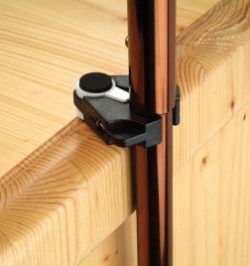
One great example of Cane or Walking stick Accessories is the Walking Stick Clip:
A Walking Stick Clip attaches to the edge of a table, ensuring the stick remains easily accessible, and doesn’t drop to the floor – a convenience that prevents the need for you to bend down and retrieve it, or worry about it falling to floor.
Click here to find out about the various types of Walking Aids available
Accessories for Crutches

Crutches are short-term mobility aids.
With Crutches, both your hands are in use, which means carrying things can be a little tricky.
There is help!
Companies like Ability Assist and Pro Mobility stock pouches and bags specifically designed for crutch users, allowing you to store and transport your essentials in a safe and convenient way.
One example of a Crutch accessory is the Crutch Pod. The Crutch Pod is the ideal around the house accessory.
The pod clips onto the crutch, allowing you keep your remote control, glasses or even your phone, close on hand, without any inconvenience or upsetting the balance of your crutches.
Click here to find out about the various types of Crutches available
Accessories for Walkers
Just as Walkers are designed to enhance your mobility, walker accessories are designed to make getting around easier. To this end there is a large selection of walker attachments available to assist you with everyday tasks from companies such as Ability Assist and Pro Mobility.
These include, for example:
i) Walker Carry Bag: The Walker Carry Bag fits all walkers to increase your carrying capacity for shopping or any personal items. It has three pouches: one in front, and two side pouches.
ii) The Walker Net Bag – is a net bag which fits and clips onto any walker – Ideal for carrying light loads for shopping, as well as holding personal items, leaving your hands free to use the Walker
Click here to find out about the various types of Walkers and Rollators available

Parts And Repairs
Over time your Walking Aid, Crutches, Walkers, Canes and Walking Sticks, may need to be repaired or have parts replaced. The Ferrules for your Crutches, Walkers, Canes and Walking Sticks may become worn and need to be replaced, CLICK HERE to find companies who stock these “Walking Aid parts” and offer repairs.
Accessories for Wheelchairs
2. Wheelchair Gloves
Regular use of a manual wheelchair is hard on the hands. As a result, many users choose to wear gloves to protect their hands from calluses and blisters. Wheelchair gloves not only protect the hands, but they also improve grip, increasing manouverability. Most are dual fabric, with leather beneath for maximum grip, and breathable materials such as lycra or mesh on top, to reduce sweat. You will find a large selection of these gloves, available in ALL sizes, online.
Note: Quadriplegic gloves differ a little from those used by Paraplegics. Because they have limited or no use of their fingers some Quads require gloves with wrist supports or straps to make them easier to put on, or take off independently. Some wheelchair users choose to purchase cycling gloves from sports shops, as they easily available, but these might not suite everyone. If you struggle to find what you are looking for, please contact DiSA directly.


1. Wheelchair Bags
Persons who use Wheelchairs and Scooters, require accessories to store and transport their possessions in a safe and convenient way. These accessories are available from companies like Ability Assist and Pro Mobility, and include products like:
i) Wheelchair Bag With Strap:
A Waterproof Nylon fabric bag with zipper on top, and loop straps that fit the handles of the wheelchair. Includes a reflective strip for increased visibility.
ii) Drive Medical – Backpack:
Made of waterproof nylon, it protects contents from adverse weather conditions. An extremely spacious, strong and durable bag with zip fastenings and reflective strips for added safety. Loop straps allow the bag to be easily attached and detached from the wheelchair using a quick release buckle. Convenient and easy to carry and manage. Dimensions: 35cm (W) x 38cm (H) x 15cm (D).
Wheelchair Advice
Choosing the right wheelchair for you is a highly personal decision. and not one to be taken lightly. If you are struggling to find the right wheelchair for your needs, please visit our Wheelchairs and Scooters page, where you will find valuable tools and resources to help you find the best wheelchair for you.
2. Eating And Drinking Accessories
Persons with Mobility Impairments who are effected by conditions or disabilities, such as Cerebral Palsy, Parkinson’s, Arthritis and Quadriplegia, often have difficulty grasping standard eating utensils or drinking from normal glasses or mugs.
Eating and Drinking Accessories are those accessories that are designed to assist persons with Mobility Impairments during meal times, enabling independence and enhancing self-esteem. They include things like gloves, plate guards and specially adapted cups, lap trays and over bed tables, which are especially useful if you are in a wheelchair or laid up in bed.
It is advisable to try out a variety of different types of Adaptive Eating Utensils and Straps before deciding on one that suites you.
You should try to get one that you can put on and take off yourself, aiding your independent. You can also ask advise from companies such as Ability Assist, Pro Mobility and Mobility Aids, or contact them to find out more.
Assistive Plates, Bowls and Plate Guards
Assistive Plates, Plate Guards, Scoop Bowls, and Divided Plates are all designed to solve eating problems for persons with Mobility Impairments, by either preventing food from falling off the plate or moving around the plate.
Some of the devices are as simple as a clip-on plate guard that attaches to a normal bowl or plate.
Others have a lip on the edge to help prevent food from coming off the plate, or separators that prevent food from sliding around the plate.
Some include an anti-slip grip beneath to prevent the plate or bowl from sliding around the table.
Available in a variety of colours, styles and brands from companies like Ability Assist, Pro Mobility, WINFAR and Mobility Aids.

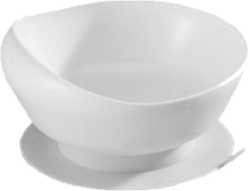
This dish (pictured above right) has a moulded scoop to assist individuals to eat with only one hand, it has a non-slip suction base to keep the bowl in place.
It is microwave and dishwasher safe – except for the suction base.
It has a diameter of 235mm and height of 60mm.
Available from: Ability Assist and Pro Mobility

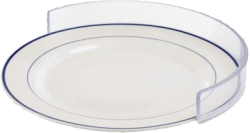
This food guard (see image above) has a contoured edge to help keep food on the plate, it is ideal for one-handed use, and is easy to put on and remove. It attaches to any dinner plate and prevents food from falling off the plate by providing a barrier which hugs the rim of a dish for a secure fit.
It measures 1 1/4” high and will fit a 10 3/4” diameter plate and is easy to clean and is microwave and top dishwasher rack safe.
Available from: Ability Assist and Pro Mobility
This bowl has a moulded scoop to assist individuals to eat with only one hand. It has a non-slip suction base to keep the bowl in place.
Microwave and dishwasher safe – except for the suction base.
It has a diameter of 150mm and height of 78 mm.
Available from: Mobility Aids, Pro Mobility, WINFAR and Ability Assist
The Clear Plate Guard provides individuals with independent eating. It fits on most plates, preventing food from slipping off the plate and stays firm even as food is being scooped up against it.
Dishwasher safe.
This Plate Guard fits plates from 215mm to 255mm
Available from: Mobility Aids, Pro Mobility and Ability Assist
Adaptive Eating and Writing Equipment
Assistive Plates, Plate Guards, Scoop Bowls, and Divided Plates are all designed to solve eating problems for persons with Mobility Impairments, by either preventing food from falling off the plate or moving around the plate.
Some of the devices are as simple as a clip-on plate guard that attaches to a normal bowl or plate. Others have a lip on the edge to help prevent food from coming off the plate, or separators that prevent food from sliding around the plate. Some include an anti-slip grip beneath to prevent the plate or bowl from sliding around the table.
Available in a variety of colours, styles and brands from companies like Ability Assist, Pro Mobility, WINFAR and Mobility Aids.
Clips, Straps and Gloves for Eating Utensils
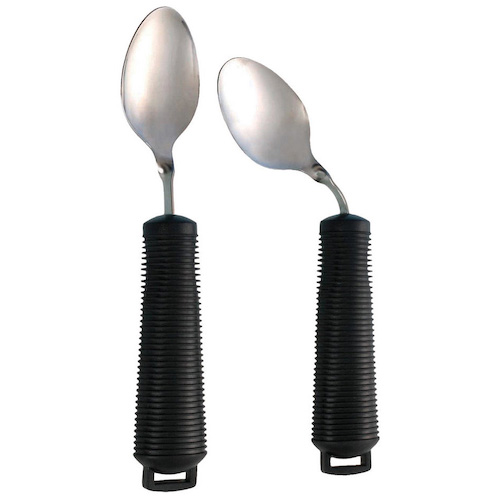
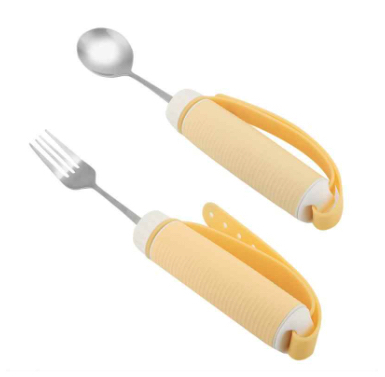
Some Quadriplegics or persons with Arthritis may require foam handles to make the handle larger and easier to grip.
To this end there are a variety of different clips, straps and gloves available that can slip over the hand to secure a spoon or fork in place.
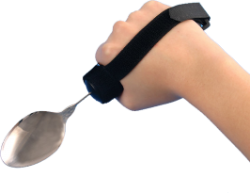
Utensil Straps are ideal for use with Bendable Utensils and for individuals with limited grip.
Simply attach the strap to one of the bendable utensils and slip a hand through the loop.
These and other similar adaptions are available at Ability Assist, Pro Mobility and Mobility Aids.
A Utensil Strap is ideal for use with Bendable Utensils and for individuals with limited grip. Simply attach the strap to one of the bendable utensils and slip a hand through the loop.
Available from: Ability Assist, and Pro Mobility
Drinking Utensils

For some persons with Mobility Impairments drinking from a standard cup can be challenging. It’s difficult to grip, to control and challenging to tilt the head back in the required manner.
There are a number of adaptive drinking devices available designed to help including: Covered cups with fixed straws – which help prevent spilling;
One way safe straws; Cups that screw down onto a table or lap-table; Adapted plastic coffee mugs with wider handles that are easier to pick up, while remaining cool on the outside – and Camelbak-style products, that can be fitted in a bag on the back of a wheelchair, allow you to drink more frequently, without asking for help.
Available from: Ability Assist, Pro Mobility and Mobility Aids.
Made from high quality, durable plastic, this two handled cup holder (pictured above) can be used with a whole host of drinking vessels and provides excellent control when drinking.
The large handles wraps around receptacles firmly and securely and are easy to grasp and avoids spills and accidents and protects the hands from hot drinks.
They have a diameter of 60 mm and size of 140 mm x 100 mm, with a weight of 55 gms and can be easily cleaned and are dishwasher safe.
Available from: Ability Assist, Pro Mobility and Mobility Aids
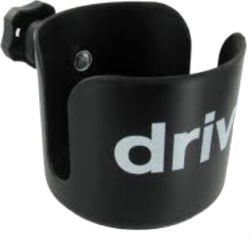
The Drive Medical-Wheelchair Cup Holder is a convenient cup holder for wheelchair users in which you can place a mug/glass whilst enjoying a drink. It can be mounted to the front or side on the armrest tubing on most wheelchairs with a separate armrest.
Available from: Pro Mobility
The Drinking Cup has a long mouthpiece making it easy to drink and preventing spillage. They are microwave and dishwasher safe.
Have a capacity of 250ml and a weight of 50g.
Available from: Ability Assist, Pro Mobility and Mobility Aids
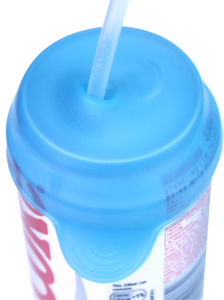
Self Sealing Cup Caps stretch to fit mugs, cups or glasses to prevent spills when they are shaken or knocked. Simply place the cup cap over a cup or glass, insert a straw through the purpose made, self sealing eyelet in the centre and you have a virtually spillproof container for liquids.
The cup caps are strong, washable and have excellent grip qualities, meaning they can be used many times over, they are perfect for children and people with an unsteady grip, protecting furniture, carpets and clothing from spills.
The cap will also keep drinks fresher for longer and can be used to store the drink in a fridge. Tenura Cup Caps are sold in a pack of two, with one measuring 80mm in diameter and the other 60mm
Available from: Ability Assist, and Pro Mobility
Adhesive Mats
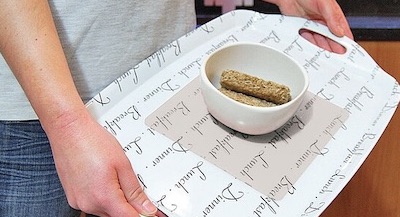
While many of these adaptive plates and bowls are specially made or modified so as not to slide around on the table, there are also Anti-Slip Mats and Trays that can be used to keep Plates, Glasses and Bowls from sliding around.
One example of this is the Tenura Extreme Super Grip Adhesive Mats – ideal for persons who use Wheelchairs or Scooters, these revolutionary super grip adhesive mats will grip at angles, so that you do not need to worry about plates and glasses slipping when you need them to stay put.
Available from: Ability Assist and Pro Mobility
3. Wheelchair Tables, Lap Trays and Overbed Tables
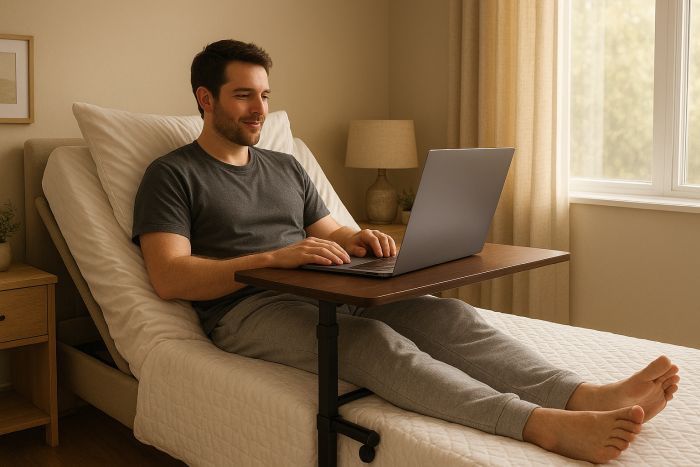
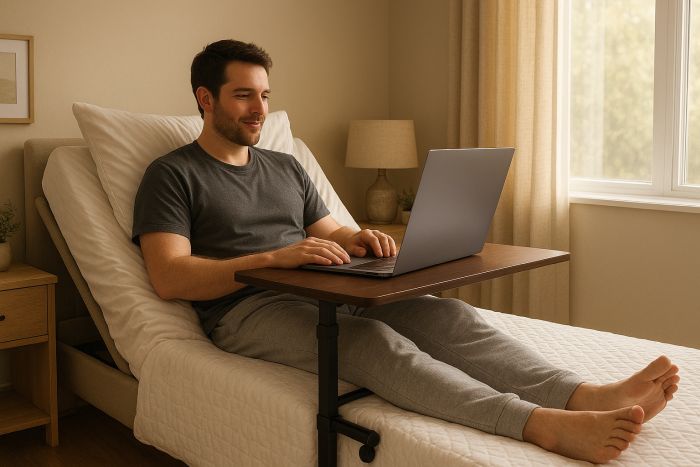
Wheelchair Tables, Lap Trays and Over Bed Tables, are useful accessories for those laid up in bed or spending considerable amounts of time seated in a wheelchair. This useful accessory can simply be rolled into place making it easier to eat and drink, read a book, or work on your Laptop while in bed.
These products come in a variety of different styles including:
Wheelchair Tables and Lap Trays
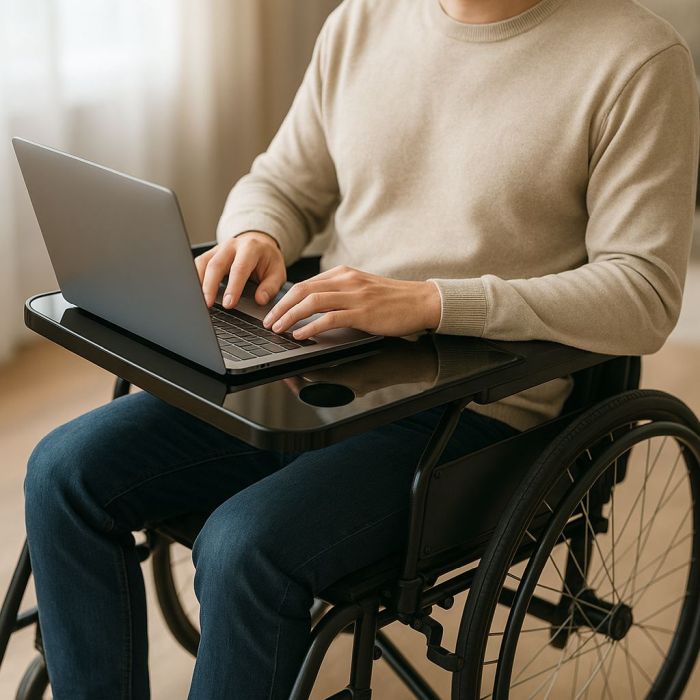
Wheelchair Tables and Lap Trays are ideal for individuals who use wheelchairs and enjoy dining out or having coffee at restaurants. Some venues have tables that are too low or narrow, making it difficult to fit a wheelchair or get close enough to eat or drink comfortably. These trays solve that problem by providing a stable, accessible surface.
They’re also useful for activities like reading, writing, or working. Available in various sizes, styles, and materials—such as wood, plastic, or perspex—some designs include slots for cups or plates and straps for secure attachment to the wheelchair.
Suitable for both manual and motorized wheelchairs, these trays promote independence and convenience. They are available to purchase throughout South Africa and include products such as:
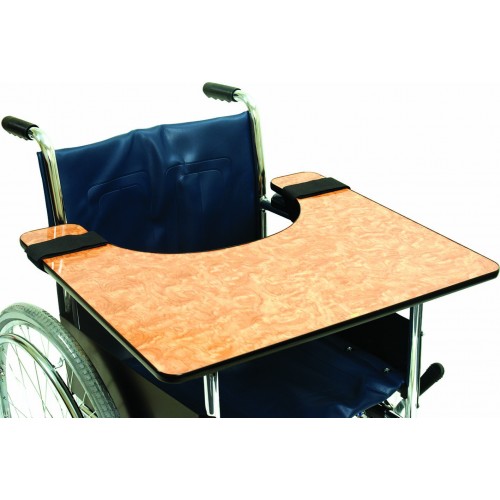
This Wheelchair Table is easy-to-clean, has two cut out areas for your glass, preventing spillage. It also has a cut out area to fit snugly around your body and can be attached by Velcro straps to the arms of both Manual and Motorized Wheelchairs.
Available from: Pro Mobility
Overbed Tables
Over Bed Tables are versatile Accessories that makes many aspects of home and hospital care more convenient for those in Wheelchairs or those who spend prolonged periods of time in bed.
There are a variety of different types and styles of these products that are sold in South Africa by various companies, including those featured below.
To find out more about the types of Bedroom and Bedroom Accessories available in South Africa visit our Bed and Bedroom Accessories page.
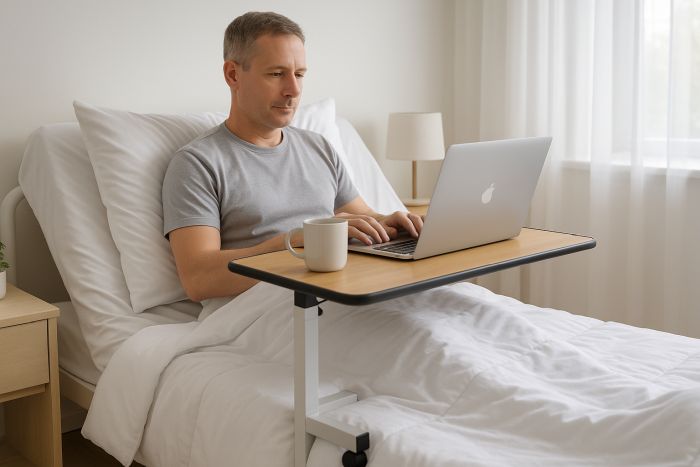
A versatile device which allows users to tilt the Over Bed Table to multiple positions to add ease to many activities such as Reading, Eating, Writing or Working On Your Computer.
The height is adjustable and the swivel top can be used at any angle. The four 10cm Swivel castors allow for easy manoeuvring and the raised edge helps keep your Laptop, Books and Papers securely on the tabletop.
Available from: Pro Mobility and WINFAR

4. Adaptive Clothing
Persons with disabilities including those who use wheelchairs and those with reduced mobility can often benefit from wearing “Adaptive Clothing”. “Adaptive Clothing” is specially adapted to make dressing easier, improve comfort and promote independence for persons with disabilities or those with limited mobility.
This adaptive clothing includes products such as shoes with Elastic Shoelaces; clothing that can slip over your head like a Poncho or Wheelchair coveralls; clothing with flat seams that reduce the chance of friction and pressure soars; rear-closure designs or clothes with hidden magnets or Velcro, rather than buttons and zippers so that a person can be dressed easier by their carer or themselves. These types of clothing make the lives of persons with disabilities easier, especially for those who have to spend several hours in the same position, or those who have difficulty moving or dressing themselves.
Adaptive clothing should be comfortable and help those who wear it to undertake their day-to-day activities with ease, improve their independence, as well as make the work of caregivers and family members easier when it comes to dressing the person with a disability.
All Weather Adaptive and Protective Gear
Many persons who use wheelchairs, as well as those with reduced mobility can benefit from wearing Adaptive and Protective Clothing including for example Adaptive Rain Gear and Wheelchair Coveralls which are cut to size to cover both the person and the chair, keeping both dry and preventing water damage to the wheelchair.
Other Protective Clothing such as Seal Cuff Waterproof Cast Covers let you shower or bath without getting your cast or bandage wet.
While Winter Thermal Blankets and Hand Muffs allow wheelchair users to go outside during the colder weather.
There are a variety of Adaptive Clothing styles available on the market today, including those products featured below.

This coverall with sleeves offers great protection from the weather, it provides greater independence for people who want to propel themselves, the elasticated cuffs make this coverall draught proof and it includes a hood.
Available from: Pro Mobility
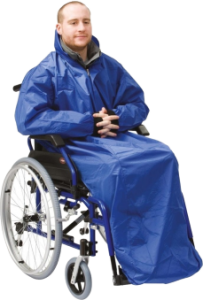
This quilted nylon cover provides excellent warmth and outdoor protection from showers. It has a fully washable lining which is completely draught proof. Elastic loops fit over the handles and keep the cover in place. It is available in a large size: Hip 102 – 125cm.
Available from: Pro Mobility
We understand how tricky it is to be caught in the rain. Standard raincoats and umbrellas are just not conducive to wheelchair users – except the Cirrus Poncho (pictured above). A raincoat specifically designed for wheelchair users.
The Cirrus Poncho is made from a lightweight, water resistant fabric which fully covers the user from head to feet.
The hood is wide with adjustable drawstring and zip.
An optional extra is a row of hidden studs on the inside of the poncho that when clipped together creates a sleeve.
The beauty of the Cirrus Poncho is that it is created in such a way that it will not interfere with the wheels in any way.
Seal Cuff Waterproof Cast Covers are an ideal solution for persons recovering from leg operations or injuries, letting you shower or bathe without getting your cast/bandage wet. It has a water tight fit and is reusable. Ideal when you need to protect a wound on an Adults Leg and keep the bandages dry.
This reusable Sealed Watertight Leg Cast Protector has a soft and comfortable opening which allows you to adjust the cover easily and will not restrict the blood flow.
The elastic opening can reduce dragging on the cast or bandages when fitting and removing it.
Available from: Knee Scooter

5. Dressing Accessories and Useful Tools

The round elastic shoelaces are ideal for the elderly or persons with disabilities who battles to tie their shoe laces. Round Elastic Shoelaces never need to be tied and do not create any pressure points and allow natural movement.
They have a length of 140mm and are available in Black and White. These Round Elastic Shoelaces are supplied as single laces or in pairs.
Available from: Mobility Aids, Pro Mobility and Ability Assist

An easy hold handle and the trigger is operated by the full hand. The head is rotatable by 360° to suit the user’s wrist angle. A magnetic tip aids picking up of small metal items, and a hook near the tip aids
as both a shoehorn or for pulling up pants. It has a length of 750mm & a weight of 196g.
Available from: Mobility Aids, Pro Mobility, WINFAR, Sheer Mobility and Ability Assist
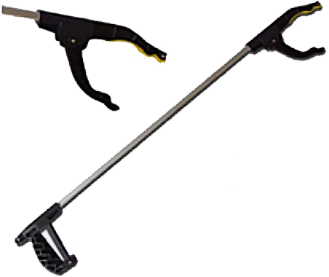
The Helping Hands & Handy Grip Reacher, are two Assistive Devices that are ideal to assist people who battle to bend, reach or pick up objects due limited hand function, through using these products instead of reaching or bending, you can also prevent back injuries.
The Helping Hands can reach just about anything and can safely pick up things that you don’t want to handle or can’t reach easily. You can use it indoors or outdoors, at work or at home and can pick up everything from broken glass to a brick without painful bending or unsafe ladders or stools.
It has a lightweight, comfortable pistol grip and an original rubber cup pick up tool, it also has a sturdy, no-rust construction with a strong rubber cup grip.
Available from: Mobility Aids, Pro Mobility, WINFAR, Sheer Mobility and Ability Assist
Shoehorns are available in Standard & Extra Long sizes to make it easier to put on your shoes. The extra-long shoehorn has a non-slip vinyl handle and nylon storage loop. It is 61cm in length and 140g in weight and is ideal for individuals who have difficulty bending down.
A conventionally shaped shoehorn with extended length incorporates a hook and a nylon loop for easy storage, it has a length of 410mm and a weight of 42g.
Available from: Mobility Aids, Pro Mobility and Ability Assist
There are also various Accessories which have been designed to assist persons with disabilities or the elderly, who have difficulty performing daily activities such as dressing, writing and picking up fallen or out of reach objects. This equipment promotes greater independence by enabling people to perform tasks they were formerly unable to accomplish, or had great difficulty accomplishing.
6. Access and Disability Experts
DiSA Advice and Guidance
Choosing the right assistive device is a highly personal decision and not one to be taken lightly. If you are struggling to find the right equipment for your needs, please feel free to contact DiSA on the following details:Alan Downey: Email: info@DiSA.org.za or Mobile/WhatsApp: 084 504 9176
Disclaimers and References
Simplified Summary
Accessories: This includes special equipment that help make daily life easier and more comfortable and includes things like special clothing, eating and drinking equipment, bags and pouches that fit to your wheelchair, walker or walking stick to support independence.