


Walking Aids & Prosthesis
Welcome to our Walking Aids and Prosthetics page, where we explore a range of assistive devices designed to support individuals to be able to walk.
Whether you’re recovering from an injury, adapting to age-related changes, or living with a physical impairment, there are many solutions available to make movement safer and more comfortable.
From everyday walking aids like canes, crutches, walkers, rollators, gait trainers, and knee scooters, to more advanced options, there’s a wide range available in South Africa to suit different needs and lifestyles.
We also explore prosthetics—devices for those who have lost a limb, such as prosthetic legs, arms, hands, or feet—as well as orthotics, which include braces and splints that support or guide movement in the limbs or spine.
We’ll guide you through available options, and where best to source these options. As well as key considerations, proper fit, and setup.
To get started, use the list at the top right of this page to jump directly to specific sections—or simply scroll down and let us guide you through the choices, so you can find the walking aid or prosthetic that best fits your lifestyle.
What Are You Looking For?
1. Finding the right mobility aid for you. Who can help?
2. Walking Aid Categories
A. Everyday Walking Aids
– Types of Walking Aids
i. Canes and Walking Sticks
ii. Crutches and Knee Scooters
– Knee Walkers
iii. Walkers and Rollators
– Walker or Rollator – Which do I need?
– Types of Walkers and Rollators
– Walkers, Zimmer Frames, Wheeled Walkers
– Rollators, Tri-Wheelers
iv. Gait Trainers
B. Prosthesis
C. Orthotics including Braces, Moonboots and Splints
3. Positioning Fitment and Set-Up
4. Spares & Accessories






Where Can I Find Walking Aids and Prosthesis?
Walking Aids are available to buy throughout South Africa from various organizations & companies such as Sheer Mobility, Pro Mobility, Ability Assist, Sitwell, CE Mobility, Mobility Aids, WINFAR, be-Able Solutions, Mr Mobility and Solutions Medical.
These companies specialise in providing products for people with mobility impairments and should be able to advise you on the best type of Walking Aid for you. They can also help set it up to insure that you correctly postured and supported. Most service and repair the products that they sell should the need arise. Whatever your need may be, you can be guaranteed that they will be able to assist you to find exactly the right aid for you.
Sitwell Technologies are Specialists in the provision of Mobility & Assistive Aid Equipment for persons with physical disabilities.
Sitwell Technologies represent all local suppliers as well as a number of International manufacturers of equipment, providing an unbiased view of all products available to the South African market.
Their approach to Mobility is about providing a holistic solution to each individual’s needs.
Sitwell Technologies are based in Johannesburg but can provide products throughout South Africa.
You can contact them at: Tel: (+27) 11 440 8226 or email: mobility@sitwell.co.za
Website: www.sitwell.co.za
Address: 41 11th Avenue, Highlands North, Johannesburg.
Sheer Mobility: is in the market with a mission to make quality assistive devices more affordable in this country. “Our imported range of European & American quality accredited products includes a wide variety of assistive devices, including “Bathroom Aids and Accessories” such as commodes, shower benches and grab rails.” They also install, service & repair many of the products that they supply.
Sheer Mobility are based in Cape Town but can provide products throughout South Africa.
You can contact them at: Tel: (021) 552 5563 or Email: brobinson@sheerocean.co.za
Website: www.sheermobility.co.za.
Address: Unit 6, 14 Esso Road, Montague Gardens, 7441.
Elevate Your Mobility, enhance your lifestyle – choose Pro-Mobility! Discover a world of freedom and accessibility with Pro Mobility – Your Ultimate Destination for Assisted Living and Mobility Solutions! Our holistic approach is driven by a genuine passion to enhance the quality of life for individuals facing mobility and agility challenges. At Pro Mobility, we go beyond just providing products; we offer a personalized experience, understanding the unique needs of each client.
Why Choose Pro Mobility?
– Leading-Edge Solutions: Experience the latest in mobility and accessibility solutions curated for your needs.
– First-Class Service: Our dedicated team is committed to delivering top-notch service and unwavering support
– Authorized Agents: Proud partners with Autochair and Ardoo Products in South Africa, ensuring you get the best in the market.
Explore our extensive range of products and services: Pro mobility provides an extensive range of products and services, including Wheelchairs; Walking Aids; Hoists, Lifts, Ramps, and Transferring Aids; Bathroom and Mobility Aids; Pressure Care Products; Paediatric Equipment; Vehicle Adaptations and Equipment and much more!
Services Offered includes: Seating Assessments, Servicing, and Repairs: Pro Mobility not only provides quality products but also ensures that they are prescribed, serviced, and repaired with expertise.
Visit Our Showroom: Discover a welcoming, wheelchair-friendly space at our showroom in Gillitts. Experience firsthand how our products seamlessly integrate into your home. With ample parking and easy accessibility, our showroom is designed with your convenience in mind.
Connect with Pro Mobility: Visit our website at www.pro-mobility.co.za for a virtual tour of our offerings.
For inquiries, reach out to us at 031-266 6421 or email: mobility@pro-mobility.co.za.
Better yet, visit us at 17 Hamilton Crescent, Gillitts, 3610, and witness the freedom we bring to your life.
Elevate your mobility, enhance your lifestyle – choose Pro Mobility!

Ability Assist stock and sell a wide variety of these different types of Eating, Drinking and Cooking Accessories, as well as other types of assistive devices and accessories, including Pressure Care, Mobility and Transfer Aids.
These products can be purchased online at:
Website; www.abilityassist.co.za
Contact: (011) 894 5667
Email: info@abilityassist.co.za
Address: Unit 7, Lincoln Business Park, Cnr Malcolm Moodie Crescent & George Palmer Street, Jet Park, Boksburg, 1459
CE Mobility supply a wide range of Services and Assistive Devices for persons with Mobility Impairments, which include Manual and Motorized Wheelchairs and other Mobility Aids.
CE Mobility was established more than 70 years ago and during that time they have gained a wealth of knowledge and experience about wheelchairs, seating and everything that goes hand in hand with it.
We are proud to be the largest wheelchair manufacturer and distributor in South Africa. We were the first company in SA to employ Occupational Therapists and the first to invest in Pressure Mapping technology. Leading the way is what we have always done and continue to do.”
Today, CE Mobility boasts 8 branches nationwide and a team of experts including Occupational Therapists, Physiotherapists, wheelchair users, Engineers and Seating Specialists to assist you in choosing the correct equipment to suit your needs and budget.
CE Mobility is the largest importer of wheelchairs and accessories as well as the largest local manufacturer providing employment to over 150 South Africans. Visit our showrooms in Roodepoort, Sandton, Pretoria, Durban, Cape Town, Port Elizabeth, George or Bloemfontein to view our extensive range of mobility equipment, or visit our website: www.cemobility.co.za to contact a branch in your area, or contact us at their Johannesburg branch at: Tel: 010 593-2903 or email: candice@cemobility.co.za.

Mobility Aids – The Small Business, that’s big enough to Care.
Mobility Aids specialize in providing a good quality service and a wide variety of products and services for persons with disabilities in Gauteng and South Africa. Mobility Aids have been serving persons with disabilities since 1995 and carry a wide range of products including Hospital Beds, Mobility Scooters, Pressure Care Mattresses, Walkers, Rollators, Wheelchairs, Cushions, Ramps, Power Wheelchairs, Bathroom Aids, Eating and Dressing Accessories and much more.”
Mobility Aids offer an After Sales Service, and can service and repair your Assistive Devices, and also rent out a variety of products including Hospital Beds, Walkers, Crutches, Commodes, Wheelchairs and More.
Contact: 011 849 2810 / 011 425 1095 | Email: info@mobilityaids.co.za | Website: www.mobilityaids.co.za Address: 7 Kei Road, Farrarmere, Benoni
Solutions Medical manufactures and distributes rehabilitation equipment to both the Industry and end user. We supply Solutions for caring for a patient at home, as well as a wide variety of other products, which are available to rent or to buy. These products include but are not limited to Motorized and Manual Wheelchairs; Bathroom Aids; Hoists and Slings; Pediatric Equipment; Rehabilitation Equipment; Pressure Care and Seating Products; Scooters; Walking Aids; Ramps, etc
We offer high-quality products and a great service, our mission is to exceed all of our customers’ needs, which is one of the big reasons that almost all of our customers come back to us. We also do home visits to assess the client’s needs, including problems accessing the bathroom or advising what aged care products would suite the one you care for.
Contact: (021) 592 3370, WhatsApp: 065 277 6701;
Email: sales@wheelchairs.co.za,
Website: www.wheelchairs.co.za
or www.facebook.com/www.wheelchairs.co.za.
Address: 69 Stewart Street, Stewart Industrial Park, Townsend Estate, Goodwood, Western Cape, South Africa, 7460.
WINFAR provides mobility and home care products and solutions, designed to improve your quality of life. Whether in recovery, mobility impaired, ill or just getting older – our products are specifically designed to make your life easier, safer, healthier and more enjoyable!
Based in Cape Town, we service everyone in need of assistance, living in Cape Town, Johannesburg, Pretoria and throughout South Africa!
Our product range includes a Walkers, Rollators, Mobility Aids, Wheelchairs, Wheelchair Cushions, Power Wheelchairs, Grab Rails, Bed Rails, Shower Aids, Commodes, Toilet Aids, Bedroom Aids and much more.
With 67 years of caring experience WINFAR is about people. Born of a family business, that built its reputation on personalised care, service, honesty and integrity, we stand on those self-same promises today. Honest, professional advice. Personalised, attentive service. Delivering the best possible products and solutions to suite your particular needs – perfectly fitted to you and your needs. Let us help you choose the best product for you!
Statistically speaking, if an accident or fall is going to occur within the home, it is going to happen in the bathroom. Safety in the bathroom cannot be underestimated. It’s a valid consideration for anybody, of any age, regardless. And, it doesn’t take much. Just a few simple changes or additions and peace of mind, and security, are restored. Not to mention dignity and independence. At WINFAR we offer a wide range of Bathroom Aids, including Bath Chairs, Shower Chairs, Commodes, Grab Rails and Raised Toilet Seats, that can make your bathroom safer and more comfortable. Knowing which product will best suit your needs, can be challenging, but we are here to help. With our complete range of products and simple solutions, we will help you find the best product for you.
Our after-sales service includes set-up assistance, a repair service, an online support service, and a call us anytime for advice service. PLUS, for your peace of mind, all our mobility products carry a 1 year free from defect warranty.
Our store is staffed with certified fitters who are able to help you there and then, or if you are Cape Town based, in the convenience of your own home.
Please feel free to contact WINFAR on: +27 (021) 797 0034 or whats app: 076 869 7061, via email: admin@winfar.co.za, or visit our web site at: www.winfar.co.za to view our products which we deliver country wide to your door, or click on the link to find out more about Bathroom Aids and Safety, or click on the WINFAR Catalogue to find out more!

be-Able Solutions, we are dedicated to simplifying life for individuals facing mobility challenges by providing a comprehensive range of products and solutions that prioritize independence, dignity, and comfort. Our mission is to assist you in making informed decisions that suit your needs. Our team is committed to offering personalized consultations to streamline your decision-making process.
One-Stop Shopping Experience: Visit our store in Plumstead for a hassle-free shopping experience. Our knowledgeable staff is always on hand to assist you.
Assisted Living Products: Enhance your daily activities with our range of daily living aids, designed to improve convenience and enjoyment. Whether for home or garden, we offer a diverse selection of high-quality products. If you can’t find what you’re looking for, we’ll endeavor to source it for you.
Mobility Products: Don’t let mobility issues slow you down. From wheelchairs to walkers and crutches, be-Able Solutions has everything you need to maintain your mobility. Our commitment to providing impartial advice ensures that you find the perfect wheelchair to suit your requirements.
Product Rentals: For temporary needs or budget constraints, we provide a variety of equipment available for rent. Whether it’s for recovery, a holiday, or simply to try out, we offer flexible rental options, including long-term and short-term arrangements.
Home and Personal Care: Adapting to change is easier with the right products. Our extensive range caters to various needs, promoting independence and comfort. Whether it’s beds, handles, hoists, standing frames, or rails, we specialize in finding the ideal solutions for you.
Pressure Care: For extended periods spent in bed or a wheelchair, we offer specialized solutions to prevent pressure sores and discomfort. Our selection includes leading brands such as Roho, Jay, and Matrix, along with customizable options like alternating air mattresses and medical sheepskin.
Maintenance/Repairs: Equipment malfunctions happen but be-Able Solutions has you covered. Our team can repair most equipment efficiently, ensuring minimal disruption to your daily routine.
Contact: +27 21 111 0980
WhatsApp: +27 (0) 66 233 8871
Email: info@beablesolutions.co.za
Website: www.beablesolutions.co.za
Address: Shop 8, The Village Square, cor. Main & Southfield Road, Plumstead, 7800, Cape Town.
Mr Mobility specializes in providing a good quality service and a wide variety of products and services for persons with disabilities in Cape Town and throughout South Africa. Mr Mobility operates exclusively online to bring you the best products at the most affordable prices. By not having any physical locations, we can keep our overhead costs low and pass those savings on to our customers. This also allows us to distribute products quickly and efficiently, so you can get the mobility aid you need when you need it. Products that we supply include Hospital and Homecare Beds, Pediatric Equipment, Hoists, Mobility Scooters, Pressure Care Mattresses, Walkers, Rollators, Wheelchairs, Cushions, Ramps, Power Wheelchairs, Bathroom Aids, Accessories and much more.
We understand that sometimes it’s necessary to have specialized equipment for a loved one to recover at home. That’s why we offer a wide range of medical equipment rentals, including hospital beds, patient lifters, mobility scooters, over-bed tables, and pressure relief mattresses, among other accessories.
We believe that hospital beds are not just for nursing homes or hospitals anymore. With sleek designs and various styles of head and footboards, modern hospital beds look like bedroom furniture and can blend seamlessly into any home decor. Our rental options make it easy and affordable for you to provide the care your loved one needs. without the lone-term commitment of purchasing expensive medical equipment. Whether you need a hospital bed for a short-term recovery or a patient lifter for daily transfers, we have you covered. Our selection of equipment is not only top-of-the-line but also regularly serviced and sanitized to ensure the highest standards of hygiene and safety.
Our team is dedicated to providing you with excellent service and support every step of the way. Please feel free to contact us on: (063) 020-0992; Email us on: info@mrmobility.co.za, or visit our web site to view our products at: www.mrmobility.co.za
Walking Aid Categories
In this section, we explore the full range of walking aids — from the simplest support tools to more advanced mobility solutions. We’ll start with canes and walking sticks, then progress to walkers and rollators, depending on your mobility needs, lifestyle, and budget. We’ll also cover crutches and knee scooters, which are often better suited for short-term or post-operative recovery.
The right aid for you depends on factors like balance, weight-bearing ability, and intended use. The table below is designed to help you clarify your needs and narrow down your options before selecting the specific model that’s best for you.

A. Everyday Walking Aids
Standard Walking aids like Canes, Walking Aids and Rollators support someone who can walk, but requires a little extra support with balance and/or endurance.
Click here to learn more.

A. Everyday Walking Aids
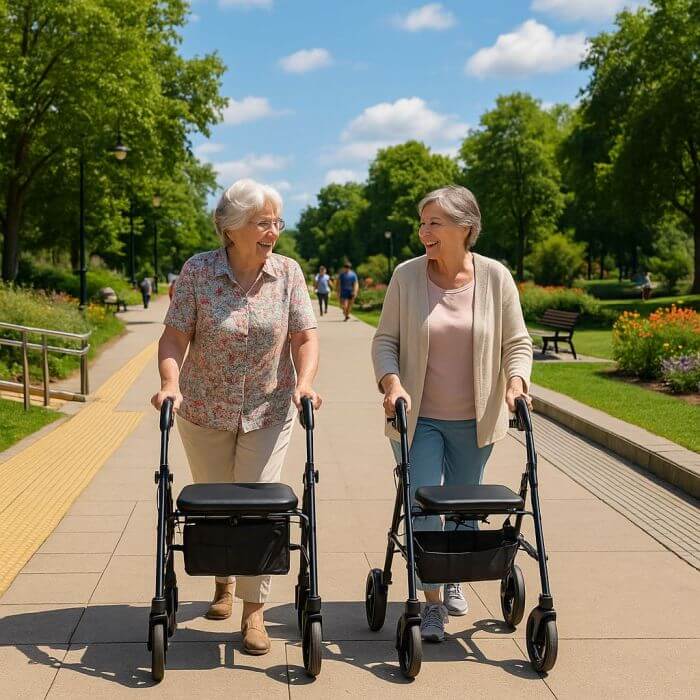
The term Walking Aids covers an array of Assistive Devices that includes Canes, Crutches, Walkers, and Rollators.
These aids are used by persons who can walk, but require a little assistance or struggle with stability issues.
The person using them would need some upper body strength, specifically in their arms and the use of their hands to be able to securely grip the Walking Aid.
In recent years, the term has expanded to included Knee Walkers and /or Scooters, which are two, three or four-wheeled alternative to Crutches.
And Gait Trainers – Walking is a complex function, and there is a growing consensus that a well-positioned pelvis in combination with dynamic movement is critical to successful gait training. Gait Trainers assist with this.
Types of Walking Aids
In this section, we explore the full range of walking aids — from the simplest support tools to more advanced mobility solutions. We’ll start with canes and walking sticks, then progress to walkers and rollators, depending on your mobility needs, lifestyle, and budget. We’ll also cover crutches and knee scooters, which are often better suited for short-term or post-operative recovery.
The right aid for you depends on factors like balance, weight-bearing ability, and intended use. The table below is designed to help you clarify your needs and narrow down your options before selecting the specific model that’s best for you.
1. Canes and Walking Sticks
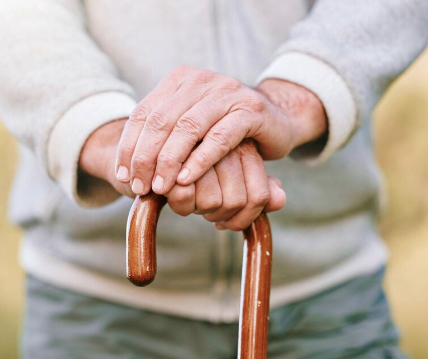
Canes or walking sticks are the most basic type of walking aid, designed to provide support, improve balance, and assist with stability while walking. Held in one hand, a cane helps distribute a portion of the user’s weight from the legs to the upper body—primarily the hands and wrists—offering an extra point of contact with the ground. By increasing stability and widening the user’s base of support, canes help improve posture, reduce the risk of falls, and enhance overall mobility.
Available in various styles and materials including wood, metal, and durable plastic, canes and walking sticks can be single-point, foldable, or have three or four pronged bases for added stability.
Most are fitted with a non-slip rubber tip, called a ferrule, to reduce the risk of slipping.
There are a wide variety of canes and walking sticks available to suit different preferences, mobility needs, and environments including those listed below.
For Walking Stick and Cane Accessories please visit our Accessories page
Types of Canes
i. Bariatric Canes

Bariatric canes are heavy-duty walking aids specifically designed to provide safe, stable support for individuals weighing up to 227 kg.
They offer enhanced durability and comfort to assist with balance and mobility, making walking safer and easier.
Constructed from strong materials such as reinforced metal or solid wood.
Bariatric canes are available in both Single-tip (standard) designs and Quad-base designs for added stability. These canes are ideal for individuals who need a reliable and supportive walking aid that can handle higher weight capacities without compromising comfort or functionality.
Available from: WINFAR, Solutions Medical, Pro Mobility, be-Able Solutions or Mobility Aids
ii. Tripod Walking Stick
The Tripod Walking Stick is a sturdy and reliable mobility aid designed for enhanced balance and stability. Weighing just 1 kg, it features a lightweight aluminium frame and a soft, ergonomically designed handle that rotates 180º, making it suitable for both right- and left-handed users. Ideal for users needing extra support and stability without compromising comfort or mobility.
Key features include:
– Swan-neck design for improved weight distribution and balance
– Height adjustable from 85 cm to 105 cm to suit different users
– Durable powder-coated steel legs built to withstand daily wear and tear
– Weight capacity: up to 120 kg
Available from: WINFAR, Solutions Medical, Pro Mobility, be-Able Solutions or Mobility Aids
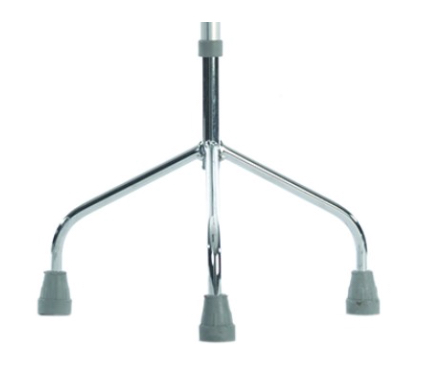
iii. Quad Canes and Quadruped Walking Sticks

Quad canes, also known as quadruped walking sticks, are designed to offer greater support and stability than standard single-point canes. Their four-point base distributes weight more evenly, making them ideal for users who need extra balance assistance or have limited mobility.
Key features include:
– Aluminium frame for lightweight durability
– Soft, ergonomic handle for added comfort
– Non-slip rubber ferrules on all four legs for secure grip and stability on various surfaces
These walking aids are especially useful for individuals recovering from injury, stroke, or those with balance-related conditions.
What about
White Canes?
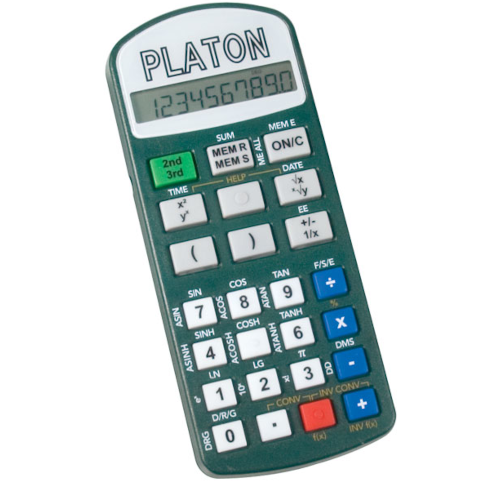
Canes are also used as Mobility Aids by Persons who are Blind or Visually Impaired.
In which case they are primarily used to scan the surroundings for obstacles or orientation marks. These are known as White Canes. They are thinner and longer than standard canes – and usually white, made from aluminium, graphite-reinforced plastic or other fibre-reinforced plastic. White Canes are available with a wide variety of tips, style is dependant upon user preference. Click here to learn more about White Canes.
2. Crutches and Knee Scooters
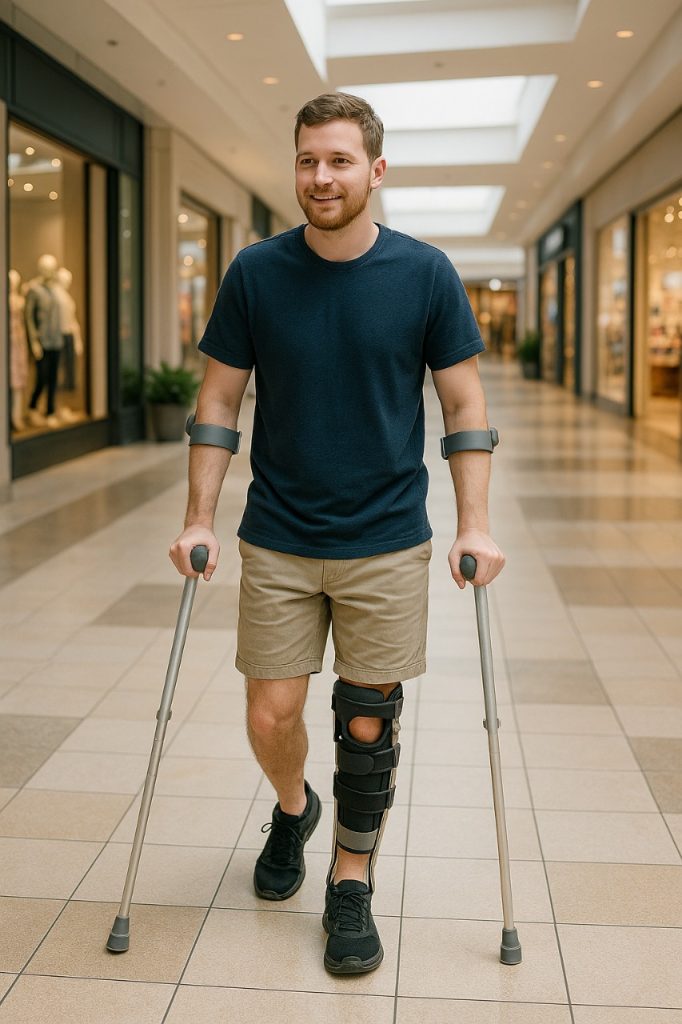
Crutches are walking aids designed to support a greater amount of body weight than canes, making them ideal for individuals with temporary or long-term mobility impairments. Like canes, crutches transmit load to the ground through a shaft—but unlike canes, they also provide support through multiple points of contact: the hand and either the forearm or underarm, depending on the type of crutch. This additional contact allows crutches to bear significantly more weight, helping users maintain mobility while reducing strain on injured or healing legs.
Crutches are commonly used during recovery from surgery, injury, or for certain chronic conditions that affect weight-bearing ability. Crutches are available in a range of materials such as wood and lightweight metal, and come in several styles to suit individual needs.
The most commonly used types include: Forearm Crutches (also known as elbow crutches); Underarm or Axillary Crutches and Gutter Crutches (for users who cannot bear weight on their wrists or hands). Each type offers specific benefits depending on the user’s condition, strength, and required level of support.
Available from: WINFAR, Mobility Aids, Pro Mobility, Solutions Medical, Sheer Mobility and be-Able Solutions.
For Walking Stick and Cane Accessories visit our Accessories page
Types of Crutches
i. Gutter Crutches | Trough Crutches
Gutter Crutches, also known as Trough Crutches (pictured right), are specially designed for individuals with arthritis, limited grip strength, or painful hands.
Instead of relying on the hands for support, these crutches feature a padded forearm platform that helps distribute body weight more evenly across a larger area, reducing strain and increasing comfort.
Made from lightweight yet durable materials, they offer a robust trough for forearm support, an easy-to-use Velcro strap to secure the arm, and adjustable height settings to ensure a proper fit for each user.
The crutches also include non-slip rubber ferrules for improved stability and support a maximum user weight of 114 kg.
Available from: Pro Mobility, Solutions Medical and be-Able Solutions.


ii. Underarm or Axillary Crutches
Underarm Crutches, also known as Axillary Crutches, are designed to be positioned under the armpits, with the top pad resting against the ribcage and the user gripping the handle below.
They are commonly used for temporary mobility support, particularly after injury or surgery when weight-bearing on one leg is limited.
To avoid discomfort or irritation under the arms, it’s recommended to use a towel or padded cover with these crutches for added cushioning. For these and other related product visit our accessories page for more information.
Available from: Pro Mobility, Solutions Medical, WINFAR and be-Able Solutions
iii. Forearm Crutches
Forearm Crutches offer more support than a standard cane by incorporating a cuff that wraps around the forearm, helping to improve balance, lateral stability, and reduce pressure on the wrists. They are commonly used by individuals with lower limb injuries or fractures, or those experiencing reduced mobility.
These crutches feature a swing-out three-part cuff that ensures a secure fit, along with three-step height adjustment, a soft ergonomic grip for added comfort, and a non-skid rubber tip that maintains flexibility even in cold conditions.
Users may choose to use one or two crutches, depending on their needs and mobility level.
Available from: Ability Assist, Sheer Mobility, CE Mobility, Solutions Medical, Pro Mobility, WINFAR, and be-Able Solutions.

Knee Scooters
A Knee Walker or Knee Scooter is a two, three or four-wheeled alternative to Crutches or a traditional Walker as an ambulation aid. It is known by many other names, such as Knee Coaster, Knee Cruiser, Knee Caddy, Orthopaedic Scooter, or Leg Walker.
Over the years it has taken on many forms, from small-wheeled devices suitable for indoor use to larger sturdier units capable of use outside on grass or paved surfaces. Today’s version is usually a lightweight, foldable design that supports the shin of the unusable limb. The opposite foot makes contact with the floor or ground, providing propulsion.
The objective of the Knee Scooter is to create a safe, comfortable, and easy-to-maneuver alternative to the traditional Crutch. Prior to its introduction, those experiencing foot surgery, bunionectomies, gout, below the knee amputations, diabetic ulcers and wounds, as well as foot sprains, or fractures had no choice but to limit activity during rehabilitation and to use either Crutches, a traditional Walker, a Wheelchair or have complete bed rest.
The Knee Scooter does have limitations that may make it unsuitable for some patients, such as those with leg injuries above or near the knee. It cannot negotiate stairs, and is significantly heavier and more difficult to load into a vehicle than crutches.
There are various types of Knee Scooters which are available to be purchased from various companies around South Africa including the following:
Knee Walkers
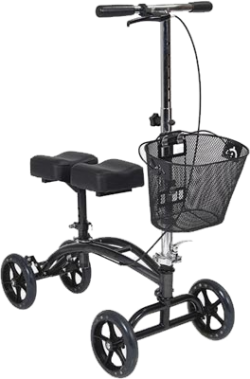
This Knee walker can be steered for increased manoeuvrability. It is deal for persons recovering from foot surgery, breaks, sprains, amputation, and ulcers of the foot. The new foldable steering column allows for easy storage, it has a deluxe dual-braking system, the sturdy dual frame adds stability and durability while the Leg pad with “channel” provides added stability and comfort.
The Tiller can be easily folded for storage and transportation and the Tool-free height adjustment of the seat and handle make it easy to fold, transport and store. The 8″ casters are ideal for indoor/outdoor use and the silver vein finish is easy to maintain.
The product weight is 8.8kg and the handle has a maximum height of 37.5″ and a minimum handle height of 33″. The overall product height is 33″ with an overall product length of 32″ and width of 17″. This product has a weight capacity of 136kg and is available in black and is made from Aluminium. It also has a Pad height of 17.5″-21.5″; Pad length of 14.25″ and Pad of width of 7.25″.
These Knee Walkers are available to purchase from various companies in South Africa including Mobility Aids, be-Able Solutions, WINFAR and Pro Mobility, please contact them to find out more or receive a quote
As knee scooters are often used for post-surgery recovery, they are often rented for a short period of time, usually about 4 weeks as a form of cost saving options.
Available from: Ability Assist, Sitwell, be-Able Solutions, WINFAR and Pro Mobility
To rent from: Ability Assist, Sitwell, be-Able Solutions, WINFAR and Pro Mobility
To rent a Heavy Duty Scooter: Mobility Aids, be-Able Solutions and Pro Mobility or visit our Equipment To Hire Page
3. Walkers and Rollators
Walkers and Rollators are two of the most common mobility aids used to provide support and enhance independence for individuals with walking difficulties.
Walkers are the most stable type of walking aid, consisting of a freestanding metal frame with three or more points of contact with the ground. The user places the walker slightly ahead, grips the handles, and steps forward for support during movement. The points of contact may include: Rubber ferrules (like those found on canes or crutches); Wheels, or a combination of both
When equipped with wheels, a walker is known as a Rollator. Rollators typically have three or four wheels and often include features such as: Braking systems for safety; and Built-in seats or baskets for resting or carrying items.
Choosing between a walker and a rollator depends on individual mobility needs, upper body strength, and environment. It’s recommended to consult an Occupational Therapist for guidance on the most suitable walking aid.

Walker or Rollator? Which One Do I Need?
Traditional walkers consist of a rigid metal frame with four legs, either with rubber ferrules or two front wheels. They offer maximum stability, making them ideal for people with poor balance, low strength, or those recovering from surgery. While they may be slower to move—especially non-wheeled models—they are lightweight, foldable, and best suited for indoor use.
On the other hand, rollators are mobility aids with three or four wheels, often equipped with brakes, a seat, and a basket for added convenience. They are easier to push over longer distances and better suited for individuals who can walk steadily but need light support or occasional rest. While not as stable as traditional walkers, rollators are excellent for both indoor and outdoor use and are especially helpful for people with moderate mobility needs.
Choosing the right walking aid for you starts with understanding your physical needs, your lifestyle requirements, and consideration of your daily routines. Here are a few basic considerations to help you make the right decision for you:
1. Are you experiencing STABILITY issues when you walk? Choose a walker.
2. Are you struggling to stand up from a seated position? Choose a walker
3. Do you just need a little extra support when walking, but are otherwise fit and able? Choose a rollator
Types of Walkers and Rollators
Walkers and rollators come in a variety of styles to suit different levels of mobility and support needs.
The most basic option is the 4-legged walker, which provides maximum stability and is ideal for those with significant balance issues.
A step up from this is the 2-wheeled folding walker, which adds ease of movement while still offering solid support.
As mobility improves, users often progress from a basic walker to a rollator for increased independence and comfort. with 4-wheeled rollators offering the greater freedom of movement.
1. Standard Walker
A standard walker is a simple, lightweight device without wheels. Made of aluminium, and height-adjustable to ensure maximum user comfort, it is lifted by the user, who moves it forward one step at a time.

2. Folding Walker
This used to be a consideration, but these days, most walkers are foldable. Which means, they are easily transportable. This is an important feature, as it ensures the walker is not a deterrent to independence but is rather designed to facilitate and encourage as much independence as possible. Ensure the walker you choose is foldable.
3. Two-Wheeled Walkers
Two-wheel walkers are for users who still enjoy a fair amount of mobility, who don’t need quite as much support, as a 4-frame walker provides. But, are not quite stable enough to use a four-wheel rollator.
4. Tri-Wheelers
The perfect in-betweener. This 3-wheeler provides support for safe and confident walking. Their lightweight design makes them ideal for tight spaces, and they can be folded up easily for convenient storage or transport.
5. Four-Wheeled Rollators
A rollator is essentially a four-wheeled walker – a versatile and user-friendly walking aid, ideal for individuals who can walk steadily but need light support and rest breaks. Four-wheeled rollators often have a seat for intermittent stops and a basket for added convenience. Suitable for outdoor use.
6. Bariatric Walkers
A bariatric walker is designed to support larger people. Standard walking frames are designed to support people with a weight of around 100kg. Bariatric walkers are designed to support heavier frames, of between 100 and 225kg.
The heavier the user’s body frame, the heavier the walking frame required to bear the weight.
1. Step Walkers and Zimmer Frames
i. Four-Legged Walkers

4 Legged Walkers are available in a variety of different makes including the “Pulpit Walker”, “Two Step Walker” and “Zimmer Frame Walker”
4-Legged Walkers, also known as Pulpit Walkers (pictured right), offer a higher level of stability than crutches and are ideal for individuals who need secure, full-body support while walking.
These walkers feature four sturdy legs and are designed to provide confidence and balance, particularly for those recovering from surgery, injury, or with reduced mobility.
One popular option is the lightweight, foldable aluminium walker, which is both durable and easy to use. It includes adjustable height settings, supports users up to 120 kg, and features a safety clip to prevent accidental folding during use—making it both secure and practical for everyday movement.
Available for purchase from: Sheer Mobility, Solutions Medical, WINFAR, Mobility Aids, Sitwell, be-Able Solutions and Pro Mobility,
Available for Rent from: Mobility Aids, Solutions Medical, Pro Mobility, WINFAR and be-Able Solutions or visit our Equipment For Hire page
ii. Two-Legged Walkers
2-Legged Walkers, such as the Pulpit Walker and Zimmer Frame Walker, are available in a range of designs to suit different mobility needs. Similar in structure to 4-legged walkers, these models are fitted with two front wheels and two rear legs with rubber tips.
The wheels at the front make it easier to push the walker forward without needing to lift it. While the fixed rear legs provide stability and control by preventing the walker from rolling when weight is applied. This design strikes a balance between mobility and safety, making it ideal for users who need steady support but want smoother movement.

Available for purchase from: Sheer Mobility, Solutions Medical, Pro Mobility, Sitwell, Mr Mobility, WINFAR, be-Able Solutions and Mobility Aids
Available for Rent from: Mobility Aids, Solutions Medical, Pro Mobility, WINFAR and be-Able Solutions or visit our Equipment For Hire page
2. Wheeled Walkers and Rollators
When walking outside, you may require additional support from a Wheeled Walker, these Walkers come in three or four wheeled versions and are also known as Rollators, which often include a breaking system.
There are a wide variety of different types of Wheeled Walkers or Rollators. Some are foldable and may include a basket to store your belongings, or a seat so that the user can rest if need be. Wheeled Walkers and Rollators are also available throughout South Africa and include various different makes, with each offering their own set of advantages and benefits which include:
i. Tri-Wheelers
3-Wheeled Walkers and Rollators are a more compact and easy-to-manoeuvre alternative to their 4-wheeled counterparts, while still providing essential support for safe and confident walking. Their lightweight design makes them ideal for tight spaces, and they can be folded up easily for convenient storage or transport.
Most models come equipped with brakes for safety and may also include a shopping basket or storage pouch, perfect for carrying light items or personal belongings—keeping your hands free to maintain proper grip and control.
A variety of 3-wheeled walkers and rollators are available in South Africa, offered in different makes and models to suit individual needs. Popular options include:
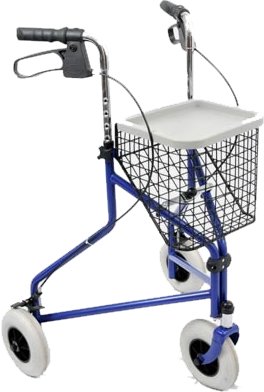
Available from: Solutions Medical, Sitwell, Ability Assist, CE Mobility, Mobility Aids, Pro Mobility and WINFAR,
Available for Rent from: Pro Mobility, Solutions Medical and Mobility Aids, Visit our Equipment For Hire page to find out more.
ii. 4-Wheeled Rollators
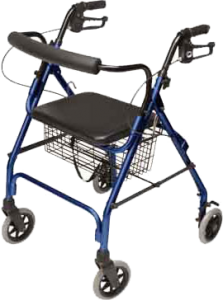
The Rollator is a versatile and user-friendly walking aid, ideal for individuals needing moderate support with added convenience. Its lightweight aluminium frame is both sturdy and easy to manoeuvre, and the foldable design makes it simple to store or transport.
Equipped with loop-style brakes and a hand-locking mechanism, it offers reliable control and safety. The 8-inch castor wheels ensure a smooth ride across various surfaces, while the height-adjustable handles provide a comfortable, personalised fit.
For added practicality, the Rollator includes a padded seat with back support for resting on the go, and a removable basket for carrying personal items—keeping hands free and movement safe.
Some examples of 4-Wheeled Rollators are:
This folding walking frame, with lockable wheels, is the ideal mobility aid for those requiring increased stability and assistance.
Manufactured from lightweight aluminum, it folds easily from each side inwards, and comes standard with anti-slip rubber tips for increased grip, 4 castors with cable brake on rear castor and Locking Brakes on front castors.
These height adjustable; fold up Rollators are available for purchase from: WINFAR

The Invacare Rollite Rollator Tall features a lightweight, durable aluminium frame and convenient hand brakes.
It has a flip-up seat and flexible backrest, which provides a place to sit down when needed.
The Rollator conveniently folds for easy storage and transportation and has a handle height range from 88 to 99cm, it is rated to carry 136kg.
These Walkers are available to buy from: Pro Mobility and be-Able Solutions, please contact them to find out more information.
Available for purchase from: Sheer Mobility, Ability Assist, Sitwell, CE Mobility, Mobility Aids, Solutions Medical, Pro Mobility, be-Able Solutions and WINFAR
Available for Rent from: Mobility Aids, Solutions Medical, be-Able Solutions and Pro Mobility. Or visit our Equipment For Hire page to find out more.
4. Gait Trainers
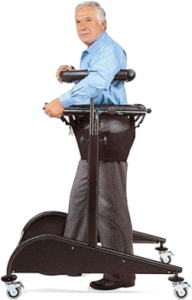
Walking is a complex function, there is a growing consensus that a well-positioned pelvis in combination with dynamic movement is critical to successful gait training.
Often parents of children with disabilities or adults who have incurred serious injuries – seek out walkers to enable better mobility and walking practice.
While walkers have their place in rehabilitation, these very basic support devices offer very little when compared to gait trainers. There are various specialised Walkers & Gait Trainers, as well as other equipment that can assist you to achieve this proper positioning and provides the dynamic weight-bearing and weight-shifting needed for a more natural gait pattern and easier stepping.
There are a variety of Walkers and Gait Trainers are available in South Africa including:
The Ormesa Dynamico is a heavy-duty gait trainer / walker for children and adults with special needs.
The Dynamico Gait Trainer is available in 5 Indoor sizes and 4 Outdoor sizes. The Indoor Dynamico Gait Trainer comes with four smaller swivel wheels for easy manoeuvrability in school, home, and therapy clinics.
The Outdoor Dynamico Gait Trainer comes with large, flat-resistant tires and larger swivel front wheels, plus handbrakes for increased control over rougher, outdoor terrain.
The smallest Dynamico Gait Trainer / Walker will accommodate a child with special needs up to 40 kg while the largest size can hold up to 100 kg.
These Walkers/Gait Trainers are available from various companies in South Africa including Mobility Aids, be-Able Solutions and Pro Mobility, please contact them to find out more or to receive a quote.
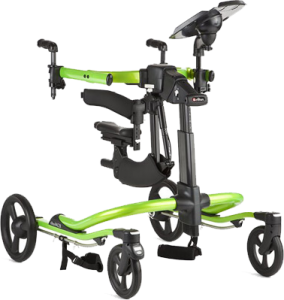
Walking is a complex function, specialised gait trainers, like the Rifton Dynamic Pacer, helps achieve this proper positioning and provides the dynamic weight bearing and weight shifting needed for a more natural gait pattern and easier stepping.
The Dynamic Pacer is a system comprising of an upper frame with a choice of bases, to accommodate users with a broad range of abilities, in a variety of settings.
Rifton Pacers encourages progress, so nothing stands between the user and the places they want to go.
These Gait Trainers are available from various companies in South Africa including Sitwell, be-Able Solutions and Pro Mobility, please contact them to find out more or to receive a quote.
.
To view more Gait Trainers and Walking Aids visit our Sports, Exercise & Rehabilitation Equipment – Standing & Walking Equipment” Page
For Walkers and Gait Trainers specifically designed for children, visit our Pediatric Equipment.
B. Prosthesis or Prosthetic
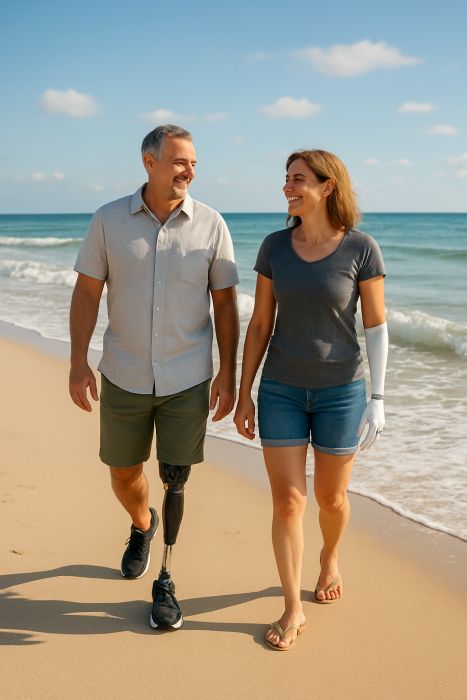
A Prosthesis or a Prosthetic Limb is an artificial device that replaces a missing body part that may have been lost through trauma, disease, or congenital conditions.
A Prosthesis can include Upper or Lower Limbs as well as Breast Prosthesis. Prosthetic amputee rehabilitation is primarily coordinated by a prosthetist and an inter-disciplinary team of Health Care professionals including psychiatrists, surgeons, physical therapists, and occupational therapists.
A person’s prosthesis should be designed and assembled according to the patient’s appearance and functional needs. For instance, a patient may need a transradial prosthesis, but need to choose between a myoelectric device, a body-powered device, or specific device.
The patient’s future goals and economical capabilities may help them choose between one or more devices.
In most cases, the prosthetist begins by taking a plaster cast of the patient’s affected limb. Lightweight, high-strength thermoplastics are custom-formed to this model of the patient.
Cutting-edge materials such as carbon fibre, titanium and Kevlar provide strength and durability while making the new prosthesis lighter. More sophisticated prostheses are equipped with advanced electronics, providing additional stability and control.
i. Upper Limb Prosthesis
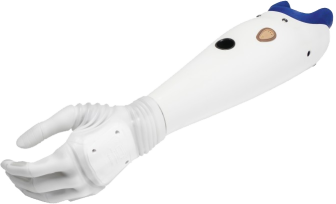
There are three main types of upper limb prosthetic fittings: body-powered, myoelectric and hybrid, which is a combination of the other two. Body-powered systems use a harness with cables to move the prosthesis. By engaging larger muscles, the cables can open and close a hook or hand, as well as an elbow or shoulder joint.
With myoelectric systems, the prosthesis actually takes advantage of the natural signals that your muscles generate when they are used. Small sensors, known as electrodes, measure and amplify these muscle (or ‘myoelectric’) signals and are used to activate various functions of the prosthesis, such as opening or closing the hand. Batteries are used to power the motors that make these movements.
Hybrid systems take advantage of both systems. A hybrid system may have a myoelectrically controlled hand and wrist, with a body-powered elbow joint.
ii. Lower Limb Prosthesis
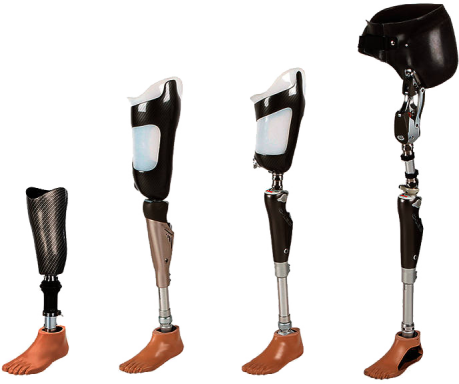
Lower-extremity prostheses provide replacements at varying levels of amputation, these include hip disarticulation, transfemoral prosthesis, knee disarticulation, transtibial prosthesis, Syme’s amputation, foot, partial foot, and toe. The two main subcategories of lower extremity prosthetic devices are trans-tibial (any amputation transecting the tibia bone or a congenital anomaly resulting in a tibial deficiency) and trans-femoral (any amputation transecting the femur bone or a congenital anomaly resulting in a femoral deficiency).
A Transtibial Prosthesis is an artificial limb that replaces a leg missing below the knee. A transtibial amputee is usually able to regain normal movement more readily than someone with a transfemoral amputation, due in large part to retaining the knee, which allows for easier movement.
C. Orthotics

Orthotics is a medical specialty that focuses on the design and application of orthoses.
An orthosis is an externally applied device used to modify the structural and functional characteristics of the neuromuscular and skeletal system. An orthosis may be used to:
Orthotics includes Braces, Splints and other artificial external devices that provide support to the limbs or spine to prevent or assist relative movement. There are a wide variety of different types and styles of Orthotics designed to assist persons with various injuries, including:
i. Spine & Neck Braces
Neck and back braces are used to support, stabilise, or limit movement in the spine during recovery from injury, surgery, or to manage chronic conditions. They help reduce strain, relieve pain, and promote proper alignment while healing — whether for short-term recovery or longer-term support. There are various types of Neck and Back Braces including:
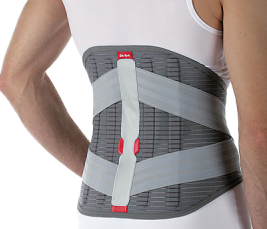
Lumbo Direxa High Spine Braces (pictured right) are used by persons with moderate back pain to the lumbar and lower thoracic spine due to muscular imbalance in the area of the lumbar and thoracic spine or moderate degeneration of the lumbar and lower thoracic spine; Intervertebral disc protrusion (L1-S1); Stabilisation after discectomy (L1-S1) or Moderate irritation of the sacroiliac joint.
The Lumbo Direxa High Spine Brace provides pain relief, has breathable, skin-friendly material and has individual compression adjustment thanks to adjustable, elastic straps.
The Lumbo Direxa High has a slim design; are easy to put on thanks to closures with ergonomic pocket grips and are machine washable.
These Braces are available to purchase in South Africa from companies, please contact DiSA to find out more.
The Smartspine Tlso are used by persons with: Mechanical thoracic spine pain; Mechanical thoracic kyphosis (hunchback) (without fused vertebrae); Scheuermann’s disease; Compression fractures of the thoracic spine (with no neurological deficits); Severe degeneration of the thoracic and/or lumbar spine; Stable traumatic fractures of the thoracic and/or lumbar vertebral bodies; Severe disc degeneration of the thoracic and/or lumbar spine; Facet joint syndrome of the thoracic spine.
The Features of The Smartspine Tlso are Easy and quick application and adaption; Relief and immobilization of the spine and Individual adjustment with pulley system that maximizes abdominal compression and support.
These Braces are available to purchase in South Africa, please contact DiSA to find out more.
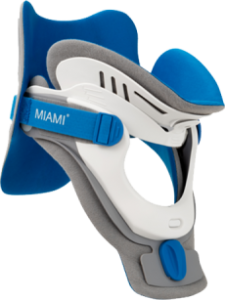
The Miami J Select Cervical Collar is used by persons with: Acute pain syndromes of the cervical spine; Stenosis of the cervical spine; Whiplash trauma of the cervical spine; Fractures in the cervical spine (simple and stable); Dislocation & dislocation fractures of the cervical spine (postoperative).
The Miami J Select Cervical Collar has a Tamper resistant height-adjustment mechanism; New Anti-microbial Sorbatex™ padding and Sternal-thoracic extension with micro-adjustment to enhance coverage and compliance while maintaining immobilisation.
The large tracheal opening offers improved function for ICU patients, while the one-piece collar back provides comfort, ease of fitting and improved immobilisation.
These Collars are available to purchase in South Africa, please contact DiSA to find out more.
ii. Ankle, Knee and Foot Braces

Braces for the ankle, knee, and foot are designed to provide stability, reduce pain, and support recovery from injuries or surgery. They can also help manage chronic conditions like arthritis or joint instability. From light compression sleeves to rigid support braces, each type serves a specific purpose.
The iKAN Brace is a rehabilitation/therapy device and can be used to learn standing, walking and various physiotherapy exercises, it is available in 2 sizes and for children of average height and weight from 4 years and above. It is multi adjustable in height, width and feet and has removable handles for when sitting or using walkers and hoists.
Every iKAN Brace comes with a 2 year warranty, are only available in black and have detachable top brace, and knee and lower pelvis pads. They have degree dials on the hips, knees and ankles which can be set at flexion and extension angles and settings are available for standing, walking or sitting. Forward and backward facing handles and tamper proof degree dials are also included.
Available from: Sitwell
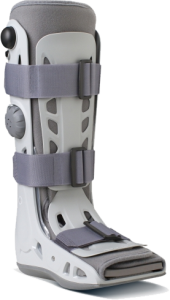
The Airselect Moonboot is used by persons with a stable fracture of foot/ankle/lower leg Severe ankle sprain or for Post-operative immobilization.
The Airselect standard has a durable, semi-rigid shell that supports the limb while providing protection. Housed within the shell are two adjustable distal aircells that provide compression and support the malleoli. SoftStrike technology absorbs and dissipates shock, while the light weight and lab-tested rocker sole combine to encourage a natural gait and a continuation of everyday activities.
These Airselect Moonboots are available to purchase in South Africa, please contact DiSA to find out more.
The Silistab Achillo is available for persons with Achilles Tendon injuries, conditions and problems with Achilles Tendonitis. It has a simple system of two heel pieces that can be fitted together to offload the Achilles tendon – two heights possible (13mm or 8mm). A second pair of heel pieces are included to balance out both sides.
It reduces vibrations by using a protective tendon guide silicone insert with dimling that is positioned over the tendon. The brace is made from a compressive knit that provides a proprioceptive and analgesic effect. It has a practical, slim design that slips on like a sock, and has pull tabs to make it easy to put on and to wear inside a shoe.
The Silistab Achillo is available to purchase in South Africa, please contact DiSA to find out more.
The Genu Arexa (pictured above) is available for use following injury or repair of the ACL, PCL, MCL, and/or LCL; for conservative pre-operative and post-operative joint stabilization, and for conservative therapy of chronic knee ligament instabilities.
The low-profile poly-centric hinges adjust for limited range of motion control without tools (stops included) 15” length for superior control Thermoformed flexible proximal and distal shells contour to the leg for a customized fit and improved patient comfort.
The low-profile quick-release mechanisms and simplified strap numbering eases patient application Ultra-plush padding for superior patient comfort Anterior Tibial Migration Pad maximizes contact with the tibia to limit rotation and migration. Pivoting internally mounted calf straps hug the leg above the calf muscle and help prevent migration (SPECIAL ORDER TO SIZE)
The Silistab Achillo is available to purchase in South Africa, please contact DiSA to find out more.
iii. Shoulder, Elbow and Hand Braces
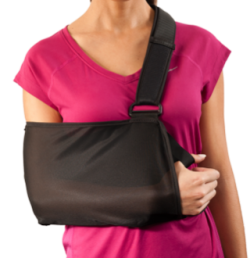
Braces and supports for the shoulder, elbow, and hand are commonly used to manage injuries, reduce pain, or aid recovery following surgery. They help stabilise joints, limit movement when needed, and relieve pressure on affected areas. In the examples below, we’ll cover a range of options suited for both short-term use and ongoing support, depending on your condition and level of activity.
Below are a few examples of Shoulder, Elbow and Hand braces:
To see more Back Braces, as well as various Neck Collars visit our Abdominal Binders and Trusses page
For more about Shoulder, Elbow and Hand Braces visit our Stroke and Rehabilitation page
4. Positioning, Fitment & Set-Up
Correct positioning, fitment, and setup are essential when using walking aids such as canes, crutches, walkers, rollators, gait trainers, or even a prosthesis. Because every individual’s body and mobility needs are different — and because these aids vary in design and function — it’s important to choose equipment with professional guidance.
A specialist can not only help you select the most suitable device but also ensure it’s adjusted correctly for your height and posture. This helps avoid discomfort, poor alignment, or secondary issues like back pain. Just as importantly, buying from a provider who offers reliable after-sales support, servicing, and spare parts ensures long-term comfort and safety.
Companies such as Sitwell, Mobility Aids, Solutions Medical, Pro Mobility, WINFAR and be-Able Solutions can not only advise you on what Walking Aids would suit your particular needs, but can also set them up and adjust them, so that they offer the best possible benefits. To find out more about these Products and Services please visit our: “Seating & Positioning” Page
5. Spares & Accessories
Some of the Walking Aids mentioned on this page, are imported from countries overseas, while some of this equipment is manufactured in South Africa.
Some of these Walking Aids may require servicing and maintenance which should be done by a specialist. From time to time, parts for this equipment may need replacing, it is therefor very important to purchase your Mobility Aids and equipment from reputable dealers, such as those companies listed on this website, which not only sell good reliable products, but also supply a good after sales service, which also includes supplying and stocking the spare parts such as Tires, Tubes, Ferrules, etc.
Many of the companies listed on this web site, not only supply the equipment listed but also specialize in repairing, setting up and fitting the products they supply, so that the Walking Aid is custom fitted to suite your needs.
Before purchasing a product, please check that the company you purchase it from, offers a good after sales service, contact any of the following companies on these links below to see what products they can supply, service and repair: Sheer Mobility, Pro Mobility, Ability Assist, CE Mobility, Mobility Aids, Sitwell and WINFAR.
Should you be interested in finding Accessories for your the Walking Aid please visit our Accessories Page to learn more.
