Deaf | Hearing Impairments

The term Hearing Impairments refers to a broad range of conditions that affect a person’s ability to hear — from mild hearing loss to profound deafness.

These may occur in one or both ears and can develop gradually or suddenly.
Symptoms often include difficulty understanding speech, or sensations such as ringing or buzzing (tinnitus).

Within the broader spectrum, people may identify as Deaf (with a capital “D”), deaf, hard of hearing and Hearing impaired.

By understanding these distinctions, we can better appreciate the diversity of experiences among people with hearing differences — and promote more inclusive communication and support.

Please use the Quick Reference Menu to the Right to find out more.

1. Types of Hearing Impairments

Hearing Impairments describe a wide range of conditions that reduce a person’s ability to hear, from mild to profound loss. Hearing changes can affect one or both ears and may develop gradually or suddenly. Symptoms can include difficulty understanding speech, or sensations such as ringing or buzzing (tinnitus). The term hearing impairment is sometimes seen more as a medical descriptor rather than a cultural one, as it focuses on the physical condition rather than identity.
Within this spectrum, people may identify in different ways

2.1 Hearing Loss

Hearing loss exists when there is diminished sensitivity to the sounds normally heard. The terms hearing impaired or hard of hearing are usually reserved for people who have relative insensitivity to sound in the speech frequencies.

The severity of a hearing loss is categorized according to the increase in volume above the usual level necessary before the listener can detect it. Hearing loss can be temporary or permanent, sudden or progressive. If both ears are affected, then one ear may be more affected than the other. Thus it is possible, for example, to have normal hearing in one ear and none at all in the other, or to have mild hearing loss in one ear and moderate hearing loss in the other. Hearing loss is categorized by type, severity, and configuration.

Hearing loss may exist in either:
– one ear (unilateral)
– in both ears (bilateral).

Blind person walking with the aid of a walking cane

People with unilateral hearing loss or single-sided deafness (SSD) have difficulty in:
– hearing conversation on their impaired side
– localizing sound
– understanding speech in the presence of background noise.
– In quiet conditions, speech discrimination is approximately the same for normal hearing and those with unilateral deafness; however, in noisy environments speech discrimination varies individually and ranges from mild to severe.

One reason for the hearing problems these patients often experience is due to the head shadow effect. Newborn children with no hearing on one side but one normal ear could still have problems. Speech development could be delayed and difficulties to concentrate in school are common. More children with unilateral hearing loss have to repeat classes than their peers. Taking part in social activities could be a problem. Early aiding is therefore of utmost importance.

2.2 Types of Hearing Loss

There are four main types of hearing loss:
– Conductive hearing loss,
– Sensorineural hearing loss, central deafness and combinations of conductive and sensorienural hearing losses which is called mixed hearing loss.
– An additional problem which is increasingly recognised is auditory processing disorder which is not a hearing loss as such but a difficulty perceiving sound.

Conductive hearing loss is present when the sound is not reaching the inner ear, the cochlea. This can be due to external ear canal malformation, dysfunction of the eardrum or malfunction of the bones of the middle ear. The ear drum may show defects from small to total resulting in hearing loss of different degree. Scar tissue after ear infections may also make the ear drum dysfunction as well as when it is retracted and adherent to the medial part of the middle ear.

Dysfunction of the three small bones of the middle ear – malleus, incus, and stapes – may cause conductive hearing loss. The mobility of the ossicles may be impaired for different reasons and disruption of the ossicular chain due to trauma, infection or ankylosis may also cause hearing loss.

Sensorineural hearing loss is one caused by dysfunction of the inner ear, the cochlea or the nerve that transmits the impulses from the cochlea to the hearing centre in the brain. The most common reason for sensorineural hearing loss is damage to the hair cells in the cochlea. Depending on the definition it could be estimated that more than 50% of the population over the age of 70 has impaired hearing.

Damage to the brain can lead to a central deafness. The peripheral ear and the auditory nerve may function well but the central connections are damaged by tumour, trauma or other disease and the patient is unable to hear.

Mixed hearing loss is a combination of conductive and sensorineural hearing loss. Chronic ear infection (a fairly common diagnosis) can cause a defective ear drum or middle-ear ossicle damages, or both. In addition to the conductive loss, a sensory component may be present.

This is not an actual hearing loss but gives rise to significant difficulties in hearing. One kind of auditory processing disorder is King-Kopetzky syndrome, which is characterized by an inability to process out background noise in noisy environments despite normal performance on traditional hearing tests.

2.3 Tinnitus

Tinnitus is the hearing of sound when no external sound is present. It often described as a ringing, but may also sound like a clicking, hiss or roaring. Rarely, unclear voices or music are heard. The sound may be soft or loud, low pitched or high pitched and appear to be coming from one ear or both. Most of the time, it comes on gradually. In some people, the sound causes depression, anxiety or interferes with concentration.

Tinnitus is not a disease but a symptom that can result from a number of underlying causes. It is more common in those with depression and one of the most common causes is noise-induced hearing loss. Other causes include:

– ear infections
– disease of the heart or blood vessels
– Ménière’s disease

– brain tumors
– emotional stress
– exposure to certain medications

– a previous head injury
– earwax

2.4 Meniere’s Disease

Meniere’s disease is a condition that afflicts the ear & often results in loss of hearing, although, it usually affects only one ear and is also known as idiopathic endolymphatic hydrops, Meniere’s disease is a disorder of the ear and  is a problem that is associated with the fluid balancing system in the inner ear.

The exact cause of this condition is not known, but it occurs when the amount of fluid in the inner ear rises up. However, what exactly causes this fluid level to rise is not known. The condition manifests as an abnormality of the inner ear indicating its existence through:
– vertigo
– severe dizziness
– tinnitus (a roaring sound in the ears)
– fluctuating hearing loss, & the sensation of pressure or pain in the affected ear known as aural fullness.

3. Deafness

Deafness is defined as a degree of loss such that a person is unable to understand speech even in the presence of amplification. In profound deafness, even the loudest sounds produced by an audiometer (an instrument used to measure hearing by producing pure tone sounds through a range of frequencies) may not be detected. In total deafness, no sounds at all, regardless of amplification or method of production, are heard.

A person can either be born Deaf or Hard of Hearing or Develop it overtime. Hearing loss can be temporary or permanent. In children hearing problems can affect the ability to learn and in adults it can cause work related difficulties. In some people, particularly older people, hearing loss can result in loneliness.

i. Born Deaf or Hard of Hearing

Early identification and support are particularly important especially in children. Hearing loss is diagnosed when hearing testing finds that a person is unable to hear 25 decibels in at least one ear. Hearing loss can be categorized as mild, moderate, severe, or profound.
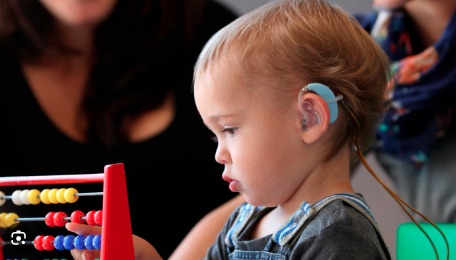
Child with hearing impediment learning to play

Testing for poor hearing is recommended for all newborns.
Half of hearing loss is preventable.
Born Deaf or Hard of Hearing, can be caused by a number of factors, including:
– genetics
– birth complications
– infections during pregnancy.

Deafness or Hearing Loss at Birth can be prevented by:
– immunization
– proper care around pregnancy

Hearing loss can be inherited, there are 2 different forms:

Syndromic deafness.
Occurs when there are other medical problems aside from deafness in an individual. Syndromic cases occur with diseases such as Usher syndrome, Stickler syndrome, Waardenburg syndrome, Alport’s syndrome, and neurofibromatosis type 2.
These are diseases that have deafness as one of the symptoms or as a common feature associated with it

Nonsyndromic
Nonsyndromic deafness occurs when there are no other signs or medical problems associated with an individual other than deafness. represents the majority of hereditary hearing loss. Many of the genetic mutations giving rise to syndromic deafness have been identified. In nonsyndromic cases, where deafness is the only finding, it is more difficult to identify the genetic mutation although some have been discovered.

Fetal alcohol spectrum
Fetal alcohol spectrum disorders are reported to cause hearing loss in up to 64% of infants born to alcoholic mothers, from the ototoxic effect on the developing fetus plus malnutrition during pregnancy from the excess alcohol intake.

Premature birth
Premature birth can be associated with sensorineural hearing loss because of an increased risk of hypoxia, hyperbilirubinaemia, ototoxic medication and infection as well as noise exposure in the neonatal units. The risk of hearing loss is greatest for those weighing less than 1500gms at birth.

4. Development of Deafness or Hearing Impairment Over Time

A person can develop a Hearing Impairment over time due to a number of factors, these include:

Signs and Symptoms
– difficulty using the telephone
– loss of directionality of sound
– difficulty understanding speech, especially women and children
– difficulty in speech discrimination against background noise (cocktail party effect)
– sounds or speech becoming dull, muffled or attenuated
– need for increased volume on television, radio, music and other audio sources

Hearing loss is sensory, but may have accompanying symptoms:
– pain or pressure in the ears
– a blocked feeling

There may also be accompanying secondary symptoms:
– hyperacusis, heightened sensitivity to certain volumes and frequencies of sound, sometimes resulting from “recruitment”
– tinnitus, ringing, buzzing, hissing or other sounds in the ear when no external sound is present
– vertigo and disequilibrium
– tympanophonia, abnormal hearing of one’s own voice and respiratory sounds, usually as a result of a patulous Eustachian tube or dehiscent superior semicircular canals
– disturbances of facial movement(indicating possible tumor or stroke)

i. Causes

Hearing loss has multiple causes, including ageing, genetics, perinatal problems and acquired causes like noise and disease. For some kinds of hearing loss the cause may be classified as an unknown cause. There is a progressive loss of ability to hear high frequencies with ageing known as presbycusis. For men, this can start as early as 25 and women at 30. Although genetically variable it is a normal concomitant of ageing and is distinct from hearing losses caused by noise exposure, toxins or disease agents. While everyone loses hearing with age, the amount and type of hearing lost is variable.

Hearing loss may be caused by a number of factors, including: chronic ear infections; ageing, infections and:-

Half of hearing loss is preventable.

It can be prevented by:
– immunization,
– proper care around pregnancy
– avoiding loud noise
– avoiding certain medications.
– Full volume music – limit earphone useage to an hour a dayf

Trauma to the ear:
There can be damage either to the ear itself or to the brain centers that process the aural information conveyed by the ears
People who sustain head injury are especially vulnerable to hearing loss or tinnitus, either temporary or permanent.
Identification of a hearing loss is usually conducted by a general practitioner medical doctor, otolaryngologist, certified and licensed audiologist, school or industrial audiometrist, or other audiology technician. Diagnosis of the cause of a hearing loss is carried out by a specialist physician (audiovestibular physician) or otorhinolaryngologist.

Solvents:
toluene, styrene, xylene, n-hexane, ethyl benzene, white spirits/Stoddard, carbon disulfide, jet fuel, perchloroethylene, trichloroethylene, p-xylene Asphyxiants, carbon monoxide, and hydrogen cyanide

Heavy Metals:
lead, mercury, cadmium, arsenic, tin-hydrocarbon compounds (trimethyltin), paraquat, organophosphates
The evidence is weak regarding association between herbicides and hearing loss; hearing loss in such circumstances may be due to concommitant exposure to insecticides.

Hearing loss can also result from specific chemicals: metals, such as lead; solvents, such as toluene (found in crude oil, gasoline and automobile exhaust, for example); and asphyxiants. Combined with noise, these ototoxic chemicals have an additive effect on a person’s hearing loss.

Hearing loss due to chemicals starts in the high frequency range and is irreversible. It damages the cochlea with lesions and degrades central portions of the auditory system. For some ototoxic chemical exposures, particularly styrene, the risk of hearing loss can be higher than being exposed to noise alone.

Noise is the cause of approximately half of all cases of hearing loss, causing some degree of problems in 5% of the population globally.

Hearing loss due to noise may be temporary, called a ‘temporary threshold shift’, a reduced sensitivity to sound over a wide frequency range resulting from exposure to a brief but very loud noise like a gunshot, firecracker, jet engine, jackhammer, etc. or to exposure to loud sound over a few hours such as during a pop concert or nightclub session. Recovery of hearing is usually within 24 hours, but may take up to a week. Serial exposure to very loud sounds may eventually result in a permanent loss of hearing. Extremely loud sounds may cause instant and permanent hearing loss.

Various governmental, industry and standards organizations set noise standardations living near airports or freeways are exposed to levels of noise typically in the 65 to 75 dB(A) range. If lifestyles include significant outdoor or open window conditions, these exposures over time can degrade hearing.

Louder sounds cause damage in a shorter period of time. Note that for some people, sound may be damaging at even lower levels than 85 dB A. Exposures to other ototoxins (such as pesticides, some medications including chemotherapy agents, solvents, etc.) can lead to greater susceptibility to noise damage, as well as causing their own damage. This is called a synergistic interaction. Since noise damage is cumulative over long periods of time, persons who are exposed to non-workplace noise, like recreational activities or environmental noise, may have compounding damage from all sources.

The damage caused by loud, though proving hearing loss was a direct result of military service is problematic without entry and exit audiograms.

Strokes:
Depending on what blood vessels are affected by the stroke, one of the symptoms can be deafness.
multiple sclerosis can have an effect on hearing as well. If the auditory nerve becomes damaged, the affected person will become completely deaf in one or both ears.

Perilymph fistula:
A microtear in either the round or oval window (membranes separating the middle and inner ear) of the cochlea causing perilymph to leak into the middle ear. This usually occurs as a consequence of trauma, including barotrauma, and can give rise to vertigo as well as hearing loss.

Viral Infections of the ear can cause sensorineural hearing loss usually as the consequence of a labyrinthitis. The patient may be generally unwell at the time.
Measles may cause auditory nerve damage but usually gives rise to a chronic middle ear problem giving rise to a mixed hearing loss.
Mumps (Epidemic parotitis) may result in profound sensorineural hearing loss (90 dB or more), unilateral (one ear) or bilateral (both ears).
Congenital rubella (also called German measles) syndrome, can cause deafness in newborns.

Herpes virus
Several varieties of herpes viruses that cause other diseases can also infect the ear, and can result in hearing loss: congenital infection with cytomegalovirus is responsible for deafness in newborn children and also progressive sensorineural hearing loss in childhood; herpes simplex type 1, oral herpes associated with cold sores; Epstein Barr virus that causes mononucleosis; varicella zoster oticus that causes facial paralysis (Ramsay Hunt syndrome)

HIV/AIDS. 
People with HIV/AIDS may develop hearing problems due to medications they take for the disease, the HIV virus, or due to an increased rate of other infections.

West Nile Virus, which can cause a variety of neurological disorders, can also cause hearing loss by attacking the auditory nerve
Meningitis may damage the auditory nerve or the cochlea.

Syphilis is commonly transmitted from pregnant women to their fetuses, and about a third of infected children will eventually become deaf.
– People with Down syndrome are more likely to have hearing loss.
– Charcot–Marie–Tooth disease variant 1E (CMT1E) can cause deafness
– Autoimmune disease can cause cochlear damage. Cogan’s syndrome commonly presents with hearing loss
– Otosclerosis is a condition that can cause conductive hearing loss
– Congenital problems
– Superior semicircular canal dehiscence, a gap in the bone cover above the inner ear, can lead to low-frequency conductive hearing loss, autophony and vertigo.
– Recurring ear infections or concommitant secondary infections (such as bacterial infection subsequent to viral infection) can result in hearing loss.
– Vestibular schwannoma, erroneously known as Acoustic neuromas, and other types of brain tumors can cause hearing loss by infringement of the tumor on the vestibulocochlear nerve.

ii. Prevention

It is estimated that half of cases of hearing loss are preventable.
Preventative strategies include:
– immunisation against rubella to prevent congenital rubella syndrome,
– immunization against influenza and pneumoniae to reduce cases of meningitis.
– avoiding or protecting against excessive noise exposure
– immunization against measles, mumps, and meningitis
– efforts to prevent premature birth
– avoidance of certain medication as prevention.
– Education regarding noise exposure increases the use of hearing protectors.
– Use less noisy power tools
– Limiting exposure to ototoxic chemicals
– Companies can also provide personal hearing protector
– Better enforcement of laws can decrease levels of noise at work.

Young male handyman with safety earphones
iii. Diagnosis and Treatment

A case history (usually a written form, with questionnaire) can provide valuable information about the context of the hearing loss, and indicate what kind of diagnostic procedures to employ. Case history will include such items as: major concern: birth and pregnancy information; medical history; development history; family history; workplace and home environment.

The examination process includes:
Laboratory testing: In case of infection or inflammation, blood or other body fluids may be submitted for laboratory analysis.
Hearing tests: Hearing loss is generally measured by playing generated or recorded sounds, and determining whether the person can hear them.
Otoacoustic emissions test is an objective hearing test that may be administered to toddlers and children too young to cooperate and older children and adults.
Scans: MRI and CT scans can be useful to identify the pathology of many causes of hearing loss. They are only needed in selected cases.

Treatment depends on the specific cause (if known), as well as the extent, type and configuration of the hearing loss.
Most hearing loss, that resulting from age and noise, is progressive and irreversible, and there are currently no approved or recommended treatments.
Management is by hearing aid. In most cases, ‘treatment’ simply involves addressing underlying pathologies, but any hearing loss incurred may be permanent.
There are a number of devices that can improve hearing in those who are deaf or hard of hearing – or allow people with these conditions to manage better in their lives. For a few specific conditions, surgical intervention can provide a remedy:

There is no treatment, surgical or otherwise, for hearing lost due to the most common causes (age, noise and genetic defects).

For a few specific conditions, surgical intervention can provide a remedy:
– surgical correction of superior canal dehiscence
– myringotomy, surgical insertion of drainage ventilation tubes in the tympanic membrane.
Such placement is usually temporary until the underlying pathology (infection or other inflammation) can be resolved.
– radiotherapy or surgical excision of vestibular schwannoma or acoustic neuroma, though, in most cases, it is unlikely that hearing will be preserved.
– Stapedectomy and stapedotomy for otosclerosis –
replacement or reshaping of the stapes bone of the middle ear can restore hearing in cases of conductive hearing loss.
– Surgical and implantable hearing aids are an alternative to conventional external hearing aids.
This implant is invisible under the intact skin and therefore minimises the risk of skin irritations.

Cochlear implants improve outcomes in people with hearing loss in either one or both ears. They work by artificial stimulation of the cochlear nerve by providing an electric impulse substitution for the firing of hair cells. They are expensive, and require programming along with extensive training for effectiveness.

Cochlear implants as well as bone conduction implants can help with single sided deafness. Middle ear implants or bone conduction implants can help with conductive hearing loss.

People with cochlear implants are at a higher risk for bacterial meningitis. Thus, meningitis vaccination is recommended. People who have hearing loss, especially those who develop a hearing problem in childhood or old age, may need support and technical adaptations as part of the rehabilitation process. Recent research shows variations in efficacy but some studies show that if implanted at a very young age, some profoundly impaired children can acquire effective hearing and speech, particularly if supported by appropriate rehabilitation.

5. Hearing Impairment and Learning

i. Prelingual deafness

Typically, hearing loss is gradual and often detected by family and friends of affected individuals long before the patients themselves will acknowledge the disability.
Post-lingual deafness is far more common than pre-lingual deafness. Those who lose their hearing later in life, such as in late adolescence or adulthood, face their own challenges, living with the adaptations that allow them to live independently.

Prelingual deafness is hearing loss that is sustained before the acquisition of language, which can occur due to a congenital condition or through hearing loss in early infancy. Prelingual deafness impairs an individual’s ability to acquire a spoken language. Children born into signing families rarely have delays in language development, but most prelingual hearing loss is acquired via either disease or trauma rather than genetically inherited, so families with deaf children nearly always lack previous experience with sign language. Cochlear implants allow prelingually deaf children to acquire an oral language with remarkable success if implantation is performed within the first 2–4 years

Mother cuddling her. toddler
ii. Learning in a Classroom Environment

For a classroom setting, children with hearing loss often benefit from direct instruction and communication.

One option for students is to attend a school for the Deaf, where they will have access to the language, communication, and education. Another option is to have the child attend a mainstream program, with special accommodation such as providing favorable seating for the child. Having the student sit as close to the teacher as possible improves the student’s ability to hear the teacher’s voice and to more easily read the teacher’s lips.
When lecturing, teachers can help the student by facing them and by limiting unnecessary noise in the classroom.
In particular, the teacher can avoid talking when their back is turned to the classroom, such as while writing on a whiteboard.

For those students who are completely deaf, one of the most common interventions is having the child communicate with others through an interpreter using sign language. Hearing loss increases with age.

The use of CART (Communication Access Real Time) systems, where an individual types a captioning of what the teacher is saying, is also beneficial. The student views this captioning on their computer.

Automated captioning systems are also becoming a popular option. In an automated system, software, instead of a person, is used to generate the captioning.

Unlike CART systems, automated systems generally do not require an Internet connection and thus they can be used anywhere and anytime. Another advantage of automated systems over CART is that they are much lower in cost. However, automated systems are generally designed to only transcribe what the teacher is saying and to not transcribe what other students say.

An automated system works best for situations where just the teacher is speaking, whereas a CART system will be preferred for situations where there is a lot of classroom discussion.

6. Deaf culture

Deaf culture is not about contemplating what deaf people cannot do and how to fix their problems, an approach known as the “pathological view of the deaf.” Instead deaf people celebrate what they can do. There is a strong sense of unity between deaf people as they share their experiences of suffering through a similar struggle. This celebration creates a unity between even deaf strangers

Many in the deaf community strongly object to a deaf child being fitted with a cochlear implant (often on the advice of an audiologist); new parents may not have sufficient information on raising deaf children and placed in an oral-only program that emphasizes the ability to speak and listen over other forms of communication such as sign language or total communication. Many Deaf people view cochlear implants and other hearing devices as confusing to one’s identity. A Deaf person will never be a hearing person and therefore would be trying to fit into a way of living that is not their own. Other concerns include loss of Deaf culture and identity and limitations on hearing restoration.

Those who use sign language and are members of Deaf culture see themselves as having a difference rather than an illness. Most members of Deaf culture oppose attempts to cure deafness & some within this community view cochlear implants with concern as they have the potential to eliminate their culture.

Disclaimers and References

DiSA is committed to promoting the rights, dignity, and inclusion of persons with disabilities as outlined in the White Paper on the Rights of Persons with Disabilities. We strive to ensure that all content on our website reflects appropriate, respectful, and inclusive language in alignment with these principles.

However, we also provide a platform for companies and organisations to advertise their services and products. While we encourage advertisers to adhere to correct terminology and inclusive practices, DiSA cannot guarantee the accuracy or appropriateness of the language used by external parties in their content.

Please note: Any views, language, or terminology used in advertisements, promotional material, or external links do not necessarily represent the views of DiSA.

DiSA disclaims any responsibility for inaccuracies or language that may not align with the White Paper or best practices for disability terminology.

Should you however encounter language or content that you believe is inappropriate or offensive, we encourage you to contact us at info@disa.org.za, so that we can address the issue.

DiSA remains dedicated to fostering a respectful and inclusive environment for all individuals. We appreciate your understanding and collaboration in supporting our mission.


While we strive for accuracy and clarity, AI-generated visuals may not always reflect real-life conditions or representations.
In addition, we feature authentic images and videos of actual instances, events, circumstances that have occurred, as well as products and services supplied by companies who advertise with us.

These authentic visuals are intended to accurately depict our content or the offerings of our advertising partners.
If you have any questions or concerns about the content displayed on this site, please feel free to contact us.

DiSA provides a platform for companies and organisations to advertise their products and services to assist persons with disabilities and their families. While we make every effort to list reputable and credible service providers, the inclusion of any company, organisation, product, or service on our website does not constitute an endorsement or guarantee by DiSA.

Please note the following: DiSA is not involved in the delivery, quality control, or customer service of any product or service offered by advertisers listed on our platform.

Any agreements, purchases, or arrangements made between users of this website and advertisers are solely between those parties. DiSA is not responsible for the outcome of such interactions.

DiSA disclaims any liability for dissatisfaction, damages, or disputes arising from products or services supplied by companies or organisations listed on our website.

We encourage users to thoroughly research and verify any service provider or product before engaging with them. If you have concerns or encounter issues with an advertiser listed on our platform, please let us know at: info@disa.org.za. We value your feedback to help maintain the integrity of our platform.


While we strive for accuracy and clarity, AI-generated visuals may not always reflect real-life conditions or representations.
In addition, we feature authentic images and videos of actual instances, events, circumstances that have occurred, as well as products and services supplied by companies who advertise with us.

These authentic visuals are intended to accurately depict our content or the offerings of our advertising partners.
If you have any questions or concerns about the content displayed on this site, please feel free to contact us.

DiSA is committed to providing accurate and up-to-date information to assist persons with disabilities and their families. However, the nature of online content and external resources means that information can change frequently.

Please note the following: DiSA cannot guarantee the accuracy, completeness, or reliability of all information on our website, particularly information obtained from external sources or links to third-party websites.
External websites may update or remove content without notice, which can result in broken links or outdated information. DiSA is not responsible for the content, accessibility, or functionality of external websites.

While we make every effort to keep our information current, some content may become outdated over time.
We encourage users to verify information directly with the relevant third parties or organisations before making any decisions based on the information found on our platform.

If you encounter a broken link or outdated content, please notify us at: info@disa.org.za and we will address it as soon as possible.
Thank you for understanding and helping us maintain a reliable and accessible platform.


While we strive for accuracy and clarity, AI-generated visuals may not always reflect real-life conditions or representations.
In addition, we feature authentic images and videos of actual instances, events, circumstances that have occurred, as well as products and services supplied by companies who advertise with us.

These authentic visuals are intended to accurately depict our content or the offerings of our advertising partners.
If you have any questions or concerns about the content displayed on this site, please feel free to contact us.

The Information services and website that we offer free of charge, is privately run and funded and is not run or funded by the government. We rely on advertising, paid services and donations to supply and improve this Free information service that we do provide.

The Companies, Clubs, Schools and Organisations that are listed on this site, have advertised or made donations to the Website and have therefore assisted us be able to provide this free Service.
Please support them as they have supported Us and please contact us via info@disa.org.za, if you can advertise with us or would like to make a donation. Alternatively, visit our “Support Us” page to find out how you can support us or acquire our services. – Thank You.

If you encounter a broken link or outdated content, please notify us at: info@disa.org.za and we will address it as soon as possible.
Thank you for understanding and helping us maintain a reliable and accessible platform.

Please Note: We do assist with inquiries via email but may need to send or copy your details and inquiry to various other organisations, companies or government departments, that we sometimes consult, so that we can help you in the best way possible.
If you have any objection to us sharing your query or contact details, please notify us in your email. We will only share your information to assist you and will never sell or use your personal information for any other purposes.

DiSA waivers any liability for what happens if information is shared or used for marketing or other purposes by other organisations who do have consent to view such information.


While we strive for accuracy and clarity, AI-generated visuals may not always reflect real-life conditions or representations.
In addition, we feature authentic images and videos of actual instances, events, circumstances that have occurred, as well as products and services supplied by companies who advertise with us.

These authentic visuals are intended to accurately depict our content or the offerings of our advertising partners.
If you have any questions or concerns about the content displayed on this site, please feel free to contact us.

Please note that this website uses images and videos that are AI-generated and created to visually represent certain information, concepts or scenarios for illustrative purposes.


While we strive for accuracy and clarity, AI-generated visuals may not always reflect real-life conditions or representations.
In addition, we feature authentic images and videos of actual instances, events, circumstances that have occurred, as well as products and services supplied by companies who advertise with us.

These authentic visuals are intended to accurately depict our content or the offerings of our advertising partners.
If you have any questions or concerns about the content displayed on this site, please feel free to contact us.

Disability Info South Africa (DiSA) is committed to protecting your personal information in compliance with the Protection of Personal Information Act (POPIA), Act No. 4 of 2013. By using our free information service, you acknowledge and agree to the following:

Collection of Personal Information:
DiSA may collect and process your personal information (such as name, contact details, and inquiries) solely for the purpose of assisting you with your requests and providing relevant information or support.

Use and Storage:
Your personal information will only be used for the purpose it was collected for, we may need to send or copy your details and inquiry to various organisations, companies or government departments, that we sometimes consult, so that we can assist you in the best way possible.
If you have any objection to us sharing your query or contact details, please notify us in your email. We will only share your information to assist you and will never sell or use your personal information for any other purposes.
DiSA implements appropriate measures to secure your personal information against unauthorized access or loss.

Consent:
By submitting your details through our Contact Form, or contacting us via our email address, you consent to allow DiSA to process your information as outlined in this disclaimer. If you are not comfortable with DiSA sharing your information for the above purposes, please contact us directly at info@disa.org.za.

Access and Updates:
You have the right to request the deletion of your personal information at any time.
To do so, please contact us at: info@disa.org.za.

Third-Party Websites:
DiSA is not responsible for the privacy practices of external websites linked on our platform. Users are encouraged to review the privacy policies of third-party sites before sharing personal information.
For any queries or concerns regarding the handling of your personal information, please contact us at: info@disa.org.za.
Thank you for trusting DiSA to support you with accessible, inclusive, and reliable information.