


Healthcare and Rehabilitation




Below is information about some of the complications and issues that can effect persons with Mobility Impairments, as well as the Health Care Professionals, Companies, Organizations, Hospitals, Adaptive Fitness Experts and Rehab Units such as Plumrus Community Service Centre (CSC), NCPD, Rolling Rehab, LIDIA PRETORIUS: Disability Empowerment Consultant and Life Coach, WHASCP Fitness, QuadPara Association of South Africa (QASA) and Courage Beyond Bounds, who have all supported us in the development of this page and can assist persons with Mobility Impairments.
NCPD is an NGO with a footprint throughout South Africa that plays a lobbying & advocacy role when it comes to the rights of persons with disabilities. “We’re an umbrella body coordinating the advancement of the rights of persons with physical disabilities in accordance with the White Paper on the Rights of Persons with Disabilities, the UN Convention on the Rights of Persons with Disabilities and more. We have nine provincial Associations for Persons with Disabilities with numerous projects and branches that focus on rural development as well as social.”NCPD
The National Council of and for Persons with Disabilities does advocacy work and services leading to an equitable and inclusive society. “We are affiliated to the South African Disability Alliance, as well as Rehabilitation International. Our programmes cover the whole of South Africa.”
The National Council of and for Persons with Disabilities offer a wide variety of different types of Services, including short training of Professionals in the Services and Health profession, for which these professionals get CPD points. This training includes Transport and driving training. The majority of training sessions can be tailor-made to suit your needs.
QASA – Bags of Hope
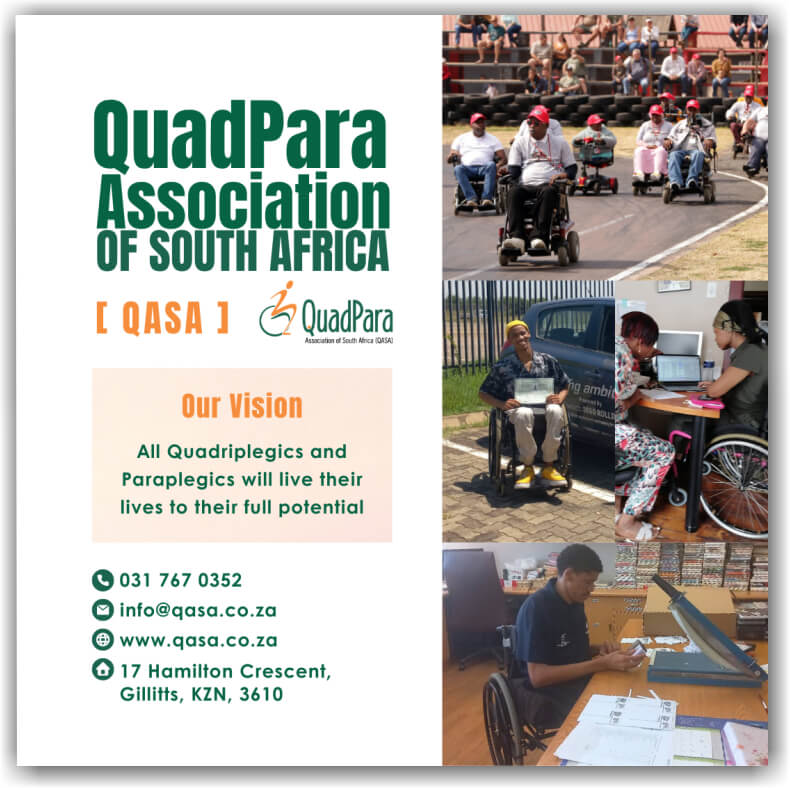
The QuadPara Association of South Africa (QASA) is a non-profit organisation (NPO 000-881) of Quadriplegics and Paraplegics in South Africa. QASA’s mission is “to improve lives by securing resources to advocate, educate, capacitate, support and mobilize”. QASA’s vision is that “all quadriplegics and paraplegics will live their lives to their full potential”. QASA develops products, programmes and services for quadriplegic and paraplegic members to build their capacity and ensure opportunities for societal integration and empowerment.
These projects and services include but are not limited to the Bags of Hope:
When somebody sustains a spinal cord injury (SCI), they will need anything from three months to a couple of years of rehabilitation in a hospital before they are ready to go back into normal life. This rehabilitation will teach the person how to manage the physical aspects of their disability, such as bladder and bowel function, use of a wheelchair and other assistive devices, and pressure care, as well as giving them resources to address issues such as independent living, employment and sexual options. Once people leave a rehabilitation centre, they often have no further resources to assist them to cope with the changes in their lives. QASA and Coloplast have launched a project called Bags of Hope, which provides a bag full of information to each person being discharged from a rehabilitation unit. The bag contains samples of the healthcare products needed to manage quadriplegia or paraplegia, such as catheters. It also contains information on spinal cord injury and its consequences, coping with mobility impairment, sexuality and sexual options after SCI, and the rights of persons with disabilities. The publications are also available in isiZulu format and in a pictorial format for people who cannot read. These bags are distributed by Coloplast representatives all over the country.
Read More
My consulting services focus on mentoring, capacity-building and disability inclusive project design and implementation. Projects are conceptualised and implemented in partnership with enterprises and organisations owned by persons with disabilities and/or parents of children with disabilities as primary contractors, wherever possible. I integrate coaching principles and tools in all technical support, training, and facilitation to maximise impact, sustainability and empowerment.
I bring to our partnership 30 years’ experience in disability rights advocacy, disability inclusion public policy development, and disability inclusive community development in the public, non-governmental, as well as international development cooperation sectors.
Service packages are customised according to client needs. All services are offered on a contact-online hybrid basis.
HOW CAN WE WORK TOGETHER TO BRING ABOUT THE CHANGE WE WANT TO?
Follow this link if you are ready to invest in your happiness and would like to sign up for the free, no-obligation #DisabilityMojo Discovery Call to explore individual or group coaching.
Follow this link if you want to explore how I can support you with building disability inclusion confidence and competence in the services and opportunities you offer.
Visit my website and sign up for my weekly email newsletter with valuable advice and tips on disability policy, opportunities, and discovering and strengthening your #DisabilityMojo by downloading the free Gratitude template.
Our approach is person-centred, compassionate, and empowering. We understand that every journey is unique, which is why we meet you where you are—whether that’s celebrating daily victories or navigating complex life transitions. We work with you to design a support plan that builds confidence, promotes autonomy, and enhances emotional wellbeing.
We also collaborate closely with families, caregivers, and educators to ensure a strong, consistent network of support. Our sibling programs are especially designed to offer safe spaces for siblings to be seen, heard, and understood—because they’re part of the journey, too.
All sessions are available both in person and online, giving you the flexibility to access services that work around your schedule and needs. Our lead practitioner is a COMENSA-accredited life coach and experienced Montessori educator, who also brings invaluable personal insight into living with a disability. This lived experience adds a layer of understanding that is both heartfelt and practical.
If you’re looking for guidance, structure, and community in a safe, inclusive environment, we are here to support you every step of the way. Take advantage of our limited-time promotional offer to receive a discounted rate! Let’s start this journey together toward greater confidence and well-being.
Don’t be afraid to take the next step, contact Ayesha Ahmed on 072 466 6633 or via email at: ayeshbw1@gmail.com
Hospitalisation and Rehabilitation after injury
Persons who sustain Spinal Cord Injuries (SCI) for example, may need anything from three months to a couple of years of rehabilitation in a Rehab Centre before they are ready to get back into normal life.
In many cases, the patient will not recover fully from the Mobility Impairment, as there is currently no cure for a SCI, so this rehabilitation will also teach the patient how to manage the physical aspects of their disability, such as bladder and bowel function, pressure care, use of a Wheelchair and other Assistive Devices, as well as giving them resources to address issues such as independent living, employment and sexual options.
Once the patient has completed their stay in the Hospital or Rehabilitation Centre, and it is time for them to return home or to a Self Help Centre, they should have a better idea about what they are up against, the severity of their Mobility Impairment and whether they are likely to recover some movement in the future. This however can still be quite daunting, as there is still a lot to learn and get accustomed to, but there are some companies and organizations that are available that can assist them including those listed on this page below.
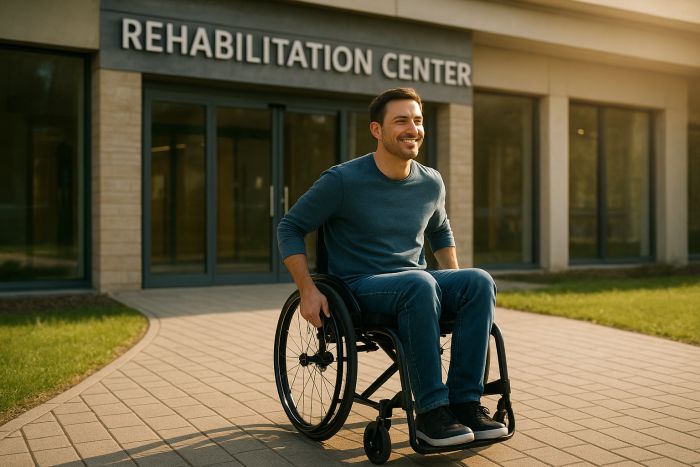
When leaving hospital, you will need to find a General practitioner to assume responsibility for your continuing medical care, should any complications arise. When choosing a General practitioner, it is beneficial to choose one that is a specialist in your type of Mobility Impairment, and to try to keep to the same General practitioner over a lengthy period of time, so that you build up a relationship with them and and they become familiar with your condition. A good place to start is www.sadoctors.co.za to find a Doctor in your area.
1. General Support Services
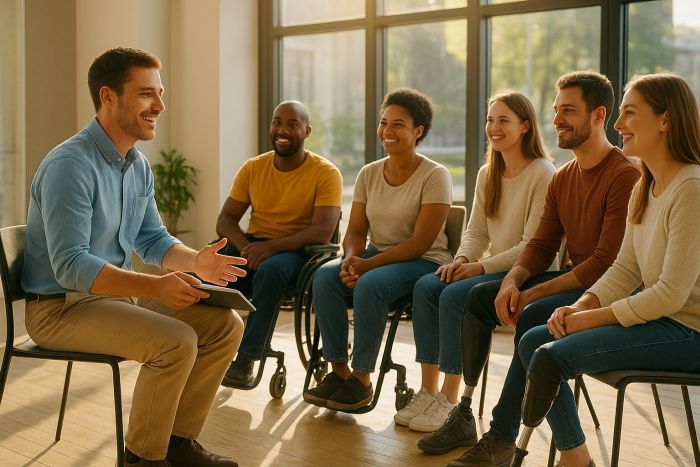
For many people with physical impairments, full recovery is not always possible, so social services, community-based support organisations, and access to assistive devices and rehabilitation services are essential to promote independence, inclusion, and dignity while helping individuals navigate healthcare, education, employment, and daily living challenges. Various support services and organisations are available to assist.
2. Mental Health Support
In South Africa, mental health support services for people with physical impairments include life coaching, counselling, psychosocial support, peer groups, and access to psychologists and social workers through public, private, and NGO sectors.
These services help address trauma, adjustment, depression, and anxiety, promoting emotional wellbeing, resilience, and holistic rehabilitation.
3. Physical Health Support
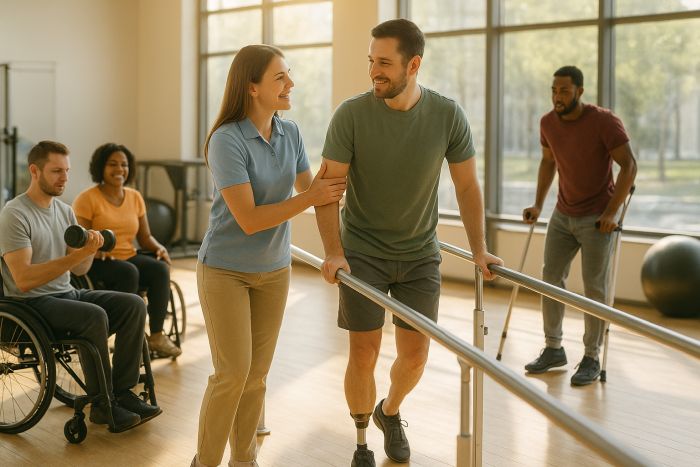
In South Africa, physical health support services for people with physical impairments include primary healthcare, specialist medical care, rehabilitation therapy, and access to assistive devices through public, private, and NGO providers.
These services focus on maintaining health, preventing secondary conditions, managing pain, and supporting long-term independence and quality of life.
1. General Support Services
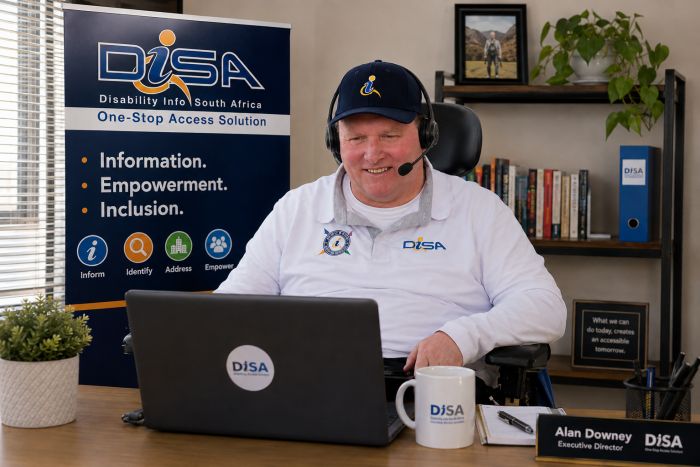
i. DiSA | Disability Info South Africa
‘Disability info South Africa” (DiSA) is a “One Stop Free Information Service” which was developed for Persons with Disabilities and their families in South Africa, who are looking for information that can help them to be better equipped to face the challenges of their circumstances and any related barriers presented by society.
This includes information about: Assistive Devices and the Suppliers; Suppliers of Services; Organizations; Sports Clubs; Health Care Facilities and Educational Facilities, which are available from various companies, organizations and clubs throughout South Africa.
DiSA provides the services listed below, to Inform people with disabilities on who or what is available to assist them, Identify and address barriers to access and Empower and Inspire persons with disabilities to be the best that they can be.
DiSA services include but not limited to:
Contact Us to find out more: Please feel free to contact Alan Downey on:
Email info@DiSA.org.za or info@disabilityinfosa.co.za, or
Contact: Mobile/WhatsApp: 084 504 9176, to find out more about the services that DiSA provide, or to receive a quote.
The QuadPara Association of South Africa (QASA) is a non-profit organisation (NPO 000-881) of Quadriplegics and Paraplegics in South Africa. QASA’s mission is “to improve lives by securing resources to advocate, educate, capacitate, support and mobilize”.
QASA’s vision is that “all quadriplegics and paraplegics will live their lives to their full potential”. QASA develops products, programmes and services for quadriplegic and paraplegic members to build their capacity and ensure opportunities for societal integration and empowerment.
These projects and services include but are not limited to the Bags of Hope:
To learn more about QASA and the other Projects and Services that they provide, visit our Organizations – QASA Page. Or visit their website at: www.qasa.co.za.
Or click here for more information about Care Attendant Training Courses xx and other Health Care Services xxx available in South Africa.
ii. Self Help Centres
After sustaining injuries such as SCI’s, some persons with Mobility Impairments are not able to return home for a number of reasons, there are however various Self Help Centers, Homes or Group Homes such as the Ann Harding Cheshire Home in Northwold, Johannesburg which provide accommodation for persons with chronic disabilities, who cannot live with their families due to their disability and the specialised assistance they require.
These homes cater for young adults, adults and seniors. They have trained caregivers available for 24 hours a day, depending on the amount of residence and the care that they need. There are a variety of other types of these centers available throughout South Africa, visit our Assisted Living & Self Help Centers Page to learn more, or Contact Us for any other assistance.
2. Mental Health Support
i. Empowerment Consultants, Life Coaches and Peer Support Groups
Both persons who are born with impairments as well as those who develop them later life, have to deal with various issues due to obstacles created by society or drastic changes in their situation, due to their disability. These changes may include a loss or change of career; relationship and financial difficulties; isolation; a change in living environments, as well as stereotypical social and personal attitudes; abuse; loss of roles within the family; stressors related to poverty and environmental barriers.
These changes can affect persons with disabilities in different ways, those who are positively affected by these changes, often first accept their disability and limitations, before they move on with their life and adapt to a “New Normal”. Once you have acknowledged to yourself that your life will not be exactly the same as before your injury, will you be able to focus on what they are able to do, rather than what they cannot do due to your disability.
When you are ready to focus on your future, it is worth investing in life coaching to help you discover and use your #DisabilityMojo to live a purposeful and joyful life. Life Coaches such as Lidia Pretorius and Courage Beyond Bounds are available to assist persons with disabilities in South Africa and around the world by improving their relationships, careers, and day-to-day lives.
Lidia Pretorius: Disability Empowerment Consultant and Life Coach
I champion action that changes the narrative for persons with disabilities and their families by impacting on their ecosystems. I am passionate about changing the disability narrative, by enabling persons with disabilities, their families and the people in their eco-system to unlock the potential of persons with disabilities by removing attitudinal barriers that detract from them aspiring to champion their own destinies.
Disability empowerment coaching is a short-term process to empower you to start your journey of embracing disability, of living a purposeful, joyful life towards self-actualisation. Be the change you want to see!
I support persons with disabilities to re-discover their #DisabilityMojo, using their disability gifts to remove roadblocks and free them to live a purposeful and joyful life.
– Embracing their strengths to expand possibilities
– Redefining their life purpose to live life beyond the impossible
– Creating a roadmap and new habits to live the life they really want
Courage Beyond Bounds
We provide a variety of services tailored for families and individuals with disabilities or special needs, including:
– Individual and group coaching through our dedicated multidisciplinary team
– Support for independent living
– Assistance in setting small, achievable goals
– Sibling support programs
– Guidance on school placements
– Tools to help you reach your full potential
– Strategies for establishing healthy boundaries
– Effective goal setting
Our approach is person-centred, compassionate, and empowering. We understand that every journey is unique, which is why we meet you where you are—whether that’s celebrating daily victories or navigating complex life transitions. We work with you to design a support plan that builds confidence, promotes autonomy, and enhances emotional wellbeing. ayeshbw1@gmail.com
Don’t be afraid to take the next step, contact Ayesha Ahmed on: 072 466 6633 or via email at: ayeshbw1@gmail.com
3. Physical Health Services
Complications Related to Mobility Impairments
There are wide variety of complications and conditions which can effect persons with Mobility Impairments, especially those who are unable to walk. The inability to walk is just the tip of the iceberg for many persons with Spinal Cord Injuries and other similar conditions or injuries. These “complications and conditions” listed below, may require specialist treatment from professionals that are qualified and trained in dealing with these complications and conditions below:

Please read the article below to find out more information about these “complications and conditions” and the Health Care Professionals, Companies, Organizations, Hospitals and Rehab Units that can assist you in South Africa.
1. Loss of Independence
Many persons with severe Mobility Impairments find that their “Loss of Independence” resulting from their disability is one of the most difficult things to come to terms with. Some persons with Mobility Impairments may need assistance with activities such as Dressing, Transferring, Washing and Toiletries,
Driving or being Transported, Eating and Drinking, but there are a wide variety of Assistive Devices and techniques that can be learned which can assist you with this, as well as Occupational Therapist which can create these Assistive Devices or advise you on what Assistive Devices are available and which ones would best suite your needs to assist you to become more independent.
Visit our Assistive Devices and Equipment page to view various products that can assist you to break free of your disabilities, as well as the various companies or organisations that supply these products, Accessories, Health Care Accessories and Assistive Devices.
1. Occupational Therapy
Occupational Therapy (OT) is the assessment and treatment to develop, recover, or maintain the daily living and work skills of persons with a physical, mental, or cognitive disorder.
Occupational Therapists also focus much of their work on identifying and eliminating environmental barriers to improve the independence of persons with disabilities. They place emphasis on the progress towards the client’s goals and focus on adapting the environment, modifying the tasks, teaching the skills, and educating the client or their family in order to increase participation in and performance of all daily activities including: Self-care, Sports, Hobbies, Home-Making, Leisure, Work and Driving.
Rehabilitation centres such as the Walking With Brandon Foundation in Cape Town, have Occupational Therapists which work with their patients, while Caroline Rule from Rolling Rehab is an Occupational Therapist who deals with Driver Training. Various other Occupational Therapists also specialise in Seating and Positioning, visit our Seating and Positioning page to find out more about this, or visit the Walking With Brandon Foundation, for more information about how their Occupational Therapists can assist you.
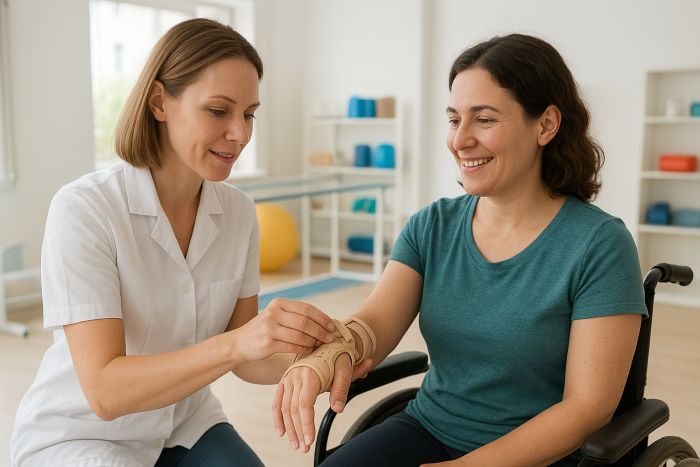
Driver Training and Assessments
One of the biggest obstacles that many Persons with Mobility Impairments often encounter, is getting their independence back and being able to drive a vehicle or be transported in a vehicle. There are a variety of different types of Vehicle Aids and Adapted Vehicles, which are available in South Africa to assist you to be able to drive, as well as some Occupational Therapists and Organizations such as The National Council of and for Persons with Disabilities, Rolling Rehab and QASA, which offer services such as Driver Training and Set-Up, which can help you get back on the road safely, thus giving the independence back to many Persons With Disabilities.
The NCPD is an NGO with a footprint throughout South Africa that plays a lobbying & advocacy role when it comes to the rights of persons with disabilities. “We’re an umbrella body coordinating the advancement of the rights of persons with physical disabilities in accordance with the White Paper on the Rights of Persons with Disabilities, the UN Convention on the Rights of Persons with Disabilities and more. We have nine provincial Associations for Persons with Disabilities with numerous projects and branches that focus on rural development as well as social.”
The National Council of and for Persons with Disabilities does advocacy work and services leading to an equitable and inclusive society. “We are affiliated to the South African Disability Alliance, as well as Rehabilitation International. Our programmes cover the whole of South Africa.”
The National Council of and for Persons with Disabilities offer a wide variety of different types of Services, including short training of Professionals in the Services and Health profession, for which these professionals get CPD points. This training includes Transport and driving training. The majority of training sessions can be tailor-made to suit your needs.
Rolling Rehab is run by Occupational Therapist Caroline Rule and offers an independent consultancy service where they do a holistic assessment of the individual’s needs and abilities, and advise whether they are safe to start driving or to continue driving after an accident or illness which may have affected their ability to adequately control a vehicle. Each assessment is customized according to the client’s needs and include:
– Driver Ability Assessment
– Passenger Needs Assessment
– Vehicle Adaptations Assessment
Click here to learn more about Vehicle Adaptations and Driver Aids XXX
3. Assistive Devices, Tools and Braces
Occupational Therapy also includes the development of tools or braces and the education of the patient on how to use these Tools and other Assistive Devices, to make daily activities possible or easier to accomplish. These tools include:
– Eating Braces & Adaptive cutlery and utensils – for use at mealtimes – Visit our Accessories – Eating and Drinking Accessories to find more
– Writing & Typing Braces and Computer Aids – for an individual that has limited use of the hands or fingers – Visit our Accessories or Computer Aids Page to find out more
– Braces/Devices for Hobbies, Sport and Exercise – This enables persons that have limited use of their hands or fingers, to still take part in these activities. – Visit our Sports, Exercise and Rehabilitation Page to find out more
– Leg, Arm, Hand and Back Braces that assists you to Stand or to improve posture and prevent injuries. Visit our Seating and Positioning page to find out more about this, as well as the Occupational Therapists and Companies that can help you.

Occupational Therapists often work closely with other Health Care professionals that specialize in Physical Therapy, Speech Therapy, Nursing, Social Workers, and the community.
There are various Occupational Therapists throughout South Africa, visit our Health Care – Search Facility and search for an “Occupational Therapist” or visit www.sadoctors.co.za – occupational therapists to find an Occupational Therapist in your area, or visit the Walking With Brandon Foundation information below to find out how their Physical Therapist, Speech Therapists or Occupational Therapists that can assist you if you are in Cape Town.
4. Nursing & Private Home Nursing
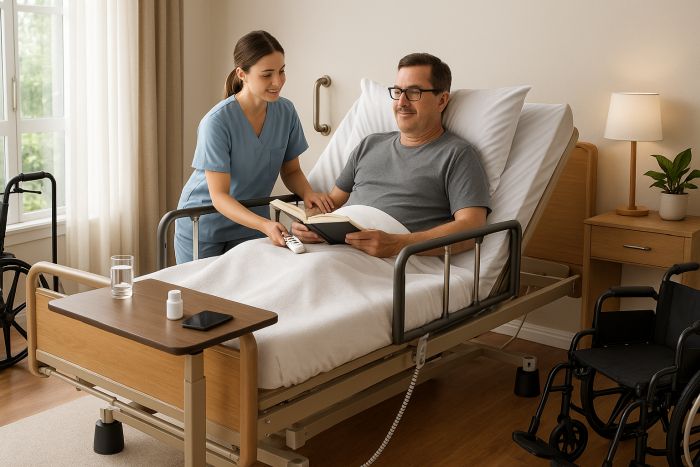
Depending on the degree of your Mobility Impairment, the Assistive Devices mentioned above may not offer enough assistance to give you back your complete independence, in which case, you may need the assistance of a Sister, Nurse or Home Base Caregiver to assist you with your day to day activities.
Private Home Nursing or Home Care is supportive care provided in your home by a Qualified Sister, Nurse or Care Giver, this care may be provided on a temporary or permanent basis to ensure that your daily needs are met and includes assistance with Wound Dressing, Catheter Care, bathing or showering, eating, dressing, etc. These services help the patient to stay at home versus living in a facility and are normally paid for by the patient or their family.
.
Home Base Caregivers
Home Base Caregivers are often preferred, as they are a cheaper option than a qualified Sister or Nurse. Home Base Caregivers are generally not as qualified as Sisters or Nurses, but have completed various home base courses and work for Organizations, Agencies or Companies, who hire them out as the client requires them.
One Organization that offers this Service is the PlumRus Community Service Centre:
The Plumrus Community Service Centre (CSC) are also available to assist you if you are traveling to Cape Town and need Home Base Caregivers to assist you. Contact Plumrus Community Service Centre (CSC) on Tel: 021 761 2323 or via email: rhodene@plumrus.co.za to find out more,
or visit their website at: www.plumrus.co.za.
If you do not live in Cape Town, there are also various Home Base Carers working throughout South Africa, visit our Health Care – Search Facility and search for “Home Base Carers” to find one near you, or Contact Us and we will recommend some in your area.
Care Attendant Training Courses (CAT)
Due to the high prevalence of pressure sores amongst some persons with Mobility Impairments, some organizations such as The National Council of and for Persons with Disabilities and QuadPara Association of South Africa offers Care Attendant Training Courses:
The QuadPara Association of South Africa (QASA) is a non-profit organisation (NPO 000-881) of Quadriplegics and Paraplegics in South Africa. QASA’s mission is “to improve lives by securing resources to advocate, educate, capacitate, support and mobilize”. QASA’s vision is that “all quadriplegics and paraplegics will live their lives to their full potential”. QASA develops products, programmes and services for quadriplegic and paraplegic members to build their capacity and ensure opportunities for societal integration and empowerment.
These projects and services include but are not limited to the Care Attendant Training Courses (CAT):
Quadriplegics have an impairment which limits the use of their hands, arms and legs and Paraplegics, limitations of their legs. This results in the need for 24-hour care by care attendants (either by family members or paid carers). Initially, most care attendants have very little knowledge of the care and the good management of Quadriplegics and Paraplegics.
QASA’s Care Attendant Training was initiated in response to the critical need for a comprehensive and holistic training programme for care attendants of Paraplegics and Quadriplegics.
To find out more about Care Attendant Training Courses (CAT), visit our Organizations – QASA XXX Page to find out more about the Projects and Services that they provide, or their website at: www.qasa.co.za.
The NCPD is a NGO with a footprint throughout South Africa that plays a lobbying & advocacy role when it comes to the rights of persons with disabilities. “We’re an umbrella body coordinating the advancement of the rights of persons with physical disabilities in accordance with the White Paper on the Rights of Persons with Disabilities, the UN Convention on the Rights of Persons with Disabilities and more. We have nine provincial Associations for Persons with Disabilities with numerous projects and branches that focus on rural development as well as social.”
The National Council of and for Persons with Disabilities does advocacy work and services leading to an equitable and inclusive society. “We are affiliated to the South African Disability Alliance, as well as Rehabilitation International. Our programmes cover the whole of South Africa.”
The National Council of and for Persons with Disabilities offer a wide variety of different types of Services, including short training of Professionals in the Services and Health profession, for which these professionals get CPD points. This training includes Caregiver training for carers of children or adults. The majority of training sessions can be tailor-made to suit your needs. To Find out more
To find out more visit our Organizations – NCPD XXX Page to find out more about the Projects and Services that they provide, or their website at: www.ncpd.co.za.
Thusanang – Enabling Support Services: provides services and a hand to assist disabled persons by seamlessly offering special medical consumables, caregiver training, RAF benefits and motivational talks. Our organisation also offers specialised caregiver training aimed at equipping the caregivers with adequate hands-on knowledge on how to assist disabled individuals their day-to-day lives including healthy living, hygiene, simple exercise, diet, etc.
Thusanang also provide primary medical health care for the treatment of wounds in the comfort of patient home i.e Non-healing wounds, pressure ulcer, Diabetic foot wounds, burn wounds, post operative wounds and last but not least cancer wounds. A wound neglected is a wound infected, hence at Thusanag we endeavor to bring healthcare services to the people.Thusanang have offices in both Boksburg and Limpopo, you can contact them at
Boksburg: You can contact Ms Edwina Makgamatha on Tel: +27 (0) 11 453 0480 or Email: edwina@te-ss.co.za or visit their office at: Boksburg: Unit 19, Jan Smuts Park, 62 Jones Road, Jet Park, Boksburg 1459.
Limpopo: You can visit the Limpopo Office at: Shop 6B Mokopane Plaza, 101 Nelson Mandela Drive, Mokopane, 0600, or contact them on Tel: +27 (0) 15 491 1099. Alternatively you can view their Catalogue, or visit their website at: www.te-ss.co.za
2. Development of Pressure Sores
Pressure Ulcers, also known as Pressure Sores or Pressure Injuries are localized damage to the skin and/or underlying tissue that usually occur over a bony prominence as a result of pressure or pressure in combination with shear and/or friction. These Pressure sores are normally caused from staying in one position for too long and commonly form where your bones are close to your skin, such as your ankles, back, elbows, heels and hips. The Elderly and some persons with Mobility Impairments are at risk if they are bedridden, use a wheelchair, are unable to change position, or have poor circulation and blood flow to the area.
One of the first signs of Pressure Sores is a reddened, discolored or darkened area on the skin, the skin may look purple on persons with darker complexion and may also feel hard and warm to the touch.
Wound healing is an intricate process where the skin or other body tissue repairs itself after injury. In normal skin, the epidermis (surface layer) and dermis (deeper layer) form a protective barrier against the external environment. If the affected skin is broken, you should clean open sores with saltwater (saline) solution each time the dressing is changed. Pressure sores should be kept moist. Increasing your protein intake, staying off the affected area and putting on a Dressing speeds up healing.
The wound healing process is not only complex but fragile, susceptible to interruption or failure, leading to the formation of non-healing chronic wounds. Factors that contribute to non-healing chronic wounds are diabetes, venous or arterial disease, infection, and metabolic deficiencies of old age. If you are affected by any of these or have a wound that is open, you should contact a Wound Sister.
For additional information:
– Visit our Health Care Accessories – Wound Care Products, to find out more about some of the Health Care Accessories that are available to prevent and treat pressure sores,
– Visit our Seating and Positioning page and Pressure Care Products Page to find out more about the various services that can assist your posture or pressure relief, or products that can supply pressure relief while you sitting in a chair or wheelchair or lying in bed.
– Alternatively you can visit the Walking with Brandon Foundation – Peer Support Programme in Cape Town to find out more about how they assist you and your family to deal with pressure soars.
Wound Nursing
Wound Nursing is provided by Wound Sisters and is the treatment of patients with acute and chronic wounds. These wounds can be caused by medical treatments, diseases, or injuries, these Wound Sisters often work with a healthcare team, assessing patients, managing wounds, and monitoring healing. Wound Sisters provide a modern line of wound care products, for various types of wounds, such as burns, acute and superficial wounds, and diabetic leg syndrome, including surgically complicated wounds.
There are various companies, organisations and Wound Sisters working in South Africa, that can assist you, this includes the “Mobile wound care clinic” provided by Thusanang-Enabling Support Service.
3. Loss of Bladder Function
Many persons with severe Mobility Impairments such as Quadriplegics and Paraplegics have “Loss of Bladder Function”, this could lead to problems emptying their Bladder or loss of bladder control. There are various options for people with a neurogenic bladder and they include:
This equipment is supplied by companies such as Thusanang – Enabling Support Services, who stock various types of Health Care Accessories.
Visit our Health Care Accessories – Urine Health Care & Incontinence Accessories page to find out what products they supply
or Contact DiSA to find out more.
Persons who use CIC or in-dwelling catheters after their injury, can often lead to them experiencing Urinary Tract Infections in hospital or after they return home. UTIs also known Bladder Infections can occur as often as 3 to 4 months apart and occur more frequently for a number of reasons including:
– Open wounds
– The cleanliness regime of the carers or persons looking after the person.
– Not drinking enough water.
There are also various products such as Colloidal Silver which can drastically reduce the risk of persons with spinal cord injuries from getting UTI’s.
i. Colloidal Silver
Colloidal Silver is made through a process of electrolysis which creates a solution with a small percentage of silver. Research has shown that organisims like e-coli can survive for hours on stainless steel, whereas if placed on a silver surface, they are killed in less than half-an-hour. Colloidal Silver is available at many pharmacies in both a liquid and gel and is not very expensive. It is recommended that Colloidal liquid be sprayed around the catheter “wound” two or three times a day.
Using Colloidal Silver Concurrent with a rigorous sterile regime of hand washing and drinking lots of water helps prevent UTI’s from developing. Click on the link below to find out more about how Colloidal Silver can help prevent UTI’
Want to know More About Colloidal Silver? Click Here.
If this or other treatments don’t work, you may want to contact your primary care provider who can often treat simple urological issues, such as urinary tract infections or frequent urges to urinate, but if your problems are more complex, or if your primary care provider’s treatments have failed, you may need to seek specialized help from a Urologist.
ii. Urology and Urologists
Urology is the branch of medicine that focuses on surgical and medical diseases of the male and female urinary-tract system and the male reproductive organs. Urologists specialize in the health of the urinary system, as well as male reproductive health and deal with Organs which include the kidneys, adrenal glands, ureters, urinary bladder, urethra, and the male reproductive organs.
Persons with brain and spinal cord injuries may have urological issues, as in many cases the brain and spinal cord signals don’t properly travel to the urinary system, resulting in incontinence, erectile dysfunction, loss of sensation, or difficulties with sexual arousal. In other cases, spinal cord or brain injuries give rise to disuse that causes the urological system to deteriorate. Urological infections are also prevalent among spinal cord injury survivors, particularly those who are immobilized in hospital or unable to void without assistance. In cases such as these, the Doctor or Urologist would normally recommend that the patient use a catheter to void their Bladder. (See information above.)
For More Information: Looking for a Urologist? Search for a Urologist, visit www.sadoctors.co.za – urologists to find a Urologist in your area.
4. Loss of Bowel Function
A Spinal Cord Injury or a nerve disease may also damage the nerves that help control the lower part of your colon, therefor causing “Loss of Bowel Function.” The muscles and nerves around your rectum and anus need to work together for your bowels to work properly. Nerves control the muscles of the rectum, and they signal when the rectum is full, damage to these nerves can interfere with bowel control. This damage may reduce the peristalsis in the muscles around the colon and may block signals to or from the rectum and anus. This means you may not feel when you need to have a a bowel movement (BM) or you may not be able to have a BM when you want. This often causes constipation and bowel accidents and gets in the way of your normal ability to store and eliminate waste.
There are various Bowel management options for people with a neurogenic bowel, they include:
The equipment and medication is supplied by companies such as Thusanang who stock various types of Health Care Accessories.
Visit our Health Care Accessories – Bowel Incontinence Products page to find suppliers near you.
To find a Colonic Hydrotherapists near you, visit www.sadoctors.co.za – Colonic Hydrotherapists / Hydrotherapy
Stomas and Stomal Sisters
Some persons including some Quadriplegics and Paraplegics choose to have their bowel surgically relocated to open onto the abdomen. This opening that is created is called a ‘stoma’ and it is enclosed in a sealed bag system.
Stomal Therapy is the management of stomas and Stomal Sisters or Stomal Therapists are responsible for helping patients adjust to living with either a permanent or temporary colostomy. This role includes pre-operative counselling, immediate post-operative care and education and follow-up assessment and counselling following patient discharge. Some Stomal Therapists also provide the equipment that the patients need on a monthly basis.
This equipment is available from Thusanang. Please visit our Health Care Accessories – Bowel Incontinence Products page or Contact Us for more information.
5. Loss of Strength and Muscle Tone
Loss of Strength and Muscle Tone is one of the more noticeable complications or side effects of having a serious Mobility Impairment – whether it be through disease or injury. Persons who permanently use a wheelchair, or are bedridden and are unable to move their arms or legs may start to experience Muscle Atrophy where their muscles start to waste away due to lack of physical activity.
This type of atrophy often occurs whilst recovering in hospital, but can be reversed or prevented to some extent, with exercise and improved nutrition.
Regaining muscle mass is beneficial for persons of all ages and not only improves your appearance, but also increases strength; lowers blood pressure and also increases bone density and helps reduce the risk of osteoporosis-related fractures.
You can regain muscle mass quickly by incorporating strength training into your daily routine and making a few minor dietary modifications such as increasing your protein intake. You should eat up to 1 gram of protein per pound of body weight during your rebuilding period and also increase your intake of vegetables, healthy fats, and fruits – and consider supplementing with fish oil. You also need to make sure that you get enough sleep and vitamin D – and don’t cut carbs but limit your alcohol intake.
6. Gaining Weight
Some persons with Mobility Impairments who use wheelchairs or scooters are also at a high risk of gaining weight, after initially losing weight when they are first injured. After returning home from hospital, they often find it difficult to gauge how many calories they need to eat and so eat more than they need to, but use less energy through physical activity, and so begin to put on weight.
Once they have put on this weight, they will find it harder to lose this weight, because they tend to use fewer calories through the fact that they are often less active. “Wheelchair users also tend to lose muscle in their legs over time and less muscle requires fewer calories to maintain your body weight.”
We advise that you consult a qualified Adaptive Trainer such as Victor Buitendag from WHASCP Fitness, to find a diet and exercise routine that would suite you and your condition, you can also contact your Doctor to discuss an exercise plan and a Dietitian to help you to work out your daily calorie needs.
If you are living in the Cape Town area, you can visit the Walking With Brandon Foundation which offers a wide variety of services to help persons with Mobility Impairments to lose weight through their Rehabilitation programme. Click on the links above to find more information about this, or read the information below.
Dietitian
A Dietitian is an expert in human nutrition and the regulation of a diet. A Dietitian alters their patient’s nutrition based upon their medical condition and individual needs. Dietitians are the only healthcare professionals licensed to assess, diagnose, and treat nutritional problems.
Regulating the diet of patients with certain conditions or mobility impairments is out of physician’s scope of expertise, thus a Dietitian must be called to permit any changes based upon their knowledge of nutritional biochemistry. Dietitians work in a variety of settings including hospitals, health-maintenance organizations, private practices, and other health-care facilities.
After learning about a patient’s health history, favorite foods, eating and exercise habits, the dietitian helps the person to set goals and to prioritize. Follow-up visits often focus on maintenance and monitoring progress.
A balanced diet is important to staying healthy, but exercise together with a balanced diet, is even more important to reduce your weight and to stay healthy. You should aim to do regular cardiovascular activity, as well as regular muscle-strengthening exercise. Cardiovascular physical activity is particularly important when it comes to losing weight. This activity raises your heart rate and gets you slightly out of breath and can causes you to break a sweat. We advise that you speak to your Doctor before starting to diet or exercise, or consult a qualified Adaptive Trainer such as Victor Buitendag from WHASCP Fitness, to find a diet and exercise routine that would suite you and your condition.
If you are living in the Cape Town area, you can visit the Walking With Brandon Foundation which offers a wide variety of services to help persons with Mobility Impairments to lose weight through their Rehabilitation programme, or they can put you in contact with a Dietitian near you. Click on the links above to find more information about this, or read the information below.
Exercise and Rehabilitation
Rehabilitation is a step-by-step process that helps persons to recover and to function as effectively as possible after a life-changing event. For persons with Mobility Impairments, this may include getting them moving again, helping them regain their strength through exercise, relearning old skills, or finding new and different ways of doing things.
A team of doctors, nurses, social workers, physiotherapists and occupational therapists will oversee the rehabilitation process. Rehabilitation may be needed for a short period after an operation, or for a longer time, such as after a stroke.
The length of time is decided by the team and can take place:
– in hospital or in an in-patient rehabilitation facility
– on a long-term outpatient or day patient basis at a hospital
– In a community rehabilitation centre or in the person’s own home
There are a variety of different ways that you can exercise, including doing regular:
Physiotherapy
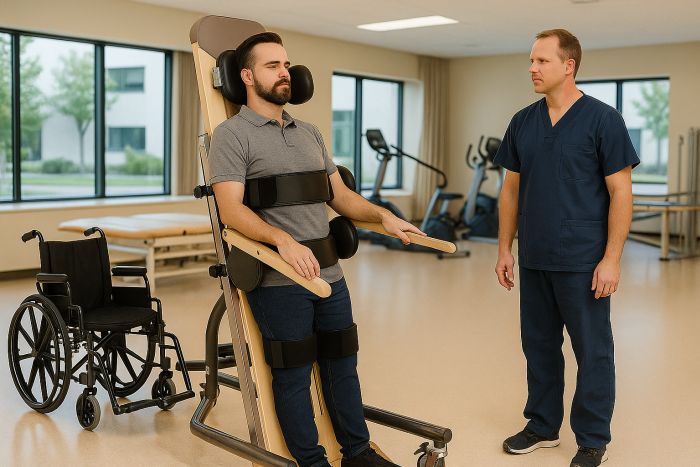
Physiotherapy involves the illnesses or injuries that limit persons abilities to move and perform functional activities in their daily lives. Physical Therapists use a persons history and physical examination to arrive at a diagnosis and establish a management plan which commonly includes assistance with specific exercises, manual therapy and manipulation, mechanical devices such as traction, education, physical agents which includes heat, cold, electricity, sound waves, radiation, prescription of assistive devices, prostheses, orthoses and other interventions.
Physical Therapists also work with individuals to prevent the loss of mobility before it occurs by developing fitness and wellness-oriented programs for healthier and more active lifestyles, providing services to individuals and populations to develop, maintain and restore maximum movement and functional ability throughout their lifespan. This also includes providing therapeutic treatment in circumstances where movement and function are threatened by aging, injury, disease or environmental factors. It is therefore important to continue with physiotherapy throughout your life, even once your rehabilitation period is over.
If you don’t already have a Physio Therapist: Visit our Health Care – Search Facility or visit www.sadoctors.co.za – physio therapists to find a Physio Therapist in your area.
Standing and Walking Rehabilitation
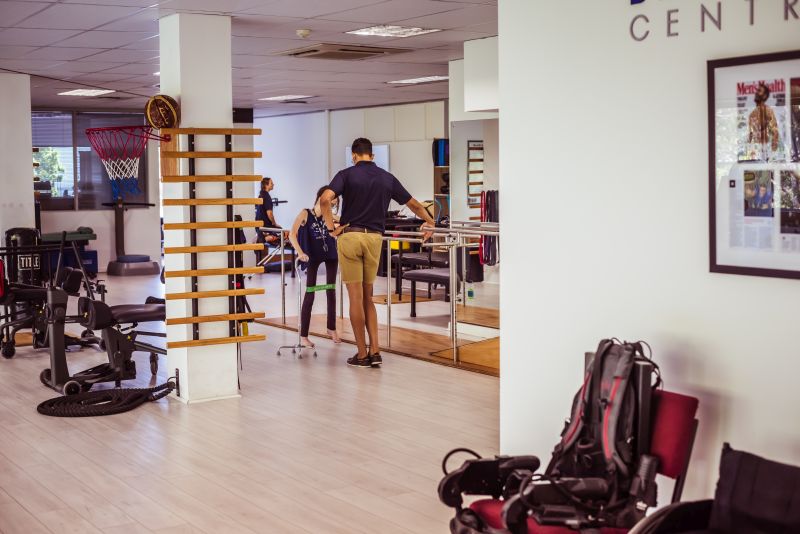
Advances in research also suggest that functional neuro-recovery offers tremendous potential in rehabilitation medicine. The rewiring of neural pathways or the recruitment of new pathways to control movement offer hope for the restoration of function following traumatic injury, as the central nervous system is malleable and can still adjust and relearn post-injury.
Body weight supported gait training is used in various Rehabilitation Units in South Africa such as The Walking With Brandon Foundation, who uses the Ekso Suit. It provides the sensory experience of walking, with the goal of re-training neural pathways, ultimately resulting in ambulation. Trained physical therapists provide the necessary manual assistance, facilitating extension of the hip, knee, and ankle. This training helps to improve your balance, motor control, weight-bearing ability and the re-creation of a natural gait. It also increases endurance and speed.
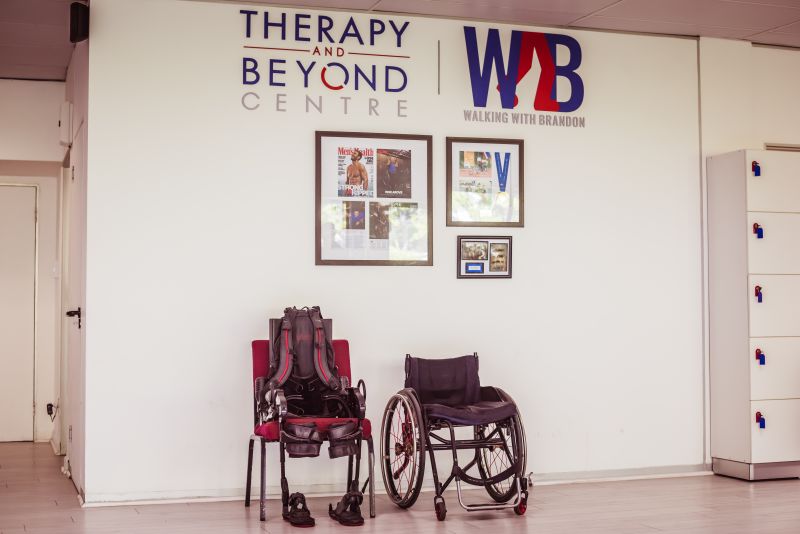
The Walking with Brandon Foundation (Walking with Brandon Foundation), founded in 2015, formulated a comprehensive and considered approach to rehabilitation based on the very latest in research and development in neurology and orthopaedics at its Therapy and Beyond Centre (Therapy & Beyond Centre | Walking with Brandon Foundation).
Its neurological and orthopaedic programme comprises an integrated, holistic treatment package which considers rehabilitation of both the body and the mind. Developed to meet each of its clients’ unique needs, the Therapy and Beyond programme is made up of the following core specialist functions: Biokinetics; Physiotherapy; Speech therapy; Hydrotherapy; Peer support; Family support; Para sport
Fully committed to making its rehabilitative treatment available to all South Africans regardless of their financial status or other limitations, the Walking with Brandon Foundation and its Therapy and Beyond Centre also run a very successful Subsidy Programme which makes it possible for people from poor socio-economic backgrounds to access its world-class rehabilitation at reduced rates.
If you are interested in rehabilitative treatment, or wish to sponsor a subsidised patient, contact:
Mark Beack: mark@walkingwithbrandon.org or 083 456 3006
To join our Peer Support Programme, contact:
Brandon Beack: brandon@walkingwithbrandon.org or 083 259 6411,
or visit our website for more information: www.walkingwithbrandon.org.
(View the video on the right to find out more XXXX)
There is a variety of different types of equipment that can be used to assist persons with Mobility Impairments to stand or walk during Rehabilitation, including Standing Frames, Standing Wheelchairs, Parallel Bars and Tilt Tables.
For more information: Visit our Sports, Exercise & Rehabilitation Aids – Standing & Walking Equipment
Hydrotherapy and Scuba Diving
Walking and Standing Rehabilitation is also possible and made easier in a swimming pool, this form of therapy is known as Hydrotherapy.
Hydrotherapy, is a form of physiotherapy, that involves the use of water for pain relief and treatment, it encompasses therapeutic methods that take advantage of the physical properties of water, such as temperature and pressure to stimulate blood circulation and treat the symptoms of certain diseases. It is also used in the treatment of a variety of different conditions, including paralysis, arthritis and related rheumatic complaints. Scuba Diving also provides various benefits to persons with Mobility Impairments, including pain relief, increased mobility and blood circulation and Mobility of joints in entire body, to name just a few. Scuba Diving sometimes also takes place in a heated swimming pool for training purposes (Discover Scuba), but also in the sea (Open Water).
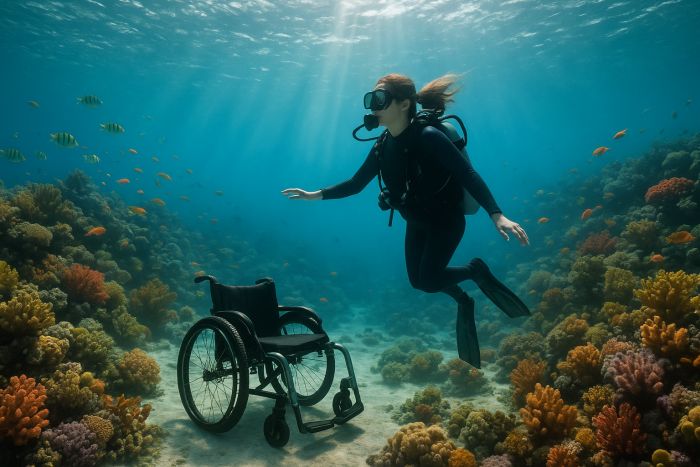
Are you living in Cape Town and looking for a Physio Therapist that does Hydrotherapy? Visit the Walking With Brandon Foundation which offers a wide variety of services including Hydrotherapy to help persons with Mobility Impairments through their Rehabilitation programme.
Electro Therapy
Electrotherapy is the use of electrical energy as a variety of treatments, including the use of electrical devices such as deep brain stimulators for neurological disease. Electrotherapy is primarily used in physical therapy and has been researched and accepted in the field of rehabilitation for the following:
If you live in Cape Town and are looking for a Physio Therapist, that does Electrotherapy: visit the Walking With Brandon Foundation, which offers a wide variety of services to help persons with Mobility Impairments through their Rehabilitation programme. Visit Walking With Brandon Foundation to learn more information or visit www.sadoctors.co.za – physio therapist to find a Physio Therapist in your area.
Hippo and Horse Riding Therapy
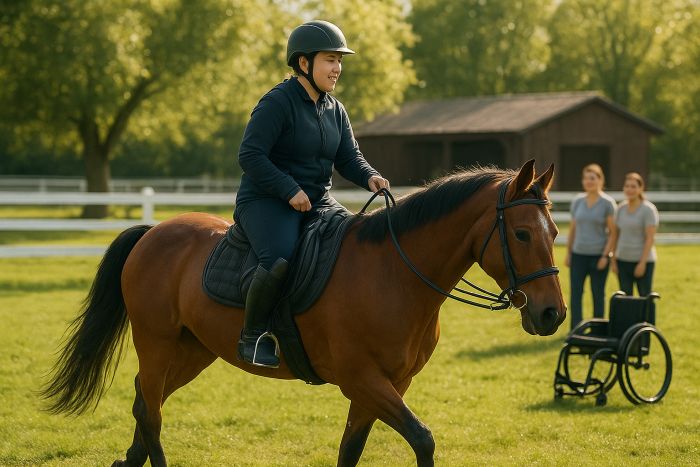
Horse Riding is available in South Africa for persons with various disabilities, as a Sport, Hobby and as various forms of Therapy, known as Horse Riding Therapy and Hippotherapy or Equine Therapy. There are many benefits of animal-assisted activities and therapies, which have been recognized recently and are becoming more well known.
Working and interacting with horses can have a major physical and emotional impact on adults and children of almost all ages with a wide variety of issues and disabilities, including Physical disabilities or Mobility Impairments. These benefits include Recreational; Therapeutic Benefits; Mental Benefits; Physical Benefits and Encourages Socializing. Horse Riding as a Sport, Hobby and as various forms of Therapy is available in most Provinces in South Africa and is supplied by companies and organizations such as Tumanako Equine Therapy and Equestrian is also one of the sports that are available for persons with Mobility Impairments at the Paralympics
Tumanako Equine Therapy: is run by Andrew and Jolene Rowland and offers Special Needs Riding for a wide variety of special needs individuals of all ages, as well as offering practical, hands-on experiences to help introduce newcomers to this unique form of therapy.
Operating since 2007, Tumanako is a specialised practice that utilises horses to provide a multi-disciplinary therapeutic approach that encompasses the fields of Physiotherapy, Occupational Therapy, Psychology and Speech Therapy.
Many studies have been conducted overseas with regards to the effects of Hippotherapy: improvements in joint mobility, balance and coordination, relaxation of spasticity, increased muscle power, increased self-confidence through improved self-image, improved learning, concentration, spatial awareness of neurologically impaired individuals and more.
Tumanako operates Tuesdays to Sundays and offers long and short-term treatments depending on the needs of the client. Cost structures are applied accordingly. The sessions are carried out under the strictest of safety standards, which typically involves the therapist, horse leader and side-walkers, and are designed to address the physical needs of the client as well as to assist in developing social skills. The aim of the treatment is to make it as fun as possible, while ensuring optimum therapeutic benefits.
If you require any of the services listed above, or are a medical professional interested in treating your own clients with Tumanako, please contact:
Andrew Rowland on 082 782 1103 or Jolene Rowland on 081 588 1086 for more details.
Email: tumanakosa@mweb.co.za,
Website: www.tumanako.co.za,
or search “Tumanako Equine Therapy” on Facebook.
You can also visit us at: Hartzenbergfontein Estate, Walkerville, Johannesburg South.
For alternative venues Contact DiSA or more information.
Exercise at Home or Gym
Taking part in regular physical activities offers many advantages to persons of all ages, and is even more important for persons with disabilities, whether they want to lose weight, reverse muscle atrophy, build strength or improve their mobility. Persons with Mobility Impairments who went through rehab, usually would have attended Physiotherapy once a day 5 days a week when in rehab, but this is generally not possible when they return home. It is however important to continue with physiotherapy, even if it is once or twice a week and then try to do some other type of physical activity two or three times a week.
It is recommended that to improve fitness, adults with SCI should engage in at least 20 minutes of moderate to vigorous intensity aerobic exercise two times a week and three sets of moderate strengthening exercise for each major functional muscle groups two times per week. To improve cardiometabolic health, it is suggested they engage in at least 30 minutes of moderate to vigorous intensity aerobic exercise, three times per week.
There are various activities that can help you to burn fat and build strength, if you push your Wheelchair, you could start by making short journeys by pushing yourself in your wheelchair, or doing various other exercises at home or in the gym including rowing machines adapted for wheelchair use, and weight machines for resistance exercises.
We do however recommend that you contact companies or individuals who are qualified or specialise in rehabilitation or exercise programs, which include strength building and improve balance. It is not only important to get an experts advice to be able to get the best results, but also to do so without getting injured. Injury can often happen if the exercises are done incorrectly, or by overdoing certain exercises. Injuries through incorrect training techniques will not only result in you having to delay your plans to get fit and lose weight but can lead to loss of independence or possible time in hospital. There are various companies and qualified individuals such as WHASCP Fitness that can assist you with these types of fitness and weight loss programs, thus reducing the risk of these types of injuries.
Please note that it is advisable to speak to your Doctor before starting to exercise
Sports
Sports are very important to keep a person healthy and are even more important if that person has had an injury or has a Mobility Impairment and uses a wheelchair. Sports such as Scuba Diving (Handicapped Scuba Crew) and Cross Fitness Training (WHASCP Fitness) offers many advantages to persons with disabilities and are equally important, not only when you are first injured, to build up your strength, but also in later years, to keep your fitness up, assist to keep the weight off and to make sure that you don’t lose any movement or strength that you have regained since you injury.
Persons with Mobility Impairments or Physical Disabilities can take part in a variety of Sports at both club, provincial and international level. Whatever your age, disability, experience level, or gender, there’s a place for you in Mobility Impaired sports. Whether you prefer team or individual sports, Winter or Summer sports, high action or something a bit slower, if you’ve got the enthusiasm and the drive, you can find something in this section that will suit you. Focus on the things that you can do, rather than those you cannot and click on the link below to find out more about these sports that are available in South Africa, including organisations such Handicapped Scuba Crew who provide Scuba Diving for persons with disabilities in South Africa.
For More Information visit our Sports Page Here
7. Depression
Depression and loneliness are very common among all age groups around the world, but it is even more common for persons with disabilities and the elderly, especially during this time of Covid-19 and the consequent lockdown. There is substantial evidence which indicates that persons with Mobility Impairments are at least three times more likely to experience depression compared to the general population.
Many persons with disabilities have to deal with various difficulties related to their impairment, which can often be the cause of depression, such as: A change or loss of job; relationship and financial difficulties; isolation; change in living environments, or adaptions to current accommodation, as well as stereotypical social and personal attitudes; abuse; loss of roles within the family; stressors related to poverty and environmental barriers, and often a lack of access to appropriate Health Care, etc.
These changes and difficulties can affect persons with disabilities in different ways, those who are ultimately positively affected by these changes, often first accept their disability and limitations, before they can move on with their life and adapt to a “New Normal”. Once you have acknowledged to yourself that your life will not be the same due to your injury, you would then be able to focus on what you are able to do rather than what you cannot do due to your disability. Then you can focus on finding solutions and still achieve your goals. Like a person paralyzed from the neck down who learns to paint with their mouth, or the person who dreamed of playing rugby for the springboks and instead represents his country in wheelchair rugby. These and other Sports and Hobbies also help reduce depression, improve fitness, encourage social engagement etc.
If you are struggling with depression and need help contact the Walking with Brandon Foundation – Peer Support Programme in Cape Town. They can possibly assist you and your family to come to terms with your impairment and the changes that it may bring. Click on the link above to find out more information about this, or contact The South African Depression and Anxiety Group (SADAG), to find out if they can assist you, or Contact Us if you need any other assistance.
Read More: ….