


Driver Training – Steps To Getting on the Road
Discover Disability Driver Training with information & service providers who can assist you to learn to drive your vehicle with an impairment.
One of the biggest obstacles to independence that most Persons With Mobility Impairments encounter, is transport and the inability to drive a vehicle.
It doesn’t have to be that way.
There are a number of organizations invested in assisting Persons With Disabilities get back on the road – and regain their independence.
This article will assist you on that journey. Walking you through the process, and putting you in contact with the right people who can assist you.
It includes information about:
– Learning to Drive
– Obtaining Wheelchair Parking Permits
– Driver Positioning and Set-Up
Please read the article below to find out more, or use the quick links on the right to jump to the sections of interests.
What Are You Looking For?
1. Learning to Drive: Steps To Getting on The Road
i. Assessment on Ability to Drive
– Rolling Rehab
ii. Driver Training
– Driving Schools
2. Driver Positioning and Set-Up
– Spinal Cord Injury
– Amputation
– Stroke Or Head Injury
– Cerebral Palsy
– Short Stature
3. Wheelchair Parking Bays and Discs
4. PrDP Licence






Organisations that can Help You Get Back on The Road
One of the biggest obstacles that many Persons with Mobility Impairments encounter is getting back their independence and being able to drive a vehicle or be transported in a vehicle. Organizations such as Rolling Rehab, The National Council of and for Persons with Disabilities and QASA offer services such as Driver Training and Assessments, which can help you get back on the road safely, and give you back your independence.
Rolling Rehab is an organization that is passionate about assisting people who have a disability & want to drive. “We understand that. being unable to drive in South Africa is like having a prison sentence, so our aim is to assist people to get back their independence through safe driving. We offer an independent consultancy service where we do a holistic assessment of the individual’s needs and abilities, and advise whether they are safe to start driving or to continue driving after an accident or illness.
We also make recommendations on what vehicles and adaptations are best suited to their needs. We believe that defensive driving is an essential skill for any driver who has reduced physical abilities and therefore we organize a number of defensive driving days throughout the year in partnership with an advanced driving academy.”
Visit: www.rollingrehab.co.za to find out more
Auto-Mobility is a comprehensive hub to driving in South Africa, for people with physical disabilities.
Auto-Mobility addresses vital information to potential drivers with disabilities and offers information on a range of vehicle adaptations, giving solutions and opportunities to become mobile and independent. Auto-Mobility covers specific dimensions, features and benefits of selected vehicles.
Visit: www.auto-mobility.co.za to find out more.
This is What You Need To Know
One of the biggest obstacles that many Persons with Mobility Impairments encounter is getting back their
independence and being able to drive a vehicle.
1. Steps To Getting on The Road
Persons With Disabilities who want to drive a vehicle or be able to be transported in their own vehicle, will need to overcome a few obstacles and make a few decisions, before they are able to purchase the correct vehicle and vehicle aids to suit their needs.
First: They should also go for an assessment, to make sure that it is safe for them to be driving a vehicle.
These assessments can also assist you if you are a passenger in the vehicle. According to the Road Traffic Act there are some restrictions that can prevent some people from qualifying to drive due to medical conditions. Chapter 4 of the Road traffic Act states that a person does not qualify to hold a drivers licence if they are affected by one of the following diseases or disabilities: Read More: Auto-Mobility – Do I Qualify?
There are legislations and Road Traffic Act’s in place, that you should take note of.
To find out more about these, visit: Auto-Mobility – Need to Know; Auto-Mobility – Legislation And Auto-Mobility – Road Traffic Acts
Should you qualify, you will then be required to go for an assessment to see if it is safe for you to be driving a vehicle.
These assessments can also assist you if you are a passenger in the vehicle.
i. Driver Assessment
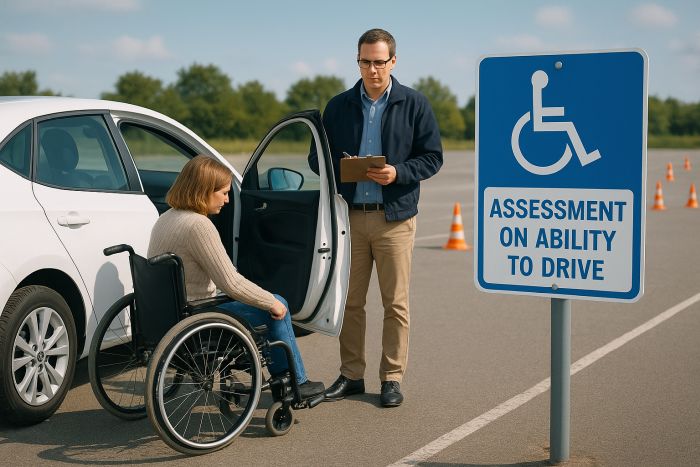
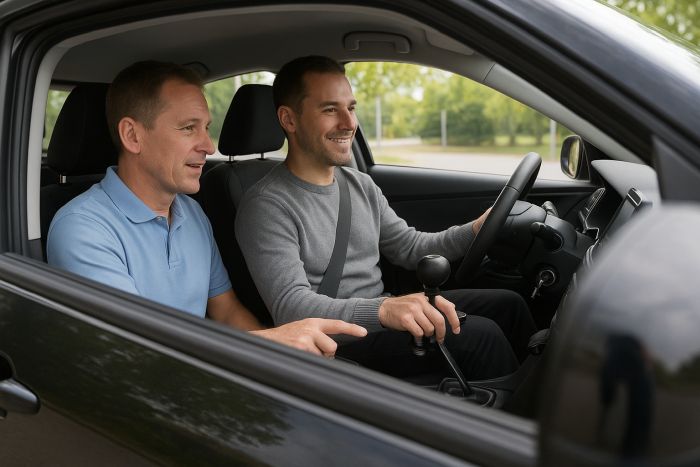
Learning to drive is a huge step towards regaining your independence. The first step towards that end, is an assessment of your ability to drive. Click Here to Learn More about Driver Assessments.
i. Assessment of Your Ability to Drive
Learning to drive is a huge step towards regaining your independence. The first step towards that end, is an assessment of your ability to drive. This assessment is standard procedure, and is used to assess the impact of your condition on your neuro-functioning and response time. Especially if your disability arises as a result of a neurological condition (e.g. Stroke or Traumatic Brain Injury (TBI)), or degenerative disease (e.g. Multiple Sclerosis or Muscular Dystrophy).
Assessments are also a suitable safety check for responsible older drivers.
Assessments are customized according to the client’s needs and cover all aspects of driving including:
Rolling Rehab
Rolling Rehab is an Organization that offers an independent consultancy service where they do a holistic assessment of the individual’s needs and abilities, and advise whether they are safe to start driving or to continue driving after an accident or illness which may have affected their ability to adequately control a vehicle.
Each assessment is customized according to the client’s needs.
The following types of assessments are offered:
– Driver Ability Assessment
– Passenger Needs Assessment
– Vehicle Adaptations Assessment
Rolling Rehab makes recommendations on what vehicles and adaptations are best suited to their clients needs, as well as running workshops for therapists and driving instructors who want to improve their knowledge about driving adaptations and the effects of disability on driving ability.
To find out more, visit: Rolling Rehab – Workshops
Rolling Rehab also offers Defensive Driver Training, which helps the individual learn to adapt their driving style in order to compensate for their disability.
“We believe that defensive driving is an essential skill for any driver who has reduced physical abilities, so we organize a number of defensive driving days throughout the year in partnership with an advanced driving academy.
To find out more, visit: Rolling Rehab – Defensive Driver Training
Once the client’s needs and abilities have been established, Rolling Rehab refers them to a suitable driving school that will prepare them for the K53 test.
For more information: Contact Caroline Rule on: Cell: 083 560 6886.
Email: rule@global.co.za
Website: www.rollingrehab.co.za,
Address: Inside Shoprider Premises: Unit 13 Diamond Park, 92 Jacaranda Street, Hennopspark, 0046.
ii. Driver Training
Once you have been assessed and passed, you will be required to get your learners licence.
First time licensing procedures for Persons With Disabilities are exactly the same as for any other person applying for a licence. If a person had a normal licence and then developed a disability, which resulted in them requiring adaptations, or an automatic vehicle to enable them to drive, they are legally required to inform the licensing department and be re-tested.
To find out more about the required Licensing Procedures, visit: Auto-Mobility – Licensing Procedures
Driving Schools
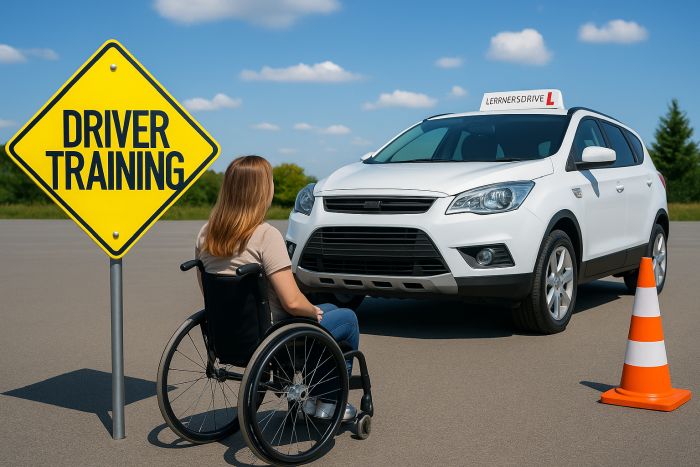
There are currently only a few Driving Schools across the country that can accommodate Drivers With Disabilities, however most of these can only accommodate persons who have arm function and no leg function.
There are also various Organizations such as the QuadPara Association of South Africa (QASA), Rolling Rehab and the National Council of and for Persons with Disabilities (NCPD) which can assist Persons With Disabilities to be able get back on the road safely, thus giving their independence back.
Where no Driving School is available that can accommodate a persons needs, they should first purchase a vehicle and get it adapted accordingly, only then can they learn to drive. To do this, a special motivation is needed for the banks to enable them to get vehicle finance with only a learner’s licence. They will also need to get their insurance pre-approved before the bank will agree to finance them.
To find lists of “Driving Schools” in your area, visit:
Auto-Mobility – Driving Schools
Rolling Rehab – Driving Schools
Disability Info South Africa – Driving Schools
One Driving School that does accommodate many different types of Mobility Impairments, is Driving Ambitions Driving School.
Rolling Rehab assists to manage the Driving Ambitions Driving School, under contract to the QuadPara Association of South Africa (QASA).
Driving Ambitions
The NCPD is a NGO with a footprint throughout South Africa that plays a lobbying AND advocacy role when it comes to the rights of persons with disabilities. “We’re an umbrella body coordinating the advancement of the rights of persons with physical disabilities in accordance with the White Paper on the Rights of Persons with Disabilities, the UN Convention on the Rights of Persons with Disabilities and more.
We have nine provincial Associations for Persons with Disabilities with numerous projects and branches that focus on rural development as well as social.”
The National Council of and for Persons with Disabilities does advocacy work and services leading to an equitable and inclusive society. “We are affiliated to the South African Disability Alliance, as well as Rehabilitation International. Our programmes cover the whole of South Africa.”
The National Council of and for Persons with Disabilities offer a wide variety of different types of Services, including short training of Professionals in the Services and Health profession, for which these professionals get CPD points. This training includes Transport and driving training. The majority of training sessions can be tailor-made to suit your needs.
Click here to Learn More About NCPD Driver Training Programmes or their website at https://ncpd.org.za/
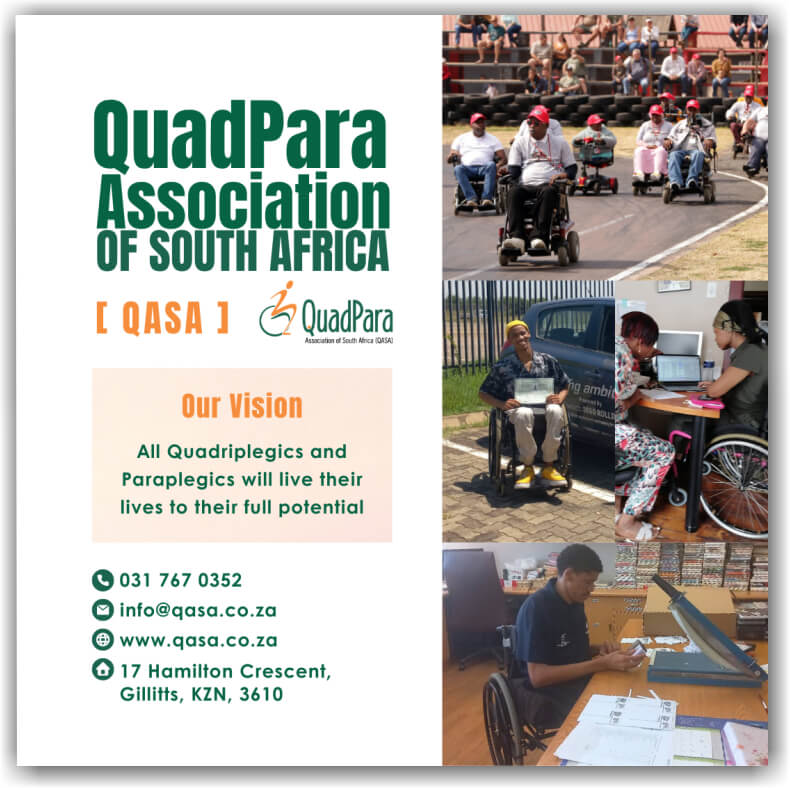
QASA is a non-profit organisation (NPO 000-881) of Quadriplegics and Paraplegics in South Africa. QASA’s mission is “to improve lives by securing resources to advocate, educate, capacitate, support and mobilize”.
QASA’s vision is that “all quadriplegics and paraplegics will live their lives to their full potential”. QASA develops products, programmes and services for quadriplegic and paraplegic members to build their capacity and ensure opportunities for societal integration and empowerment.
These projects include but are not limited to the QASA – Driving Ambitions:
QASA – Driving Ambitions:
A major barrier facing persons with disabilities is a lack of accessible public transport, which is a huge obstacle for wheelchair users trying to lead an independent life. Recognising this, QASA rolled out a driver training project in KwaZulu-Natal, Gauteng and the Western Cape to teach persons with mobility impairments to drive a vehicle fitted with hand controls.
Should you be interested in joining this programme you will have to meet the following requirements:
– Be a QASA member – if not fill in a membership application form.
– Have a physical disability.
– A South African ID document.
– The candidate must be focused and committed to attending classes every day
– The candidate must have the ambition of wanting full time employment at the end of the programme.
Click here to Read More about QASA Driving Ambitions or their website at www.qasa.co.za.
iii. Driver Positioning and Set-Up
Any person with limited body function as a result of a disability, requires correct positioning and set-up. Correct positioning in the vehicle can help to optimize the physical function of drivers in order to optimize their driving performance and keep them safe on the roads. Each individual should be correctly positioned in the car according to their body height, proportions and strength. This can make the difference between having the physical ability to avoid an emergency situation, compared with finding that they are trapped and unable to escape as a result of not having the agility to manoeuvre their vehicle out of harm’s way.
To find out more about the importance of correct Positioning and Set-up – and how to do it – visit: Auto-Mobility – Positioning and Set-Up.
Due to the wide variety of different types of disabilities, each person is different. There are therefore various solutions to each persons type of disability or Mobility Impairment. These solutions can be a combination of the correct positioning and set-up and the right type of Vehicle Aids and Hand Controls.
To find out solutions for these, visit the appropriate section below:
2. Wheelchair Parking Bays and Discs
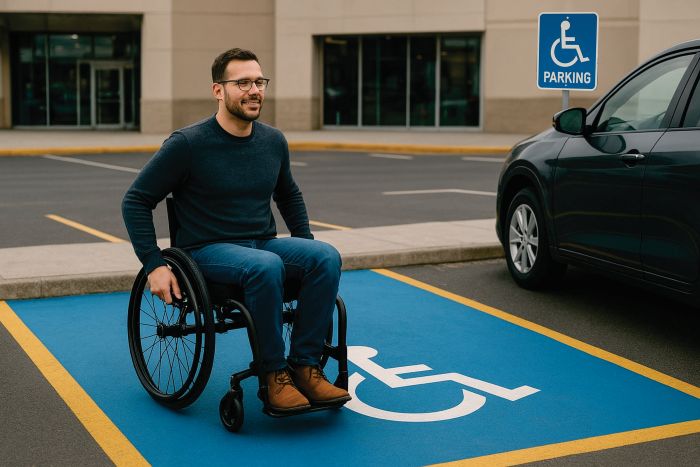
Wheelchair Parking Bays and Discs are for people with disabilities who require the extra space to enter or exit a vehicle.
These Accessible Parking Bays are not only close to the entrance, but are also wider than the average parking bay at 3500mm wider, to cater for a Mobility Aid user, or someone who needs the extra space to enter or exit the vehicle. This extra space ensures safe transfer for the user and protects the vehicle in the parking space near by from getting damaged.
People who require these parking bays need to apply for an Accessible Parking Permit, sometimes incorrectly referred to as a Disabled/Wheelchair Parking Permit, which is displayed on the vehicle at all times. These Parking Permits are available from QASA, National Council of and for Persons with Disabilities (NCPD), an APD in your province, or your closest municipality.
View more about Accessible Parking Disks and how to apply for them.
3. Professional Driving Permit Licence
Persons who are going to drive a vehicle and transport Persons with Disabilities, will require a PrDP Licence.
A Professional Driving Permit (PrDP) is a legal requirement for any person to drive public transport and heavy duty vehicles, such as taxis, buses and breakdown vehicles. To transport passengers for an income you must have a Professional Driving Permit (PrDP). Before it was called a PrDP, a Professional Driving Permit was originally called a Public Drivers Permit (PDP) which was issued to drivers before 1998.
There is currently no law stating that a Person with a Physical Disability is not allowed to have a PrDP Licence, as long as that person is able to demonstrate to an examiner that they have adequate control of the vehicle at all times. The medical criteria for a PrDP are however significantly stricter than a normal Drivers Licence. The PrDP Permit is issued in addition to an ordinary drivers licence & applies to the following motor vehicle categories: Auto-Mobility – Professional Driving Permits
To find out more about Professional Driving Permits (PrDP) visit: Western Cape Government – Professional Driving Permit (PrDP).