Looking for a Job

Welcome to the “Looking for a job” page that provides information and options for people with Physical Impairments looking to earn a living.

Finding employment in these difficult times is not easy, especially for people with Physical Impairments, but thanks to the support of various organisations, there are options. Including Internships, Work Readiness Programs, Protective Workshops and support for those seeking employment and Entrepreneurs wanting to start their own businesses.

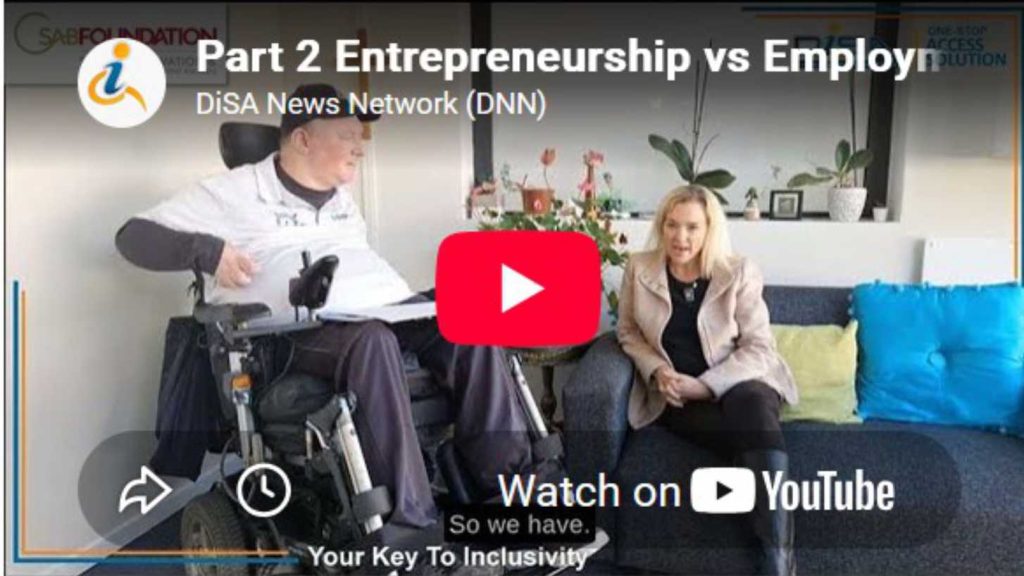
On the page below, we unpack the pros and cons of Employment versus Entrepreneurship.
And introduce the support and services available to assist you, in your endeavour, including:
• Job and Learnership Recruitment programs
• Work Readiness Programs and Internships
• Protective Workshops
• Awareness and Sensitisation Training
• Information about Employment Rights and Legislation
• Support for Entrepreneurs starting their own business

Please click on the links to the right for easy access to sections below.

Employment Rights for Persons With Disabilities

Disability is a natural part of human life and does not diminish the right of persons with disabilities to take their rightful place in the work place. However people with disabilities experience high unemployment levels and often remain in low status jobs and earn lower than average remuneration.

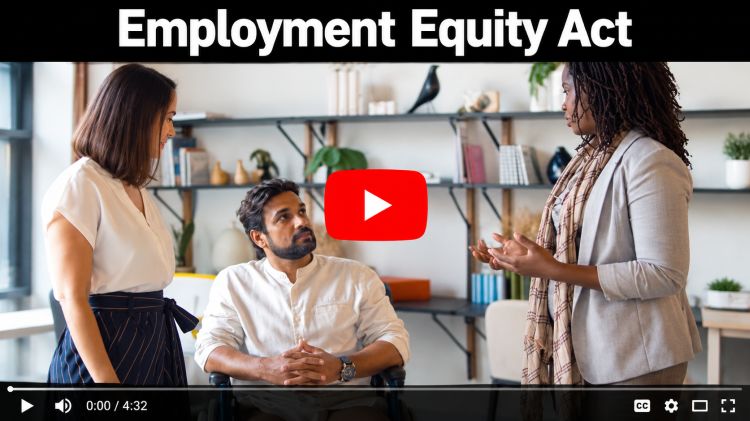
The Employment Equity Act no. 55, of 1998 was drafted and put in place to ensure the employment rights of persons with disabilities in the workplace.
Employment versus Entrepreneurship

Employment and entrepreneurship both offer valuable pathways for people with disabilities in South Africa to achieve economic independence and social inclusion. While formal employment provides stability, benefits, and structured opportunities within existing companies and organisations, entrepreneurship allows individuals to create their own livelihoods, often offering greater flexibility and control over working conditions.

For many people with disabilities, barriers such as inaccessible workplaces, discrimination, and limited job opportunities make self-employment an empowering alternative. Encouraging both employment and entrepreneurship ensures that people with disabilities can fully participate in South Africa’s economy, contributing their skills, creativity, and resilience to a more inclusive society.

1. Looking For Options For Employment

Job and learnership recruitment, work readiness programs, internships, and protective workshops all provide people with disabilities opportunities to gain skills, workplace exposure, and sustainable employment. These initiatives promote inclusion, independence, and equal participation in the country’s workforce.
Please read the information below to find out more about these options for persons with disabilities.

1.1 Job and Learnership Recruitment

Job and learnership recruitment, work readiness programs, internships, and protective workshops all provide people with disabilities opportunities to gain skills, workplace exposure, and sustainable employment. These initiatives promote inclusion, independent Job and Learnership Recruitment for persons with disabilities requires a thoughtful, inclusive, and proactive approach to ensure equitable access to opportunities. This is not only important during the advertising of the job or learnership, but also in the interview stages and in the placement of persons with disabilities.

Various companies and organisations specialise in Job and Learnership Recruitment by not only having a database of persons with disabilities looking for jobs and learnerships but also also specialising in disability rights in the workplace, reasonable accommodation in the workplace and Disability Awareness and Sensitization Training. This includes Companies and Organisations such as the National Council of and for Persons with DisabilitiesBradshaw LeRoux ConsultingTCM – Technology Corporate Management (Pty) Ltd and Isilumko.

Please read the information below to find out more about these companies and organisations that provide recruitment for persons with disabilities.ce, and equal participation in the country’s workforce. Please read the information below to find out more about these options for persons with disabilities.

National Council of and for Persons with Disabilities (NCPD)

The National Council of and for Persons with Disabilities offer BBBEE advice and services related to persons with disabilities.

NCPD services include: Job placement, Skills development, Preferential procurement, Ownership, Supply chain development. “We will refer you to our experts in each of the nine provinces or support you from our National Office in Edenvale.

Contact: Danie Marais
Tel: +27 11 452 2774
via Email: danie@ncpd.org.za  
Website: www.ncpd.co.za
Logo for the National Council of Persons with Disabilities, an organisation which provides specialised services for persons with disabilities in South Africa

The National Council of and for Persons with Disabilities also provides Disability Equity Training. Many public and private sector bodies have gradually realised that their work practices and policies fall far short of fulfilling the needs, rights and aspirations of disabled people who are their clients, customers and co-workers and that, in order to change this situation, they need to turn to disabled people for education and guidance. From this realisation has grown the demand for Disability Equality Training (DET) run by disabled people, which aims to help people understand the meaning of disability, identify changes in work practice, and plan strategies to implement change.

Disability Equality Training courses have been organised and run by disabled people and organizations to address the need for information about reality of disability. A DET course will enable participants to identify and address discriminatory forms of practice towards disabled people. Through training they will find ways to challenge the organisational behaviour which reinforces negative myths and values and which prevents disabled people from gaining equality and achieving full participation in society.

NCPD offer training which is done by an expert well trained team of persons with disabilities, the training is inclusive of all impairments and addresses definitions, an inclusive workplace, reasonable accommodation, terminology and much more! The sessions are at least three hours, but can be up to two days (depending on the needs of the client). Training is done in inter – actively, using multimedia and is not “heavy”!!! Training is tailor made for every sector, including: Tourism, Tertiary Education, Banking, Mining and more.

The National Council of and for Persons with Disabilities also provides Universal Design and Access Service to ensure that persons with disabilities are not excluded from any events, services, information, communication, products and venues.

NCPD believe that this can be prevented by applying Universal Design Principals during the design phase and they therefor offer the following services to assist:
– Workshops for architects, developers and other building professionals to develop an understanding of universal design and access.
– Facilitating access audits for new or existing buildings; echo e-access for the natural and communication environment. Audits are followed by a report indicating shortfalls and recommendations.
– Marketing of facilities that are accessible to persons with disabilities

Contact:
Leanne Channer, Schenker SA: W + 27 11 971 8400
Switchboard or Email: Leanne.Channer@dbschenker.com

Alison Jänicke at Endangered Wildlife Trust on:
Tel: 011 372 3600 Ext 70 or Email: alisonj@ewt.org.za

Contact Fanie Swanepoel or Thuli Witbooi for more information: 
fanies@ncpd.org.za or thuli@ncpd.org.za or Tel: 011 452 2774.

Learn More about Disability Equity Training >

Bradshaw Le Roux Consulting

Bradshaw LeRoux Consulting was established in 1998 and are recognised leaders in Disability Inclusion.
We focus on sourcing, identifying, developing and retaining diverse talent within your organisation.

Through our range of Disability Awareness Campaigns, Stereotype Busting Training, Strategic Consulting, and On the Ground support services, we leverage the benefit of their extensive network and experience in Disability Inclusivity to create enabling and flexible business environments.

Our significant contribution to internationally recognised Best Practice principals of disability inclusion is making impact in South African organisations, with large focus being placed on Transformation and Scorecard objectives in the space of Disability Inclusion. In a nutshell, we represent both job seekers with a disability, and assist companies with including and developing people with a disability by creating a disability inclusive environment.

For companies seeking to employ talent, our role is to assist you in creating an accessible work environment that provides equal opportunities for employment of people with a disability. In a nutshell, we represent both job seekers with a disability, and assist companies with including and developing people with a disability by creating a disability inclusive environment.

We also offer SETA Accredited Learnership Programmes and various other services including:
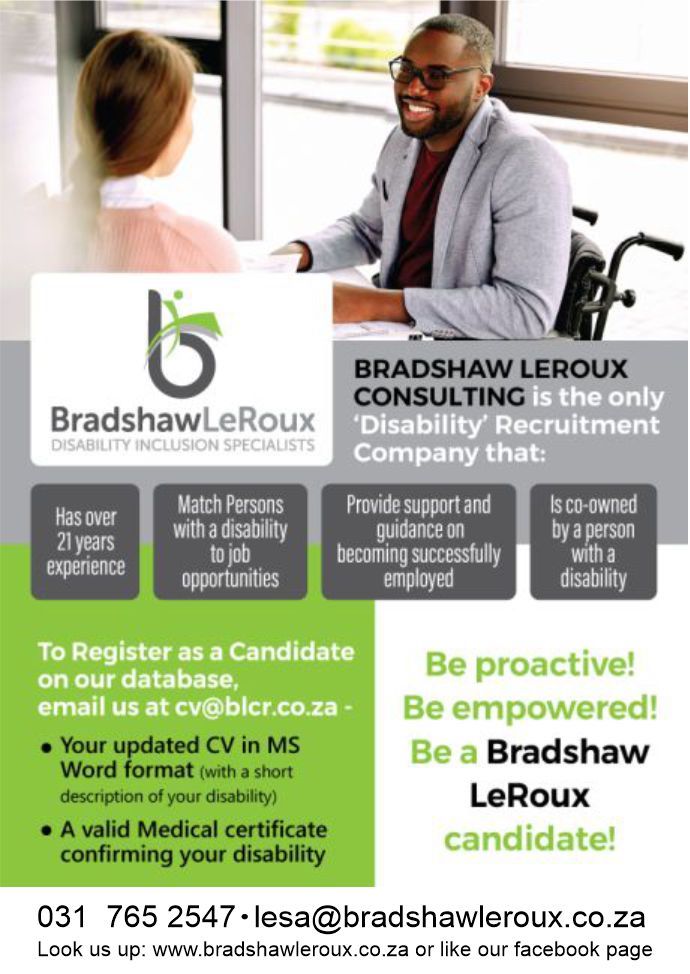
Bradshaw Le Roux Candidate flyer encouraging persons with disabilities to register as a candidate on their database. If interested email cv@blcr.co.za
Bradshaw Le Roux - Promoting Disability Inclusive Cultures

Bradshaw LeRoux Consulting conduct Environmental Accessibility Audits designed to identify environmental barriers that could hinder access for Persons with a Disability.
Our consultants will review your site, note potential barriers from a functional and safety perspective, and propose cost-effective solutions which can be actioned within short, medium and longer term timeframes.
Our reports are practical in nature, specific in the solutions offered, and allow for ease of use by all. Relevant to all environments, from corporate offices, manufacturing or industry sites, education facilities or hospitality environments, we can assist.

Learn More about Bradshaw Le Roux Accessibility Service >

In order to develop and create awareness in the organisation for persons with a disability which aligns to the organisation’s D&I strategy, Bradshaw LeRoux have proposed a focused training approach aimed at raising awareness about disability as a value adding form of diversity.

Facilitated by Lesa Bradshaw, who is a recognised international disability inclusion specialist with over 23 years experience, these practically applicable courses focus on the critical success factors needed to create a transformative, inclusive and safe environment in which persons with a disability feel confident to compete and succeed. “Our training is designed to equip organisations and their stakeholders with relevant tools to drive the disability inclusion agenda with impact and effectiveness.”

Learn More about Bradshaw LeRoux Disability Awareness Training >

Communicating the right messaging on Disability as a form of Diversity, and its value to business and society, is a key success factor in promoting Inclusion and building a culture of respect.

The aim of any Disability Communications Campaign is to ‘normalise’ disability, shift perceptions which form barriers to inclusion, and create a culture of trust in which employees feel confident to disclose a disability in order equalize opportunities for success.
Paramount to the success of changing perceptions around disability is the use of the correct ‘language’ and messaging content. This campaign includes a brand/logo design and 5 digital communications including context and design work. Read More: ….

Designed to teach persons with a disability about their rights and responsibilities within the workplace, these training sessions assist those individuals who have a newly acquired a disability, or who are new to the work environment, to understand the potential barriers to equal and dignified access to, or advancement in, employment and how to become change champions in creating an inclusive culture.
Empowering by design, this practical and motivating training approach prepares individuals for their work journey and equips them with the skills needed to ‘get the job’.

Learn More about Bradshaw LeRoux’s Empowerment Training services >

The bursary management programme is an excellent alternative for your company to invest in the Skills Development of Persons with a disability.

The programme provides benefit to the Bursary recipients as they receive ongoing mentorship and assistive support during their years of study and beyond into their careers, creating future empowered, skilled talent with a disability.

The programme benefits the Sponsoring company by building a talent pipeline aligned to its future needs whilst enjoying Skills Development objectives and positive brand recognition for respecting the value of disability as a form of diversity in the workplace.
Learn More about Bradshaw LeRoux’s Bursary Management Programme >

ODIN is a web-based diversity and inclusion platform which supports the transformation of an organisational culture towards being disability inclusive.
ODIN Recruit matches talent with a disability to your vacancies
ODIN Learn supports your learners with a disability, whether on or off site, to promote retention
ODIN Recruit provides you with a cost-effective, fixed cost, ‘budget friendly’ solution in the form of a subscription-based service.

Learn More about Bradshaw LeRoux’s ODIN Service >

We’ve been busy building a pipeline of talent with a disability to feed into your organisation’s vacancies relating to IT positions such as IT Technicians, Junior Network Engineers, Network Administrators, Cybersecurity Analysts, Applicant Engineers, or Systems Engineers.

Bradshaw LeRoux Consulting’s skills academy, the South African Bridge Academy, present the 2023 cohort of incredible talent with a disability who are ready for work and qualified with an international CCNA (Cisco Certified Networking Associate) qualification!

Bradshaw LeRoux Consulting’s skills academy
Bradshaw LeRoux Consulting’s skills academy, the South African Bridge Academy, present the 2023 cohort of incredible talent with a disability who are ready for work and qualified with an international CCNA (Cisco Certified Networking Associate) qualification!

If you would like to link this talent directly to a meaningful career path which could include fixed term contracts, permanent employment or graduate programs, with no placement fees, then all you have to do is present the opportunity, interview the students for those opportunities, and feel the benefit of a capacitated employee. Contact us for more information >

If you are a job seeker with a disability, please take a look at our Current vacancies page on our website, and Upload Your CV.
For more information, please feel free to send any queries to 
Contact: 031 765 2547 via Email: lesa@bradshawleroux.co.za  Website: www.bradshawleroux.co.za

Isilumko

Isilumko was established in 1995 and is a fully fledged Recruitment and Staffing Solutions Business with robust systems, strong client relationships and references, top empowerment credentials, a stout cashbook, and a national footprint, which allows us to render superior solutions to clients.

Isilumko delivers talent through scalable staffing solutions by recruiting the highest-calibre, best-suited candidates to ensure extraordinary value for our clients.
Our vision is to be remembered for the positive contribution to our stakeholders.
Our clients see us as a strategic partner.

National Services include: Recruitment (Perm and Contractor), Project Management, Learnerships, Internships, Skills Training Initiatives, Bursary Services.
Isilumko logo

Special focus on Disability, services include: 

Special focus on Disability, services include: Tailored to client objectives, Hosting services, Workplace Accommodation, On-site Audits, Disability Sensitisation Workshops, End to end Learnership Project Management including recruitment, Learnership Registration with relevant SETA, Agreements & Contracting, Payroll services.

Recruitment Solutions: 

No matter what your requirements, our team will assist with you with a customised solution which includes:

– Temporary, contract or permanent placement
– Once-off or ongoing, single or bulk recruitment service
– Recruitment Process Outsourcing (RPO)

Look at our team as your HR department away from head office that can offer the following:

– Partial or complete management of the recruitment process
– On-boarding and life-cycle management
– Payroll, HR and IR management, with an option of a full on-site managed solution.

Industrial Recruitment Solution: 

Our team has extensive experience in once-off as well as large-scale bulk recruitment solutions to fulfill your temporary, contract or permanent placement and shift-work requirements.

We offer a full on-site managed solution which includes:
– Recruitment
– Licensing
– PPE and Equipment management, Payroll, HR and IR management

For recruitment, Learnership Solutions, or Disability Services, please feel free to send any queries to 
Contact: Shay 021 461 3609 | 021 801 7787 | Email: shay@isilumko.co.za | Website: www.isilumko.co.za

TCM – Technology Corporate Management

Technology Corporate Management (Pty) Ltd (TCM) is one of South Africa’s largest privately-owned IT companies. Established in 1987, TCM’s experience, expertise and commitment to service excellence is matched by its agility and accent on innovation. TCM – Technology Corporate Management

TCM has always taken a holistic approach to actualizing its transformation and empowerment goals. A number of initiatives are in place to ensure TCM operates according to the spirit of transformation, all driven by the Company’s commitment to social consciousness.
This includes:
TCM - Technology Corporate Management

Technology Corporate Management (TCM) invites candidates who are interested in a career in the ICT industry to apply to participate in its internship and learnership programmes. The programmes will provide workplace experience and in the case of learnership, recognised qualification in a dynamic work environment.Tailored to client objectives, Hosting services, Workplace Accommodation, On-site Audits, Disability Sensitisation Workshops, End to end Learnership Project Management including recruitment, Learnership Registration with relevant SETA, Agreements & Contracting, Payroll services.

Benefits of being part of the TCM Internship or learnership:

– Obtain a recognised ICT qualification (Learnership programmes)
– Gain real world experience in the field.
– Exposure to relevant technologies.
– Mentorship by IT professionals.
– Opportunity to gain experience in an ICT career path.
 
Program Details:
– Duration of the Internship: 12 Months
– Schedule: Full-time
– Reference code for applications: TCM Development Programmes
– Location\ Reporting office: Gauteng; Free State; Western Cape; Eastern Cape; Kwa Zulu- Natal
– Application link: https://tcm.docuware.cloud/docuware/forms/recruitment-external-job-application-form?ver=1

Entry Requirements: – To be eligible, candidates MUST meet the following minimum requirements:
– A south African Citizen
– Currently unemployed
– 29 Years or younger
– Not currently on a learnership or internship programme
– Not have completed an MICT SETA internship programme
– Able to commute to the local office and or other TCM assigned workplace sites daily
 
NB: These programs are open to people of all ethnic groups and people with disabilities
 
Qualification requirements:
– Minimum Requirements (dependent on the programme)
– Matric / Grade 12 (all programmes)
– NQF4 / NQF5 or above ICT qualification (dependent on the programme)
– Beneficial Qualifications and Certifications (will be an added advantage):
– IT Vendor or OEM certificates / qualifications
– Electrical & Mechanical Engineering
 
Personal Attributes
 – Self-motivated and an eagerness to learn.
 – Ability to work independently and in a team.
 – Good communication skills.
 – Integrity and be professionalism.
 – Strong work ethics.
– Ability to perform under pressure and meet deadlines.
– Strong logical thinking and problem-solving capabilities.
– Attention to detail and concern for excellence.
– Organised, reliable, and responsible.

For more information, visit www.tcm.co.za, or click here to download the specifications of our current learnership.

Contact TCM For more information, please feel free to call us on: 0861 TCM 911 | 0861 826 911 | 011 848 6200, or send any queries to: hr@tcm.co.za.

1.2 Work Readiness Programmes and Internships

Work readiness programmes and internships for people with disabilities in South Africa represent crucial pathways toward inclusion, economic empowerment, and equal opportunity. Organisations such as Bradshaw LeRoux Consulting; NCPD; Isilumko and the QuadPara Association of South Africa (QASA), offer work readiness training tailored to people with physical impairments.

Please read the information below to find out about there Benefits for Students at Post-School Education and Training Facilities and more about the companies and organisations that provide various work readiness programmes and internships.

There are specific benefits available for financially qualifying students with disabilities at public post-school education and training facilities through the National Student Financial Aid Scheme (NSFAS).
The NSFAS Disability Bursary Programme is designed to provide comprehensive support, ensuring that students with disabilities have equitable access to higher education opportunities at public universities and TVET colleges.
To qualify for NSFAS funding, students with disabilities must have a combined household income not exceeding R600,000 per annum (2025).

NSFAS Disability Bursary Benefits (2025):

– Tuition and Registration Fees:
Full coverage of tuition and registration costs at public higher education institutions.
– Living Allowance:
An annual allowance of R20,000 to assist with daily living expenses, including meals.
– Learning Materials Allowance:
University students receive R6,000 per academic year for essential learning materials. (Note: For TVET college students, learning material costs are included in the general allowance.)
– Assistive Devices:
A once-off allowance of up to R50,000 for devices that facilitate learning, such as wheelchairs, hearing aids, or specialized computer software. If a student’s needs change, additional devices may be considered, provided the total amount does not exceed the stipulated limit during the study period.
– Repairs and Maintenance:
An allowance of R2,000 for the repair and maintenance of assistive devices due to normal wear and tear.
– Human Support:
Up to R50,000 per academic year for necessary human support services, including caregivers, scribes, tutors, or sign language interpreters. This support must be recommended by a registered medical professional and approved by the institution’s Disability Unit and NSFAS
– Assessment Costs:
A one-time allowance of R2,000 to cover expenses related to assessing the need for assistive devices or human support.
How to Access These Benefits:
When applying for NSFAS funding, ensure that you declare your disability status.
Complete Annexure A: Fill out the Disability Annexure A form, providing detailed information about your disability and required accommodations. This form should accompany your NSFAS application.
Provide Supporting Documentation – Medical Assessment: Submit a recent medical report or assessment from a registered healthcare professional detailing the nature of your disability and the necessity for specific accommodations or assistive devices.
Additional Support Services:
Beyond financial assistance, many educational institutions offer various support services to ensure an inclusive learning environment:
– Academic Support: Specialized tutoring, mentoring programs, and adaptive learning materials tailored to individual needs.
– Counselling Services: Access to psychological support to address any personal or academic challenges.
– Accessibility Services: Ensuring that campus facilities, libraries, and resources are accessible to all students.
To fully benefit from these services, it is advisable to contact the Disability Unit or Student Support Services of your chosen institution directly. They can provide detailed information on available resources, assist with the NSFAS application process, and ensure that your specific needs are met effectively.

QuadPara Association of South Africa (QASA)

QASA is a non-profit organisation (NPO 000-881) of Quadriplegics and Paraplegics in South Africa.

Their vision is that “all quadriplegics and paraplegics will live their lives to their full potential”. Its mission is “to improve lives by securing resources to advocate, educate, capacitate, support and mobilise”.

To this end, QASA develops products, programmes and services for quadriplegic and paraplegic members to build their capacity and ensure opportunities for societal integration and empowerment.

These projects include but are not limited to:
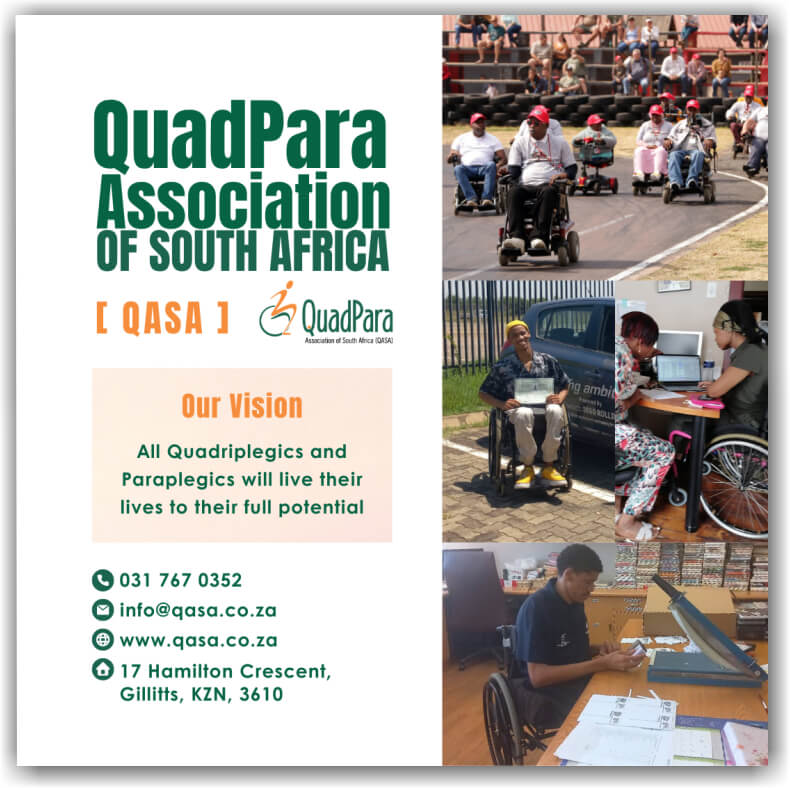
Advertisement for QuadPara - Association of South Africa (QASA) Logo

The aim of the Work Readiness and Employment Programme is to equip trainees with the necessary skills and tools for gainful employment. The programme facilitates an accredited 3-month online training programme (17 modules including MS Office) for over 150 unemployed youth with mobility impairments.

The Project received a Change Agent Recognition Award from the South African Board for Personnel Practice (SABPP) in September 2019 for Employment Equity Development and Transformation. The project received the Impumelelo 2020 Top Empowerment Finalist Award.

To learn more about the QASA “Work Readiness and Employment Programme” visit www.qasa.co.za.

Contact: 031 767 0352 / 0348 via Email: info@qasa.co.za or Website: www.qasa.co.za Address: 17 Hamilton Cres, Gillitts, 3610

1.3 Protective Workshops

Protective Workshops are safe, accessible environments providing opportunities for persons with disabilities from the local community to develop and improve their skills and to earn an income through the products that they make to supplement their disability grants.

Services provided by Protective workshops include:

– Skills development such as life-skills, work-skills as well as entrepreneurial development.
– Psycho-social and other support services
– Empowerment and other capacity building programmes
– Contract work, which may be available at some protective workshops
For more information about Protective Workshops in the Western Cape click here

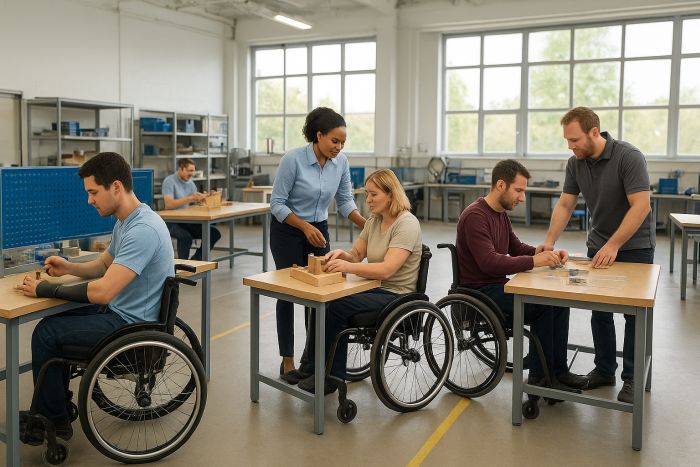
People in wheelchairs participating in Protective Workshops

2. Important Information To Consider

When employing people with disabilities, or providing educational services, it is essential for companies to foster an inclusive and supportive work environment through awareness and sensitization training for all staff and be aware of employment rights and legislation that exist, while also providing reasonable accommodation to ensure that people with disabilities are treated fairly and have equal access to opportunities. Together, these measures create a workplace that values diversity, inclusion, and equal participation for everyone.

Please read the information below to find out more about this and the companies and organisations that provide this training.

2.1 Awareness and Sensitisation Training

Man in a wheelchair providing disability awareness & sensitzation training

When employing people with disabilities, or providing educational services, it is essential for companies to foster an inclusive and supportive work environment through awareness and sensitization training for all staff and be aware of employment rights and legislation that exist, while also providing reasonable accommodation to ensure that people with disabilities are treated fairly and have equal access to opportunities. Together, these measures create a workplace that values diversity, inclusion, and equal participation for everyone.

Please read the information below to find out more about this and the companies and organisations that provide this training.

Disability Info South Africa (DiSA)

DiSA provides a One-Stop Access Solution by working with various specialists in access, as well as providing various services listed below, including Disability and Awareness Training and Universal Access Solutions.

DiSA are able to provide these services through 30 years of lived experience of DiSA’s Executive Director, Alan Downey, ( a quadriplegic and disability advocate), as well as the extensive access consultancy expertise of co-founding director Igor Rix, a qualified access consultant.

Additionally we leverage the vast resources of the DiSA website, a trusted platform for disability-related information in South Africa. Thereby providing a unique combination of practical insights, expert guidance, and actionable strategies to help promote accessibility, inclusion, and disability rights within various sectors of society, including educational facilities.
DiSA - Your One-Stop Access Solution

Disability Info South Africa (DiSA) offers a dedicated information website that serves as a one-stop resource for disability-related support and solutions. The platform connects individuals with relevant services, products, and organisations across South Africa that provide support for people with disabilities. This includes children and the organisations and service providers that assist children in various ways.

DiSA also provides Educational and Awareness videos that create awareness, support and provide information about various solutions available to people with disabilities.

To support this free service, DiSA facilitates Advertising and Product or Service Referrals, helping businesses and service providers reach their target audience while ensuring people with disabilities access high-quality, tailored solutions for their needs. This service promotes inclusion and accessibility while bridging gaps in information and resources.

Read More about the DiSA Information Desk and the Services that we supply

DiSA provides a One-Stop Access Solution to improve inclusivity by removing barriers to access in the built environment by referring Companies and Educational Facilities to various qualified Universal Access Consultants around the country. This includes Igor Rix, a qualified access consultant and co-founder of Disability Info South Africa (DiSA), who specialises in conducting Accessibility Audits and providing detailed reports on barriers within physical spaces and services.

Igor develops practical Implementation Plans to address these challenges, ensuring compliance with both national accessibility standards and international best practices. While focusing on fostering inclusivity for all individuals.

Ensuring all people of diverse needs and preferences, can fully participate and contribute to society in a meaningful way.

Read More about Igor Rix and the Accessibility Audits, Reporting and Implementation plans that he can provide.

Disability Info South Africa (DiSA) provides, or can recommend other companies/organisations that provide Disability Conscious Training (Awareness/Sensitisation Training) to your company or Educational Facility.

Disability Info South Africa (DiSA) is a comprehensive program designed to raise awareness and foster understanding of disability-related issues. Tailored to your company needs this training is delivered in collaboration with Access Warriors and disability specialists and equips organisations, businesses, and communities with the knowledge and tools to create inclusive environments.

The training draws on the 30 years of lived experience of DiSA’s Executive Director, Alan Downey, a quadriplegic and disability advocate, as well as the extensive access consultancy expertise of co-founding director Igor Rix, a qualified access consultant.

Additionally, it leverages the vast resources of the DiSA website, a trusted platform for disability-related information in South Africa. This unique combination ensures practical insights, expert guidance, and actionable strategies to help participants promote accessibility, inclusion, and disability rights within their company.
Read More about the Disability Conscious Training (Awareness/Sensitisation Training) offered by Disability Info South Africa (DiSA)

Disability Info South Africa (DiSA) spearheads their Accessible Cities Project Management, working alongside Access Warriors and other specialists to transform organisations, companies, educational facilities and communities’ urban environments into inclusive, accessible spaces. This initiative focuses on changing attitudes, creating awareness, developing policies and identifying and addressing barriers in infrastructure, services, and public spaces, to ensure compliance with accessibility standards.

By leveraging expertise in access consultancy, disability advocacy and a variety of other specialists, DiSA facilitates sustainable, practical solutions to remove barriers and change cities one company at a time. To create environments where everyone, including people with disabilities, can thrive.
Read More about DiSA’s Accessible Cities Platform and Projects

Alan Downey, co-founder of Disability Info South Africa (DiSA), delivers Motivational Speaking engagements that inspire and empower audiences.

Drawing from his personal journey as a quadriplegic of over 30 years and his work in disability advocacy, Alan shares insights on overcoming challenges, embracing resilience, and focusing on possibilities. His talks aim to shift mindsets, foster inclusion, and motivate individuals, companies and organisations to break barriers and create positive change.
Read More about Alan Downey and the Motivational Speaking that he provides

Alan Downey, Executive Director of Disability Info South Africa (DiSA), offers Interviews, Consultations, and Peer Support to individuals, organisations, companies and communities. With 30 years of lived experience as a quadriplegic, a wealth of knowledge and a passionate disability advocate, Alan provides unique insights, practical guidance, and empathetic support. His services aim to empower people with disabilities, raise awareness, and foster inclusion by addressing challenges, sharing expertise, and encouraging positive change.

Visit our DiSA News Network to view our various Interviews that Alan Downey from DiSA have produced

Alan Downey, Executive Director of Disability Info South Africa (DiSA), offers Interviews, Consultations, and Peer Support to individuals, organisations, companies and communities. With 3 years of lived experience as a quadriplegic, a wealth of knowledge and a passionate disability advocate, Alan provides unique insights, practical guidance, and empathetic support. His services aim to empower people with disabilities, raise awareness, and foster inclusion by addressing challenges, sharing expertise, and encouraging positive change.

Visit our DiSA News Network to view our various Interviews that Alan Downey from DiSA have produced or visit our DiSA Services page to get a quote or find out more.

Contact DiSA to find out more: Please feel free to contact Alan Downey on:
Email info@DiSA.org.za | Tel: 021 761 4831 | Cell: 084 504 9176 | Learn more about the DiSA services that we provide.

2.2 Employment Rights and Legislation

In South Africa, people with disabilities have strong legal protections and rights in the workplace, supported by several laws and policy instruments that aim to ensure equal opportunity, non-discrimination, and inclusion.

The Employment Equity Act (No. 55 of 1998) prohibits unfair discrimination on the grounds of disability in all aspects of employment, including recruitment, hiring, promotion, and retention. It also mandates that designated employers take affirmative action to achieve equitable representation of disadvantaged groups, including persons with disabilities.

Visit the Accordion Menus listed below to find information or a policy that can assist you, or your company.

In the foreground of this image is an open book of the law, with a gravel laid upon its open pages. In the background are lawyers discussing the law.

These policies cover Human Rights, Equality and Protection against discrimination, they include:

1. The Constitution of the Republic of South Africa

The Constitution of the Republic of South Africa, 1996, was approved by the Constitutional Court (CC) on 4 December 1996 and took effect on 4 February 1997.
The Constitution is the supreme law of the land. No other law or government action can supersede the provisions of the Constitution. It states: –
“Everyone is equal before the law and has the right to equal protection and benefit of the law. Equality includes the full and equal enjoyment of all rights and freedoms.
To promote the achievement of equality, legislative and other measures designed to protect or advance persons or categories of persons, disadvantaged by unfair discrimination may be taken.”

Download the Constitution of the Republic of South Africa

2. Promotion of Equality and Prevention of Unfair Discrimination Act, 2000 (PEPUDA)
The Promotion of Equality and Prevention of Unfair Discrimination Act, 2000 (PEPUDA or the Equality Act, Act No. 4 of 2000) is a comprehensive South African anti-discrimination law. It prohibits unfair discrimination by the government and by private organisations and individuals and forbids hate speech and harassment.

The act specifically lists race, gender, sex, pregnancy, family responsibility or status, marital status, ethnic or social origin, HIV/AIDS status, colour,
sexual orientation, age, disability, religion, conscience, belief, culture, language and birth as “prohibited grounds” for discrimination.
It also contains criteria that courts may apply to determine which other characteristics are prohibited grounds.
Download The Promotion of Equality and Prevention of Unfair Discrimination Act (PEPUDA)

3. The White Paper on the Rights of Persons with Disabilities (2006)
The White Paper on the Rights of Persons with Disabilities (WPRPD) is a South African government policy document that outlines the rights of people with disabilities. The WPRPD was published by the Department of Social Development.

Purpose
– To create a just and free society that includes people with disabilities as equal citizens.
– To promote equality, integration, and full inclusion for people with disabilities.
– To improve the quality of life for people with disabilities and their families.

Download the White Paper on the Rights of Persons with Disabilities (WPRPD)

4. Broad-Based Black Economic Empowerment Act 53 of 2003
This Act deals with economic empowerment of black women and men and persons with disabilities. The Act gives priority to issues such as employment equity and equalising opportunities.
Download the Broad-Based Black Economic Empowerment Act here

These policies cover HumanThese Policies cover Labour, Employment and include Laws ensuring fair treatment in the workplace.

1. The Employment Equity Act, no 55 of 1988

The Employment Equity Act, no 55 of 1988 covers employees in both the public and private sectors as well as applicants for employment and training. The Acts outlaw discrimination in work-related areas such as pay, vocational training, access to employment, work experience and promotion.
Download the Employment Equity Act here

2. The Skills Development Act

The Skills Development Act of 1998 (Act 97 of 1998) in South Africa aims to improve the skills of the workforce. This is done by increasing investment in education and training, and by creating opportunities for people to learn new skills. The Act also aims to improve employment prospects for people who have been disadvantaged by unfair discrimination.
Download the Skills Development Act here

3. The “Technical Assistance Guidelines on the Employment of People with Disabilities” (TAG)

The “Technical Assistance Guidelines on the Employment of People with Disabilities” (TAG) is a document designed to help employers, employees, trade unions, and people with disabilities understand and implement the Employment Equity Act, specifically regarding non-discrimination and affirmative action measures for people with disabilities in the workplace;
It provides practical guidance on how to ensure fair employment practices for individuals with disabilities by outlining reasonable accommodation measures and other key considerations
Download the Technical Assistance Guidelines on the Employment of People with Disabilities (TAG) here

4. Code of Good Practice on the Prevention and Elimination of Harassment

The Code of Good Practice on the Prevention and Elimination of Harassment in the Workplace (Code) aims to eliminate all forms of harassment in the workplace by providing guidance on the policies and procedures to be implemented in the event that harassment occurs in the workplace.
Download the Code of Good Practice on the Prevention and Elimination of Harassment in the Workplace here

Rights, Equality and Protection against discrimination, they include:

1. The Constitution of the Republic of South Africa
The Constitution of the Republic of South Africa, 1996, was approved by the Constitutional Court (CC) on 4 December 1996 and took effect on 4 February 1997.
The Constitution is the supreme law of the land. No other law or government action can supersede the provisions of the Constitution. It states: –
“Everyone is equal before the law and has the right to equal protection and benefit of the law. Equality includes the full and equal enjoyment of all rights and freedoms.
To promote the achievement of equality, legislative and other measures designed to protect or advance persons or categories of persons, disadvantaged by unfair discrimination may be taken.”
Download the Constitution of the Republic of South Africa

2. Promotion of Equality and Prevention of Unfair Discrimination Act, 2000 (PEPUDA)
The Promotion of Equality and Prevention of Unfair Discrimination Act, 2000 (PEPUDA or the Equality Act, Act No. 4 of 2000) is a comprehensive South African anti-discrimination law. It prohibits unfair discrimination by the government and by private organisations and individuals and forbids hate speech and harassment.
The act specifically lists race, gender, sex, pregnancy, family responsibility or status, marital status, ethnic or social origin, HIV/AIDS status, colour,
sexual orientation, age, disability, religion, conscience, belief, culture, language and birth as “prohibited grounds” for discrimination.
It also contains criteria that courts may apply to determine which other characteristics are prohibited grounds.
Download The Promotion of Equality and Prevention of Unfair Discrimination Act (PEPUDA)

3. The White Paper on the Rights of Persons with Disabilities (2006)
The White Paper on the Rights of Persons with Disabilities (WPRPD) is a South African government policy document that outlines the rights of people with disabilities. The WPRPD was published by the Department of Social Development.

Purpose
– To create a just and free society that includes people with disabilities as equal citizens.
– To promote equality, integration, and full inclusion for people with disabilities.
– To improve the quality of life for people with disabilities and their families.

Download the White Paper on the Rights of Persons with Disabilities (WPRPD)

4. Broad-Based Black Economic Empowerment Act 53 of 2003
This Act deals with economic empowerment of black women and men and persons with disabilities. The Act gives priority to issues such as employment equity and equalising opportunities.
Download the Broad-Based Black Economic Empowerment Act here

The Employment Equity Act (EEA), 1998 (as amended in 2023) defines “people with disabilities” as those who have “a long-term or recurring physical, mental, intellectual, or sensory impairment which, in interaction with various barriers, may substantially limit their prospects of entry into, or advancement in, employment.” 

Under the Act, you have the right to:
Reasonable accommodation:
Your employer must make adjustments (e.g., modifying workspaces, providing assistive devices) to enable you to perform your job.
Protection from discrimination:
You cannot be unfairly treated because of your disability.
Equal opportunities:
Employers must implement affirmative action measures to promote the employment and advancement of persons with disabilities.

If your rights are violated, you can lodge a complaint with the Commission for Conciliation, Mediation, and Arbitration (CCMA).

Equally important policy instruments are two Codes of Good Practice.

Every employee has the right to a fair, respectful, and accessible workplace. The Code of Good Practice on the Employment of Persons with Disabilities (2015) and the Code of Good Practice on the Prevention and Elimination of Harassment in the Workplace (2023) set out guidelines to ensure that persons with disabilities are treated with dignity, provided equal opportunities and protected from discrimination and harassment.

Employment Rights of Persons with Disabilities:
Persons with disabilities have the right to equal treatmentin hiring, promotion, and workplace policies. Employers must:
– Ensure non-discrimination—hiring and workplace practices must be fair and inclusive.
– Provide reasonable accommodation—this may include assistive devices, flexible work arrangements, or workspace modifications.
– Respect confidentiality—employees are not required to disclose their disability, but if they do, employers must handle it with sensitivity.
– Develop inclusive policies—workplaces must actively support disability inclusion and consultation with disabled employees.

What is Workplace Harassment?
Harassment is any unwanted behavior that demeans, excludes, or intimidates someone. Persons with disabilities often face:
– Ableist harassment—mocking, questioning, or dismissing someone’s disability.
– Bullying—verbal abuse, exclusion, or setting unrealistic expectations.
– Denial of reasonable accommodations—refusing to adjust workspaces, schedules, or duties to accommodate disability-related needs.
– Online harassment—offensive messages, social exclusion, or inappropriate jokes.

Employer Responsibilities:
Employers must take proactive steps to create a harassment-free and disability-inclusive workplace by:
– Implementing clear anti-harassment and disability inclusion policies.
– Training staff on disability rights and appropriate workplace behaviour.
– Investigating and addressing harassment complaints immediately.
– Providing safe and accessible reporting systems for employees who experience or witness harassment.

What Can You Do?
– Know your rights—you deserve a workplace free from discrimination and harassment.
– Request accommodations—employers must make reasonable adjustments to support your work.
– Report harassment—if you experience or witness harassment, speak to HR, a manager, or a trusted workplace representative.
– Advocate for inclusion—raise awareness and support a culture of respect, accessibility, and equal opportunity.

2.3 Reasonable Accommodation in the Workplace

Reasonable accommodation involves making necessary and appropriate modifications to ensure that persons with disabilities can enjoy their rights on an equal basis with others. The National Strategic Framework on Reasonable Accommodation for Persons with Disabilities (2023) provides comprehensive guidelines to facilitate this process.
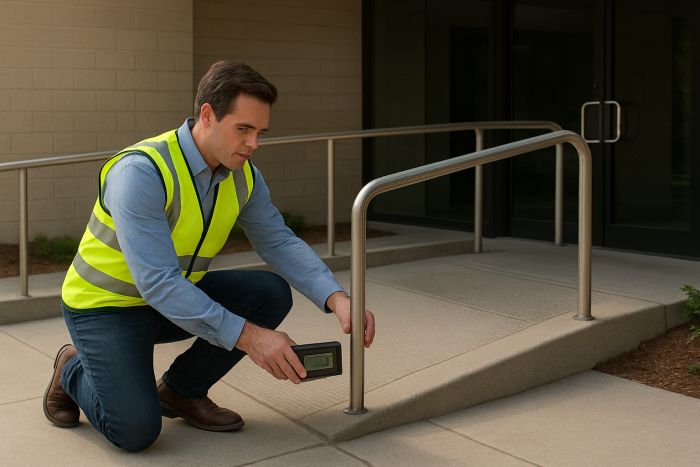
Man with a machine measuring the degree of slope of a ramp.

A significant part of providing Reasonable Accommodation in the workplace is making physical spaces accessible, by Implementing changes such as ramps, elevators, accessible bathrooms and modified workstations to ensure mobility and comfort.

To ensure that this is done correctly, it is important to use Organisations and Companies that specialise in Universal Design and Access and follow standards set by “The National Building Regulations and Building Standards Act”.

By contacting Organisations and Companies such as those listed below that are qualified in Universal Design, you ensure that you are not only on the right side of the law, but also dont exclude anyone.

Reasonable accommodation involves making necessary and appropriate modifications to ensure that persons with disabilities can enjoy their rights on an equal basis with others. The National Strategic Framework on Reasonable Accommodation for Persons with Disabilities (2023) provides comprehensive guidelines to facilitate this process.

The Strategic Framework provides for:

Individualized Support: Recognizes that reasonable accommodation measures are often specific to the individual’s impairment and personal circumstances.
Comprehensive Measures: Includes assistive devices, technology, personal assistance, and environmental adaptations to promote independence and participation.
Standardized Procedures: Encourages the development of service charters and standards across all sectors to ensure consistent and equitable access to accommodations.

Examples of Reasonable Accommodation:

Adjusting Work Hours or Duties: Modifying schedules or job responsibilities to align with an individual’s needs.
Providing Assistive Technologies: Supplying tools such as screen readers, ergonomic chairs, or other devices to enhance accessibility.
Making Physical Spaces Accessible: Implementing changes like ramps, elevators, or modified workstations to ensure mobility and comfort.
Offering Live Assistance: Providing services such as personal aides, sign language interpreters, or guide dogs to support daily functions.

How to Request Reasonable Accommodation:

Disclosure: Communicate your specific needs to the relevant authority. While disclosure is voluntary, providing detailed information can facilitate appropriate accommodations.
Assessment Reports: Offer medical or professional documentation that outlines your disability and the recommended accommodations.
Confidentiality: Employers are obligated to handle all personal information with the utmost confidentiality.
Interactive Process: Engage in open dialogue to identify effective and reasonable accommodations.
Timely Implementation: The framework emphasizes prompt action to ensure that accommodations are provided without unnecessary delays.

3. Starting Your Own Business

Starting your own business as a person with a physical disability in South Africa can be a powerful step toward independence, empowerment, and financial security. With the right support, accessible resources, and determination, entrepreneurs with disabilities can turn their skills and passions into sustainable enterprises.

Although challenges such as accessibility, funding limitations, and societal stigma may exist, many successful business owners with disabilities have shown that innovation and perseverance can overcome these barriers with the right type of support.

By creating their own opportunities, they not only build meaningful livelihoods but also inspire others and contribute to a more inclusive economy.
The South African government and various organisations such as NCPD and the SAB Foundation offer programs, funding opportunities, support and training initiatives aimed at promoting disability-inclusive entrepreneurship. Please read the information below to find out more about these companies and organisations that provide these services for persons with disabilities.

Entrepreneurs with disabilities and disability-owned businesses can access various benefits, support programs, and preferential procurement opportunities in South Africa. These benefits aim to promote economic inclusion, access to funding, and business growth.

Preferential Procurement Opportunities
The Preferential Procurement Policy Framework Act (PPPFA) and Public Procurement Act (PPA) provide opportunities for businesses owned by persons with disabilities to secure government contracts.

However, eligibility is influenced by Broad-Based Black Economic Empowerment (B-BBEE) policies:
Black-owned businesses (Africans, Coloureds, and Indians with disabilities) qualify for preferential procurement points and reserved contracts.
White-owned businesses with disabilities are not eligible for B-BBEE preferential procurement under the amended framework.

Key benefits include:
– Reserved procurement opportunities for disability-owned businesses.
– Enterprise development and supplier programs for black disability entrepreneurs.
– Financial incentives for companies that subcontract or partner with black-owned disability businesses.

Access to Funding and Financial Support
Entrepreneurs with disabilities may qualify for business funding, grants, and bursaries through various programs, including:
– National Empowerment Fund (NEF) –Disability Empowerment Fund: Provides financial assistance and equity funding for black entrepreneurs with disabilities.
– Small Enterprise Finance Agency (SEFA): Offers business loans and support services tailored for entrepreneurs with disabilities.
– National Treasury’s Preferential Procurement Programs: Provides funding incentives and partnerships for disability-inclusive businesses.

SAB Foundation

The SAB Foundation’s Social Innovation and Disability Empowerment Awards is a program that supports South African entrepreneurs developing innovative, sustainable, and scalable solutions to social challenges.

It includes a specific focus on the Disability Empowerment Awards for innovations that improve the lives of people with disabilities and enhance their access to the economy.

The program provides funding, mentorship, and business development support.
Goal: To identify and support entrepreneurs with scalable, sustainable business solutions that address social challenges.
Specific focus: Improving the lives of women, youth, people with disabilities, and those in rural areas.
Disability Empowerment component: Offers additional prize money and support specifically for innovations that benefit people with disabilities.
Benefits for winners: Grant funding, personalized mentorship, and business development support.
Eligibility: Open to South African individuals, innovators, and social enterprises with proven innovation and the potential to create sustainable businesses.

How to apply
Application window: The 2025 application period closes on March 12, 2025, at midday.
Application portal: Applications must be submitted online through the SAB Foundation’s website.
Required information: The application requires detailed information about the applicant, the business, financials, and the social impact of the innovation.

Previous award winners and focus areas
Diverse sectors: Past award winners have developed solutions in various fields, including health, education, housing, and financial inclusion.
Impact: The program has successfully demonstrated its impact by helping entrepreneurs grow their turnover and become more sustainable.

National Council of and for Persons with Disabilities (NCPD)

The National Council of and for Persons with Disabilities (NCPD) currently has +-2 000 registered Entrepreneurs with disabilities on our database and provide the following assistance:

– Provide extensive training programs e.g. on tender processes, compliance, sector specific Marketing of their products and services.
– Refer companies seeking BBBEE points in the category of Enterprise Development.
– On-board Entrepreneurs on Digital Business Management portals e.g. Accenture and Google.
– Find sector specific Mentors.
– Assist with registration on Government and other Database
– Nominate Entrepreneurs for competitions e.g. SAB competition or to serve on Boards (self-representation)
– Share success stories

Logo for the National Council of Persons with Disabilities, an organisation which provides specialised services for persons with disabilities in South Africa

Economic Development Support (EDS)
EDS is a network of Entrepreneurs who receive development support from NCPD and other stakeholders of the programme. All Entrepreneurs complete a needs analysis and the support offered is tailored accordingly.

Membership of EDS entitles entrepreneurs to any of the following offerings:
– Mentorship from industry specific experts coaching and consultations where applicable
– Access to office space and equipment where applicable
– Access to Internet, printing and the telephone where applicable
– Other demand-led professional services within NCPD
– Access to Markets from our existing networks
– Access to Network of other Entrepreneurs within the program
– Peer Support from other Entrepreneurs within the program
– Collaborations and joint ventures with other entrepreneurs within program
– Personalised support and as and when needed consultation from our programme staff
– Tendering Support
– Dissemination of information Entrepreneurs enrolled in this programme come from all 9 provinces.

Small Medium Enterprise Ecosystem Digital Platform (SME-DE)
SME-DE is a diverse supplier development program which aims to empower entities owned by Entrepreneurs with disabilities to be agile, ahead of the market, and to keep growing and adapt to the ever-changing environment.

The program includes the following:
– Training
– Mentoring
– Business development
– Collaboration
– Development support
– Access to markets

Read More about Economic Empowerment – NCPD

How can we help you?

At Disability Info South Africa (DiSA), we are committed to breaking down barriers and creating a more inclusive society.

Guidance & Support

We provide information on eligibility, application processes, and legal rights regarding assistance dogs. 

Accessibility Audits

Ensuring businesses and public spaces are ‘assistance-dog friendly’ and compliant with accessibility standards. 

Disability Awareness Training

Educating organizations and individuals on the importance and rights of assistance dog users. 

Advocacy & Resources
Employment Changes Lives –
Let’s Make South Africa More Inclusive

If you are seeking employment or are a business wanting to improve inclusivity and accessibility, get in touch with us today! 

Together, we can create a world where independence has no limits!

Disclaimers and References

DiSA is committed to promoting the rights, dignity, and inclusion of persons with disabilities as outlined in the White Paper on the Rights of Persons with Disabilities. We strive to ensure that all content on our website reflects appropriate, respectful, and inclusive language in alignment with these principles.

However, we also provide a platform for companies and organisations to advertise their services and products. While we encourage advertisers to adhere to correct terminology and inclusive practices, DiSA cannot guarantee the accuracy or appropriateness of the language used by external parties in their content.

Please note: Any views, language, or terminology used in advertisements, promotional material, or external links do not necessarily represent the views of DiSA.

DiSA disclaims any responsibility for inaccuracies or language that may not align with the White Paper or best practices for disability terminology.

Should you however encounter language or content that you believe is inappropriate or offensive, we encourage you to contact us at info@disa.org.za, so that we can address the issue.

DiSA remains dedicated to fostering a respectful and inclusive environment for all individuals. We appreciate your understanding and collaboration in supporting our mission.


While we strive for accuracy and clarity, AI-generated visuals may not always reflect real-life conditions or representations.
In addition, we feature authentic images and videos of actual instances, events, circumstances that have occurred, as well as products and services supplied by companies who advertise with us.

These authentic visuals are intended to accurately depict our content or the offerings of our advertising partners.
If you have any questions or concerns about the content displayed on this site, please feel free to contact us.

DiSA provides a platform for companies and organisations to advertise their products and services to assist persons with disabilities and their families. While we make every effort to list reputable and credible service providers, the inclusion of any company, organisation, product, or service on our website does not constitute an endorsement or guarantee by DiSA.

Please note the following: DiSA is not involved in the delivery, quality control, or customer service of any product or service offered by advertisers listed on our platform.

Any agreements, purchases, or arrangements made between users of this website and advertisers are solely between those parties. DiSA is not responsible for the outcome of such interactions.

DiSA disclaims any liability for dissatisfaction, damages, or disputes arising from products or services supplied by companies or organisations listed on our website.

We encourage users to thoroughly research and verify any service provider or product before engaging with them. If you have concerns or encounter issues with an advertiser listed on our platform, please let us know at: info@disa.org.za. We value your feedback to help maintain the integrity of our platform.


While we strive for accuracy and clarity, AI-generated visuals may not always reflect real-life conditions or representations.
In addition, we feature authentic images and videos of actual instances, events, circumstances that have occurred, as well as products and services supplied by companies who advertise with us.

These authentic visuals are intended to accurately depict our content or the offerings of our advertising partners.
If you have any questions or concerns about the content displayed on this site, please feel free to contact us.

DiSA is committed to providing accurate and up-to-date information to assist persons with disabilities and their families. However, the nature of online content and external resources means that information can change frequently.

Please note the following: DiSA cannot guarantee the accuracy, completeness, or reliability of all information on our website, particularly information obtained from external sources or links to third-party websites.
External websites may update or remove content without notice, which can result in broken links or outdated information. DiSA is not responsible for the content, accessibility, or functionality of external websites.

While we make every effort to keep our information current, some content may become outdated over time.
We encourage users to verify information directly with the relevant third parties or organisations before making any decisions based on the information found on our platform.

If you encounter a broken link or outdated content, please notify us at: info@disa.org.za and we will address it as soon as possible.
Thank you for understanding and helping us maintain a reliable and accessible platform.


While we strive for accuracy and clarity, AI-generated visuals may not always reflect real-life conditions or representations.
In addition, we feature authentic images and videos of actual instances, events, circumstances that have occurred, as well as products and services supplied by companies who advertise with us.

These authentic visuals are intended to accurately depict our content or the offerings of our advertising partners.
If you have any questions or concerns about the content displayed on this site, please feel free to contact us.

The Information services and website that we offer free of charge, is privately run and funded and is not run or funded by the government. We rely on advertising, paid services and donations to supply and improve this Free information service that we do provide.

The Companies, Clubs, Schools and Organisations that are listed on this site, have advertised or made donations to the Website and have therefore assisted us be able to provide this free Service.
Please support them as they have supported Us and please contact us via info@disa.org.za, if you can advertise with us or would like to make a donation. Alternatively, visit our “Support Us” page to find out how you can support us or acquire our services. – Thank You.

If you encounter a broken link or outdated content, please notify us at: info@disa.org.za and we will address it as soon as possible.
Thank you for understanding and helping us maintain a reliable and accessible platform.

Please Note: We do assist with inquiries via email but may need to send or copy your details and inquiry to various other organisations, companies or government departments, that we sometimes consult, so that we can help you in the best way possible.
If you have any objection to us sharing your query or contact details, please notify us in your email. We will only share your information to assist you and will never sell or use your personal information for any other purposes.

DiSA waivers any liability for what happens if information is shared or used for marketing or other purposes by other organisations who do have consent to view such information.


While we strive for accuracy and clarity, AI-generated visuals may not always reflect real-life conditions or representations.
In addition, we feature authentic images and videos of actual instances, events, circumstances that have occurred, as well as products and services supplied by companies who advertise with us.

These authentic visuals are intended to accurately depict our content or the offerings of our advertising partners.
If you have any questions or concerns about the content displayed on this site, please feel free to contact us.

Please note that this website uses images and videos that are AI-generated and created to visually represent certain information, concepts or scenarios for illustrative purposes.


While we strive for accuracy and clarity, AI-generated visuals may not always reflect real-life conditions or representations.
In addition, we feature authentic images and videos of actual instances, events, circumstances that have occurred, as well as products and services supplied by companies who advertise with us.

These authentic visuals are intended to accurately depict our content or the offerings of our advertising partners.
If you have any questions or concerns about the content displayed on this site, please feel free to contact us.

Disability Info South Africa (DiSA) is committed to protecting your personal information in compliance with the Protection of Personal Information Act (POPIA), Act No. 4 of 2013. By using our free information service, you acknowledge and agree to the following:

Collection of Personal Information:
DiSA may collect and process your personal information (such as name, contact details, and inquiries) solely for the purpose of assisting you with your requests and providing relevant information or support.

Use and Storage:
Your personal information will only be used for the purpose it was collected for, we may need to send or copy your details and inquiry to various organisations, companies or government departments, that we sometimes consult, so that we can assist you in the best way possible.
If you have any objection to us sharing your query or contact details, please notify us in your email. We will only share your information to assist you and will never sell or use your personal information for any other purposes.
DiSA implements appropriate measures to secure your personal information against unauthorized access or loss.

Consent:
By submitting your details through our Contact Form, or contacting us via our email address, you consent to allow DiSA to process your information as outlined in this disclaimer. If you are not comfortable with DiSA sharing your information for the above purposes, please contact us directly at info@disa.org.za.

Access and Updates:
You have the right to request the deletion of your personal information at any time.
To do so, please contact us at: info@disa.org.za.

Third-Party Websites:
DiSA is not responsible for the privacy practices of external websites linked on our platform. Users are encouraged to review the privacy policies of third-party sites before sharing personal information.
For any queries or concerns regarding the handling of your personal information, please contact us at: info@disa.org.za.
Thank you for trusting DiSA to support you with accessible, inclusive, and reliable information.

– www.bradshawleroux.co.za
www.tcm.co.za/Careers
www.sabfoundation.co.za
– www.ncpd.org.za
– www.isilumko.co.za
– www.qasa.co.za

Simplified Summary

Looking For A Job Page: This page includes information about employment and Entrepreneurship. It provides information about companies and organisations that can assist people with disabilities in getting different types of employment and learnerships.