


Vehicles, Driving and Equipment
Welcome to the Vehicles, Driving and Vehicle Aids Page, where we aim to empower you to get you back on the road.
One of the biggest obstacles that many People with Mobility Impairments often encounter, is getting their independence back – and being able to drive a vehicle or even being able to be transported in their own vehicle.
Owning your own vehicle offers many benefits. Thanks to the advances in technology, there are a variety of different types of equipment and adapted vehicles available on the market today, supplied by companies or organisations such as Pro-Mobility, Sitwell, Shoprider, Skyjacks, Easy Drive WC and Nicky’s Drive.
With the use of these Vehicle Aids, and the support of Organisations such as the National Council of and for Persons with Disabilities (NCPD) and QASA, who supply Driver Training and advice, you can get back on the road again – and regain your independence.
This page will assist you to choose the best vehicle for you , the most suitable Vehicle Aids, and also put you into contact with the right people who can help you regain your independence.
What Are You Looking For?
1. Steps To Getting on the Road
– Wheelchair Parking Bays and Discs
2. Choosing The Right Type of Vehicle for your Needs
i. Wheelchair Accessible Vehicles – Driving From Your Wheelchair
ii. Travelling in Your Wheelchair
iii. Motor Vehicle Importation Rebates
iv. Vehicles best suited for Ease of transfer
3. Vehicle Aids
– Who Can Help?
i. Hand Controls
ii. Person-only Transfer Aids
iii. Assistance Loading Your Wheelchair into/onto Your Vehicle
iv. Assistance for Travelling In your Mobility Aid
v. Wheelchair Restraint Systems
4. PrDP Licence





Companies and Organisations that can help you get back on the road
Regaining your ability to drive again, or even finding the right type of Vehicle and Vehicle Aid to transport you and your Mobility Aid, requires specialist solutions.
With so many different types of Vehicle Aids to choose from, which not only help you to drive the vehicle, but also access or exit the vehicle, whether you travel in you wheelchair or not. It is important to find the correct solution to meet your needs.
Companies such as Pro Mobility, Sitwell, SWC Lifts, Shoprider, Nicky’s Drive, NCPD and Easy Drive WC offer a wide variety of solutions and can also advise you on what Vehicle and Vehicle Aids would best suit your needs. Some of these companies can also install and service this equipment if the need arises.
Please read the information below to find out more about Driver Training and assessments and companies that provide Vehicle Adaptions and Vehicle Aids, which can help you get back on the road safely, and give back your independence.
Elevate your mobility, enhance your lifestyle – choose Pro Mobility!
Discover a world of freedom and accessibility with Pro Mobility – Your Ultimate Destination for Assisted Living and Mobility Solutions! Our holistic approach is driven by a genuine passion to enhance the quality of life for individuals facing mobility and agility challenges.
At Pro Mobility, we go beyond just providing products; we offer a personalized experience, understanding the unique needs of each client
Why Choose Pro Mobility?
– Leading-Edge Solutions: Experience the latest in mobility and accessibility solutions curated for your needs.
– First-Class Service: Our dedicated team is committed to delivering top-notch service and unwavering support.
– Authorized Agents: Proud partners with Autochair and Ardoo Products in South Africa, ensuring you get the best in the market.
Explore our extensive range of products and services:
Pro mobility provides an extensive range of products and services, including Wheelchairs; Walking Aids; Hoists, Lifts, Ramps, and Transferring Aids; Bathroom and Mobility Aids; Pressure Care Products; Paediatric Equipment; Vehicle Adaptations and Equipment and much more!
Services Offered includes:
Seating Assessments, Servicing, and Repairs: Pro Mobility not only provides quality products but also ensures that they are prescribed, serviced, and repaired with expertise.
Visit Our Showroom:
Discover a welcoming, wheelchair-friendly space at our showroom in Gillitts. Experience firsthand how our products seamlessly integrate into your home. With ample parking and easy accessibility, our showroom is designed with your convenience in mind.
Connect with Pro Mobility:
Visit our website at www.pro-mobility.co.za for a virtual tour of our offerings.
For inquiries: Tel: 031-266 6421 or email: mobility@pro-mobility.co.za.
Address: 17 Hamilton Crescent, Gillitts, 3610
Shoprider represents the range of electric mobility scooters and wheelchairs manufactured by the Pihsiang Corporation in Taiwan. Pihsiang’s manufacturing plants have been certified for ISO 9001, ISO14001 and ISO 13485 standards.
For the last 30 years Shoprider SA has been serving the Southern African market from Centurion in Gauteng, and as the business and market has grown, we have added representatives in key areas. Shoprider SA carries a full range of stock items which is held
at our centrally located, workshop/showroom in Centurion.
Shipment of parts and scooters to anywhere in the Southern African continent is not a problem. We believe that our after sales service and support give Shoprider South Africa the competitive edge when it comes to customer satisfaction and our ongoing commitment to quality control.
We keep a full compliment of spares on site at all times to ensure that our customers are not left stranded. Our technicians are fully trained, offering in-house service and manufacturing where needed. All our work is guaranteed.
At Shoprider South Africa, we are passionate about providing you with the perfect portable scooter or wheelchair, giving you the personalised mobility and flexibility you need. In partnering with top European and US manufacturers, we have expanded our services to include vehicle conversions for easy and practical transporting of your portable mobility scooter or electric wheelchair.
Contact Shoprider: Tel: (012) 653 1168
Email: shoprider@icon.co.za
Website: www.shoprider.co.za
Address: 70 Jakaranda street, 13 Diamond park, Hennopspark, Centurion, Gauteng.

When mobility becomes a challenge, the journey shouldn’t end. SWC Lifts helps people move with dignity, freedom, and confidence — whether at home, at school, in medical transport, or in community fleets.
Every day, wheelchair users, families, caregivers, and transport providers face the same struggle: getting in and out of a vehicle shouldn’t require risk, strain, or complicated setups. You deserve a solution that removes the barrier, not adds to it.
That’s why SWC designs wheelchair lifts built for reliability, simplicity, and safety.
Explore our compact SWL300 Single-Arm Wheelchair Lift for small vehicles:
https://www.swclifts.com/products/swl300-wheelchair-lift
And our robust SWL350 Dual-Arm Wheelchair Lift for clinics, schools, outreach vehicles and PRM transport:
https://www.swclifts.com/products/swl350-wheelchair-lift
Both lifts offer smooth hydraulic operation, strong steel construction, stable platforms, and easy one-person operation. They’re trusted by clinics, old-age homes, special-needs transport, mobile medical units, and families who need dependable mobility every day.
Most importantly, they restore independence. With an SWC lift, medical visits become easier, community transport becomes accessible, and families can travel without fear of injury or struggle. The lift doesn’t just raise a platform — it raises possibilities for the people who rely on it.
SWC backs every lift with a 3-year warranty and nationwide service coverage, ensuring long-term support wherever you operate.
To learn more or request assistance, contact:
011 902 0191
info@swclifts.com
www.swclifts.com
SWC Lifts — lifting lives, one journey at a time.

A Cape Town based vehicle adaption company which is owned by Johan Cillié. Easy Drive WC is passionate about their products, the quality and reliability of their systems and about making driving safer for persons with Mobility Impairments.
Johan Cillié is a Mechanical Engineer, who has been in the motor industry since 1986 and has been modifying vehicles for years, providing reliable, innovative vehicle solutions to suit the needs of persons with disabilities. The combination of his mechanical and technical knowledge and his compassionate nature assures his clients of a first class service.
We recognise that being in a wheelchair is enough of a challenge and therefore strive to make the adaptation as user friendly as possible.
With the knowledge that an adaptation to a motor vehicle is a compromise, we asses our customers and custom-make our conversions to suit the individuals needs and pockets best. We like to work within a budget and give our customers value for their money, while still ensuring that the safety aspects are non-negotiable. We will therefore not fit a system that has inferior safety and quality aspects. It is important to remember that the products being imported are not mass produced and therefore not cheap but do give good value when fitted properly and set up for the specific customer. The Warranty on all Easy Drive WC systems are guaranteed for twelve months and the servicing for the first six months is free.
Easy Drive WC can supply a wide variety of different products and devices which can assist persons with Mobility Impairments in their homes, as well as other equipment which will allow them to drive a conventional car.
These products and devices supplied by Easy Drive WC include but are not limited to:
– Bed Lifts and Staircase Lifts
– Hand Controls and Accessories
– Turn Out Seats and Towbar Fitted Power Lifts
– Accessible Vehicles & Dropped Floor Conversions
– EasyPull Wheelchair Restraint Systems and the Bodyguard Safety Device
Easy Drive WC has been awarded Agency rights for the world renowned TriPod Mobility. Matching your disability is what Johan excels at, he will adapt your vehicle to ease your driving disability, to become mobile in your own right, by having a vehicle adapted to suit your disability. By using Guido Simplex and locally manufactured adaptation devices, Johan will make it possible for you to become mobile again.
If you have a disability, but want to be independent in your ability to travel, please contact Johan from Easy Drive WC at:
Tel: (021) 851 9592
Email: johan@easydrivewc.co.za
Website: www.easydrivewc.co.za,
Address: Unit 6, The Interchange, 9 Nobel St, Somerset West, Cape Town, 7130.
Sitwell Technologies: are Specialists in the provision of Mobility & Assistive Aid Equipment for persons with physical disabilities.
Sitwell Technologies represent all local suppliers as well as a number of International manufacturers of equipment, providing an unbiased view of all products available to the South African market. Their approach to Mobility is about providing a holistic solution to each individual’s needs.
Sitwell Technologies are based in Johannesburg but can provide products throughout South Africa.
You can contact them at:
Tel: (+27) 11 440 8226
Email: mobility@sitwell.co.za
Website: www.sitwell.co.za
Address: 128 Athol Street, Waverly, Johannesburg, South Africa, 2090.

The National Council of and for Persons with Disabilities is proud to be in a position to offer various training, including Transport and driving training, the majority of training sessions can be tailor-made to suit your needs.
Other training includes SETA accredited training courses; courses for professionals in the Services and Health profession; Courses for architects; Caregiver training for carers of children or adults; Governance training; Fundraising training; Disability Equity training; Reasonable accommodation; Inclusive design; Various impairments and the implications; Drivers of persons with disabilities; Human Rights and advocacy and Assistive device repairs.
Please contact them for more information, or visit: www.ncpd.org.za to find out more.
Nicky’s Drive: is a registered non-profit organisation (086-364-NPO) that aims to assist South Africans with disabilities to be more mobile and independent through the funding of car adaptations. Nicky Abdinor, the founder and chairperson of Nicky’s Drive was inspired to start the non-profit as she knows how empowering driving an adapted car can be. Nicky was born without arms and shortened legs and always had a dream to drive.
In 2001, someone in the UK (with a very similar disability) donated her “old” car to Nicky. The costs of such sophisticated technology for Nicky to drive were beyond her reach, so this donation had a profoundly positive effect on her life.
Nicky’s Drive was founded in 2011 to inspire other people with disabilities to realise their dreams to drive! Nicky offers motivational talks at conferences and events to raise funds for these vehicle adaptions. A portion of Nicky’s speaking fee is donated to Nicky’s Drive and goes directly towards the funding of car adaptations in South Africa.
Since her 2011 TEDx Talk, Driving Dreams: Nicky has become a sought-after motivational speaker and has travelled around the world sharing her story of resilience and cultivating optimism in uncertain times. Besides her unique story, Nicky had the added expertise as a Clinical Psychologist that further enhances her message to create sustainable changes in our attitudes, beliefs and emotions.
For more information on Nicky’s keynote speaking, visit www.nickyabdinor.com.
If you have a DREAM TO DRIVE, apply to Nicky’s Drive now! They could be funding your car adaptations in the near future.
To apply for funding, please contact: apply@nickysdrive.com or nicky@nickysdrive.com for an application form.
The Nicky’s Drive committee (all volunteers) meet quarterly to review applications.
They are able to support 4 projects a year with a maximum donation of R20 000 per project.
In order to be considered by the committee for the funding of a car adaptation project, your application will need to meet the following criteria:
– Applicants with a physical disability who are South African citizens may apply for funding.
– Preference is given to applicants who require accessible transport for work and/or studies.
– Applicants must have funding for their own AUTOMATIC vehicle and the maintenance/running costs of that vehicle.
– Applications need to include a driving assessment by an Occupational Therapist to assess the abilities/needs for driving,
– And a quotation from a local car adaptation company.
– Preference is given to applicants from previously disadvantaged backgrounds.
– Applicants need to be willing to be photographed or filmed for marketing purposes.
Please note that there is no guarantee that Nicky’s Drive can support every car adaptation project (as much as they wish they could!).
Please be in touch for more information www.nickysdrive.com.
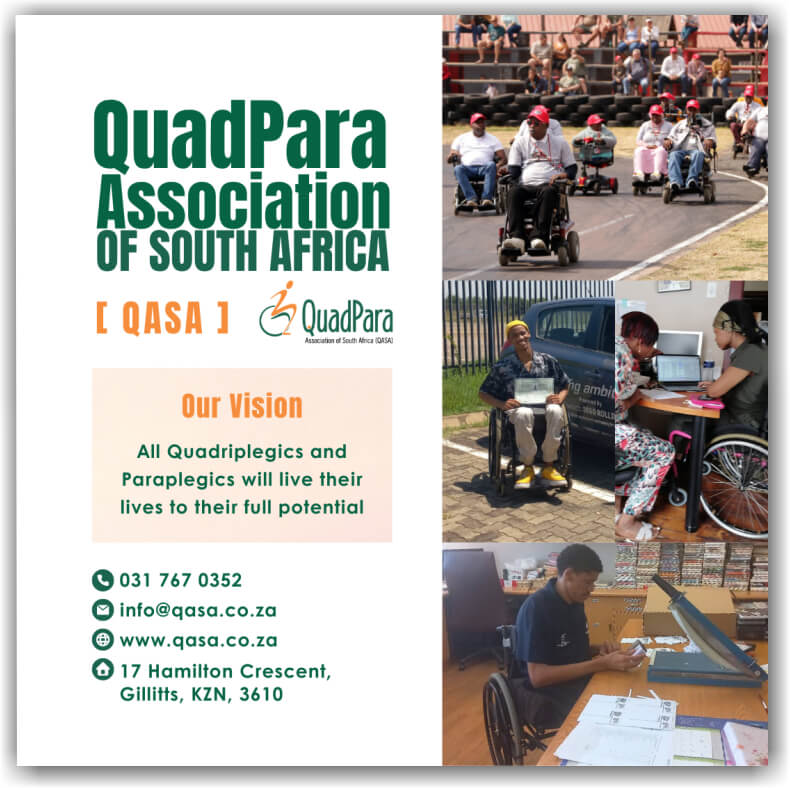
The QuadPara Association of South Africa (QASA) is a non-profit organisation (NPO 000-881) of Quadriplegics and Paraplegics in South Africa. QASA’s mission is “to improve lives by securing resources to advocate, educate, capacitate, support and mobilize”. QASA’s vision is that “all quadriplegics and paraplegics will live their lives to their full potential”. QASA develops products, programmes and services for quadriplegic and paraplegic members to build their capacity and ensure opportunities for societal integration and empowerment.
These projects include but are not limited to the Driving Ambitions:
A major barrier facing persons with disabilities is a lack of accessible public transport, which is a huge obstacle for wheelchair users trying to lead an independent life. Recognising this, QASA rolled out a driver training project in KwaZulu-Natal, Gauteng and the Western Cape to teach persons with mobility impairments to drive a vehicle fitted with hand controls.
Should you be interested in joining this programme you will have to meet the following requirements:
– Be a QASA member – if not fill in a membership application form.
– Have a physical disability.
– Possess a valid learner’s license.
– A South African ID document.
– The candidate must be focused and committed to attending classes every day.
Learn More About QASA Driving Ambitions Programme.
1. Steps To Getting on The Road
Driving or being transported with a physical impairment has become increasingly accessible thanks to advances in vehicle design, adaptive technology, and specialized driver training. Below we will guide you through the 3 Main Steps to getting on the road again, whether you will be driving or as a passenger. These include:
1. Driver Training and Assessments
2. Vehicles and Adapted Vehicles
3. Vehicle Aids and Adaptations
Read and click on the appropriate sections below to find out more:
1. Driver Training & Assessments
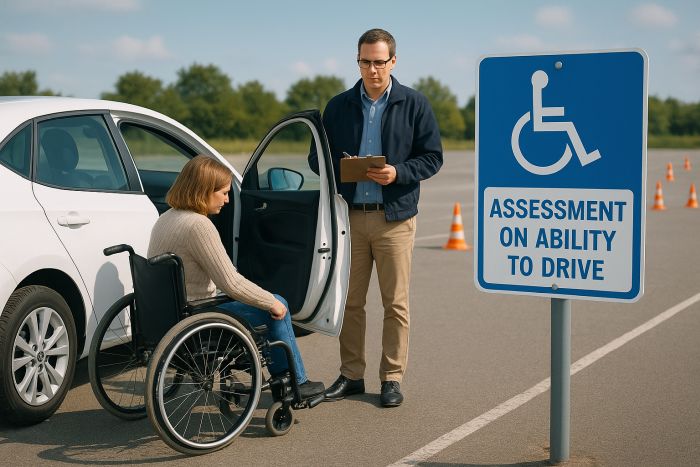
Learning to drive is a huge step towards regaining independence. An assessment is required to ensure your condition allows you to drive by law and to assess whether you have the ability to drive and identify what type of equipment you will require. Driver Training teaches you how to drive with adapted equipment.
Find out more about Driver Training & Assessments
2. Vehicles & Adapted Vehicles
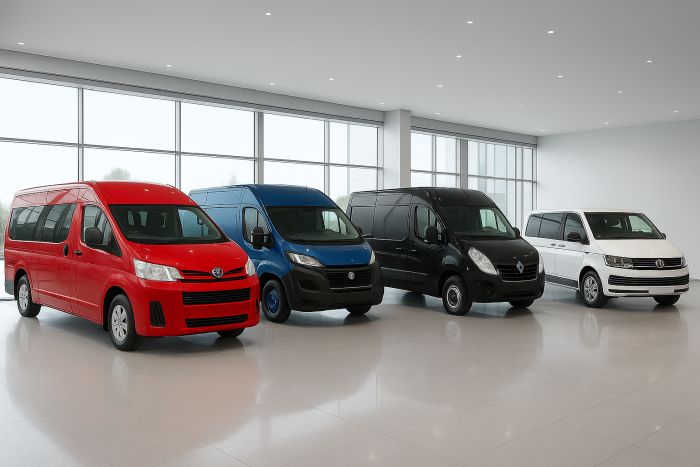
Wheelchair Users who travel in their wheelchair generally require bigger vehicles and/or specially adapted vehicles, which not only can accommodate the height of the person in the wheelchair but also the length and width of the wheelchair itself. These vehicles also require some adaptions.
Find out more about the types of vehicles available that provide the adaptions.
3. Types: Vehicle Aids & Adaptions
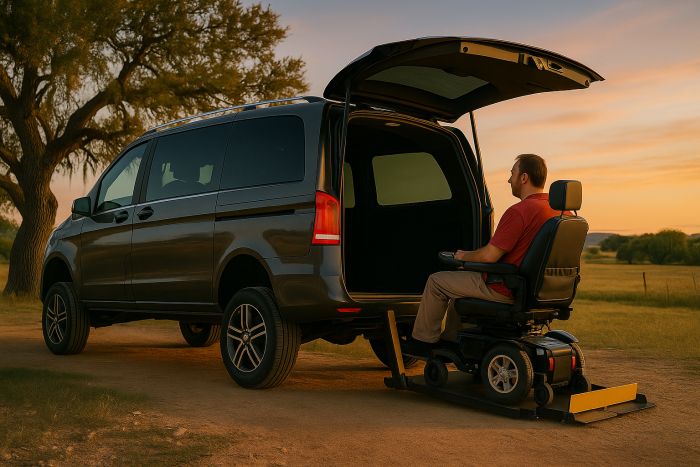
There are various types of Vehicle Aids and Adaptations that can assist people with physical impairments, these include hand controls, steering knobs, left-foot accelerators, wheelchair lifts, hoists and swivel seats. These allow for safe and comfortable travel, whether driving independently or as a passenger.
Learn More about what is available and who supply them.
1. Driver Training and Assessments
Learning to drive is a huge step towards regaining independence, but there are a number of steps to complete before you are able to qualify to drive. These steps are listed below and information on each of these are covered in this website, including the companies and organisations that can assist you such as NCPD), QASA and Rolling Rehab.
Please click on the individual categories listed below to find out more about them, or visit our Driver Training Page to find out more.
2. Choosing the Correct Vehicle for you
The Big Question:
Will you be transferring into the vehicle, or will you remain in your wheelchair, while driving or being transported?
Persons who will be driving the vehicle from their wheelchair, or will remain in their wheelchair while being transported, will require a Wheelchair Accessible Vehicle (WAV), which you can drive your wheelchair into and position in place. The WAV will need to be spacious to accommodate the chair, and the doorway will need to be wide and high enough for you to fit into.
You will also need to decide whether you will require a vehicle that allows back or side entrance.
Motorized Wheelchairs require a lot more height and space to maneuver, as apposed to most Manual Wheelchairs. The height and space you require, will depend on your height and the type of Wheelchair you are using.
i. Driving From a Wheelchair
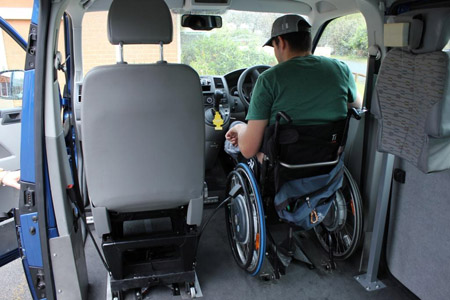
Driving From a Wheelchair provides a new level of freedom for persons who have difficulty transferring into a vehicle. It is only an option in vehicles with a flat floor and with adequate internal height to accommodate a person sitting in their wheelchair.
Considerations:
1. Dimensions of the Vehicle
When choosing this type of vehicle, the choice will be guided by the dimensions of the vehicle, in comparison with the height of the individual in their wheelchair, as well as the size of the wheelchair.
You should also measure the internal height of the vehicle and compare that to the height of the person sitting in their wheelchair.
To find out more about this and to view the dimensions of the interior of the different vehicles available, click on the links below:
Rolling Rehab: Choosing a vehicle for its dimensions: Hatch Backs
Rolling Rehab: Choosing a vehicle for its dimensions: MPV’s
Rolling Rehab: Choosing a vehicle for its dimensions: Wheelchair Accessible Vehicles
To find out more about available Wheelchair Accessible Vehicles (WAV), click on the links below:
WAV Conversions
Purchasing a Pre-adapted WAV Vehicle
Imported WAV Vehicle Rebates
i. WAV Conversions
Driving From a Wheelchair conversions in South Africa are limited to the larger Mini Vans and Kombis, which have adequate internal height.
The technology to adjust for smaller vehicles is not yet available. But you can import these vehicles through companies such as Easy Drive WC in Cape Town.
Easy Drive WC can import smaller vehicles like the Volkswagen Caddy, which have had a lower the floor conversion done all the way to the driver’s seat by companies such as Tripod Mobility, so that you can drive or be a passenger.
An example of one type of conversion, pictured to the right, is the Upfront Conversion, which is also available from Easy Drive WC:
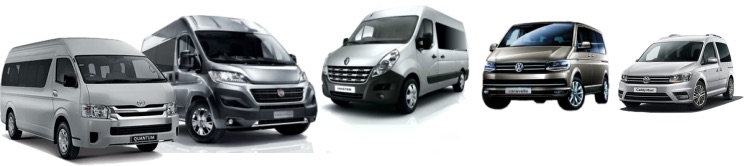
If you opt for a bigger vehicle, there are a variety of different types and makes of Vans or Kombi’s to choose from including: Volkswagen Passenger Vans; Toyota Quantum; Mercedes-Benz Vito; Ford Van; Hyundai; Nissan Van, etc.
If you prefer a smaller vehicle, contact Easy Drive WC – they import and sell previously adapted smaller vehicles, where Driving From a Wheelchair is possible.
Finding a Dealer: When purchasing a vehicle, it is often a challenge to find the right vehicle, and a motor dealer who is sympathetic to the needs of Drivers With Disabilities. Persons With Disabilities who live Gauteng can view a list of dealers in Gauteng, who have been recommended by other Persons With Disabilities. To find out more about these dealers, as well as some featured vehicles, please visit: Rolling Rehab: Recommended Dealers in Gauteng and Auto-Mobility: Featured Vehicles.
ii. Purchasing a Pre-Adapted WAV Vehicle
As mentioned above, there are companies in South Africa that supply smaller, already adapted vehicles, that can be driven into with a wheelchair or can be transferred into, to be able to drive.
These vehicles are 2nd hand and are imported from England by Easy Drive WC and Cape Mobility. Between 6 months and 5 years old, they retail from R180,000 (landed in Cape Town, including duties and VAT). They are imported from Motobility, a registered Charity in the UK with a fleet of 500,000 vehicles.
These companies are invested in making Wheelchair Accessible Vehicles (WAV’s) readily available to you in South Africa – already converted and ready for you to drive, with easy wheelchair access.

A Great example of one of these imported smaller vehicles, which can be driven from a wheelchair, is the Renault Kango “Drive From Wheelchair” vehicle. The one pictured here was donated to QASA and Driving Ambitions by Geoff Dear of Cape Mobility.
This vehicle is available for persons who would like to learn to drive from their wheelchair in the Johannesburg and Pretoria area.
To find out more information about how you can purchase a similar vehicle, contact:
Geoff Dear from Cape Mobility or Johan from Easy Drive WC.
Easy Drive WC also have a wheelchair accessible, adapted Volkswagen Caddy Maxi, available for Hire as part of their Vehicle Hire Self Drive Service. Please contact Easy Drive WC to find out more.
Imported WAV Vehicle Rebates
2. Travelling in Your Wheelchair
Persons who will not be driving the vehicle, but will be traveling in their wheelchair as a passenger, have a number of vehicles to choose from, including any of the vehicles mentioned above, as well as some slightly smaller vehicles. These smaller vehicles can be adapted in South Africa to include a “Lowered Floor” to allow for more head room.
i. Vehicles with Lowered Floors
There are a number of companies in South Africa, including Shoprider, Pro Mobility and Easy Drive WC who adapt and supply vehicles with lowered floor conversions – including, for example, the Peugeot Partner, Volkswagen Caddy Maxi, Crewbus and Trendline.
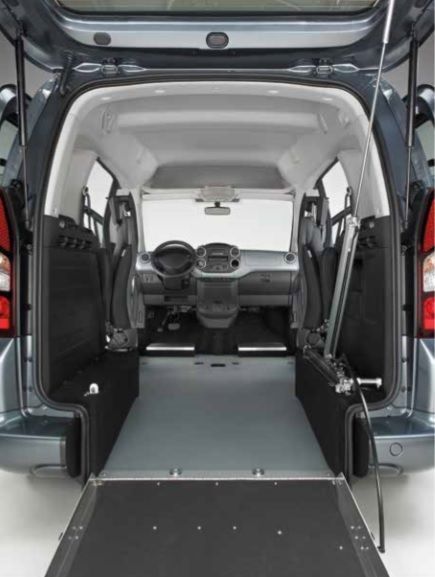
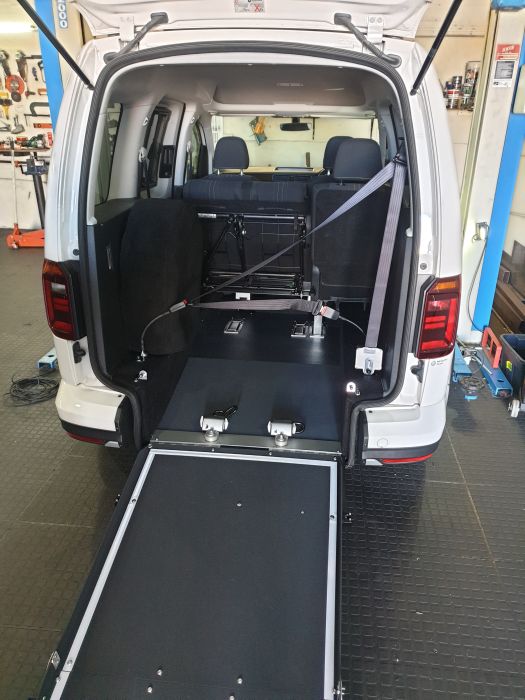
A Lowered Floor Vehicle has a section of the floor lowered and a ramp fitted to enable easy access into the vehicle.
There are 2 conversion options available: a shorter ramp in combination with a lowered suspension, or a longer ramp with the standard suspension.
These rear entry wheelchair vans provide an economically friendly accessible option that takes the worry out of narrow aisle ways and other side entry limitations. Back entry lowered floor conversions are seamlessly engineered to make wheelchair minivans as barrier-free as possible.
The conversion enhances the resale price of the vehicle and can also be undertaken on pre-owned vehicles. Easy Drive WC has completed a number of these different types of conversions:
If you cannot find what you are looking for, or have any questions, please Contact DiSA directly.
3. Vehicles Best Suited For Ease of Transfer
Persons who are able to transfer into a vehicle, should consider buying a vehicle that is a similar height to their wheelchair, including one that has a drivers door that opens relatively wide. Most Persons With Physical Disabilities require an automatic vehicle, as this simplifies the driving process and reduces the number of actions required at any one time. An automatic vehicle is therefore a lot easier to drive.
Each disability is unique and every driver has different strengths, weakness and requirements. The choice of the vehicle and the way that it is adapted, should therefore be customized according to the individual. To find more about this, visit either:
– Auto-Mobility: Choosing The Right Vehicle
– Auto-Mobility: Wheelchair Car Select
– Rolling Rehab: Selecting A Vehicle
It is also very important to have the correct positioning and set-up in the vehicle. The correct in-vehicle positioning can help to optimize the physical function of drivers who have limited body function. This can make the difference between feeling empowered and capable versus feeling trapped in an emergency situation, where you are unable to escape as a result of not having the agility to manoeuvre their vehicle out of harm’s way.
View more information about Driver Positioning and Set- Up.
i. Manual Transfers
When driving or traveling in a motor vehicle, some persons with Mobility Impairments who use wheelchairs or other similar Mobility Aids, do not travel in there Mobility Aids, they therefore need to transfer into the vehicle from their wheelchair or other Mobility Aid.
Some are lucky enough to be able to transfer themselves without assistance.
Transferring Into A Vehicle Manually
Transferring into a vehicle manually often looks easy but can be very difficult when first starting off. A person will need to develop a technique according to their individual abilities. After much practice, transferring can become easier.
To find out more about Transferring into a Vehicle, visit: Auto-Mobility: Transfer Into Vehicle
Loading a Mobility Aid Into Vehicle Manually
Persons With Mobility Impairments who travel in a vehicle and use Mobility Aids such as wheelchairs and who are able to transfer themselves into a vehicle, but do not have help putting their wheelchair into their vehicle, will have to learn to transfer their mobility aid into and out of the vehicle. This can be done manually or with the assistance of equipment such as hoists.
Learning the correct way of manually loading your wheelchair into and out of your vehicle, is the final touch to being independent, but if not done correctly, can cause long term damage to the shoulders which can ultimately threaten your independence. Each person is different, so you will need to learn how to do this according to your individual abilities, wheelchair and type of vehicle you own.
To find out the correct way to load your manual wheelchair, visit: Auto-Mobility: How To Load Manual Wheelchair
Once you have chosen a vehicle that suits your needs, you will have to decide what Vehicle Aids would suit you, this includes the Hand Controls, as well as the equipment that can help you to transfer yourself and your Mobility Aid into the vehicle. Learn More About Vehicle Aids
3. Vehicle Aids
Because each person is unique, each requires a different solution best suited to their needs. It’s not a one style or type fits all.
If you are a person with a disability and you want to get back on the road again there are a couple of things that you will need to consider. One of the most important being: will you be transferring out of your chair and into the car seat to drive, or will you remain in your wheelchair to drive. Similarly if you are being transported, the same applies, will you be transferring into the car with your wheelchair – or without. These questions will to a large degree determine what kind of aid you will require.
A Person-only transfer aid – also called called a vehicle transfer aid or transfer device, includes for example: swivel cushions, transfer boards, and transfer lifts/hoists.
Or, will you require a wheelchair lift or vehicle wheelchair hoists/ramps to transfer both you and your chair safely into the vehicle.
The article below will provide you with the information you need to know to be able to choose the correct vehicle aids to suite you and get you back behind the wheel, or on the road again.
Who can Help?
There are a wide variety of different types of Vehicle Aids available on the market today from Companies like Pro Mobility, Sitwell, Shoprider, Skyjacks, Easy Drive WC and Nicky’s Drive, who can also advise you on what Vehicles or Vehicle Aids would best suit your needs and also install and service the equipment they supply if the need arises.
i. Hand Controls
If you will be driving the vehicle, you will need to choose Hand Controls to suite you, your disability and the type of vehicle you have chosen.
There is a wide range of specialist controls, from simple attachments such as wider mirrors and steering knobs to more elaborate controls that make it possible for almost anyone to drive as long as they meet the requirements for a driver’s license. Some types of driving controls can be permanently fitted, while others are portable and do not require specialist fitting. Foot pedals can be raised, or replaced with hand-controlled devices. Hand Controls are used for those individuals that have the ability to drive, but have limited or no use of their legs.
Hand Controls can be fitted to most types of vehicles and are available from a variety of companies and organisations.
To learn more about the different types of Hand Controls available on the market today, and who supplies them
ii. Person-only Transfer Aids (You without your Mobility Device)
If you will need assistance to transfer into your vehicle.
Some Persons With Mobility Impairments may require assistance to transfer into or out of a vehicle, this may require the assistance of 1 or 2 people to manually transfer that person, but this can be made easier thanks to a number of different types of equipment including:
– Transfer Boards
– Transfer Turntable
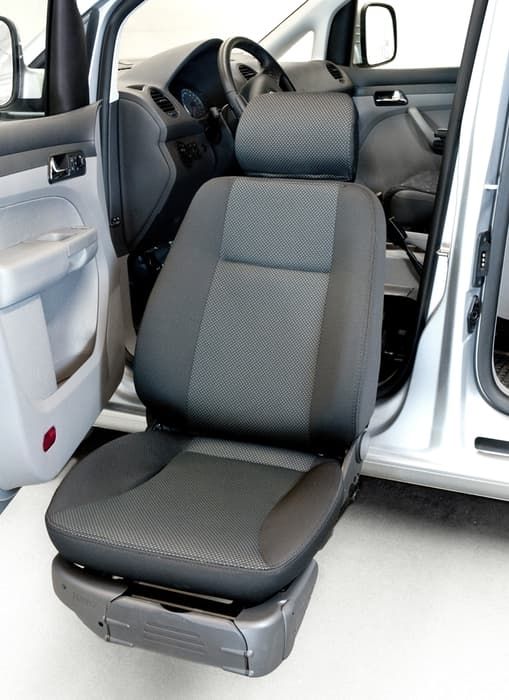
– Swivel Seat For Car Seat
– Swivel Seats
– Top Slider
– The Ardoo Caresafe 140 hoist
– The Smart Transfer Person Lift
This equipment is available in South Africa and is supplied by companies such as Pro Mobility, Sitwell, Easy Drive WC and Shoprider.
Click Here to Learn more about Transfer Aids and the companies that specialise in the supply and installation of these products.
iii. Loading Your Mobility Device into Your Vehicle
If you will be needing assistance to load you mobility aid:
Persons who are able to drive and transfer themselves into their car, but are unable to transfer their Mobility Aid into their car, may require a Vehicle Aid to assist them.
There are a variety of these Vehicle Aids which can assist you, including:
– Roof Top Lifts
– Hoist For Loading Mobility Aids Through The Sliding Door
– Rear Wheel Carriers and Powered Lifts
You should find one that suites you and your vehicle as well as the type of Mobility Aid that you use. Being able to drive and transfer yourself and your wheelchair is the final touch to being independent.
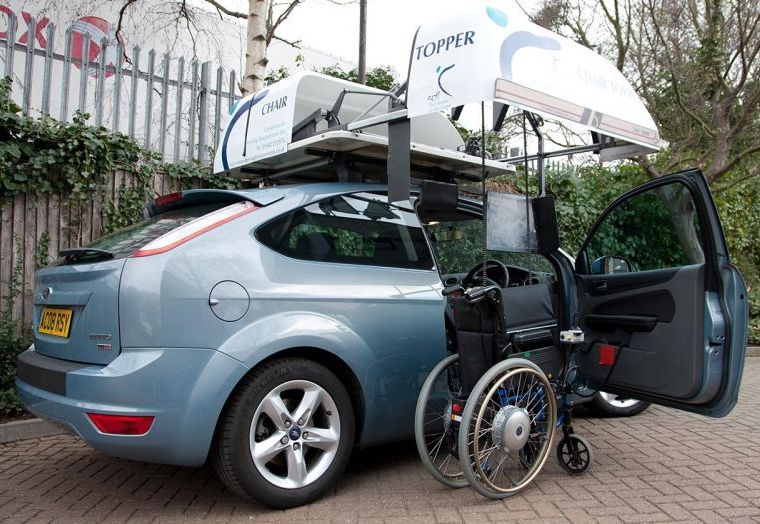
Roof Top Lifts
Persons who use a folding manual wheelchair and need help to load their wheelchair into their car, may find that a Roof Top Lift is an option for them. A Roof Top Lift is a hoist that lifts the wheelchair onto the roof of the car and stores it there. When using a Roof Top Lift, the need to store your wheelchair in the trunk, passenger seat or backseat is eliminated, thus allowing family and friends to enjoy the comfort of your vehicle.
These Roof Mounted Lifts are designed to be operated and used by independent Persons With Disabilities, who want the ease of stowing away their wheelchair without assistance.
Roof Top Lifts can also prevent injury, as long term loading of wheelchairs may often cause strains and injuries. Roof Top Lifts do however only work with folding manual wheelchairs and can add a lot to the fuel consumption of the vehicle due to wind resistance caused by the wheelchair or the compartment in which the wheelchair is stored.
There are 2 types of Roof Top Lifts available in South Africa, including:
1. Roof Mounted Wheelchair Lifts:
The lift is securely mounted onto roof racks, so it can be retrofitted to most models of sedans and hatch back vehicles.
The control toggle switch is positioned near the vehicles steering controls for ease of use by the driver – But it leaves the wheelchair exposed to the elements during transport.
2. The Chair Topper:
Designed to fit a wide variety of vehicles, it automatically folds and stores a conventional folding wheelchair inside a stylish, weather-resistant car-top compartment.
Available from: Pro Mobility, SWC Lifts, Easy Drive WC and Shoprider
View more information about: Roof Top Lifts
Loading Mobility Aids Through The Sliding Door
Sliding Doors can be useful, as they allow extra space to transfer you and your Mobility Aid into your vehicle.
There are various solutions and assistive devices available to convert a normal door into a sliding door, and to assist you transfer your mobility aid through a sliding door. The door width should be 80mm wider than the width of the Mobility Aid, and 150mm higher than the height of the Mobility Aid.
Vehicles with sliding doors can generally accommodate a greater diversity of Vehicle Aids, and are able to load Scooters, Motorized Wheelchairs and Manual Wheelchairs into a vehicle with greater ease.
Companies such as Shoprider, Pro Mobility and Easy Drive WC supply a hoist that lifts the Mobility Aid up into the vehicle, behind the drivers seat.
View more information about: Sliding Door Lifts
Rear Wheelchair Carriers and Powered Lifts

If you have someone available to assist you load your Wheelchair, Scooter or Motorized Wheelchair, but you still need to transport it:
There are a number of options for Persons With Mobility Impairments, who have assistance from someone to load their Mobility Aid, once they have transferred into the vehicle. These options require that the Wheelchair or Scooter is loaded and transported at the back of the vehicle, either in the boot or on a unit attached to a hitch on the back of the vehicle. This may require drilling into the trunk or storage space of the vehicle, or wiring the unit directly to the car battery. It is recommended that you get a reputable auto mechanic to do this, but some suppliers include the option of an expert installation, and will coordinate the entire installation process.
There are a few of these types of options available, including:
– Tail Lifts and Wheelchair Racks
– Wheelchair Carriers
– Towbar Fitted Power Lift
– Boot Hoists
Available from: Pro Mobility, Easy Drive WC, Sitwell and Shoprider
View more information about: Rear Wheelchair carriers
iv. Travelling in your Mobility Aid
If you remain in your wheelchair, while driving or being transported:
Persons who will be remaining in their wheelchair while being transported, will require a Vehicle Aid to be able to load their Mobility Aid and themselves into the vehicle.
There are two options available and these are:
– Wheelchair Lifts For Vehicles
– Wheelchair Ramps For Vehicles
Both of these options have their Pro’s and Con’s and the decision of which one to purchase, should be based on the amount of independence you require; the type of vehicle you are using, the type of Mobility Aid you use and the amount of money that you are able to spend.
You will also require a Wheelchair Restraint System installed in the vehicle to make sure that you and your Mobility Aid does not move around in the vehicle, while you are being transported.
Wheelchair Lifts For Vehicles
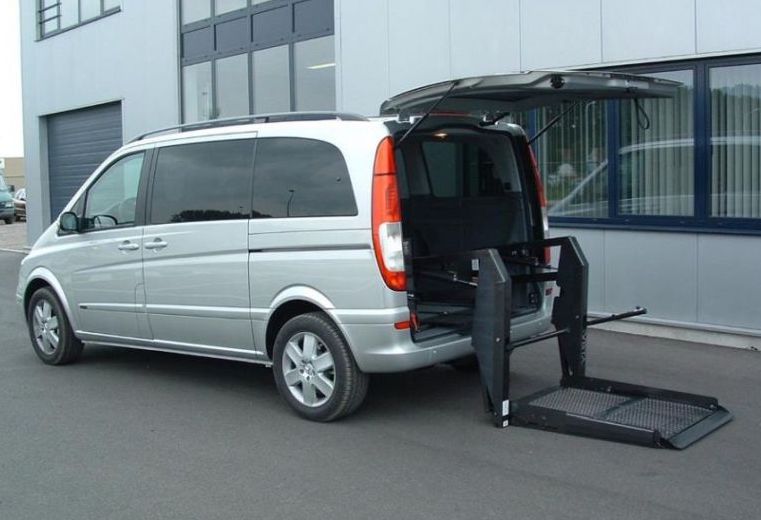
Wheelchair Lifts also known as Hydraulic Lifts are fully powered devices designed to raise persons in Wheelchairs or sometimes Scooters into a vehicle which has adequate internal height and a doorway which is wide enough.
There are a variety of Wheelchair Lifts available, depending on the type of vehicle that you will be using and the entry point, as well as the weight and size of the Mobility Aid that you will be using.
Wheelchair Lifts also come in various sizes and can either be installed on the side or back of the vehicle. Some Vehicle Lifts come with an extension, which gives extra space to load a longer Motorized Wheelchair or Scooter.
There are two types of Wheelchair Lifts that can be installed on Wheelchair-Accessible Vehicles, they are:
– Single-Arm Wheelchair Lifts
– Dual-Arm Wheelchair Lifts
Available from: Pro Mobility, SWC Lifts and Shoprider who also install this equipment
View more information about: Wheelchair Lifts for Vehicles
Wheelchair Ramps For Vehicles
Standard keyboards and miA Vehicle Wheelchair Ramp is an inclined plane installed to assist persons using Wheelchairs, Scooters, Walkers or other Mobility Aids to easily access slightly larger motor vehicles, such as a Kombi’s, Vans or even a vehicle such as the Volkswagen Caddy.
Wheelchair Ramps are ideal for persons who have assistance to get into and out of the vehicle, as most types of Ramps sold in South Africa, are not automatic. The Ramps that are available in South Africa are less expensive than Wheelchair Lifts, but serve a similar purpose. Many of these Ramps that can be used for vehicles, can also be used in or outside of a home to navigate steps.
Wheelchair Ramps for Vehicles come in a variety of different types:
Available from: Pro Mobility, Sitwell, Shoprider and Easy Drive WC
View more information about: Wheelchair Ramps for Vehicles
v. Wheelchair Restraint Systems
Wheelchair Restraint Systems are the devices used to secure a person and their Wheelchair or Scooter into a vehicle, if they are going to be transported while remaining in their Mobility Aid.
These Wheelchair Restraint Systems are extremely important to prevent the Wheelchair or Scooter from moving around and to secure the person in their Mobility Aid, especially during an accident or an emergency stop.
There are a wide range of different types Wheelchair Restraint Systems to choose from, with each having it’s pro’s and con’s, depending on whether you are driving or will have somebody assisting to secure you in the vehicle. The most important thing to remember, is safety, so it is important to double check all of your connecting points before departing.
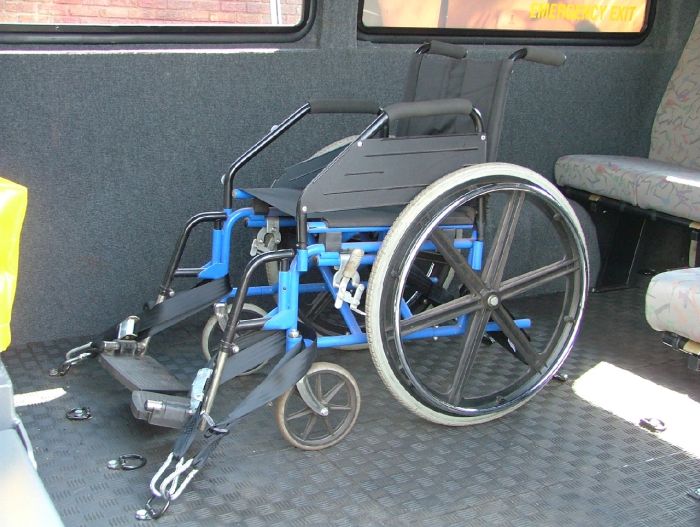
This is not only necessary for the person in the Mobility Aid, but also for the safety of everyone else in the vehicle. Some Wheelchairs or Scooters are manufactured with special hooks that can be used in the securing process. If these hooks don’t exist, it is important to use a part of the Mobility Aid that is strong and secure and will not be damaged by the securing process.
Available from: Pro Mobility, SWC Lifts, Sitwell, Easy Drive WC and Shoprider
View more information about: Wheelchair Restraint Systems
4. PrDP Licence
Persons who are going to drive a vehicle and transport Persons with Disabilities, will require a PrDP Licence.
A Professional Driving Permit (PrDP) is a legal requirement for any person to drive public transport and heavy duty vehicles, such as taxis, buses and breakdown vehicles. To transport passengers for an income you must have a Professional Driving Permit (PrDP). Before it was called a PrDP, a Professional Driving Permit was originally called a Public Drivers Permit (PDP) which was issued to drivers before 1998.
For more information: Vehicle Driving Equipment – Vehicle Aids | PrDP Licence
Disclaimers and References
Simplified Summary
Vehicles, Driving and Vehicle Aids Page: This Page has information about equipment and services to help disabled people adapt their cars