


Vehicle Aids
Discover Vehicle Aids that enable you to transfer into your vehicle from your wheelchair, or drive into the vehicle and drive the vehicle.
Whether you’re looking for adapted vehicles, hoists, ramps, Hydraulic lifts or hand controls to drive the vehicle, this page has it all, including the companies that can install the products and service them.
Regaining independence is one of the biggest challenges faced by persons with mobility impairments — and being able to drive or travel in your own vehicle can make a significant difference.
If you are a person with a disability and you want to get back on the road again, there are a couple of things that you will need to consider. This article will provide you with the information you will need to know to be able to choose the correct vehicle aids to suite you and get you back behind the wheel, or on the road again.
It will assist you to find and choose the best Vehicle Aid for you – and put you into contact with the companies that supply and install them.
Please read the article below to find out more, or use the quick links on the right to jump to the sections of interests.
What Are You Looking For?
Organisations that can Help get you back on the Road
Finding the Best Vehicle Aids for You. Who Can Help?
1. Vehicle Aids
2. Hand Controls
3. Transport Aids for Wheelchair Users
4. Transferring into a vehicle
– Transfer Boards | Transfer Turntables | Swivel Seats | Top Slider
– The ARDOO Caresafe 140 | The Milford Lift
5. Loading your own mobility aid into a vehicle
– Rooftop lifts | Sliding Door Conversions
6. Loading and Transporting a mobility Aid
– Rear Wheel Carriers and Lifts | Boot Lifts
7. Travelling in your mobility aid
a. Wheelchair Lifts for Vehicles
b. Wheelchair Ramps for Vehicle
c. Wheelchair Restraint Systems
d. Flooring
e. Car Seating Solutions for Children



Organisations that can Help You Get Back on The Road
There are a wide variety of different types of Vehicle Aids to choose from, which can not only help you to drive the vehicle, but also access or exit the vehicle, whether you travel in you wheelchair or not. Each person is unique and therefore requires a different solution. Organizations such as Rolling Rehab and Auto Mobility can assist you to choose the right equipment to suite your needs:
Rolling Rehab is an organization that is passionate about assisting people who have a disability and want to drive. “We understand that. being unable to drive in South Africa is like having a prison sentence, so our aim is to assist people to get back their independence through safe driving. We offer an independent consultancy service where we do a holistic assessment of the individual’s needs and abilities, and advise whether they are safe to start driving or to continue driving after an accident or illness.
We also make recommendations on what vehicles and adaptations are best suited to their needs. We believe that defensive driving is an essential skill for any driver who has reduced physical abilities and therefore we organize a number of defensive driving days throughout the year in partnership with an advanced driving academy.”
Visit: www.rollingrehab.co.za to find out more

Nickys Drive is a registered non-profit organisation (086-364-NPO) that aims to assist South Africans with disabilities to be more mobile and independent through the funding of car adaptations. Nicky Abdinor, the founder and chairperson of Nicky’s Drive was inspired to start the non-profit as she knows how empowering driving an adapted car can be.
Nicky was born without arms and shortened legs and always had a dream to drive. In 2001, someone in the UK (with a very similar disability) donated her “old” car to Nicky. The costs of such sophisticated technology for Nicky to drive were beyond her reach, so this donation had a profoundly positive effect on her life.
Nicky’s Drive was founded in 2011 to inspire other people with disabilities to realise their dreams to drive! Nicky offers motivational talks at conferences and events to raise funds for these vehicle adaptions. A portion of Nicky’s speaking fee is donated to Nicky’s Drive and goes directly towards the funding of car adaptations in South Africa.
Since her 2011 TEDx Talk, Driving Dreams: YouTube Clip, Nicky has become a sought-after motivational speaker and has travelled around the world (and online during the pandemic!) sharing her story of resilience and cultivating optimism in uncertain times. Besides her unique story, Nicky had the added expertise as a Clinical Psychologist that further enhances her message to create sustainable changes in our attitudes, beliefs and emotions. For more information on Nicky’s keynote speaking, visit www.nickyabdinor.com.
If you have a DREAM TO DRIVE, apply to Nicky’s Drive now! They could be funding your car adaptations in the near future.
To apply for funding, contact: apply@nickysdrive.com or nicky@nickysdrive.com for an application form. The Nicky’s Drive committee (all volunteers) meet quarterly to review applications. They are able to support 4 projects a year with a maximum donation of R20 000 per project.
In order to be considered by the committee for the funding of a car adaptation project, your application will need to meet the following criteria:
– Applicants with a physical disability who are South African citizens may apply for funding.
– Preference is given to applicants who require accessible transport for work and/or studies.
– Applicants must have funding for their own AUTOMATIC vehicle and the maintenance/running costs of that vehicle.
– Applications need to include a driving assessment by an Occupational Therapist to assess the abilities/needs for driving, along with a quotation from a local car adaptation company.
– Preference is given to applicants from previously disadvantaged backgrounds.
– Applicants need to be willing to be photographed or filmed for marketing purposes.
Please note that there is no guarantee that Nicky’s Drive can support every car adaptation project (as much as they wish they could!). Please be in touch for more information www.nickysdrive.com.
Finding the best Vehicle Aids For You. Who Can Help?
While the Organizations listed above can assist you to choose the right equipment to suite your needs, companies such as Pro Mobility, Sitwell, Skyjacks, Shoprider, Nicky’s Drive and Easy Drive WC offer a wide variety of solutions and can also advise you on what Vehicle and Vehicle Aids would best suit your needs. Some of these companies can also install and service this equipment if the need arises.
Sitwell Technologies: are Specialists in the provision of Mobility & Assistive Aid Equipment for persons with physical disabilities.
Sitwell Technologies represent all local suppliers as well as a number of International manufacturers of equipment, providing an unbiased view of all products available to the South African market. Their approach to Mobility is about providing a holistic solution to each individual’s needs.
Sitwell Technologies are based in Johannesburg but can provide products throughout South Africa.
You can contact them at: Tel: (+27) 11 440 8226
Email: mobility@sitwell.co.za
Website: www.sitwell.co.za
Address: 128 Athol Street, Waverly, Johannesburg, South Africa, 2090.

Elevate your mobility, enhance your lifestyle – choose Pro Mobility!
Discover a world of freedom and accessibility with Pro Mobility – Your Ultimate Destination for Assisted Living and Mobility Solutions! Our holistic approach is driven by a genuine passion to enhance the quality of life for individuals facing mobility and agility challenges. At Pro Mobility, we go beyond just providing products; we offer a personalized experience, understanding the unique needs of each client
Why Choose Pro Mobility?
– Leading-Edge Solutions: Experience the latest in mobility and accessibility solutions curated for your needs.
– First-Class Service: Our dedicated team is committed to delivering top-notch service and unwavering support.
– Authorized Agents: Proud partners with Autochair and Ardoo Products – ensuring you get the best in the market.
Explore our extensive range of products and services:
Pro mobility provides an extensive range of products and services, including Wheelchairs; Walking Aids; Hoists, Lifts, Ramps, and Transferring Aids; Bathroom and Mobility Aids; Pressure Care Products; Paediatric Equipment; Vehicle Adaptations and Equipment and much more!
Services Offered includes:
Seating Assessments, Servicing, and Repairs: Pro Mobility not only provides quality products but also ensures that they are prescribed, serviced, and repaired with expertise.
Visit Our Showroom:
Discover a welcoming, wheelchair-friendly space at our showroom in Gillitts. Experience firsthand how our products seamlessly integrate into your home. With ample parking and easy accessibility, our showroom is designed with your convenience in mind.
Connect with Pro Mobility:
Visit our website at www.pro-mobility.co.za for a virtual tour of our offerings.
For inquiries: Tel: 031-266 6421 or email: mobility@pro-mobility.co.za.
Address: 17 Hamilton Crescent, Gillitts, 3610
Shoprider represents the range of electric mobility scooters and wheelchairs manufactured by the Pihsiang Corporation in Taiwan. Pihsiang’s manufacturing plants have been certified for ISO 9001, ISO14001 and ISO 13485 standards.
For the last 30 years Shoprider SA has been serving the Southern African market from Centurion in Gauteng, and as the business and market has grown, we have added representatives in key areas. Shoprider SA carries a full range of stock items which is held
at our centrally located, workshop/showroom in Centurion.
Shipment of parts and scooters to anywhere in the Southern African continent is not a problem. We believe that our after sales service and support give Shoprider South Africa the competitive edge when it comes to customer satisfaction and our ongoing commitment to quality control.
We keep a full compliment of spares on site at all times to ensure that our customers are not left stranded. Our technicians are fully trained, offering in-house service and manufacturing where needed. All our work is guaranteed.
At Shoprider South Africa, we are passionate about providing you with the perfect portable scooter or wheelchair, giving you the personalised mobility and flexibility you need. In partnering with top European and US manufacturers, we have expanded our services to include vehicle conversions for easy and practical transporting of your portable mobility scooter or electric wheelchair.
Contact Shoprider: Tel: (012) 653 1168
Email: shoprider@icon.co.za
Website: www.shoprider.co.za
Address: 70 Jakaranda street, 13 Diamond park, Hennopspark, Centurion, Gauteng.

When mobility becomes a challenge, the journey shouldn’t end. SWC Lifts helps people move with dignity, freedom, and confidence — whether at home, at school, in medical transport, or in community fleets.
Every day, wheelchair users, families, caregivers, and transport providers face the same struggle: getting in and out of a vehicle shouldn’t require risk, strain, or complicated setups. You deserve a solution that removes the barrier, not adds to it.
That’s why SWC designs wheelchair lifts built for reliability, simplicity, and safety.
Explore our compact SWL300 Single-Arm Wheelchair Lift for small vehicles:
https://www.swclifts.com/products/swl300-wheelchair-lift
And our robust SWL350 Dual-Arm Wheelchair Lift for clinics, schools, outreach vehicles and PRM transport:
https://www.swclifts.com/products/swl350-wheelchair-lift
Both lifts offer smooth hydraulic operation, strong steel construction, stable platforms, and easy one-person operation. They’re trusted by clinics, old-age homes, special-needs transport, mobile medical units, and families who need dependable mobility every day.
Most importantly, they restore independence. With an SWC lift, medical visits become easier, community transport becomes accessible, and families can travel without fear of injury or struggle. The lift doesn’t just raise a platform — it raises possibilities for the people who rely on it.
SWC backs every lift with a 3-year warranty and nationwide service coverage, ensuring long-term support wherever you operate.
To learn more or request assistance, contact:
011 902 0191
info@swclifts.com
www.swclifts.com
SWC Lifts — lifting lives, one journey at a time.

A Cape Town based vehicle adaption company which is owned by Johan Cillié. Easy Drive WC is passionate about their products, the quality and reliability of their systems and about making driving safer for persons with Mobility Impairments.
Johan Cillié is a Mechanical Engineer, who has been in the motor industry since 1986 and has been modifying vehicles for years, providing reliable, innovative vehicle solutions to suit the needs of persons with disabilities. The combination of his mechanical and technical knowledge and his compassionate nature assures his clients of a first class service.
We recognise that being in a wheelchair is enough of a challenge and therefore strive to make the adaptation as user friendly as possible.
With the knowledge that an adaptation to a motor vehicle is a compromise, we asses our customers and custom-make our conversions to suit the individuals needs and pockets best. We like to work within a budget and give our customers value for their money, while still ensuring that the safety aspects are non-negotiable. We will therefore not fit a system that has inferior safety and quality aspects. It is important to remember that the products being imported are not mass produced and therefore not cheap but do give good value when fitted properly and set up for the specific customer. The Warranty on all Easy Drive WC systems are guaranteed for twelve months and the servicing for the first six months is free.
Easy Drive WC can supply a wide variety of different products and devices which can assist persons with Mobility Impairments in their homes, as well as other equipment which will allow them to drive a conventional car.
These products and devices supplied by Easy Drive WC include but are not limited to:
– Bed Lifts and Staircase Lifts
– Hand Controls and Accessories
– Turn Out Seats and Towbar Fitted Power Lifts
– Accessible Vehicles & Dropped Floor Conversions
– EasyPull Wheelchair Restraint Systems and the Bodyguard Safety Device
Easy Drive WC has been awarded Agency rights for the world renowned TriPod Mobility. Matching your disability is what Johan excels at, he will adapt your vehicle to ease your driving disability, to become mobile in your own right, by having a vehicle adapted to suit your disability. By using Guido Simplex and locally manufactured adaptation devices, Johan will make it possible for you to become mobile again.
If you have a disability, but want to be independent in your ability to travel, please contact Johan from Easy Drive WC at:
Tel: (021) 851 9592
Email: johan@easydrivewc.co.za
Website: www.easydrivewc.co.za,
Address: Unit 6, The Interchange, 9 Nobel St, Somerset West, Cape Town, 7130.
Nicky’s Drive: is a registered non-profit organisation (086-364-NPO) that aims to assist South Africans with disabilities to be more mobile and independent through the funding of car adaptations. Nicky Abdinor, the founder and chairperson of Nicky’s Drive was inspired to start the non-profit as she knows how empowering driving an adapted car can be. Nicky was born without arms and shortened legs and always had a dream to drive.
In 2001, someone in the UK (with a very similar disability) donated her “old” car to Nicky. The costs of such sophisticated technology for Nicky to drive were beyond her reach, so this donation had a profoundly positive effect on her life.
Nicky’s Drive was founded in 2011 to inspire other people with disabilities to realise their dreams to drive! Nicky offers motivational talks at conferences and events to raise funds for these vehicle adaptions. A portion of Nicky’s speaking fee is donated to Nicky’s Drive and goes directly towards the funding of car adaptations in South Africa.
Since her 2011 TEDx Talk, Driving Dreams: Nicky has become a sought-after motivational speaker and has travelled around the world sharing her story of resilience and cultivating optimism in uncertain times. Besides her unique story, Nicky had the added expertise as a Clinical Psychologist that further enhances her message to create sustainable changes in our attitudes, beliefs and emotions.
For more information on Nicky’s keynote speaking, visit www.nickyabdinor.com.
If you have a DREAM TO DRIVE, apply to Nicky’s Drive now! They could be funding your car adaptations in the near future.
To apply for funding, please contact: apply@nickysdrive.com or nicky@nickysdrive.com for an application form.
The Nicky’s Drive committee (all volunteers) meet quarterly to review applications.
They are able to support 4 projects a year with a maximum donation of R20 000 per project.
In order to be considered by the committee for the funding of a car adaptation project, your application will need to meet the following criteria:
– Applicants with a physical disability who are South African citizens may apply for funding.
– Preference is given to applicants who require accessible transport for work and/or studies.
– Applicants must have funding for their own AUTOMATIC vehicle and the maintenance/running costs of that vehicle.
– Applications need to include a driving assessment by an Occupational Therapist to assess the abilities/needs for driving,
– And a quotation from a local car adaptation company.
– Preference is given to applicants from previously disadvantaged backgrounds.
– Applicants need to be willing to be photographed or filmed for marketing purposes.
Please note that there is no guarantee that Nicky’s Drive can support every car adaptation project (as much as they wish they could!).
Please be in touch for more information www.nickysdrive.com.
1. Vehicle Aids
If you are a person with a disability and you want to get back on the road again, there are a couple of things that you will need to consider.
This article will provide you with the information you will need to know to choose the right vehicle aid for you. It addresses considerations like: how you will enter and exit the vehicle. Will you be driving? And If you are driving – will you remain in your wheelchair or not? How will you load your mobility device?
And, Hand Controls. If you plan on driving a vehicle, you will need to choose Hand Controls that suites you, your disability and the type of vehicle you have chosen.
This is what you need to know.
2. Hand Controls
There is a wide range of specialist controls, from simple attachments such as wider mirrors and steering knobs to more elaborate controls that make it possible for almost anyone to drive as long as they meet the requirements for a driver’s license. Some types of driving controls can be permanently fitted, while others are portable and do not require specialist fitting. Foot pedals can be raised, or replaced with hand-controlled devices. Hand Controls are used for those individuals that have the ability to drive, but have limited or no use of their legs. Hand Controls can be fitted to most types of vehicles. There are a wide variety of companies, who supply different types of driving controls, that will work with each individuals needs, making driving safe for all drivers.
It is important for any person with limited body function to find the correct Positioning and Set-Up in order to optimize their driving performance. Once correctly positioned in a vehicle, then suitable Driving Controls can be chosen according to the drivers physical strengths and the type of Mobility Impairments that they have.
Finding your ideal Driving Controls may take some time, but whatever your mobility needs are, there are controls available to help regain the freedom you deserve.
View more about Positioning, Set-Up and Driving Controls for different disabilities.
Vehicles can also be imported with Hand Controls already fitted, such as this Renault Kango, in the video on the right of the page. To learn more about these WAV vehicles please click on the links below
Categories of Hand Controls
Driving Controls can be either mechanical or power-supported via electronics, pneumatics or hydraulics.
There are three categories of hand controls: primary, secondary and auxiliary:
Primary controls are the essential controls that are required for driving and include the steering, accelerator, brakes and gears. These hand controls make it possible to adjust the acceleration as well as apply the brakes.
Secondary controls operate the other functions of the vehicle which are required for safe driving such as indicators, park brake, hooter and wipers.
The Auxillary controls include the ‘comfort’ features of the car such as the radio and air conditioning.
There are a variety of different solutions available for Persons Driving With Disabilities, including the following Hand Controls and Accessories, which are supplied by companies such as Shoprider, Easy Drive WC, Pro Mobility and Nicky’s Drive.

A universal floor-mounted hand control that moves the accelerator and brake pedals to an intuitive hand control, whereby you pull for gas and push to brake.
Each Carospeed Classic comes fitted with a hill holder to hold the brake pedal down, in this way hands are freed at traffic lights to change gears or tune the radio. The Cruise control is an optional extra and its set function is activated using the same button as the hill-holder.
Carospeed Classic is available in three versions:
– Standard model: Basic accelerator and brake functions.
– Indicator model: With integral indicators for right and left.
– E model: With integral electrical functions for right and left indicators, windscreen wipers, washers, horn, high and low beam and set function for the cruise control, in the knob.
These Products that which enable you to safely and independently drive your vehicle are available from Shoprider, who also sell various other Accessories that can also assist, including Steering Wheel Spinners, Left Foot Accelerator Pedal and Pedal Extensions.
Contact Shoprider to find out more, on:
Tel: (012) 653 1168 Email: shoprider@icon.co.za
Website: www.shoprider.co.za
Address: 70 Jakaranda street, 13 Diamond park, Hennopspark, Centurion, Gauteng.
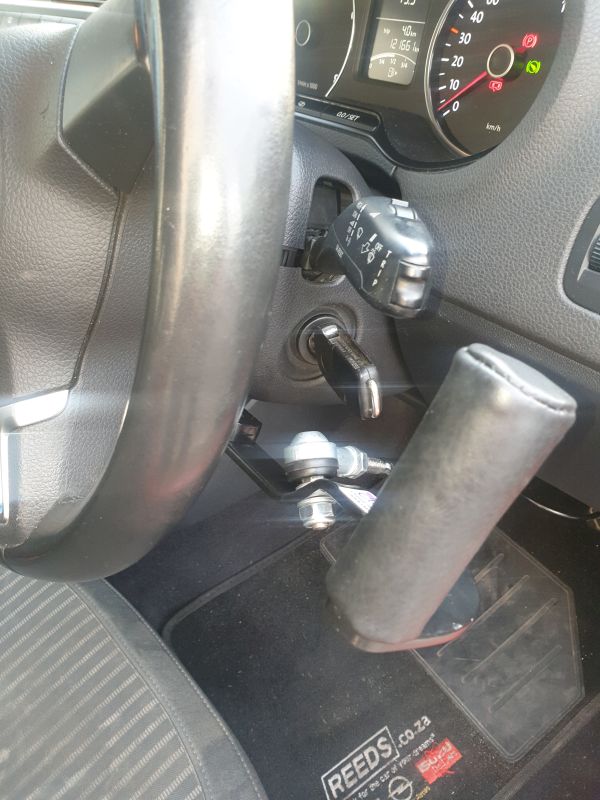
Easy Drive WC is committed to making driving safer and more accessible for people with mobility impairments by offering a range of specialised hand controls and driving accessories. Because every individual has unique strengths and limitations, different solutions may be needed to ensure safe and confident driving.
These hand controls include, but are not limited to:
– Chairman Co-driver Hand Control
– Left Hand Side Push Pull VW Polo
– Push Pull Controls
– Push Pull Right Side Controls
– Push Pull Left Side Controls
Various types of Accessories are also available from Easy Drive WC to help ensure that persons with special needs get that extra assistance, these Accessories include:
– Accelerators including: Electric Accelerators; Left Foot Accelerators and Mechanical Accelerators.
– Clutches include: Automatic Clutches & Duck Clutches
– Pneumatic Door Opener: Open and close door by remote control. Pneumatic door opener is now available in South Africa, locally made to cut cost.
– Motorized Transfer Seat: Height adjustable seat.
– Pedals Protectors of Adapted Car: Easy Drive WC has developed a cover that flips up in front of the pedals if you have problems with spasms.
The pedals are clear to be used by any able bodied driver.
– Steering Wheel Handles: Easy Drive WC also supply and fit spinners, making parking easier.
We can supply a full range of 1 and 3 prong spinners as well as the knob type.
– Secondary Controls: Secondary Controls on a vehicle can be the horn, indicators, lights, wipers, air conditioner, rear window demister, seat adjustments etc.
– Pedal Inversion (Reversal): This modification is usually done for right legged amputees, or persons who have had a stroke.
Easy Drive are able to support all these controls from a system that has been designed specifically for this purpose. All these controls can be made easily operable for the driver of a car fitted with hand controls via a touch button screen or one easily accessible button to activate multiple functions. Gear selection can also be done via touch buttons and an actuator. These controls can all be customized to suit your specific needs, and can be reprogrammed later.
To find out more about the correct Positioning, Set-Up and Driving Controls for different disabilities, Click Here.
To find out more about Adaptive Driving Controls, visit Auto-Mobility: Adaptive Driving Controls.
These and similar products are available to purchase from Companies such as Shoprider, Pro Mobility and Easy Drive WC
3. Transport Aids for Wheelchair Users
1. Aids to Help You Transfer into a Vehicle

Some persons with Mobility Impairments require assistance to transfer into or out of a vehicle – which may entail the assistance of one or more persons to manually transfer that person.
Fortunately there are tools available these days that can make this process much easier, including:
– Transfer Boards
– Transfer Turntable
– Swivel Seat For Car Seat
– Swivel Seats
– Top Slider
– The Ardoo Caresafe 140 hoist
– The Smart Transfer Person Lift
Simply click on the item of interest above or keep scrolling to learn more.
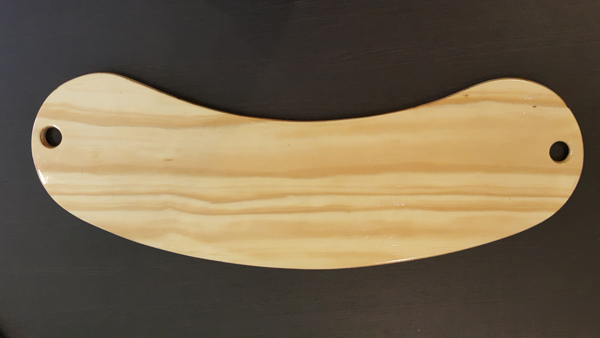
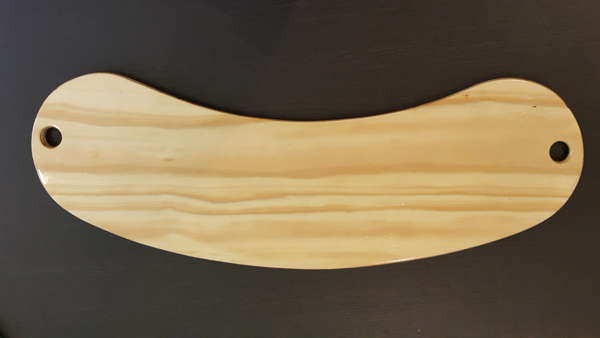
i. Transfer Boards
Transfer boards are a valuable mobility aid for anyone learning to transfer independently or looking to reduce strain during transfers.
By allowing users to slide rather than lift their full body weight, transfer boards help prevent shoulder overuse injuries — a common issue for wheelchair users.
They also make assisted transfers safer and easier, reducing the physical load on caregivers.
Standard boards are widely available through most wheelchair suppliers, with a range of alternative designs to suit different needs.
Available from: Pro Mobility, Sitwell Technologies, WINFAR, Prima Care, Shoprider and Ability Assist,
For more information visit our Hoists, Lifts, Ramps & Transferring Aids page to find out more about manual transfer equipment, or our
Auto-Mobility: Transfer Into a Vehicle – Transfer Devices page.
ii. Transfer Turntable
Transfer Turntables can be an invaluable aid for a carer or relative. They provide a smooth, easy and constant rotation when transferring a user to and from a bed, chair, commode or car. The Turntables are strong, lightweight and portable and ideal for functional standing and seated transfers, reducing the need for awkward lifting and the risk of injury to carers. They give a full 360-degree rotation, are gripped and have an anti-slip upper surface for safety.
The Turntable diameter is 405mm (16″) and have a weight of 1kg (2.2 lbs). The maximum user weight is 120kg (19st).
Available from: Sitwell Technologies, Pro Mobility and Ability Assist
iii. Swivel Seats for Car Seats
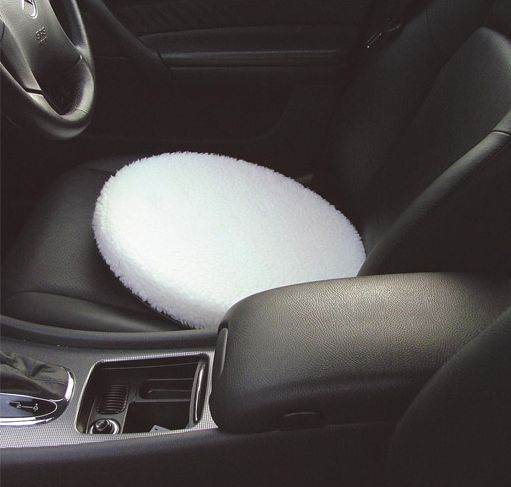
The Devilbiss Drive Swivel Seat for Car Seat cushion is the ideal assistive device to aid with transferring from a vehicle. The top disc rotates a full 360 degrees over the bottom disc. They are suitable for many applications and the slip resistant underside ensuring secure positioning.
The Devilbiss Drive Swivel Seat for Car Seat cushion has been developed to aid people who have mobility problems to turn on a number of different types of seats including dining chairs or car seats.
The fleece cover is warm and comfortable and removable for machine washing.
The seat diameter is 40cm (16″).
Available from: Ability Assist, Pro Mobility and Sitwell Technologies, you can contact them for more information.
iv. Swivel Seats

There are a variety of different types of swivel seats available in South Africa, which can aid in the transfer into or out of a vehicle. These Swivel Seats, swivel the car seat out for easy access to and from the wheelchair.
Two examples of Swivel Seats available in South Africa are:
– The Turnout or Turn-out seat
– The Turny Evo
The Turny Evo [see image at top of section] is a seat lift that will allow the user to get seated outside the vehicle, before being comfortably lifted to a safe position inside.
Having the car seat completely outside of the vehicle and at a height of choice can be very helpful when getting seated or making the transfer from a wheelchair.
The unique feature of the Turny Evo is its programmable movement path. This allows the Turny Evo to be individually tailored to each user and vehicle combination and enables many driver’s side installations.
Available from: Shoprider and Pro Mobility

There are a variety of different types of other Transfer Tables and Swivel Seats available in South Africa: For more information visit our Hoists, Lifts, Ramps & Transferring Aids page, or visit our Auto-Mobility: Swivel Seats to find out more about Swivel Seats.
v. Top Slider
The Top Slider is a portable person-lifting aid designed to assist individuals with mobility impairments in transferring into or out of a vehicle. It mounts onto a pair of Thule roof carriers (not included) and uses a self-locking lift mechanism to raise the user, sliding along a vertical bar attached to the roof rack. Once the transfer is complete, the lift system folds away neatly into a storage tube on the rack.
This roof-mounted wheelchair lift can be retrofitted to most sedans and hatchbacks.
The control toggle is typically positioned near the steering wheel, allowing for independent operation by the driver without the need for assistance. Suppliers of this product usually offer on-site installation and servicing, making it a convenient and empowering solution for many drivers.
Available from: Shoprider and Pro Mobility

vi. The Ardoo Caresafe 140 Hoist
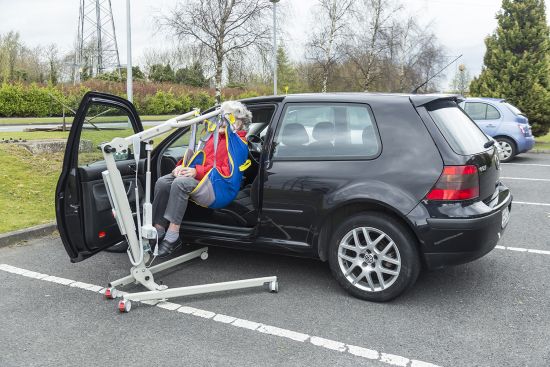
The Ardoo Caresafe 140 Hoist is one of the lightest and most compact portable disability hoists on the market today. Its unique one-piece folding design sets up or folds away in under 30 seconds—no tools required. With its small footprint and front-lifting mechanism, it’s easy to manoeuvre and ideal for use in tight spaces, making it perfect for both home and travel.
The Ardoo 140 doesn’t just benefit the user—it also eases the physical demands placed on carers. Its clever design improves daily quality of life and can be adapted for use as a stand aid.
The Ardoo Hoist Stand Aid Combo upgrade features a hook-on plate with knee pad, converting the hoist into a stand aid in seconds. This is especially useful for users with fluctuating mobility—allowing them to use the stand aid when possible, and the hoist when needed, all with a single device.
Available for Rent from Pro Mobility | For more information visit our Hoists, Lifts, Ramps & Transferring Aids page
vii. The Smart Transfer Person Lift (Milford Lift)
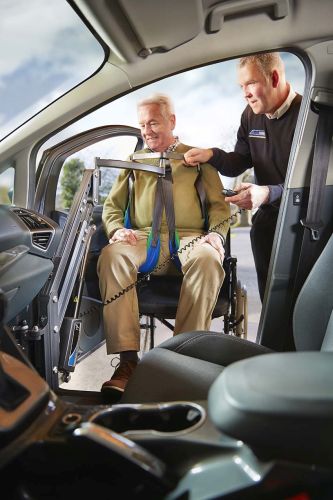
The Smart Transfer Person Lift is a safe and effortless way to transfer from a wheelchair into a standard car seat—without needing to modify your vehicle. Whether you’re a driver or a passenger, the lift gently moves you using a secure sling and lowers you into position.
Strong, versatile, and easy to install, the Smart Transfer can be detached when not in use and supports users up to 150kg. It works with almost any make or model of car, and can also be paired with the Smartbase for use indoors, in offices, or while travelling.
Suitable for both front and rear seats, it provides a dignified, no-lift solution to help you maintain your independence.
The Smart Transfer Person Lift is:
– simple and easy to operate
– easily transferred to another vehicle
– has a lifting capacity of 150kgs
– Manufactured in the UK
– Sling sizes: XS – XL
Available to purchase in South Africa from Pro Mobility.
Available from Pro Mobility and Shoprider | For more information visit our Hoists, Lifts, Ramps and Transfer Aids page
2. Aids to Help You load Your Own Mobility Aid
i. Roof Top Lift

For those who use a folding manual wheelchair and need assistance loading their chair into their vehicle, this Roof Top Lift offers a practical and user-friendly solution.
A Roof Top Lift is a motorized hoist designed to lift and store a wheelchair on the roof of a car, eliminating the need to place it in the trunk, backseat, or passenger area. This not only frees up space for passengers and luggage but also enhances comfort for family and friends traveling with you.
These roof-mounted systems are particularly well suited to independent Persons with Disabilities who wish to manage their mobility aids without assistance.
In addition to promoting independence, they also prevent any potential strain or injury that may result from repetitive lifting of wheelchairs over time.
It’s important to note, however, that Roof Top Lifts are only compatible with folding manual wheelchairs – and they can add a lot to the fuel consumption of your vehicle due to increased wind resistance of the chair on the roof.
There are 2 types of Roof Top Lifts which are available in South Africa:

Roof Mounted Wheelchair Lifts can be retrofitted to most models of sedans and hatch back vehicles. The wheelchair lift is securely mounted onto roof racks, fitted to the roof.
The control toggle switch is positioned near the vehicles steering controls for ease of use by the driver.
Roof Mounted Lifts are used primarily by independent persons with disabilities who want ease of stowing their wheelchair, they are designed to be operated by an independent disabled person without the need of assistance.
NB: You need to be able to twist into position to use this device.
The Chair Toppers [pictured above] universal mounting systems ensure this wheelchair lift will fit most cars and light trucks.
Once you’ve transferred onto your car seat, you can stow your Manual Wheelchair in the car boot, back-seat area of your car, or your car roof. No additional help required. It automatically folds and stores a conventional folding wheelchair inside a stylish, weather-resistant car-top compartment.
These hoists can be fitted to either the driver’s or the passenger’s side of the car.
How It Works:
– Transfer to your car seat
– Use a switch to bring the hoist mechanism to the car door
– Hook your wheelchair on by hand
– The hoist then lifts the chair on to the roof or transfers it to the
back of the car and secures it safely.
– You usually have to attach the wheelchair to the hoist
– Some are easier than others – with some rear-loading systems
you just need to position the wheelchair in the right place
NB: You need to be able to twist into position to use this device.
ii. Sliding Door Conversions

Sliding doors can be particularly beneficial for individuals with Mobility Impairments, as they provide wider, more accessible entry points and create additional space to facilitate easier transfers into and out of vehicles. They also make it simpler to load and unload mobility aids such as wheelchairs or scooters.
There are various solutions and Assistive Devices available in South Africa that can help convert standard car doors into sliding doors, or assist with the transfer of mobility aids into vehicles.
The vehicle pictured alongside is an adapted Peugot 1007, fitted with an electric sliding door.
Sliding Door Conversions are an ideal solution for individuals with physical disabilities. In this example, a push-pull hand control system has been installed, while maintaining a clean and unobtrusive appearance. The functionality of the vehicle remains unaffected for able-bodied users. The generous size of the door opening, combined with the absence of a conventional hinged door swinging outward, significantly improves accessibility and makes transferring into and out of the vehicle much easier and more comfortable.
3. Loading and Transporting a Mobility Aid
There are a number of options available for Persons with Mobility Impairments, who have assistance from someone to load their Mobility Aid once they have transferred into the vehicle.
These options require that the Wheelchair or Scooter is loaded and transported at the back of the vehicle, either in the boot or on a unit attached to a hitch on the back of the vehicle. This may require drilling into the trunk or storage space of the vehicle, or wiring the unit directly to the car battery. It is recommended that you get a reputable auto mechanic to do this, or ask the supplier. Some suppliers include the option of expert installation, and will coordinate the entire installation process for you.
There are a few of these types of options available, including:
– Rear Wheel Carriers and Racks
– Boot Lifts
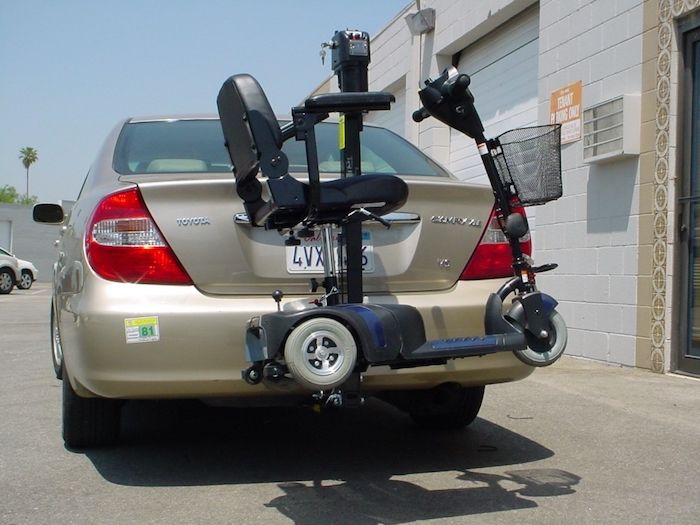
i. Tail Lifts and Wheelchair Racks
ii. Boot Lifts

A Boot Lift facilitates easy and safe stowing away of your Mobility Aid in the boot of the vehicle.
This means that your scooter or wheelchair will need to be foldable and able to fit into the boot.
There are a range of boot lifts available on the market today. Including products such as:
– Carolift
– Boot Lift from Easy Drive WC
– Hercules Automatic Scooter Lift For Your Mobility Scooter
– The Olympian Hoist
These products varey in price and capabilities, so it is important to chose one that meets your needs and suitable for use with your vehicle. If you have any questions about the products featured, please contact Pro Mobility, Shoprider and Easy Drive WC
For additional information: Auto-Mobility: Assisted Loading and Transporting Wheelchairs.
AutoAdapt have a range of boot lifts, including the flexible Carolift 40, which allows you to pick up Wheelchairs from behind or even beside the vehicle,
it lifts up to 40 kg. The jointed hoist arm folds in both directions.
Powered lifting/lowering, with manual rotation, facilitates the assisted folding of the wheelchair, to and from the storage position.
It fits almost all car models and has easy installation thanks to the smart mounting base.
One size fits all, so no need to cut or work the hoist. It is EMC and crash test approved and CE-marked.
This telescopic wheelchair hoist has powered lift and swivel for loads up to 180kg.
All motors are fully programmable, including the speed, acceleration and deceleration.
It fits almost all car models.
Adjustable height, rotation 360˚ and hoist head angle/length.
Adjustable inner and outer rotation stop position, optional quick release for foldable hoist head.
Available from: and Pro Mobility. You can contact them to find out more or to receive a quote.
Easy Drive WC supply a Boot Lift and lifting hoist designed and manufactured in the Easy Drive WC workshops.
This hoist makes the loading and unloading of heavy items such as Mobility Scooters and Wheelchairs into the boot of the vehicle a breeze.
This Hoist is available from Easy Drive WC and Pro Mobility. Contact them to find out more or to receive a quote.

The Olympian Hoist lifts mini scooters or wheelchairs effortlessly into the back of a car – literally at the touch of a button. And it can be easily detached if you need to repurpose the boot for other errands.
The Olympian Hoist is simple and easy to operate. it:
– Lifts and loads in just 60 seconds
– Is easily transferred to another vehicle
– Depending on the model selected, it has a lifting capacity of 40kg and 80kg respectively
– Allows for maximum boot space when not in use
– Suitable for MPVs; 4x4s; Estates; Vans, Saloons and Convertibles.
– Is Manufactured in the UK and available in South Africa

The Hercules Automatic Scooter Lift is a motorized lift which assists you to lift your Mobility Scooter in and out of the car with ease.
This new innovative lifter now makes transporting your Mobility Scooter easy.
The Hercules is a foldable and portable lifter designed to make it easier to lift the Scooter by automatically hoisting it, then enabling you to guide it into your car, truck or van. The lift is powered by the battery on the Mobility Scooter, with one simple plug into your Scooter, it is ready to use.
Available from: Prima Care, Sitwell and Pro Mobility, contact them to find out more or to receive a quote.
4. Travelling in your Mobility Aid
If you remain in your wheelchair while driving or being transported, you will need specific equipment to ensure safety and accessibility.
For Drivers: A lowered floor conversion is usually required.
For Passengers: A vehicle aid is necessary to load both you and your mobility device into the vehicle and to secure it during transit.
In smaller vehicles, where Lowered Floor Conversions have been done ramps are the best option.
In larger vehicles, there are two main options: Wheelchair Lifts or Ramps
Each has its pros and cons. The best choice for you, depends on your level of independence, the type of vehicle you travel in, the mobility aid you use, and your budget.
In addition to the above, a Wheelchair Restraint System must be installed to keep both you and your wheelchair securely in place while traveling. Various restraint and docking systems are available, with the right option depending on whether you are a driver or a passenger.
To learn more about lowered floor conversions, click here.
To explore restraint and docking systems, click here or keep reading.
a. Wheelchair Lifts For Vehicles
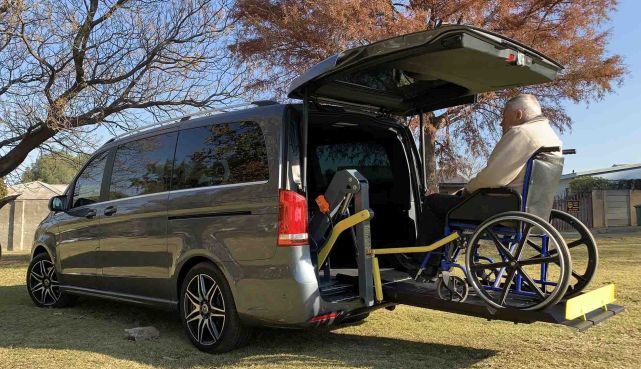
Wheelchair Lifts also known as Hydraulic Lifts are fully powered devices designed to raise persons in Wheelchairs or sometimes Scooters into a vehicle which has adequate internal height and a doorway which is wide enough.
There are a variety of Wheelchair Lifts available, depending on the type of vehicle that you will be using and the entry point, as well as the weight and size of the Mobility Aid that you will be using.
Wheelchair Lifts also come in various sizes and can either be installed on the side or back of the vehicle. Some Vehicle Lifts come with an extension, which gives extra space to load a longer Motorized Wheelchair or Scooter.
There are two types of Wheelchair Lifts that can be installed on Wheelchair-Accessible WAV Vehicles, they are:
– Single-Arm Wheelchair Lifts
– Dual-Arm Wheelchair Lifts
Single-Arm Wheelchair Lifts
Single-Arm Wheelchair Lifts are only used in side-entry applications.
The advantage of such an application is they take up less interior space and leave the passenger entry open.
The down side, is that these side application have less lifting capacity than Dual-Arm Wheelchair Lifts.
These Wheelchair Lifts are available in South Africa and can be purchased Skyjacks, who stock the following products:
Dual-Arm Wheelchair Lifts
Dual-Arm Wheelchair Lifts have a lift capacity up to 800 pounds and consume more interior space than their single arm siblings.
Because of their increased weight-bearing capacity, they take up more space and therefore block the side entry.
For this reason, they are often mounted in the back of the vehicle for rear-entry applications.
Wheelchair Lifts are equipped with a safety lift interlock, which is designed to prevent operation of the Wheelchair, Van or Wheelchair Lift in unsafe situations.
These products are available from Pro Mobility, Skyjacks and Shoprider, who sell and install the following Hydraulic Lifts:
Supplied by Shoprider, these lifts run off a hydraulic system with manual override in case of an electrical problems.
They can handle loads of up to 450kg.
For more technical details, please visit the manufacturer’s website: Autoadapt or AMF Bruns, or contact Shoprider or Pro Mobility for more information.
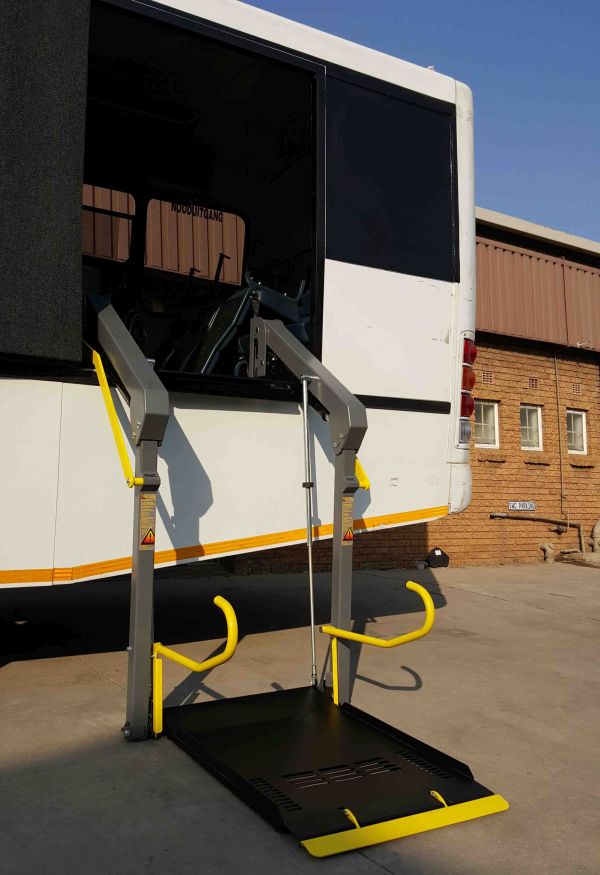
The Double Arm Wheelchair Lift (SWL350-L-15 A&B) has a robust design and can be fitted to a host of vehicles.
This Wheelchair Lift is specifically designed to be mounted into the rear door area or small vans.
With small lifting arm design changes, the B version lift fit can be fitted into large buses with a floor height of up to 1.48 meters.
The Double Arm Wheelchair Lift models are powered by the vehicles existing electrical battery.
This product is available to purchase from Skyjacks and is load tested on fitment by a qualified SWC technician.
Contact Skyjacks and Pro Mobility to find out more or to receive a quote.
Skyjacks offer on site fitment and servicing for all their products and also supply and install wheelchair Tie Down systems.
Available from: Pro Mobility, and Skyjacks who also install this equipment
For more information: Auto-Mobility: Assisted Loading and Transporting
b. Wheelchairs Ramps For Vehicles
A Vehicle Wheelchair Ramp is an inclined plane installed to assist persons using Wheelchairs, Scooters, Walkers or other Mobility Aids to easily access slightly larger motor vehicles, such as a Kombi’s, Vans or even a vehicle such as the Volkswagen Caddy.
Wheelchair Ramps are ideal for persons who have assistance to get into and out of the vehicle, as most types of Ramps sold in South Africa, are not automatic. The Ramps that are available in South Africa are less expensive than Wheelchair Lifts, but serve a similar purpose. Many of these Ramps that can be used for vehicles, can also be used in or outside of a home to navigate steps.
Wheelchair Ramps for Vehicles come in a variety of different types
i. Roll-Up Ramps
An example of Roll-Up Ramps are the Devilbiss Drive Roll Up Wheelchair Ramp.
They provide a quick and easy solution to obtain access.
It can be used as a portable or fixed ramp.
It rolls up to a compact size, with a weight capacity of 300kg (47st). They can be used for both vehicles and houses – and are narrow enough for most doorways, but wide enough to be suitable for most Scooters and Wheelchairs.
They are 70cm (27″) wide and are lightweight with an excellent check plate grip surface.
Due to the fact that they are portable, they do not require any fitting or installation.
The Aluminium finish prevents stains and corrosion, and the fixed height design means the ramps can be simply placed over most doorways and can be easily removed when required.
The ramps come complete with anti-slip pads on the underside of the ramp to offer protection to the floor surface whilst preventing slippage.
These Ramps are available in three sizes: 60cm (1.9ft); 80cm (2.6ft) and 100cm (3.2ft)

Available from: Ability Assist, Pro Mobility and Sitwell Technologies | For more information: Visit our Hoists, Lifts and Transfer Aids page
ii. Telescopic and Channel Ramps
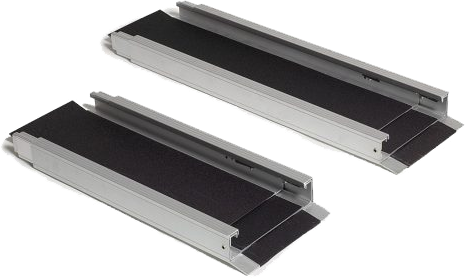
Telescopic and Channel Ramps are available in various sizes and lengths.
They are normally made from Aluminium, making them light and easy to transport.
These ramps are long enough to be used to comfortably get into a vehicle or to get up a couple of steps but can then fold down and pack away.
Some Ramps includes a small, convenient bag for easy stowaway.
These and other similar Telescopic Ramps are available from companies Sitwell, Shoprider and Pro Mobility, who sell some of the following types of Telescopic Ramps.
For more information: Visit our: Hoists, Lifts and Transfer Aids page
iii. Folding Ramps
Much like threshold ramps, folding ramps provide a simple and safe way to navigate through doorways, raised landings, curbs, and into vehicles. And they fold up for added portability.
These portable folding ramps are great for home or vehicle use – they are free-standing structures with modular designs, making them easy to packup and transport with you.
There are various different types of these Manual Folding Ramps, including the:

Sometimes the best solutions is the simplest and it does not get much simpler than a manual ramp. These aluminium ramps by FEAL are very lightweight, easy to use and simple to operate. They have no electrical parts and no maintenance parts. They come in a wide range of sizes to suit any need.
Contact Shoprider and Pro Mobility to find out more
Both of these two-part ramps are easy to handle and fold up quickly.
The Bgr19 pictured below has an extended length of 182cm
Height of 102cm and a Weight of 22kg
With a maximum load of 400kg and internal width of 82cm.
The Bgr21 has extended length of 202cm
Height of 112cm and a Weight of 24kg
With a maximum load of 400kg and internal width of 82cm.
Both of these Two-Part Ramps are available to purchase from Shoprider, please contact them to find out more or to receive a quote.
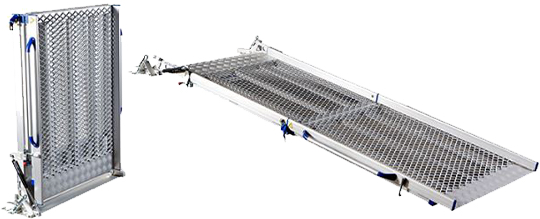
Available from: Sitwell, Shoprider and Pro Mobility
For more information view Hoists, Lifts and Transfer Aids Page, or Contact Us if you require any further assistance.
iv. Solid Ramps
Solid Ramps are portable, normally lightweight and are temporarily attached in place to prevent them from slipping.
These Ramps are usually made of aluminum – and cannot fold. As they are transported inside a vehicle, their length is limited to the width of the vehicle
The ramp provides a gradual rise which is easier for a wheelchair user to navigate, as well as safer, and it’s wide enough to easily navigate.
Lips on the sides help prevent the Mobility Aid from sliping off the edge of the Ramp.
When using this type of Ramp, it helps to park next to a pavement for loading and offloading, reducing the angle still furher.
Available from: Pro Mobility, Sitwell Technologies or Shoprider,
For more information view our Hoists, Lifts and Transfer Aids, or Contact Us if you require any further assistance.
c. Wheelchair Restraint Systems
Wheelchair Restraint Systems are the devices used to secure a person and their Wheelchair or Scooter into a vehicle, if they are going to be transported while remaining in their Mobility Aid.
These Wheelchair Restraint Systems are extremely important to prevent the Wheelchair or Scooter from moving around and to secure the person in their Mobility Aid, especially during an accident or an emergency stop.
There are a wide range of different types Wheelchair Restraint Systems including:
– Retractable or manually adjusted tie downs
– Wheelchair seat belts
– Wheelchair docking systems
Each has it’s pro’s and con’s. Which option is best for you depends on whether you are driving or will have somebody assisting to secure you in the vehicle. The most important thing to remember, is safety, so it is important to double check all of your connecting points before departing.
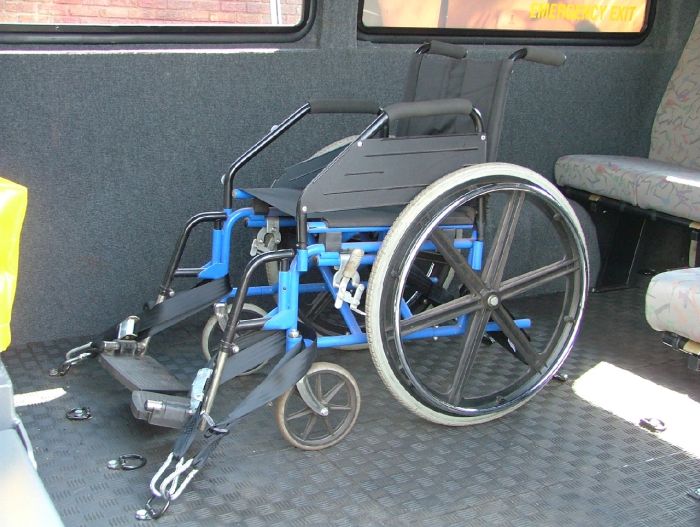
This is not only necessary for the person in the Mobility Aid, but also for the safety of everyone else in the vehicle. Some Wheelchairs or Scooters are manufactured with special hooks that can be used in the securing process. If these hooks don’t exist, it is important to use a part of the Mobility Aid that is strong and secure and will not be damaged by the securing process.
Available from: Pro Mobility, Skyjacks, Sitwell, Easy Drive WC and Shoprider
For more information: Contact DiSA
i. Retractable or Manually Adjusted Tie-Downs

Both Retractable and Manual Tie-Down systems are available in South Africa, Retractable Tie-Downs are much more user-friendly to work with and they take much less time to secure the person in their Mobility Aid and into the vehicle. Unlike a manual strap, the mechanism inside of each retractor is self-tightening.
Retractable Tie-Downs assist the person in the Mobility Aid to become much more independent as they don’t require much effort to get the straps nice and tight, or to release them once you have reached your destination.
There are a variety of different types of these products including:
ii. Wheelchair Seat Belts (Or Securement)
Wheelchair Seat Belts are not unlike most automobile seat belt systems, they may have a strap that goes across the chest area and one that goes across the waist. The difference is that in some cases, the lap belt and shoulder belt are combined together with a single or dual-retractable device and L-Track connectors.
This type of setup is designed specifically for wheelchair riders, who typically need longer straps if tied down in the middle of the vehicle.
These and similar products are available to buy from companies such as Sitwell Technologies, Ability Assist, Pro Mobility, Skyjacks and Shoprider, who sell the following products:

iii. Harnesses, Headrests, Seat Belts and Straps
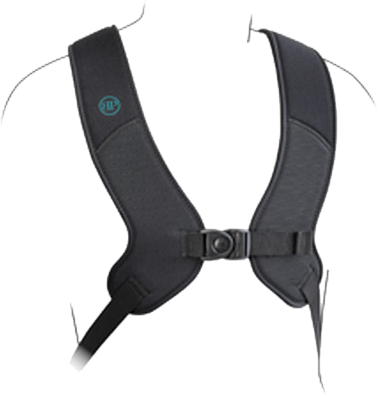
There are a wide variety of other different types of Seat Belts, Straps, Harnesses and Headrests, which are designed and used to keep you safe in your Wheelchair, improve your posture and give you extra support when travelling in a vehicle while in their wheelchair.
Each person is unique and therefore their needs are different, what works for one person, will not necessarily work for another.
There are various types of harnesses, headrests, seat belts and straps available to purchase in South Africa, from companies like Sitwell and Pro Mobility, who sell products such as:
Available from: Prima Care, Sitwell, Mobility Aids and Pro Mobility
For more information: Seating & Positioning – Harnesses, Headrests, Seat Belts and Straps page
d. Wheelchair Docking Systems

Wheelchair Docking Systems are used by many people in wheelchairs who drive their own vehicle from their wheelchair, but can also be used by wheelchair passengers.
This system is basically a rectangular metal device that is mounted to the floor. It has a spring-loaded electronic hook that grabs on to a metal bolt (or pin) that is mounted to the bottom of the wheelchair.
When the bolt is rolled into the docking device, the hook automatically closes around it, keeping the wheelchair in place. Wheelchair seat-belts are then used along with the Docking System for additional securement.
Docking Systems generally include a push button, which is an electronic controlled module and is mounted on or near the dashboard notifying the driver and passengers when the wheelchair is locked down properly.
The control module or quick release button on the docking device is then used to unlock the docking mechanism when reaching your destination. These Wheelchair Docking Systems are available in different types including:
Available from: Sitwell Technologies, Pro Mobility, Skyjacks and Shoprider
For more information: Visit: Auto-Mobility: Docking Stations to find out more about Docking Stations and other securement systems
e. Flooring
On a final more practical note, wheelchairs are heavy on the interior flooring of a vehicle, so it is recommended that whenever a wheelchair is going to be used inside a vehicle, a suitable floor surface is used. Carpets provide a lot of resistance for wheels and they quickly show wear and tear.
To counter this the step well in larger vehicles may need to be filled in to prevent the possibility of the wheelchair wheel falling into the gap.
Wooden, aluminium or rubber floor linings can offer a good solution.
Aluminium floors should preferably be black wear better and reduce reflection when the sun shines on them, which is problematic for the driver.
Available from: Pro Mobility, Easy Drive WC and Shoprider ontact them to find out more, or to receive a quote
For more information: Visit: Auto-Mobility: Flooring to find out more
f. Car Seating Solutions For Children

There are also a wide variety of different types of Car Seating Solutions designed to keep your child safe in the vehicle, improve their posture and give them extra support.
These Car Seats are available to purchase throughout South Africa and include products such as the Recaro Monza Nova featured below.
If you are looking for more vehicle seating solutions specifically designed for kids with Mobility Impairments:
Visit our Seating and Positioning – Car Seating Solutions For Children page
If you are looking for more general Paediatric Seating and Positioning Aids:
Visit our Paediatric Equipment – Pediatric Seating and Positioning Aids page to find out more.
Disclaimers and References
Simplified Summary
Discover Vehicle Aids that enable you to transfer into your vehicle from your wheelchair, or drive into the vehicle and drive the vehicle. Whether you're looking for adapted vehicles, hoists, ramps, Hydraulic lifts or hand controls to drive the vehicle, this page has it all, including the companies that can install the products and service them.