Sports for Intellectual Impairments

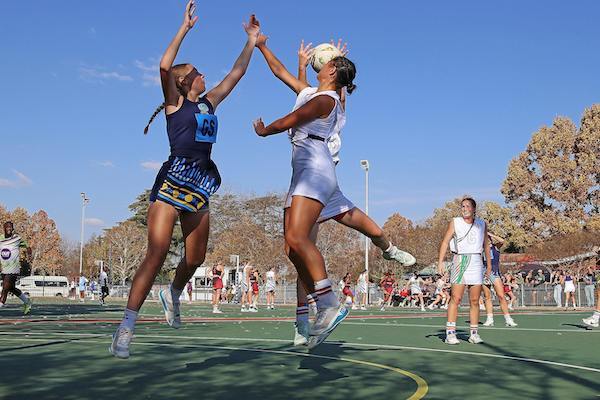
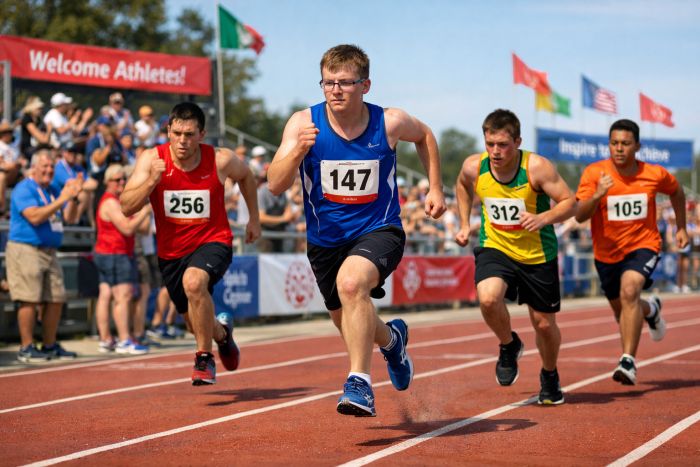
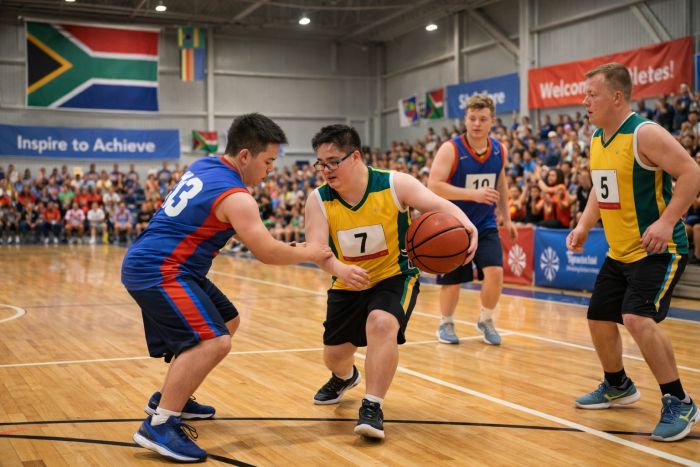
In South Africa, people with intellectual impairments can take part in a wide range of sports at social, club, provincial, national, and international levels. Opportunities are adapted to suit different ages, abilities, and experience levels, so you can start where you are and progress at your own pace.
Whether you enjoy team sports or individual activities, fast-paced action or something more relaxed, there are options available that can match your interests and goals.
Sport is not just about staying fit or competing — it is about feeling stronger, more connected, and more confident in yourself. Taking part in sport or physical activity also helps lower the risk of health problems such as heart disease, diabetes, obesity, and poor bone health.
If you choose to compete, there are clear pathways to higher levels of sport, including the Special Olympics South Africa, or Unified Sports.
Whatever path you choose, sport can be a powerful tool for inclusion, empowerment, and a better quality of life.

1. The Benefits of Sport and Recreational Activities

Sports, Hobbies and Recreational Activities are not only enjoyable, but are also good for you! Offering a powerful way to stay healthy, build confidence, deal with stress and connect with others.

Sports and hobbies provide significant physical, psychological, and social benefits for people with intellectual challenges, including improved fitness, mood, and self-esteem, while also fostering a sense of community, inclusion, and opportunities for personal growth. Leading to greater independence in daily activities, and a stronger sense of well-being and belonging.

Whether you’re joining in or cheering from the sidelines, sport brings people together, inspires communities, and helps challenge the stigma around disability.
2. Getting Started with Disability Sports in South Africa
Choosing a Sport or Hobby best suited for you

When choosing a sport or hobby, start by thinking about what you enjoy, but also what is safe, affordable, and practical for you.
Take a moment to consider your own abilities and interests. Do you enjoy fast-paced activities or something calmer? Would you prefer a team sport or something you can do on your own? Do you like being on land or in the water? These questions will help refine your choice.

It is also important to think about the kind of support you may need. Will you need help from a coach, family member, or friend? Are you able to travel to training or competitions? Choosing the right sport or hobby means finding something that suits your abilities, your lifestyle, and your budget.
No matter your age, experience, or level of ability, there is a sport or hobby for you. Take your time, explore the options below, and follow the steps provided to help you choose an activity that feels right for you.

3. Sports and Hobbies for people with Intellectual Impairments

Choose a Sport That Suits Your Interests

Adaptive sport in South Africa offers a wide and exciting range of opportunities for persons with disabilities. Depending on your interests, abilities, resources, and location, you can choose from the options below and take the first step toward getting active, connected, and confident. Let’s find the sport that fits you.
4. Join a Local Club or Provincial Body

Once you have chosen your sport, you need to take the next step and get active.
There are a variety of sports clubs within South Africa that cater for people with disability.
Each sport listed above outlines a pathway for involvement. Contact the organisation listed, asked for the nearest affiliated club and reach out to them.

When you call, be clear about what you need to ask: enquire about their beginner or social programmes first. Ask them if they have experience coaching persons with intellectual impairments. If they have adapted or inclusive training options? And visit the club. Attend a trial session, watch and listen. Ask questions. And critically assess the suitability of the club for you.

These clubs may include “Disabled” and Abled Body athletes or just “Disabled” athletes. There are a variety of these clubs in South Africa, including:

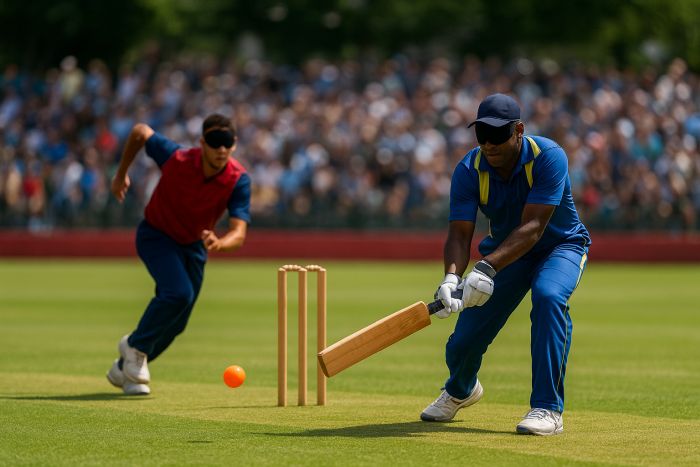
The Differently Abled Cricket Club

The Differently Abled Cricket Club is an open cricket club for the differently abled cricket players, which includes the Blind, Deaf, Intellectually Impaired (SID and MID) and Physically Disabled.
They are the only club of this kind in South Africa and need your support

To find out more …..
Differently Abled Cricket Club logo - everyone welcome
Handicapped Scuba Crew

Handicapped Scuba Crew is a Nonprofit Organization (Registration No: NPO 240/281) which is based in Pretoria and has a mission to break down barriers with “Scubility” –
“We Use SCUBA as a tool for rehabilitation back into normal society and to make sure that persons with disabilities are given the same opportunities to receive excellent quality training, certification and dive adventures, as able-bodied divers do. We enhance the lives of all persons with disabilities and their families through the sport of SCUBA Diving.
– We raise funds for all of these activities.”

Adaptive techniques enable our organization to live our ethos of everyone is equal, giving people as above an equal opportunity to experience all parts of the dives, including sitting on the pontoon if viable! The benefits of Scuba Diving are vast and include both mental and physical benefits. New medical studies confirm the therapeutic benefits of Scuba Diving and the Handicapped Scuba Crew have been recognised for the work that they are doing and the benefits of Scuba Diving for persons with disabilities.

To learn more contact: Dean on: 083 6789 849 or via email: dean@scubacrew.co.za
Richard on: 082 579 3732 or via email: info@scubacrew.co.za or 
Sue on: 064 545 1671 or via email: sue@scubacrew.co.za.
The Handicapped Scuba Crew Company Ad

5. Eligibility for Competition

If you have dreams of competing internationally, or on a national stage, you will first need to prove your eligibility.
To play sport as an athlete with an Intellectual Disability you must be able to demonstrate that you have an IQ of 75 or less. To demonstrate this, players undergo an assessment by an Educational Psychologist to ascertain their IQ level. Once confirmed, the player must then register with INAS as being able to participate in international sport. 

At international level, INAS eligibility requires:
– A formal diagnosis of an intellectual impairment
– An IQ of 75 or below
– Evidence that the impairment occurred before the age of 18
– Functional limitations in adaptive behaviour (such as communication, social, or daily living skills)
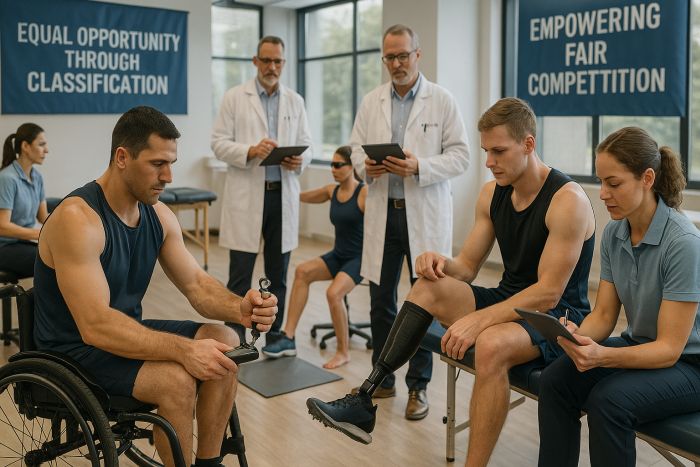
Athletes undergoing evaluation - Classification Process
6. Classification

At the top level, the International Paralympic Committee primarily serves athletes with physical disabilities, but Intellectual Disability athletes have recently been added to some Paralympic Games. Note however, this inclusion only applies to elite athletes with intellectual disabilities diagnosed before the age of 18 with a significant impairment in intellectual functioning and associated limitations in adaptive behaviour.
These athletes have been successfully integrated into Paralympic Sport.
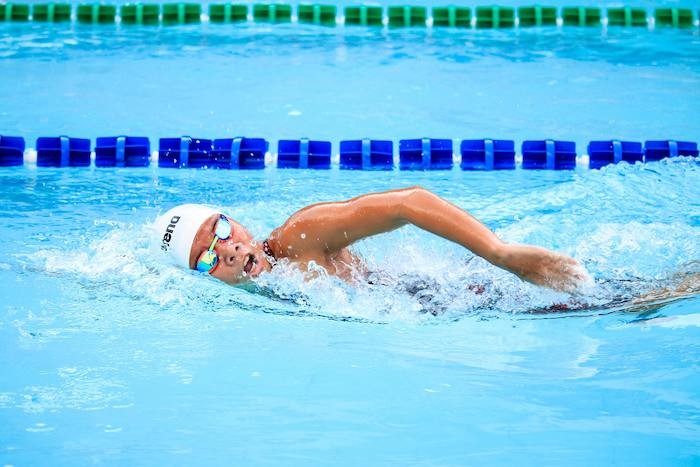
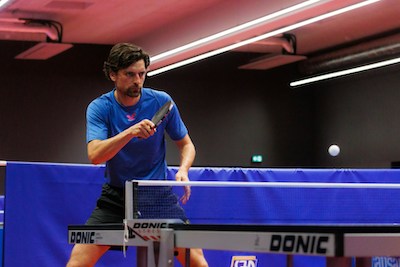
To achieve qualification, they compete in Athletics (Class T/F20), Swimming (Class S14) and Table Tennis (Class 11).
The IOC- recognized Special Olympics World Games are open to all people with intellectual disabilities.

A major component of Paralympic sport is classification. Classification provides a structure for competition which allows athletes to compete against others with similar disabilities or similar levels of physical function. It is similar in aim to the weight classes or age categories used in some non-disabled sports.

Athletes are classified through a variety of processes that depend on their disability group and the sport they are participating in. Evaluation may include a physical or medical examination, a technical evaluation of how the athlete performs certain sport-related physical functions, and observation in and out of competition. Each sport has its own specific classification system which forms part of the rules of the sport.
Read More: ….

7. Sports Organisations that govern and promote Disability Sports

There are also a variety of Sports Organisations which govern and promote Disability Sports and promote opportunities for people with disabilities to participate in sports. They can include national governing bodies, international federations, professional leagues, amateur leagues, and grassroots organisations.
These Sports Organisations are categorised as per below.
Should you require more information about these organisations, and how they can assist you, please visit the appropriate links to their websites below.

Paralympics welcomes athletes from six main disability categories: amputee, cerebral palsy, intellectual disability, visually impaired, spinal injuries and Les Autres (French for “the others”, a category that includes conditions that do not fall into the categories mentioned above). For a time, athletes with intellectual disabilities were excluded from the Paralympic Games after a cheating scandal at the 2000 Summer Paralympics, where a number of athletes participating in intellectual disability events were revealed to not be disabled, INAS-FID athletes were banned from Paralympics competition, but the ban on intellectually disabled athletes has since been lifted, but the number of events for people with intellectual disabilities are far less than other disabilities.

Competitors at elite level competitions, are classified by disability, to arrange athletes with a similar disability in the same event. T/F20 Athletes who have a recognised intellectual impairment according to international standards as recognised by the World Health Organisation i.e. IQ testing of 75 and below. The disability category determines who athletes compete against and which sports they participate in. Events in the Paralympics are commonly labelled with the relevant disability category, S14 such as Swimming for Intellectually Impaired, or Ladies Table Tennis 11, indicating athletes with an intellectual disability.

Globally, the International Paralympic Committee is recognized as the leading organization, with direct governance of nine sports, and responsibility over the Paralympic Games and other multi-sport, multi-disability events. Other international organizations, notably the International Sports Federation for Persons with Intellectual Disability (INAS) and the Cerebral Palsy International Sports and Recreation Association (CP-ISRA) govern some sports that are specific to certain disability groups.

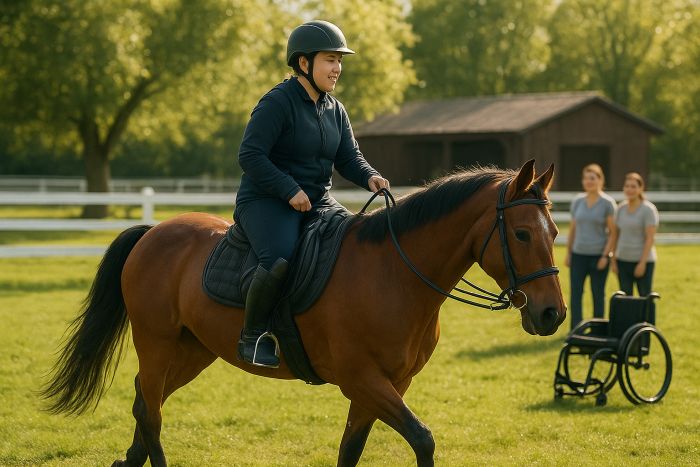
In addition, certain single-sport federations govern sports for athletes with a disability, either as part of an able-bodied sports federation such as the International Federation for Equestrian Sports (FEI).

At the national level, there are a wide range of organizations that take responsibility for Paralympic sport, including National Paralympic Committees, which are members of the IPC, and many others. Read More: ….

In 1986, the International Sports Federation for Persons with Intellectual Disability (INAS-FID) was formed to support elite competition for athletes with intellectual disabilities. This was established in contrast to the more participative, “sport for all” approach of Special Olympics.

The International Federation for Athletes with Intellectual Impairments (INAS) helps more than 300,000 of the world’s best athletes compete in a variety of winter and summer sports. These include tennis, basketball, cycling, cricket, and alpine skiing. INAS promote inclusion of people with intellectual impairments in society and are a member of the International Paralympic Committee. Part of their work involves educating members on eligibility and classification so that they can develop their athlete pool.

INAS organises competitions such as world and regional Championships and also manage eligibility and classification, working with other International Federations organisations to develop sports such as taekwondo and equestrian, with an aim to grow the number of athletes and competitions. Read More: ….

The Special Olympics World Games are held every two years, alternating with Summer and Winter Games. In addition to the World Games, Special Olympics holds competitions at the local, state/province, country, region and world level every year. In all, more than 70,000 Special Olympics competitions are held every year and South Africa takes part in this.

To be eligible to participate in Special Olympics, you must be at least 8 years old and identified by an agency or professional as having one of the following conditions:
– intellectual disabilities
– cognitive delays as measured by formal assessment
– significant learning or vocational problems due to cognitive delay that require or have required specially designed instruction

The Special Olympics Young Athletes™ program was created for children with intellectual disabilities – ages 2 through 7.

Since 1968, Special Olympics has been spreading the message that people with intellectual disabilities can and will succeed when given the opportunity. Special Olympics is the leading voice in raising awareness about the abilities of people with intellectual disabilities. Through the power of sports, people with intellectual disabilities discover new strengths and abilities, skills and success. Athletes find joy, confidence and fulfillment on the playing field and in life. They also inspire people in their communities and elsewhere to open their hearts to a wider world of human talents and potential. There are up to 200 million people with intellectual disabilities around the world. Special Olympics attempts to reach out to every one of them, as well as their families and communities. They do this through a wide range of trainings, competitions, health screenings and fund-raising events. They also create opportunities for families, community members, local leaders, businesses, law enforcement, celebrities, dignitaries and others to band together to change attitudes and support athletes.

Special Olympics is also the world’s largest public health organization for people with intellectual disabilities. They offer a wide range of free health exams and care to athletes with neglected health problems. Their goal is to bring better fitness, nutrition and healthier lifestyles to everyone involved in Special Olympics — from athletes and their families, to coaches and volunteers.

Special Olympics attitude research shows that the majority of people worldwide underestimate the abilities of people with intellectual disabilities. There research also shows that their capabilities far exceed their expectations. With this knowledge in hand, we are opening doors for greater opportunities for them in education, health care and employment.

Special Olympics leads the world in researching and addressing the concerns of people with intellectual disabilities. We identify the pressing issues facing this group, and reach out to the highest leaders in government, health care, education, the nonprofit sector and business to influence policy and to bring valuable services to those in need.

Sports is a powerful force. It can shift the focus from disability to ability, from isolation to involvement, they offer the highest quality Olympic-style sports training and competition for people with intellectual disabilities all around the world. This changes attitudes and changes lives. The transformative power of sports to instill confidence, improve health and inspire a sense of competition is at the core of what Special Olympics does. From the detailed coaching guides we provide in many languages to the sharp-eyed officials at our international games, the focus is on real sports, real competition, real achievements.

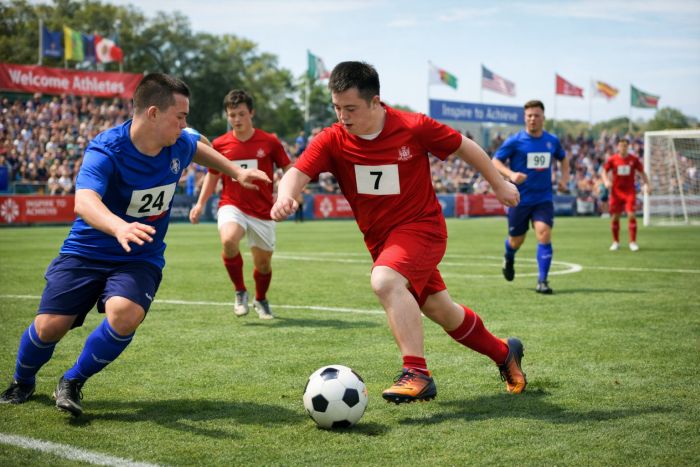
“Unified sports” involve teams made up of athletes with and without disabilities. Since the 1990s, Special Olympics Unified Sports have been promoting social inclusion through shared sports training and competition. This initiative has expanded globally and now involves more than 700,000 players in 127 countries worldwide. The principle behind Unified Sports is simple: training together and playing together is a quick path to friendship and understanding. An example of this is “The NBA Cares Special Olympics Unified Basketball Game” during the NBA All-Star Weekend.

The Walt Disney Company, ESPN and Special Olympics are also working on a two-year global initiative that will leverage the power of sports to promote an environment of social inclusion and acceptance.

Special Olympics South Africa is home to more than 45 000 talented athletes trained in 18 competitive sports. “We provide year-round training for men, women and children with intellectual disabilities. Our goal is to transform their lives through the joy of sport, and to transform the lives of their families and communities. The global mission of Special Olympics is to provide year-round sports training and athletic competition in a variety of Olympic-type sports for children and adults with intellectual disabilities. We provide continuing opportunities to develop physical fitness, demonstrate courage, experience joy and participate in a sharing of gifts, skills and friendship with families, other Special Olympics athletes and the community.” Read More: …

The South African Sports Confederation and Olympic Committee (SASCOC) is the National Olympic Committee (NOC) and National Paralympic Committee (NPC) for South Africa, and are the responsible body for South Africa at the Commonwealth Games. SASCOC is also responsible for high-performance sport in the country and coordinates the relationship with various international sports federations. They not only help look after all our various National Federations who are affiliated to them, but are also responsible for awarding National Protea Colours to athletes who have met the criteria to represent South Africa in different sporting codes, including: Athletics, Swimming /Aquatics, Waterpolo, Archery, Badminton, Baseball, Basketball, Boxing, Canoeing, Cycling, Equestrian, Fencing,  Football, Gymnastics,  Handball, Hockey, Judo, Karate, Modern Pentathlon, Netball, Rowing, Rugby 7s, Sailing, Shooting, Table Tennis, Taekwondo, Tennis, Triathlon, Volleyball, Weightlifting and Wrestling. Not all of these sports are however available for all persons with Intellectual Impairments. Read More: …..

How can we help you?

At Disability Info South Africa (DiSA), we are committed to help you break free of the shackles of your disability by providing you with the right tools to improve your daily life.
Below is a brief introduction of the services we offer. Browse now and take the next step toward accessible living!

Key Objectives of the Information Desk include:

– Providing support and assistance to Persons with Disabilities and their families through our free Contact Centre.
– Linking People with the products and services they need.
– Providing a free information service showing the various products and services that are available to suit your needs.
– Providing advertising opportunities to disability related Service and product suppliers.

Unlocking The Shackles of Your Disability Using the Key of Knowledge embodies our belief that knowledge is power. With the correct information at your fingertips, you can break free of the barriers to reach your goals and dreams.
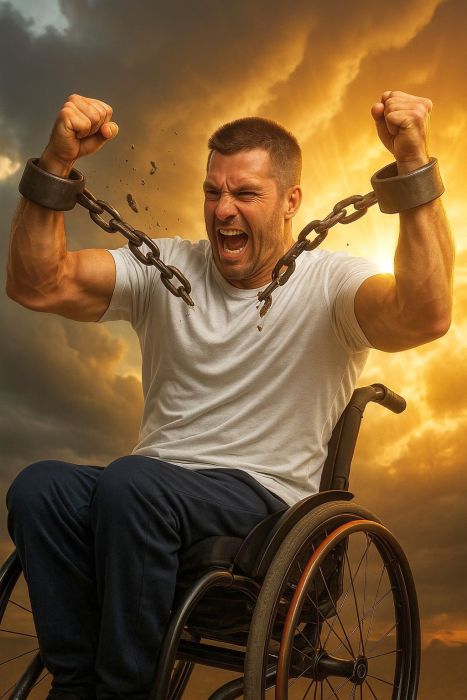
Explore Assistive Devices That Support Your Independence

Whether you’re looking for the right wheelchair, a pressure care cushion, or a product to rent—DiSA connects you to the right assistive devices and companies that sell or rent them, making everyday living more accessible, safe, and comfortable.
Find the tools that fit your lifestyle –
Browse DiSA’s Assistive Devices now!

Access the Disability Market

Do you provide Products and services to assist people with disabilities?
Look no further! Advertise with DiSA today and become part of our community!
Together, we can create a world where independence has no limits!

Disclaimers and References

DiSA is committed to promoting the rights, dignity, and inclusion of persons with disabilities as outlined in the White Paper on the Rights of Persons with Disabilities. We strive to ensure that all content on our website reflects appropriate, respectful, and inclusive language in alignment with these principles.

However, we also provide a platform for companies and organisations to advertise their services and products. While we encourage advertisers to adhere to correct terminology and inclusive practices, DiSA cannot guarantee the accuracy or appropriateness of the language used by external parties in their content.

Please note: Any views, language, or terminology used in advertisements, promotional material, or external links do not necessarily represent the views of DiSA.

DiSA disclaims any responsibility for inaccuracies or language that may not align with the White Paper or best practices for disability terminology.

Should you however encounter language or content that you believe is inappropriate or offensive, we encourage you to contact us at info@disa.org.za, so that we can address the issue.

DiSA remains dedicated to fostering a respectful and inclusive environment for all individuals. We appreciate your understanding and collaboration in supporting our mission.


While we strive for accuracy and clarity, AI-generated visuals may not always reflect real-life conditions or representations.
In addition, we feature authentic images and videos of actual instances, events, circumstances that have occurred, as well as products and services supplied by companies who advertise with us.

These authentic visuals are intended to accurately depict our content or the offerings of our advertising partners.
If you have any questions or concerns about the content displayed on this site, please feel free to contact us.

DiSA provides a platform for companies and organisations to advertise their products and services to assist persons with disabilities and their families. While we make every effort to list reputable and credible service providers, the inclusion of any company, organisation, product, or service on our website does not constitute an endorsement or guarantee by DiSA.

Please note the following: DiSA is not involved in the delivery, quality control, or customer service of any product or service offered by advertisers listed on our platform.

Any agreements, purchases, or arrangements made between users of this website and advertisers are solely between those parties. DiSA is not responsible for the outcome of such interactions.

DiSA disclaims any liability for dissatisfaction, damages, or disputes arising from products or services supplied by companies or organisations listed on our website.

We encourage users to thoroughly research and verify any service provider or product before engaging with them. If you have concerns or encounter issues with an advertiser listed on our platform, please let us know at: info@disa.org.za. We value your feedback to help maintain the integrity of our platform.


While we strive for accuracy and clarity, AI-generated visuals may not always reflect real-life conditions or representations.
In addition, we feature authentic images and videos of actual instances, events, circumstances that have occurred, as well as products and services supplied by companies who advertise with us.

These authentic visuals are intended to accurately depict our content or the offerings of our advertising partners.
If you have any questions or concerns about the content displayed on this site, please feel free to contact us.

DiSA is committed to providing accurate and up-to-date information to assist persons with disabilities and their families. However, the nature of online content and external resources means that information can change frequently.

Please note the following: DiSA cannot guarantee the accuracy, completeness, or reliability of all information on our website, particularly information obtained from external sources or links to third-party websites.
External websites may update or remove content without notice, which can result in broken links or outdated information. DiSA is not responsible for the content, accessibility, or functionality of external websites.

While we make every effort to keep our information current, some content may become outdated over time.
We encourage users to verify information directly with the relevant third parties or organisations before making any decisions based on the information found on our platform.

If you encounter a broken link or outdated content, please notify us at: info@disa.org.za and we will address it as soon as possible.
Thank you for understanding and helping us maintain a reliable and accessible platform.


While we strive for accuracy and clarity, AI-generated visuals may not always reflect real-life conditions or representations.
In addition, we feature authentic images and videos of actual instances, events, circumstances that have occurred, as well as products and services supplied by companies who advertise with us.

These authentic visuals are intended to accurately depict our content or the offerings of our advertising partners.
If you have any questions or concerns about the content displayed on this site, please feel free to contact us.

The Information services and website that we offer free of charge, is privately run and funded and is not run or funded by the government. We rely on advertising, paid services and donations to supply and improve this Free information service that we do provide.

The Companies, Clubs, Schools and Organisations that are listed on this site, have advertised or made donations to the Website and have therefore assisted us be able to provide this free Service.
Please support them as they have supported Us and please contact us via info@disa.org.za, if you can advertise with us or would like to make a donation. Alternatively, visit our “Support Us” page to find out how you can support us or acquire our services. – Thank You.

If you encounter a broken link or outdated content, please notify us at: info@disa.org.za and we will address it as soon as possible.
Thank you for understanding and helping us maintain a reliable and accessible platform.

Please Note: We do assist with inquiries via email but may need to send or copy your details and inquiry to various other organisations, companies or government departments, that we sometimes consult, so that we can help you in the best way possible.
If you have any objection to us sharing your query or contact details, please notify us in your email. We will only share your information to assist you and will never sell or use your personal information for any other purposes.

DiSA waivers any liability for what happens if information is shared or used for marketing or other purposes by other organisations who do have consent to view such information.


While we strive for accuracy and clarity, AI-generated visuals may not always reflect real-life conditions or representations.
In addition, we feature authentic images and videos of actual instances, events, circumstances that have occurred, as well as products and services supplied by companies who advertise with us.

These authentic visuals are intended to accurately depict our content or the offerings of our advertising partners.
If you have any questions or concerns about the content displayed on this site, please feel free to contact us.

Please note that this website uses images and videos that are AI-generated and created to visually represent certain information, concepts or scenarios for illustrative purposes.


While we strive for accuracy and clarity, AI-generated visuals may not always reflect real-life conditions or representations.
In addition, we feature authentic images and videos of actual instances, events, circumstances that have occurred, as well as products and services supplied by companies who advertise with us.

These authentic visuals are intended to accurately depict our content or the offerings of our advertising partners.
If you have any questions or concerns about the content displayed on this site, please feel free to contact us.

Disability Info South Africa (DiSA) is committed to protecting your personal information in compliance with the Protection of Personal Information Act (POPIA), Act No. 4 of 2013. By using our free information service, you acknowledge and agree to the following:

Collection of Personal Information:
DiSA may collect and process your personal information (such as name, contact details, and inquiries) solely for the purpose of assisting you with your requests and providing relevant information or support.

Use and Storage:
Your personal information will only be used for the purpose it was collected for, we may need to send or copy your details and inquiry to various organisations, companies or government departments, that we sometimes consult, so that we can assist you in the best way possible.
If you have any objection to us sharing your query or contact details, please notify us in your email. We will only share your information to assist you and will never sell or use your personal information for any other purposes.
DiSA implements appropriate measures to secure your personal information against unauthorized access or loss.

Consent:
By submitting your details through our Contact Form, or contacting us via our email address, you consent to allow DiSA to process your information as outlined in this disclaimer. If you are not comfortable with DiSA sharing your information for the above purposes, please contact us directly at info@disa.org.za.

Access and Updates:
You have the right to request the deletion of your personal information at any time.
To do so, please contact us at: info@disa.org.za.

Third-Party Websites:
DiSA is not responsible for the privacy practices of external websites linked on our platform. Users are encouraged to review the privacy policies of third-party sites before sharing personal information.
For any queries or concerns regarding the handling of your personal information, please contact us at: info@disa.org.za.
Thank you for trusting DiSA to support you with accessible, inclusive, and reliable information.