


Tennis and Table Tennis
Tennis and table tennis are inclusive racket sports that can be enjoyed by children and adults with intellectual impairments at social, club, provincial, and international levels. Both sports can be played individually or in doubles, allowing athletes to participate at their own pace while developing skills in a structured and supportive environment.
These sports are particularly well suited to persons with intellectual impairments as they focus on hand–eye coordination, balance, concentration, and routine. With adapted coaching and skill-based competition, athletes are supported to learn, improve, and compete fairly, regardless of experience or ability level.
Beyond physical fitness, tennis and table tennis help build confidence, independence, and problem-solving skills, while encouraging social interaction and positive communication through training and competition. Equipment and rules can be modified where needed, making both sports accessible and enjoyable for beginners as well as more experienced players.
Tennis and table tennis are both well established within the Special Olympics, offering meaningful pathways to national and international competition for athletes with intellectual impairments. Most importantly, they provide opportunities for lifelong participation, enjoyment, and inclusion through sport.
What assistance are you looking for?
A. Tennis
1. About Tennis
2. Special Olympics Tennis Pathway
3. Special Olympics Tennis Rules and Competition
4. Benefits of Tennis for Intellectual Impairments
5. Tennis Governance in South Africa
– Get Involved
B. Table Tennis
1. About Table Tennis
2. Special Olympics Table Tennis Pathway
3. Special Olympics Rules & Competition
4. Benefits of Table Tennis for Intellectual Impairments
5. Table Tennis Governance in South Africa
6. Get Involved
Tennis
Tennis is a racket sport played individually (singles) or in pairs (doubles), where players use a strung racket to strike a ball over a net into the opponent’s court. The objective is to score points by placing the ball within the court boundaries in a way that the opponent cannot return it successfully.
Tennis is an inclusive sport that can be modified to accommodate athletes with intellectual impairments, using adapted coaching methods, simplified rules, and progressive skill development. Training focuses on repetition, routine, and clear instruction, allowing athletes to develop at their own pace.
Tennis is played at social, club, provincial, national, and international levels, and can be adapted to suit a wide range of abilities. It is not included in the Paralympic Games for intellectual impairments, but it is well established within the Special Olympics movement, where athletes compete locally, nationally, and internationally.
The sport emphasises coordination, focus, consistency, and decision-making, making it well suited to individuals with intellectual impairments when delivered in a structured and supportive environment.

2. Special Olympics Tennis Pathway
Tennis is one of the core sports offered by Special Olympics, both internationally and in South Africa. The Special Olympics approach focuses on the individual athlete, ensuring that training and competition are matched to ability levels.
Special Olympics tennis provides:
– Year-round training and structured competition
– Skill-based divisions to ensure fair play
– Progressive development from beginner to advanced levels
– Opportunities for singles and doubles competition
Athletes are supported to improve physical fitness, coordination, concentration, and sportsmanship while enjoying meaningful participation in a recognised global sport.
3. Special Olympics Tennis Rules and Competition
Special Olympics tennis follows adapted rules that prioritise safety, fairness, and enjoyment, while remaining true to the core principles of the sport.
Key adaptations may include:
– Modified court sizes
– Use of slower or low-compression balls
– Shortened matches
– Simplified scoring systems for developing athletes
As athletes progress, rules increasingly align with standard tennis formats.
4. Benefits of Tennis for Intellectual Impairments
Tennis offers a broad range of benefits making it an excellent sport for both competitive participation and lifelong recreation.
Physical Benefits
– Improved hand-eye coordination
– Increased agility, balance, and endurance
– Cardiovascular fitness
– Strength development through repetitive movement
Cognitive and Emotional Benefits
– Focus and concentration
– Decision-making and problem-solving
– Self-confidence and independence
– Emotional regulation through routine and structure
Social Benefits
– Teamwork and communication
– Sense of belonging within clubs / programmes
5. Tennis Governance in South Africa
Tennis South Africa (TSA) is the recognised national governing body for tennis in South Africa. TSA oversees:
– Club affiliation and development
– Coaching and officiating standards
– National competitions and pathways
– Development programmes, including inclusive tennis initiatives
While TSA does not run impairment-specific competitions directly, many affiliated clubs and coaches offer inclusive and adapted tennis programmes.
For more information contact: Tennis South Africa (TSA) | Website: www.tennissa.co.za | Email: info@tennissa.co.za | Tel: 011 881 8900
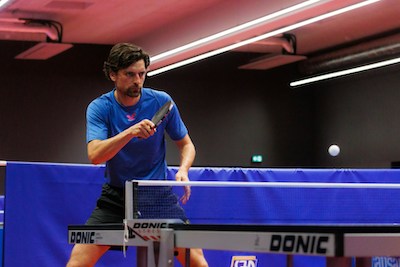
Table tennis, also known as ping-pong, is a fast-paced racket sport played by two players (singles) or four players (doubles), in which players strike a lightweight ball across a table divided by a net. Points are scored when an opponent fails to return the ball according to the rules.
Table tennis is an inclusive sport that can be modified to accommodate athletes with intellectual impairments, through adapted coaching approaches, simplified rules, and skill-based competition groupings. Training typically focuses on repetition, consistency, and progressive skill development.
Table tennis is played at social, club, provincial, national, and international levels, and is highly adaptable for persons with intellectual impairments. It is not currently included in the Paralympic Games for intellectual impairments, but it is a well-established sport within the Special Olympics movement, offering meaningful international competition opportunities.
The sport places strong emphasis on coordination, reaction time, focus, and routine, making it particularly well suited to structured training environments.
2. Special Olympics Table Tennis Pathway
Table tennis is one of the flagship sports in Special Olympics, both globally and in South Africa. Special Olympics programmes are designed to ensure that athletes compete in divisions matched to their ability level, promoting fair and enjoyable competition.
Special Olympics table tennis provides: Year-round training opportunities; Local, provincial, national, and international competitions for Singles and doubles events.
Skill-based divisions ensure equitable play. Athletes progress at their own pace, supported by trained coaches who understand the needs of athletes with intellectual disabilities.
3. Special Olympics Rules & Competition
Special Olympics table tennis follows adapted rules that prioritise safety, fairness, and athlete development, while maintaining the core principles of the sport.
Adaptations may include:
– Modified match formats
– Shortened games or sets
– Adjusted serving rules for beginners
– Simplified scoring for entry-level athletes
As skills improve, competition formats increasingly align with standard table tennis rules.
4. Benefits of Table Tennis for Intellectual Impairments
Table tennis offers a wide range of physical, cognitive, and social benefits, which make table tennis an excellent sport for both competitive athletes and recreational participants:
Physical Benefits
– Enhanced hand-eye coordination
– Improved reflexes and reaction time
– Increased upper-body strength and endurance
– Cardiovascular fitness through sustained play
Cognitive & Emotional Benefits
– Improved focus and concentration
– Faster decision-making
– Confidence building through skill mastery
– Stress reduction through structured activity
Social Benefits
– Social interaction in doubles and group training
– Development of communication skills
– Sense of belonging within clubs and teams
5. Table Tennis Governance in South Africa
Table Tennis South Africa (TTSA) is the recognised national governing body for table tennis in South Africa. TTSA is responsible for:
– Club and provincial affiliations
– Coaching and officiating standards
– National and international competitions
– National rules and regulations
While TTSA does not operate impairment-specific leagues directly, many affiliated clubs and provincial structures support inclusive and developmental table tennis programmes. For more information contact: Table Tennis South Africa | Website: www.ttsa.co.za | Email: admin@ttsa.co.za | Tel: 011 881 8900
6. Get Involved
Table tennis is one of the most accessible and adaptable sports for persons with intellectual impairments.
If you are interested in getting involved in table tennis contact TTSA for a list of affiliated Clubs in your neighbourhood
When visiting a club for the first time be sure to ask:
– If they have an Inclusive or beginner-friendly programmes
– If they have Coaching experience with intellectual impairments
– If they have an Adapted training programme or social play options
Then attend a trial session to assess fit and support levels