Skip to content
Email Phone YouTube
  • Information Desk
  • Access SolutionsExpand
    • Universal Access
    • Accessibility SpecialistsExpand
      • Bamboo Rock
      • Bidii Yetu
      • Bradshaw LeRoux
      • Happy Factory
      • Nickys Drive
      • Paws4Life
      • Stratfin Medical Tax-Back
    • Awareness Training
    • DNN | Media
    • Discrimination Complaints
  • DiSA Services
  • News And Media
  • Blogs
  • About UsExpand
    • Alan Downey
    • Igor Rix
  • Advertise | Support DiSA
  • Contact
  • Search for InfoExpand
    • Assistive Devices, Products & Equipment
    • Disability Organisations
    • Educational Service Providers
    • Health Care Services
    • Services and Service Providers
    • Sports Organisations and Clubs

DISA New logo

Intelligence is not the ability to store information, but to know where to find it.

Now You Know Where To Find It

Albert Einstein

DISA New logo

Lighting the Way to an Inclusive Society

Accessible Cities SA
DISA New logo

Sometimes, we all just need a helping hand
from someone who gets it!

Anonymous

  • Home
  • Physical ImpairmentsExpand
    • Physical Impairments

      • Types of Physical Impairments
      • Assisted Living & Self Help Centres
      • Accessible Features – Parking Discs
      • Accessible Housing
      • Assistive Devices
      • Disability Grants
      • Disability Tax
      • Education For All
      • Healthcare & Rehabilitation
      • Looking For a Job
      • Organisations
      • Travel, Accommodation & Vehicle Hire
      • Service and Assistance Dogs
      • Sports and Hobbies
      • Universal Access
      • Vehicles, Driving and Equipment

      Search For Info

      • Assistive Devices and Equipment
      • Disability Organisations
      • Educational Service Providers
      • Health Care Services
      • Services and Service Providers
      • Sports Organisations and Clubs

  • Sensory ImpairmentsExpand
    • Sensory Impairments

      • Types of Sensory Impairments
      • Blind
      • Deaf
      • DeafBlind
      • Taste, Smell, Touch, Spatial Awareness
      • Accessible Features
      • Assisted Living / Self Help
      • Assistive Devices
      • Disability Grants
      • Disability Tax
      • Education For All
      • Looking For a Job
      • Organisations
      • Parking Discs
      • Service and Assistance Dogs
      • Sports and Hobbies
      • Transport and Travel Services
      • Universal Access

      Search For Info

      • Assistive Devices and Equipment
      • Disability Organisations
      • Educational Service Providers
      • Health Care Services
      • Services and Service Providers
      • Sports Organisations and Clubs
  • Neurological ImpairmentsExpand
    • Neurological Impairments

      • Types of Neurological Impairments
      • Assistive Devices
      • Care Centres and Homes of Safety
      • Disability Grants
      • Disability Tax
      • Education For All
      • Looking for a Job
      • Organisations
      • Service and Assistance Dogs
      • Transport and Travel Services
      • Sports and Hobbies
      • Universal Access

      Search For Info

      • Assistive Devices and Equipment
      • Disability Organisations
      • Educational Service Providers
      • Health Care Services
      • Services and Service Providers
      • Sports Organisations and Clubs

  • Intellectual ImpairmentsExpand
    • Intellectual Impairments

      • Types of Intellectual Impairments
      • Assistive Devices
      • Care Centres and Homes of Safety
      • Disability Grants
      • Disability Tax
      • Education For All
      • Looking for a Job
      • Organisations
      • Service and Assistance Dogs
      • Sports and Hobbies
      • Universal Access

      Search For Info

      • Assistive Devices and Equipment
      • Disability Organisations
      • Educational Service Providers
      • Health Care Services
      • Services and Service Providers
      • Sports Organisations and Clubs

  • Psychosocial ImpairmentsExpand
    • Psychosocial Impairments

      • Types of Psychosocial Impairments
      • Care Centres and Homes of Safety
      • Disability Grants
      • Disability Tax
      • Education For All
      • Looking for a Job
      • Organisations
      • Service and Assistance Dogs
      • Universal Access

      Search For Info

      • Assistive Devices and Equipment
      • Disability Organisations
      • Educational Service Providers
      • Health Care Services
      • Services and Service Providers
      • Sports Organisations and Clubs

DISA New logo

Intelligence is not the ability to store information, but to know where to find it.

Now You Know Where To Find It

Albert Einstein

DISA New logo

Lighting the Way to an Inclusive Society

Accessible Cities SA
DISA New logo

Sometimes, we all just need a helping hand
from someone who gets it!

Anonymous

Assistive Devices | Sensory Impairments

Find a Product Supplier

Organisations That Can Assist

List My Products

Welcome to the Assistive Device Page, where you can find equipment to suite your needs and links to companies that sell them.

An Assistive Device refers to any tool, equipment, software, or electronic device designed to support individuals with impairments in completing tasks that might otherwise require assistance, thereby promoting their independence.

Assistive Devices on this page are divided into those that can assist people who are Blind or have Visual Impairments; people who are Deaf or have Hearing Impairments and people who are DeafBlind. While loss of Taste, Smell, Touch and Spacial Awareness also fall under Sensory, the loss of these senses do not generally lead to a disability and there is very limited equipment that can assist.

These Assistive Devices are listed under various categories below which describes their function.

These Assistive Devices encompass equipment that can be used in Education, Assist in the workplace, Daily Living Accessories, Mobility and sport, Safety, Therapy and Support.

DiSA does not supply these Assistive Devices but does introduce relevant suppliers and provides direct links to these products, while also providing an overview of different products available in South Africa as well as their benefits.

Readers can explore the categories listed on the right, or below which link to further information.

Contact DiSA if you cannot find what you’re looking for, or need any advice.

What Are You Looking For?

Types of Sensory Impairments
Assistive Devices: Visual Impairments
1. Accessories
2. Computer and Electronic Aids
3. Household and Cooking Aids
4. Educational and Therepeutic Aids
5. Glasses and Eye Protection
6. Mobility Aids and Orientation Techniques
7. Reading Aids
8. Sports and Hobby Aids
9. Writing and Printing Aids
Assistive Devices: Hearing Impairments
1. Alerting Devices
2. Hearing Aids and Hearing Devices
3. Hearing and Guide Dogs and Equipment
4. Sign Language and Interpreters
5. Telecommunication Aids
Assistive Devices: DeafBlind
1. Alerting Devices For DeafBlind
2. Sensory Impairment Aids
3. Hearing and Guide Dogs
Frequently Asked Questions

Benefits of Assistive Devices

Buying the correct Assistive Device that is suited for you, is a big decision, no matter the type of Assistive Device, or whether it is a big or small product. The decision has far reaching consequences, on your life, your health, your independence. It’s an investment that can change your life.

With so much at stake its really important you make the right decision, and informed choice, as to the best product for you and your specific needs. The below Questions, should help you to that end. If after reading the information below, you still feel uncertain, you are welcome to contact DiSA directly.

  • Edit Microsystems Logo - helping you learn
  • Sensory Solutions Logo
  • Ability Assist logo - they provide Assistive Devices and Products to assist persons with impairments
  • logo for Paws 4 Life - a specialised K9 Training facility in the Western Cape
  • Paws4Purpose - Service & Therapy Dog Training

Assistive Devices Devices categorised under impairment section

Click on your impairment group below to find the Assistive Devices that would be suitable for you.

1. Blind or Visual Impairments

People who are Blind or who have Visual Impairments can benefit from a variety of Assistive Devices which are categorized below and include Accessories; Computers and Electronic Aids; Household and Cooking Aids; Educational Aids; Glasses and Eye Protection; Mobility Aids; Reading Aids; Sports and Hobby Aids and Writing and Printing Aids.

Visit: Assistive Devices for the Blind

2. Deaf or Hearing Impairments

People who are Deaf or who have Hearing Impairments can benefit from a variety of Assistive Devices which are categorized below and include Alerting Devices; Hearing Aids and Hearing Devices; Hearing dogs and equipment; Sign language and interpreters and Telecommunication Aids.

Visit: Assistive Devices for the Deaf

3. DeafBlind

Assistive Devices and technology for people who are DeafBlind may include products that are listed under the visual impairment section or under the section for people who are Deaf or have a hearing impairment. However this section deals with products and technology that is specifically made for people that are both Deaf and Blind.

Visit: Assistive Devices for the DeafBlind

Assistive Devices for people who are Blind or have a Visual Impairment

Various types of Assistive Devices or Assistive Aids are available to assist people with visual impairments to complete day-to-day activities, perform tasks, play sports, study, work, or enjoy hobbies. Some of these are considered “Low Tech” devices and are inexpensive while others are more “High Tech” and can be more expensive to purchase. These Assistive Devices are categorized according to their use and are listed below.
Please click on the categories listed below to find out what is available and who can supply it.

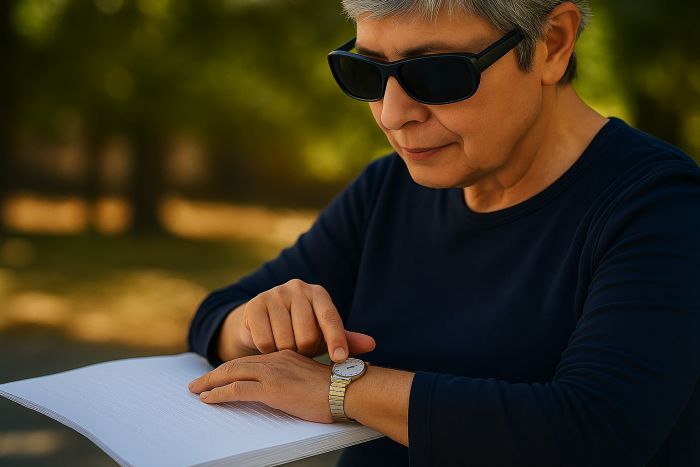
Blind woman reading the time on a Braille Watch
Accessories

Accessories are smaller products that support daily living for people with visual impairments. These include Braille or Talking Tape Measures; Money Templates; Pen Friends; Talking Calculators; Braille and Talking Watches and Alarm Clocks, etc.

woman using magnifier to zoom into book
Computer and Electronic Aids

Computers and electronic aids support independent tech access for people with visual impairments, using tools like voice control, braille keyboards, zoom technology and various types of screen reading software.

Blind woman pouring water from a kettle into a teacup with Cricket Level Indicators on.
Household and Cooking Aids

Various types of Household and Cooking Aids are available to assist people with Visual Impairments at home. These range from Iron Guards, kettle tippers and level indicators for teacups to more advanced equipment such as Talking Ovens.

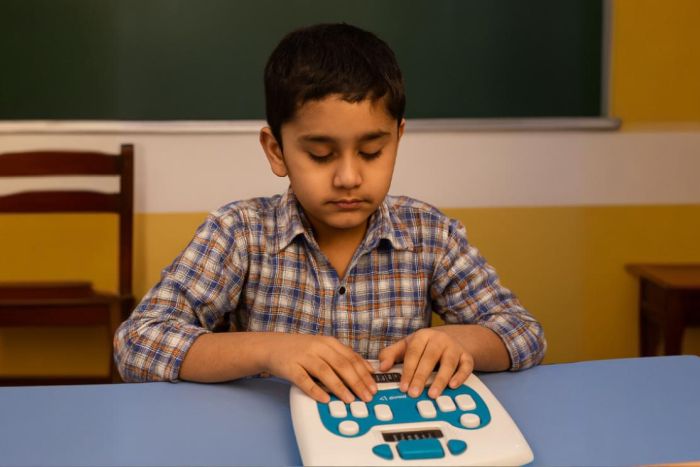
Child who is blind learning Braille on a Annie self learning Braille device
Educational and Therapeutic Aids

Various types of equipment is available to children with visual impairments including toys. This equipment can help to promote brain activity, early learning of skills or technology, or be used for relaxation and therapy.

Woman with e-sight Glasses reading a book
Glasses and Eye Protection

Various types of glasses are available to assist people with visual impairments and are designed to maximize remaining vision and ensure safety. They include filtered lenses, smart glasses and protective eye wear.

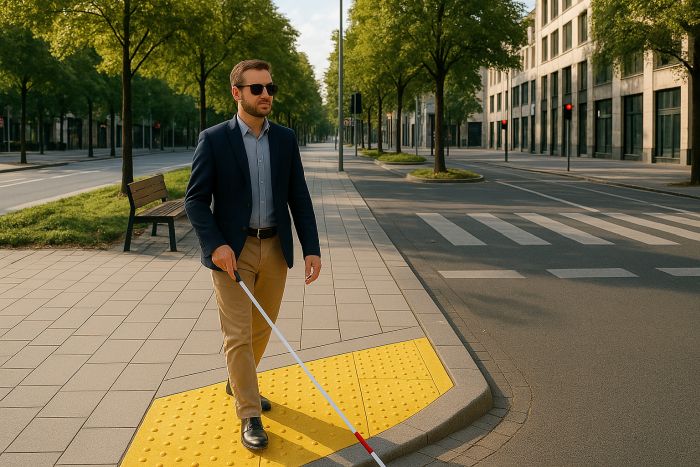
Man who is blind navigating along a pavement with a White Cane
Mobility Aids & Techniques

Mobility aids for people with visual impairments include white canes, guide dogs, GPS devices, smart glasses and Orientation Techniques. They help detect obstacles, provide orientation, and enhance independence.

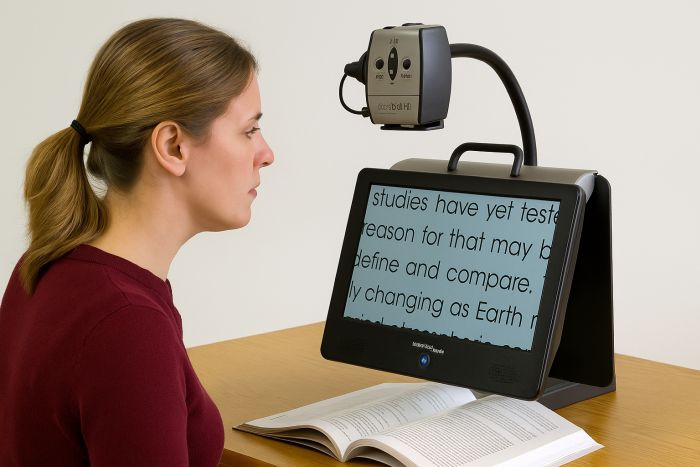
Woman with a visual impairment reading with the assistance of zoom technology.
Reading Aids

Reading aids for the blind or people with visual impairments include Braille books, audio books, screen readers, and magnifiers. They provide independent access to written information in tactile, audio, or digital formats.

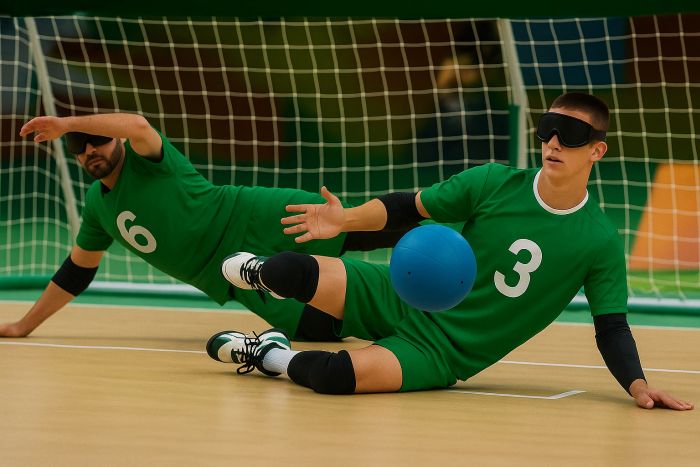
Men with blind folds playing Goalball
Sports and Hobby Aids

Various types of equipment is available for people with visual impairments to assist them to take part in activities. This includes various types of audible balls, large print and braille playing cards and board games, protective eye shades and audio players.

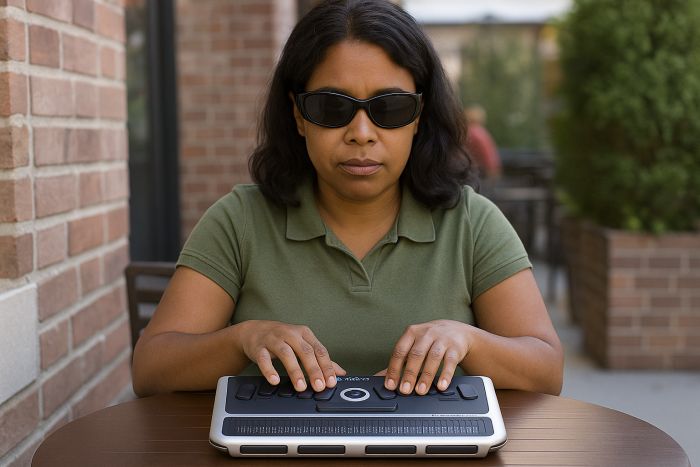
Blind woman with dark glasses taking notes using a Braille Notetaker
Writing and Printing Aids

Writing and printing aids for the blind include slates, styluses, and Braille writers for manual writing. Electronic note takers, while embossers help create and print Braille documents. They enable independent reading, writing, and information sharing.

Assistive Devices for people who are Deaf or have a Hearing Impairment

Various types of Assistive Devices or Assistive Aids are available to assist the Deaf, or people with hearing impairments to complete day-to-day activities, perform tasks, play sports, study, work, or enjoy hobbies. Some of these are considered “Low Tech” devices and are inexpensive while others are more “High Tech” and can be more expensive to purchase. These Assistive Devices are categorized according to their use and are listed below. Please click on the categories listed below to find out what is available and who can supply it.

Alarm clock connected to a vibrating alerting device situated on the bed
Alerting Devices

Alerting Devices for the Deaf or those with Hearing Impairments use visual signals like flashing lights, or vibrating alarms, to notify users of important sounds and can alert to doorbells, phone calls, or alarms.

Man with a Hearing Aid smiling and talking
Hearing Aids and Hearing Devices

Hearing aids are small electronic devices that amplify sound to help people with hearing loss. They improve communication by making speech and environmental sounds clearer.

Hearing Dog alerting owner not to cross the road as emergency car speeds past.
Hearing Dogs and Equipment

Hearing Dogs are trained to alert persons who are Deaf to sounds that are necessary for everyday safety and independence. They are trained to lead their person to the source of the sound or away from danger.

Man speaking at a conference and Sign Language interpreter interpritating what is said
Sign Language

This section introduces us to South African Sign language. Including the organisations that can help, who to contact for a Sign Language interpreter, or where to go to participate in Sign language courses.

Man who is Deaf using a Text Telephone
Telecommunication Aids

Text telephones, also known as Teletypewriters (TTYs) are Telecommunication Devices for the Deaf (TDDs) that allow the Deaf or people with hearing or speech impairments to communicate over telephone lines by converting typed text into signals.

Assistive Devices for people who are DeafBlind

Assistive Devices and technology for people who are DeafBlind may include products that are listed above under their visual impairment section or under the section for people who are Deaf or have hearing impairments. But this section deals with products and technology that is specifically made for people that are both Deaf and Blind to complete day-to-day activities. Some of these are considered “Low Tech” devices and are relatively inexpensive while others are more “High Tech” and can be more expensive to purchase. These Assistive Devices are categorized according to their use and are listed below. Please click on the categories listed below to find out what is available and who can supply it.

Alarm clock connected to a vibrating alerting device situated on the bed
Sensory and Tactile Aids

Include tools like tactile sign language, Braille displays, vibrating alert systems, and tactile communication boards. These aids use touch and vibration to replace hearing and vision, enabling communication and safety.

DeafBlind man holding a Sensory Aid Vibrating Cushion
Therapy Aids

Therapy aids for people who are DeafBlind include tactile objects, sensory integration tools, and mobility training devices that help develop communication, orientation, and daily living skills. They support physical, emotional, and cognitive development, promoting independence

Hearing Dog alerting owner not to cross the road as emergency car speeds past.
Hearing and Guide Dogs

Hearing Dogs and Guide Dogs are trained to assist persons who are Deaf or Blind. Some Training Facilities may be able to assist people who are both DeafBlind. These dogs also assist with anxiety and emotional support.

Frequently Asked Questions

Buying the correct Assistive Device that is suited for you, is a big decision, no matter the type of Assistive Device, or whether it is a big or small product. The decision has far reaching consequences, on your life, your health, your independence. It’s an investment that can change your life.

With so much at stake its really important you make the right decision, and informed choice, as to the best product for you and your specific needs. The below Questions, should help you to that end. If after reading all the below, you still have questions, you are welcome to contact DiSA directly.

Local manufacture versus imported products.
When it comes to Assistive Devices like wheelchairs, the choice between locally manufactured and imported products comes down to a mix of cost, quality, availability, and long-term support.

1. Local Manufacturers

Advantages:
– Lower cost – Often cheaper due to no import duties, shipping fees, or currency exchange fluctuations.
– Faster availability – Quicker turnaround for new orders and repairs.
– Better spare parts supply – Components are more readily available locally, reducing downtime.
– Supports local economy – Keeps jobs and skills in the country.

Drawbacks:
– Limited variety – Fewer models and advanced features compared to global brands.
– Variable quality – Depends on the manufacturer’s standards and materials.
– Technology lag – Some high-end innovations (e.g., advanced suspension, ultra-light carbon fibre frames, smart wheelchair electronics) may not be locally produced.

2. Imported Products

Advantages:
– Wider choice – More models, sizes, and accessories.
– Proven track record – Many imported brands are internationally tested and certified.
– Advanced technology & design – Global brands often lead in lightweight materials, ergonomic design, and specialist functions (sports wheelchairs, standing wheelchairs, power chairs with advanced control systems).

Drawbacks:
– Limited local servicing – Some specialised models need technicians trained by the manufacturer, which may be scarce in SA.
– Longer lead times – Repairs or replacement parts can take weeks or months if not stocked locally.
– High cost – Import duties, freight, and currency fluctuations can make them much more expensive.

3. Practical Considerations
When deciding between local and imported:
– Intended use – Everyday mobility vs. sports vs. beach use vs. long-distance travel.
– Budget & funding – Medical aid schemes may have limits on equipment cost or approved brands.
– After-sales support – Reliable maintenance is as important as initial quality.
– Availability of spares – Downtime can be a serious barrier to independence.
– User comfort & fit – A cheaper chair that doesn’t fit properly can cause long-term health issues.

If you know what type of Assistive Device you require but are looking for companies that supply them, you are in the right place.

DiSA feature a number of companies who sell Assistive Devices for people with Sensory Impairments including Edit Microsystems, Ability Assist and Sensory Solutions. 

These companies specialise in providing products for people with visual impairments and hearing impairments should be able to advise you on the best type of Assistive Device for you. They can also help set it up to insure that it is working correctly as well as service and repair the products that they sell should the need arise.

Companies such as Pro Mobility, Mobility Aids, Solutions Medical, Wheelchairs on the Run, be-Able Solutions, WINFAR and Mr Mobility also offer rentals, which is especially useful if your need is more short-term.

Whatever your need may be, you can be guaranteed that you will find a Wheelchair or Scooter that will suite your needs.

The Information services and website that we offer free of charge, is privately run and funded and is not run or funded by the government. We rely on advertising, paid services and donations to supply and improve this Free information service that we do provide.

The Companies, Clubs, Schools and Organisations that are listed on this site, have advertised or made donations to the Website and have therefore assisted us be able to provide this free Service.
Please support them as they have supported Us and please contact us via info@disa.org.za, if you can advertise with us or would like to make a donation. Alternatively, visit our “Support Us” page to find out how you can support us or acquire our services. – Thank You.

If you encounter a broken link or outdated content, please notify us at: info@disa.org.za and we will address it as soon as possible.
Thank you for understanding and helping us maintain a reliable and accessible platform.

Please Note: We do assist with inquiries via email but may need to send or copy your details and inquiry to various other organisations, companies or government departments, that we sometimes consult, so that we can help you in the best way possible.
If you have any objection to us sharing your query or contact details, please notify us in your email. We will only share your information to assist you and will never sell or use your personal information for any other purposes.

DiSA waivers any liability for what happens if information is shared or used for marketing or other purposes by other organisations who do have consent to view such information.


While we strive for accuracy and clarity, AI-generated visuals may not always reflect real-life conditions or representations.
In addition, we feature authentic images and videos of actual instances, events, circumstances that have occurred, as well as products and services supplied by companies who advertise with us.

These authentic visuals are intended to accurately depict our content or the offerings of our advertising partners.
If you have any questions or concerns about the content displayed on this site, please feel free to contact us.

Please note that this website uses images and videos that are AI-generated and created to visually represent certain information, concepts or scenarios for illustrative purposes.


While we strive for accuracy and clarity, AI-generated visuals may not always reflect real-life conditions or representations.
In addition, we feature authentic images and videos of actual instances, events, circumstances that have occurred, as well as products and services supplied by companies who advertise with us.

These authentic visuals are intended to accurately depict our content or the offerings of our advertising partners.
If you have any questions or concerns about the content displayed on this site, please feel free to contact us.

Pros and cons of buying a new product versus renting a product or buying a second-hand product.
If your need is long-term and specific, buying new is often worth the investment.
If it’s short-term, renting may be most cost-effective.
If your budget is tight but you need longer-term use, a well-checked second-hand option can be a good middle ground—be sure to make sure it’s assessed by a professional for safety and fit.

1. Buying New
Pros:
– Full warranty and after-sales support – Repairs, servicing, and replacements are often covered.
– Latest technology and features – Lighter materials, better ergonomics, improved comfort.
– Customisation – Can be tailored to your exact measurements and needs (seat width, cushion type, wheel type, accessories).
– Long-term reliability – Starts its life in perfect condition, so it’s likely to last longer with proper care.
– Hygiene and safety – No wear-and-tear damage, unknown history, or hygiene concerns.

Cons:
– Higher upfront cost – Can be significantly more expensive than renting or buying second-hand.
– Depreciation – Value drops as soon as you start using it.
– Longer commitment – If your needs change, upgrading means another large purchase.

2. Renting
Pros:
– Lower short-term cost – Ideal for temporary needs (e.g., post-surgery, rehab).
– No long-term commitment – Easy to return if your condition changes.
– Maintenance included – Rental companies often handle servicing and repairs.
– Try before you buy – Good way to test different models before making a purchase.

Cons:
– Ongoing cost – Long-term renting can end up costing more than buying.
– Limited choice – May not get the exact model or features you want.
– Wear and tear – Used by multiple people, so condition may not be perfect.
– No asset ownership – You return it at the end, so no resale value.

3. Buying Second-hand
Pros:
– Lower purchase price – Significant savings compared to buying new.
– Quicker availability – No waiting for orders or manufacturing.
– Sustainable option – Reuses equipment, reducing waste.

Cons:
– No or limited warranty – Repairs and servicing will likely be your responsibility.
– Unknown history – Could have hidden damage or wear that affects safety and performance.
– Limited fit – May not match your body measurements or specific needs exactly.
– Shorter lifespan – Already has some wear, so may not last as long as new.

Where can I rent Assistive devices in South Africa?
Visit our Equipment for Hire Page to find companies that rent various equipment in certain provinces in South Africa.

Where can I sell my Assistive devices if I no longer need them?
They are various options available to you:

1. Some companies will sell your equipment for you and charge a small fee.
– Be-Able  Solutions – 082 225 1469 – Cape Town:- Lee: 021 111 0980, info@beablesolutions.co.za;  lee@beablesolutions.co.za
– Shoprider – Daniel – Tel: 012 653 1168 – shoprider@icon.co.za – www.shoprider.co.za
– Sitwell: Tina or Adam – (011) 440 8226 Johannesburg – 41, 11th Avenue, Highlands North, Johannesburg
tina.watt@sitwell.co.za; adam.bottomley@sitwell.co.za; www.sitwell.co.za

2. Various social media pages allow you to advertise your 2nd hand medical equipment.
You can join the following pages to post your equipment:

– Medical Buy and Sell or Donate South Africa
– Buy and Sell Medical Equipment in South Africa (BASMESA)

3. Some Organisations will advertise your equipment to its members: Contact –
– QAWC – Esme on either 021 975 6078 or send an e-mail to info@qawc.org with your name, surname, e-mail address and contact number.

How can we help you?

At Disability Info South Africa (DiSA), we are committed to help you break free of the shackles of your disability through our One-Stop Access Solution that we provide to improve your daily living with the right tools. Explore our trusted range of assistive devices—from mobility aids to positioning supports—carefully selected to suit your lifestyle and needs – Browse now and take the next step toward accessible living!

Key Objectives of the Information Desk include:

– Providing support and assistance to Persons with Disabilities and their families through our free Contact Centre.

– Linking People with the products and services they need to findprovide these products and services.

– Providing a free information service showing the various products and services that are available to suit your needs.

– Providing advertising opportunities to disability related Service and product suppliers.

Unlocking The Shackles of Your Disability Using the Key of Knowledge embodies our belief that knowledge is power. With the correct information at your fingertips, you can break free of the barriers to reach your goals and dreams.

Man in a wheelchair breaking free from his chains
Let’s Chat. We Can Help!
Explore Assistive Devices That Support Your Independence

Whether you’re looking for the right wheelchair, a pressure care cushion, or a product to rent—DiSA connects you to the right assistive devices and companies that sell or rent them, making everyday living more accessible, safe, and comfortable.

Find the tools that fit your lifestyle –
Browse DiSA’s Assistive Devices now!

Access the Disability Market

Do you provide Products and services to assist people with disabilities? Look no further! Advertise with DiSA today and become part of our community!

Together, we can create a world where independence has no limits!

Disclaimers and References

DiSA is committed to promoting the rights, dignity, and inclusion of persons with disabilities as outlined in the White Paper on the Rights of Persons with Disabilities. We strive to ensure that all content on our website reflects appropriate, respectful, and inclusive language in alignment with these principles.

However, we also provide a platform for companies and organisations to advertise their services and products. While we encourage advertisers to adhere to correct terminology and inclusive practices, DiSA cannot guarantee the accuracy or appropriateness of the language used by external parties in their content.

Please note: Any views, language, or terminology used in advertisements, promotional material, or external links do not necessarily represent the views of DiSA.

DiSA disclaims any responsibility for inaccuracies or language that may not align with the White Paper or best practices for disability terminology.

Should you however encounter language or content that you believe is inappropriate or offensive, we encourage you to contact us at info@disa.org.za, so that we can address the issue.

DiSA remains dedicated to fostering a respectful and inclusive environment for all individuals. We appreciate your understanding and collaboration in supporting our mission.

DiSA provides a platform for companies and organisations to advertise their products and services to assist persons with disabilities and their families. While we make every effort to list reputable and credible service providers, the inclusion of any company, organisation, product, or service on our website does not constitute an endorsement or guarantee by DiSA.

Please note the following: DiSA is not involved in the delivery, quality control, or customer service of any product or service offered by advertisers listed on our platform.

Any agreements, purchases, or arrangements made between users of this website and advertisers are solely between those parties. DiSA is not responsible for the outcome of such interactions.

DiSA disclaims any liability for dissatisfaction, damages, or disputes arising from products or services supplied by companies or organisations listed on our website.

We encourage users to thoroughly research and verify any service provider or product before engaging with them. If you have concerns or encounter issues with an advertiser listed on our platform, please let us know at: info@disa.org.za. We value your feedback to help maintain the integrity of our platform.

DiSA is committed to providing accurate and up-to-date information to assist persons with disabilities and their families. However, the nature of online content and external resources means that information can change frequently.

Please note the following: DiSA cannot guarantee the accuracy, completeness, or reliability of all information on our website, particularly information obtained from external sources or links to third-party websites.
External websites may update or remove content without notice, which can result in broken links or outdated information. DiSA is not responsible for the content, accessibility, or functionality of external websites.

While we make every effort to keep our information current, some content may become outdated over time.
We encourage users to verify information directly with the relevant third parties or organisations before making any decisions based on the information found on our platform.

If you encounter a broken link or outdated content, please notify us at: info@disa.org.za and we will address it as soon as possible.
Thank you for understanding and helping us maintain a reliable and accessible platform.

The Information services and website that we offer free of charge, is privately run and funded and is not run or funded by the government. We rely on advertising, paid services and donations to supply and improve this Free information service that we do provide.

The Companies, Clubs, Schools and Organisations that are listed on this site, have advertised or made donations to the Website and have therefore assisted us be able to provide this free Service.
Please support them as they have supported Us and please contact us via info@disa.org.za, if you can advertise with us or would like to make a donation. Alternatively, visit our “Support Us” page to find out how you can support us or acquire our services. – Thank You.

If you encounter a broken link or outdated content, please notify us at: info@disa.org.za and we will address it as soon as possible.
Thank you for understanding and helping us maintain a reliable and accessible platform.

Please Note: We do assist with inquiries via email but may need to send or copy your details and inquiry to various other organisations, companies or government departments, that we sometimes consult, so that we can help you in the best way possible.
If you have any objection to us sharing your query or contact details, please notify us in your email. We will only share your information to assist you and will never sell or use your personal information for any other purposes.

DiSA waivers any liability for what happens if information is shared or used for marketing or other purposes by other organisations who do have consent to view such information.

Please note that this website uses images and videos that are AI-generated and created to visually represent certain information, concepts or scenarios for illustrative purposes.
While we strive for accuracy and clarity, AI-generated visuals may not always reflect real-life conditions or representations.
In addition, we feature authentic images and videos of actual instances, events, circumstances that have occurred, as well as products and services supplied by companies who advertise with us.
These authentic visuals are intended to accurately depict our content or the offerings of our advertising partners.
If you have any questions or concerns about the content displayed on this site, please feel free to contact us.

Disability Info South Africa (DiSA) is committed to protecting your personal information in compliance with the Protection of Personal Information Act (POPIA), Act No. 4 of 2013. By using our free information service, you acknowledge and agree to the following:

Collection of Personal Information:
DiSA may collect and process your personal information (such as name, contact details, and inquiries) solely for the purpose of assisting you with your requests and providing relevant information or support.

Use and Storage:
Your personal information will only be used for the purpose it was collected for, we may need to send or copy your details and inquiry to various organisations, companies or government departments, that we sometimes consult, so that we can assist you in the best way possible.
If you have any objection to us sharing your query or contact details, please notify us in your email. We will only share your information to assist you and will never sell or use your personal information for any other purposes.
DiSA implements appropriate measures to secure your personal information against unauthorized access or loss.

Consent:
By submitting your details through our Contact Form, or contacting us via our email address, you consent to allow DiSA to process your information as outlined in this disclaimer. If you are not comfortable with DiSA sharing your information for the above purposes, please contact us directly at info@disa.org.za.

Access and Updates:
You have the right to request the deletion of your personal information at any time.
To do so, please contact us at: info@disa.org.za.

Third-Party Websites:
DiSA is not responsible for the privacy practices of external websites linked on our platform. Users are encouraged to review the privacy policies of third-party sites before sharing personal information.
For any queries or concerns regarding the handling of your personal information, please contact us at: info@disa.org.za.
Thank you for trusting DiSA to support you with accessible, inclusive, and reliable information.

1. www.especialneeds.com
2. www.primacare.co.za
3. www.mobilityaids.co.za
4. www.promobility.co.za
5. www.shonaquipse.org.za
6. www.sitwell.co.za
7. DiSA internal resources and partner input

Simplified Summary

Assistive Devices Page: This page introduces tools and products that make life easier for people with Sensory impairments. You can see what’s available in South Africa and click links to find the companies that sell them. Businesses can also share their products here and join our community.

ABOUT US
DiSA is a non-profit organisation (NPO) dedicated to empowering persons with disabilities by providing easy access to information, advocating for inclusion, and supporting equitable access to both the built and digital environments.

CONTACT
Email: info@disa.org.za
Cell: 084 504 9176
WA: 084 504 9176

SUPPORT DiSA

- Donate Now
-
Advertise

INFORMATION DESK

Physical Impairments
Sensory Impairments
Neurological Impairments
Intellectual Impairments
Psychosocial Impairments

QUICK LINKS

About Us
DiSA Services
Access Solutions
Quick Search
Support Us

Facebook Facebook Group YouTube Linkedin

Terms and Conditions | Disclaimer | POPI | © 2026

Menu

Assistive Devices | Sensory Impairments

  • Assistive Devices
    • Accessories
    • Alerting Devices
    • Computer and Electronic Aids
    • Education | Therapy Aids
    • Glasses and Eye Protection
    • Hearing Aids and Hearing Devices
    • Household and Cooking Aids
    • Mobility Aids | Orientation
    • Reading Aids
    • Sign Language
    • Sports and Hobby Aids
    • Telecommunication Aids
    • Writing and Printing Aids
Scroll to top
  • Home
  • Information Desk
    • Physical Impairments
    • Sensory Impairments
    • Intellectual Impairments
    • Neurological Impairments
    • Psychosocial Impairments
  • Access Solutions
  • DiSA Services
  • About Us
  • Support DiSA
  • Contact