


Reading Aids
Reading is an essential skill for personal independence, education, and employment. Losing your vision can be a major obstacle to reading, but fortunately, there are many techniques and assistive devices available to help persons with visual impairments to be able to read again. These aids include reading glasses, large print books, magnifiers, various types of computer software, braille books, and audio books. It is important to properly assess those persons with visual impairments to determine the appropriate assistive devices and learning materials that will suit their needs. Classroom teachers can also make modifications such as using books on tape, tape recorders, and computers with voice synthesizers to assist students. Various Companies and Organizations such as Edit Microsystems and Sensory Solutions offer different types of reading aids and can provide advice on what equipment would be best suited for your needs.
Please read the article below to find out more about these Reading Aids and the companies and organisations that provide them, alternatively visit our Glasses & Eye Protection section to find out more about these types of products that are available to assist you to read.
What Are You Looking For?
Companies and Organisations That Can Assist
Reading Aids
1. Audio Books and Players
a. Audio Book Players
2. Glasses and Magnifiers
a. Glasses b. Magnifiers
i. Desktop Magnifiers ii. Portable Magnifiers iii. Wearable Magnifiers iv. Handheld Magnifiers v. Optical Magnifiers
3. Braille Books, Readers & Accessories
i. Braille & Braille Books ii. Braille Reading Techniques
Braille Accessories
Computer and Electronic Reading Aids
i. Braille Readers ii. Refreshable Braille Displays
iii. Braille Notetakers iv. Braille Translation Software
v. Reading and Writing Software


Companies and Organisations That Can Assist
There are a variety of these Reading Aids sold in South Africa, which range from simple adaptions such as reading glasses, large print books, magnifiers to various types of computer software, braille books, and audio books. It is important to properly assess those persons with visual impairments.
DiSA does not supply these Assistive Devices but do introduce relevant suppliers listed below and provide direct links to these products on their website, while also providing an overview of the different products available in South Africa.

Edit Microsystems (Pty) Ltd is an award-winning company that is devoted to finding alternative and state-of-the-art technical solutions to improve curriculum delivery in educational institutions and effective communication in business with a focus on high-speed functional connectivity and on-going support.
They have a proud tradition of innovation and are on the cutting edge of technological advances in education. Many of their products are designed to enhance interactivity in a classroom or lecture theatre. Edit Microsystems are also a leader in finding and providing specially adapted hardware and software for Learners with Special Educational Needs throughout South Africa.
Contact: 086 111 3973
Head Office: 13 Boy De Goede Circle, Table View, Cape Town, 7441.
They also have branches in KwaZulu-Natal, Mpumalanga, Gauteng.
Website at: www.editmicro.co.za
Email them at: info@editmicro.co.za
Blind SA is a national disabled People’s Organisation (DPO) of the blind and for the blind. Established in 1946 as the South African Blind Workers Organisation (SABWO) and became Blind SA in 2004. Head office is situated at 5 Fuchs Street, Alrode, Alberton, however our services are rendered to blind and visually impaired in all provinces in South Africa.
The vision of Blind SA is to do whatever is necessary or conducive to empower visually impaired people to become economically self-supporting and to live a full and meaningful life as citizens of South Africa.
The biggest challenges faced in our communities are the shortage of financial resources to enable our blind and visually impaired beneficiaries to reach their full potential as independent members of society.
The impact that Blind SA has had on the community is a more informed, empowered and enabled blind and visually impaired community. Because we have so many such people who are in serious need of our assistance, we would welcome the opportunity and resources to be able to reach more people with the view of creating a self-supporting, independent and informed blind and visually impaired community throughout South Africa.
“Our Purpose is to end the cycle of poverty for Blind South Africans, empowering them with knowledge and information through education, braille and developmental services and to break down barriers, provide opportunities and create answers that improve the quality of life for the blind community so that they can live the life they choose.”
Blind SA also stock and sell a variety of Assistive Devices to assist persons who are Blind, these include the Mali-Bhala, Tatrapoint Mechanical Brailler and Braille-Me. For any other requirements, contact Blind SA on: Tel: +27 11 839 1793/4 or Email: ceo@blindsa.org.za, Jennine Pare – sales@blindsa.org.za, or visit us at: Address: 5 Fuchs Street, Alrode, Gauteng, South Africa. Website: www.blindsa.org.za.
Sensory Solutions: Sensory Solutions is a South African company with considerable experience in the field of accommodating persons who are visually impaired, blind or partially sighted. We specialise in the field of providing Access Technology solutions for individuals, schools, universities, government departments and more, in order to make the environment more accessible for the visually impaired.
Sensory Solutions is at the forefront of the world’s leading Access Technology products and are in some cases the exclusive distributors. Sensory Solutions is a responsible employer which employs people from previously disadvantaged backgrounds as well as those who are disabled. Part of our mission is to advise individuals and institutions on the best solutions available for particular environments, to design such solutions and finally to implement them on site. As such, we are approved African distributors for a wide range of Access Technology products selected specifically for their suitability to the African environment and our specific situation.
We are proud to be appointed exclusive and preferred dealerships for some of the world’s most leading Access Technology manufacturers. Our mission and ethos revolve around our fellow man, empowering them and making the playing fields level as far as we can make a difference.
Whether you are an individual, institution or company in need of information regarding Access Technology, we are ready to assist you. Please feel free to contact us at our Head Office on +27 12 664 7704 or at 226 Kruger Avenue, Lyttelton Manor, Centurion, 0157. Email: info@sensorysolutions.co.za, khan@sensorysolutions.co.za or visit our website at: www.sensorysolutions.co.za.
Reading Aids
Our Reading section below is organised into three distinct categories:
1. Audio Books and Players
2. Glasses and Magnifiers
3. Braille Books, Readers & Accessories
Please view the sections below to find out more about products available under each section and the companies that sell each product.

1. Audio Books & Players
Audiobooks and dedicated audio players play a vital role in improving access to information, education, and leisure for people with visual impairments. By converting written content into spoken word, audiobooks remove barriers created by print, allowing users to independently enjoy books, newspapers, study material, and digital content.
Click Here to Find out more about Audio Books and Players.

2. Glasses & Magnifiers
Glasses and Magnifiers are essential low vision aids that enhance remaining sight by improving clarity, contrast, and image size, helping people with visual impairments read, write, and recognise details more easily. These tools support greater independence in daily activities, reduce eye strain, and enable continued participation in education, work, and everyday life.
Click Here to Find out more about Glasses and Magnifiers.
3. Braille Books, Readers & Accessories
Protective Workshops are safe, disability-friendly environments providing opportunities for persons with disabilities from the local community to develop and improve their skills and to earn an income through the products that they make to supplement their disability grants.
Click Here Find out more about Protective Workshops.
1. Audio Books & Players
Beyond accessibility, audiobooks and audio players offer significant cognitive, emotional, and social benefits. They support lifelong learning, literacy development, and professional growth while reducing eye strain and mental fatigue.
Audiobooks also provide companionship, entertainment, and relaxation, helping to combat isolation and enhance overall well-being. For people with visual impairments, these tools are not just alternatives to print—they are powerful enablers of inclusion, independence, and equal participation in society:

a. Audio Book Players
Audio book players are designed specifically for playing audiobooks and have features such as bookmarking, variable playback speed, and the ability to navigate between chapters or sections. Some audio book players also have built-in speakers, while others require headphones. Audio book players can be standalone devices, such as the products listed below, or integrated into other devices such as smartphones and tablets.
Audio book players can support various file formats including MP3, AAC, and WMA, and can be purchased in various sizes and price ranges from companies and Organizations in South Africa such as Edit Microsystems and Sensory Solutions, who sell the following Audio Book Players:
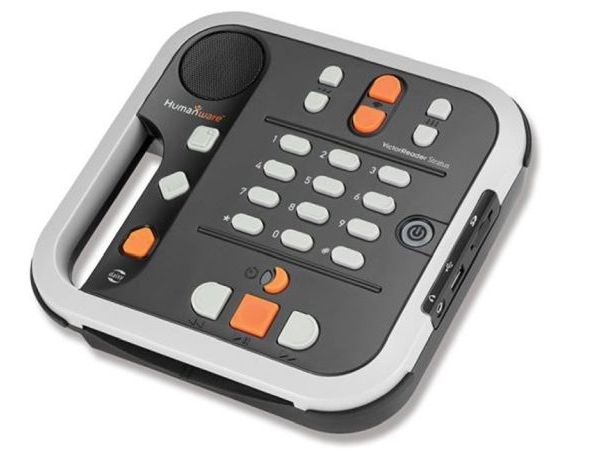
The Victor Reader Stratus4 Daisy MP3 player (pictured right) is ideal for playing both music and audio books. It is easy to use and has a user-friendly simple interface with 4 navigation keys enabling direction to desired chapters, pages, sections, paragraphs or tracks.
The DAISY, MP3 audio books and music CD’s can be to be played through the reader stratus 4, it also bookmarks important locations in each type of book, music file or text document. The built text to speech (TTS) feature allows the user to make a copy of text documents and then replay it through the built-in speaker or headphone output. It also comes with optional features which makes easy accessibility to most important buttons with the optional keyboard cover. Those who prefer an even simpler operation, use the optional keyboard cover that makes only the most important buttons accessible, and thus simulates a conventional cassette recorder.
Please feel free to contact Edit Microsystems to find out more, or to receive a quote.

Blaze ET: The Blaze ET (pictured right) is an advanced multi-player with OCR for books, music, documents, podcasts, recording, DAISY and more. Blaze ET sets a new standard for portable DAISY players with a pocket-sized book player integrated with OCR text-to-speech to capture and read aloud hardcopy printed documents on-demand.
It features a numeric keypad and Blaze EZ several built-in apps including colour reader, clock with alarm and calculator. It plays audio books and music files from its internal memory or your SD card and connects via Wi-Fi to access online media, podcasts and internet radio. The Blaze ET supports multiple file formats including DOC, DOCX, PDF and EPUB.
Create high-quality recordings using the internal microphone or stereo line-in and enjoy live radio using the built-in FM radio.
The key features of the product include a book reader that supports various file formats, a DAISY player, a media player, stereo speakers, a headphone jack, Wi-Fi connectivity, 12 GB internal memory, a micro-USB interface, an SD slot, Bluetooth 3.0, and a rechargeable battery with a 12-hour life. It comes with accessories such as an OCR capture stand, charging cradle, extra battery, and spare AC adaptor. The product falls under the categories of OCR Hardware, OCR Scan & Read, and Book Readers & Recorders. A brochure and manual are also available.
The Blaze Et is available to purchase in South Africa from organizations and companies such as Sensory Solutions, contact them to find out more about this product, or to receive a quote.

The Victor Reader Stream CD Accessory is a device that plays CDs onto a portable audio playback device. It is an easy way to transfer a collection of CDs onto a single portable audio device without using a PC. The device is ideal for users who do not use a PC. The device is a perfect solution to transition from using VR Wave to VR Stream. The CDCD player accessory especially designed to be used with the VR Stream. This product includes a power adapter and a D-Shaped USB cable.
This Victor Reader is available to purchase from companies such as Edit Microsytems, please contact them to find out more about this product, or to receive a quote.
There are also various other types of these products which are available from companies such as Sensory Solutions and Edit Microsystems, please contact them to see what other types of these products they can supply.
Please feel free to contact Edit Microsystems to find out more, or to receive a quote.
2. Glasses & Magnifiers
From prescription spectacles and high-power reading glasses to handheld, stand, and electronic magnifiers, these tools make everyday tasks such as reading, writing, recognising faces, managing medication, and viewing screens far more accessible.
By enhancing functional vision, glasses and magnifiers promote independence, confidence, and safety in daily life while reducing eye strain and fatigue. They enable continued participation in education, employment, and social activities, allowing individuals to remain engaged and productive. When properly assessed and matched to a person’s specific visual needs, these aids play a critical role in improving quality of life and supporting inclusion for people with low vision.
a. Glasses
Glasses can assist persons with visual impairments by improving their vision to enable them to be able to read easier, reduce eye strain and improve contrast sensitivity, which makes it easier to distinguish between objects and colours. In addition to traditional glasses, there are also specialized glasses designed for people with low vision, such as magnifying glasses and bioptic telescopes.
These glasses can help persons with severe visual impairments to read, watch TV, and perform other daily activities like watching sporting events, while other Smart or Electronic Glasses can enhance the vision of a Person with Visual Impairments. Overall, glasses are an effective and accessible tool for improving the quality of life for persons with visual impairments.


Many of these products are available in South Africa and are sold by Organizations and Companies such as Sensory Solutions, the South African National Council for the Blind and Edit Microsystems. Contact them to find out more, or
Please visit our Glasses & Eye Protection section to find out more about these types of products that are available to assist you to read: Glasses and Eye Protection
b. Magnifiers
A Video Magnifier is a low-vision aid that uses a camera and a screen to magnify text and images, which allows persons with low vision to read, write, and perform other tasks that would be difficult or impossible without magnification. Benefits of using a video magnifier include increased reading speed and comprehension; improved ability to see details and reduce eye strain, which leads to increased independence and productivity.
Most Video Magnifiers have a variety of features that can be customized to the user’s needs and are available to be purchased in South Africa from companies and organisations such as Sensory Solutions, the South African National Council for the Blind and Edit Microsystems.
Video magnifiers come in a variety of shapes and sizes and are categorised under the following types of Magnifiers:
i. Desktop Magnifiers
Desktop Magnifiers use advanced optical technology and user-friendly features to provide effective magnification and contrast settings which can be adjusted to suit the users’ needs. These magnifiers have large, high-resolution screens that display text, images, and objects with exceptional clarity, while some models include features like lighting, colour filters, and autofocus for an enhanced experience.
Desktop magnifiers are designed to be intuitive and ergonomic, with adjustable stands or mounts for comfortable viewing and are available to be purchased in South Africa from companies and organisations such as Sensory Solutions and Edit Microsystems, who supply products such as:
The Victor Reader Stratus4 Daisy MP3 player (pictured right) is ideal for playing both music and audio books. It is easy to use and has a user-friendly simple interface with 4 navigation keys enabling direction to desired chapters, pages, sections, paragraphs or tracks.
The DAISY, MP3 audio books and music CD’s can be to be played through the reader stratus 4, it also bookmarks important locations in each type of book, music file or text document. The built text to speech (TTS) feature allows the user to make a copy of text documents and then replay it through the built-in speaker or headphone output. It also comes with optional features which makes easy accessibility to most important buttons with the optional keyboard cover. Those who prefer an even simpler operation, use the optional keyboard cover that makes only the most important buttons accessible, and thus simulates a conventional cassette recorder.
Please feel free to contact Edit Microsystems to find out more, or to receive a quote.
The Victor Reader Stream CD Accessory is a device that plays CDs onto a portable audio playback device. It is an easy way to transfer a collection of CDs onto a single portable audio device without using a PC. The device is ideal for users who do not use a PC. The device is a perfect solution to transition from using VR Wave to VR Stream. The CDCD player accessory especially designed to be used with the VR Stream. This product includes a power adapter and a D-Shaped USB cable.
This Victor Reader is available to purchase from companies such as Edit Microsytems, please contact them to find out more about this product, or to receive a quote.
There are also various other types of these products which are available from companies such as Sensory Solutions and Edit Microsystems, please contact them to see what other types of these products they can supply.
Please feel free to contact Edit Microsystems to find out more, or to receive a quote.
ii. Portable Magnifiers
Portable magnifiers offer portability, allowing users to easily carry them and use them in various settings. They typically come with a built-in camera and display screen, providing live magnification of text, images, or objects. Portable magnifiers may offer features such as adjustable magnification levels, high contrast viewing modes, freeze frame functionality, LED lighting, and the ability to capture and save images.
Portable magnifiers are a valuable tool for enhancing visual accessibility on the go and are available to be purchased from companies and organisations such as Sensory Solutions and Edit Microsystems and include products such as:
The Victor Reader Stratus4 Daisy MP3 player (pictured right) is ideal for playing both music and audio books. It is easy to use and has a user-friendly simple interface with 4 navigation keys enabling direction to desired chapters, pages, sections, paragraphs or tracks.
The DAISY, MP3 audio books and music CD’s can be to be played through the reader stratus 4, it also bookmarks important locations in each type of book, music file or text document. The built text to speech (TTS) feature allows the user to make a copy of text documents and then replay it through the built-in speaker or headphone output. It also comes with optional features which makes easy accessibility to most important buttons with the optional keyboard cover. Those who prefer an even simpler operation, use the optional keyboard cover that makes only the most important buttons accessible, and thus simulates a conventional cassette recorder.
Please feel free to contact Edit Microsystems to find out more, or to receive a quote.
The Victor Reader Stream CD Accessory is a device that plays CDs onto a portable audio playback device. It is an easy way to transfer a collection of CDs onto a single portable audio device without using a PC. The device is ideal for users who do not use a PC. The device is a perfect solution to transition from using VR Wave to VR Stream. The CDCD player accessory especially designed to be used with the VR Stream. This product includes a power adapter and a D-Shaped USB cable.
This Victor Reader is available to purchase from companies such as Edit Microsytems, please contact them to find out more about this product, or to receive a quote.
There are also various other types of these products which are available from companies such as Sensory Solutions and Edit Microsystems, please contact them to see what other types of these products they can supply.
Please feel free to contact Edit Microsystems to find out more, or to receive a quote.
iii. Wearable Magnifiers
Wearable Magnifiers are designed to be worn on the head or attached to eyeglasses, and can be helpful for tasks such as reading, writing, or performing other visually demanding tasks and can provide a wider field of view than clip-on magnifiers, but may be bulkier and be more cumbersome to wear.
Some wearable magnifiers are also equipped with additional features, such as LED lights to provide additional illumination for the user in low-light environments, or for individuals with limited vision who require additional illumination.
Wearable magnifiers can provide additional magnification and help to make everyday tasks easier and more manageable and are sold by Companies such as Sensory Solutions, they include products such as the:

Acesight and Acesight S (pictured right) are wearable electronic glasses that let you see even with severe low vision. With a super-fast 60 Hz refresh rate and an open design that doesn’t cover your peripheral vision, looking around with Acesight feels natural and comfortable. In addition to natural colour, Acesight can convert your world into a variety of high-contrast colours, including light text on a dark background. Best of all, it can even outline the view to add definition to objects around you.
Whether you’re cutting bread to make a sandwich or pouring a cup of coffee, you’ll be able to use both hands to do so while wearing Acesight. Take it outside while walking around your garden or your neighbourhood, or use it at the store or your favourite restaurant.
Key Features include Augmented Reality (AR) open display; Full HD display; 8 megapixels camera; 45 degree field of view (per eye); 60 Hz refresh rate; 1.1x – 15x magnification; 10 contrast colours and full colour; 3 enhanced outline modes adding lines to edges of things; Floating reading mode to freeze the view and see a big still image; Find function to locate things in a higher magnification; Narrow mode to help see the whole picture; Rechargeable Li-ion battery 4+ hours usage time; Acesight S (simplified version): Find function and Narrow mode not available; Only 4 contrast colours possible.
The Acesight S Glasses are sold in South Africa by Sensory Solutions, click on the link to find out more or to purchase this product.
The Victor Reader Stream CD Accessory is a device that plays CDs onto a portable audio playback device. It is an easy way to transfer a collection of CDs onto a single portable audio device without using a PC. The device is ideal for users who do not use a PC. The device is a perfect solution to transition from using VR Wave to VR Stream. The CDCD player accessory especially designed to be used with the VR Stream. This product includes a power adapter and a D-Shaped USB cable.
This Victor Reader is available to purchase from companies such as Edit Microsytems, please contact them to find out more about this product, or to receive a quote.
There are also various other types of these products which are available from companies such as Sensory Solutions and Edit Microsystems, please contact them to see what other types of these products they can supply.
Please feel free to contact Edit Microsystems to find out more, or to receive a quote.
iv. Handheld Magnifiers
Handheld magnifiers are portable and compact devices that are designed to be held in the hand and offer a convenient solution for on-the-go magnification needs. They come in various sizes and magnification levels and feature a lens or a set of lenses that enlarge the text, images, or objects being viewed. They are lightweight and easy to use and can also come with built-in LED lights to provide additional illumination, especially in low-light environments.
These magnifiers are particularly useful for tasks such as reading small print, examining labels, or viewing details in photographs. They can be employed in various settings, including at home, in school, or while traveling. Handheld magnifiers empower individuals with visual impairments to maintain independence, access information, and engage with the surrounding world, they are available to be purchased from companies and organisations such as Sensory Solutions and Edit Microsystems and include products such as:
The Victor Reader Stratus4 Daisy MP3 player (pictured right) is ideal for playing both music and audio books. It is easy to use and has a user-friendly simple interface with 4 navigation keys enabling direction to desired chapters, pages, sections, paragraphs or tracks.
The DAISY, MP3 audio books and music CD’s can be to be played through the reader stratus 4, it also bookmarks important locations in each type of book, music file or text document. The built text to speech (TTS) feature allows the user to make a copy of text documents and then replay it through the built-in speaker or headphone output. It also comes with optional features which makes easy accessibility to most important buttons with the optional keyboard cover. Those who prefer an even simpler operation, use the optional keyboard cover that makes only the most important buttons accessible, and thus simulates a conventional cassette recorder.
Please feel free to contact Edit Microsystems to find out more, or to receive a quote.
The Victor Reader Stream CD Accessory is a device that plays CDs onto a portable audio playback device. It is an easy way to transfer a collection of CDs onto a single portable audio device without using a PC. The device is ideal for users who do not use a PC. The device is a perfect solution to transition from using VR Wave to VR Stream. The CDCD player accessory especially designed to be used with the VR Stream. This product includes a power adapter and a D-Shaped USB cable.
This Victor Reader is available to purchase from companies such as Edit Microsytems, please contact them to find out more about this product, or to receive a quote.
There are also various other types of these products which are available from companies such as Sensory Solutions and Edit Microsystems, please contact them to see what other types of these products they can supply.
Please feel free to contact Edit Microsystems to find out more, or to receive a quote.
v. Optical Magnifiers
Optical magnifiers are devices that use lenses to enlarge and enhance the visibility of text, images, or objects. They come in different forms, including handheld magnifiers, stand magnifiers, and magnifying glasses. They utilize convex lenses to increase the size of the viewed object and are available in different magnification levels, allowing users to choose the appropriate level based on their specific needs, with some including additional features like built-in lighting or filters to enhance visibility, especially in low-light conditions or to improve contrast.
Optical magnifiers are widely used in various applications, including reading books, newspapers, or documents, examining fine print, conducting detailed inspections, and engaging in hobbies or crafts and are available to be purchased from companies and organisations such as Sensory Solutions and Edit Microsystems and include products such as:

The PowerMag Handheld magnifier (pictured right) is small and light enough to be carried around and to be used both inside and outside the home. With low energy consumption and long-lasting battery life, the PowerMagPower Mag Handheld magnifiers are designed for many years of extensive use without having to replace the battery or the light bulb. Magnification levels available include: 2.5x, 3x, 3.5x, 4x, 5x, 6x, 7x, 8x, 10.75x, 13x & 15x.
The PowerMag Handheld is available to purchase in South Africa from organizations and companies such as Sensory Solutions, contact them to find out more about this product, or to receive a quote.
Please feel free to contact Sensory Solutions to find out more, or to receive a quote.
The Victor Reader Stream CD Accessory is a device that plays CDs onto a portable audio playback device. It is an easy way to transfer a collection of CDs onto a single portable audio device without using a PC. The device is ideal for users who do not use a PC. The device is a perfect solution to transition from using VR Wave to VR Stream. The CDCD player accessory especially designed to be used with the VR Stream. This product includes a power adapter and a D-Shaped USB cable.
This Victor Reader is available to purchase from companies such as Edit Microsytems, please contact them to find out more about this product, or to receive a quote.
There are also various other types of these products which are available from companies such as Sensory Solutions and Edit Microsystems, please contact them to see what other types of these products they can supply.
Please feel free to contact Edit Microsystems to find out more, or to receive a quote.
3. Braille Books, Readers and Accessories
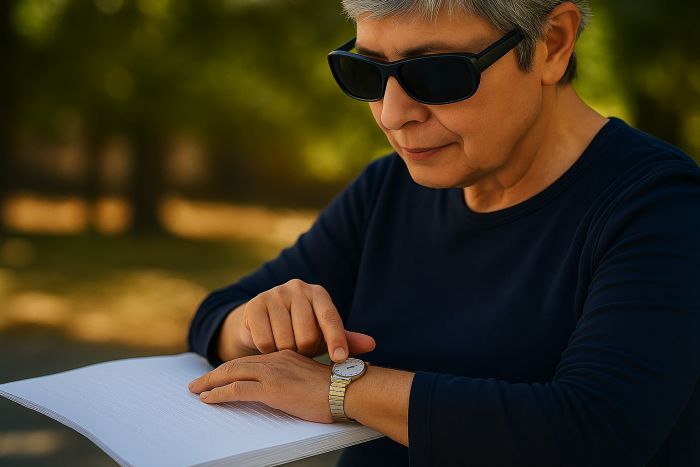
Braille is a tactile writing system used by persons who are blind or visually impaired and traditionally found in books written on embossed paper. Braille characters are small rectangular blocks called cells that contain raised dots, which distinguish one character from another. Braille is used on a variety of objects, including books, Computer Keyboards, screens, Watches, Money, and signs in public places.
Braille education remains important for developing reading skills among children who are blind and visually impaired, and Braille literacy correlates with higher employment rates. Braille cells are not the only thing to appear in braille text. There may be embossed illustrations and graphs, with the lines either solid or made of series of dots, arrows, bullets that are larger than Braille dots, etc.
b. Braille & Braille Books
Braille is a tactile writing system used by persons who are blind or visually impaired and traditionally found in books written on embossed paper. Braille characters are small rectangular blocks called cells that contain raised dots, which distinguish one character from another. Braille is used on a variety of objects, including books, Computer Keyboards, screens, Watches, Money, and signs in public places.
Braille education remains important for developing reading skills among children who are blind and visually impaired, and Braille literacy correlates with higher employment rates. Braille cells are not the only thing to appear in braille text. There may be embossed illustrations and graphs, with the lines either solid or made of series of dots, arrows, bullets that are larger than Braille dots, etc.
The Victor Reader Stratus4 Daisy MP3 player (pictured right) is ideal for playing both music and audio books. It is easy to use and has a user-friendly simple interface with 4 navigation keys enabling direction to desired chapters, pages, sections, paragraphs or tracks.
The DAISY, MP3 audio books and music CD’s can be to be played through the reader stratus 4, it also bookmarks important locations in each type of book, music file or text document. The built text to speech (TTS) feature allows the user to make a copy of text documents and then replay it through the built-in speaker or headphone output. It also comes with optional features which makes easy accessibility to most important buttons with the optional keyboard cover. Those who prefer an even simpler operation, use the optional keyboard cover that makes only the most important buttons accessible, and thus simulates a conventional cassette recorder.
Please feel free to contact Edit Microsystems to find out more, or to receive a quote.
The Victor Reader Stream CD Accessory is a device that plays CDs onto a portable audio playback device. It is an easy way to transfer a collection of CDs onto a single portable audio device without using a PC. The device is ideal for users who do not use a PC. The device is a perfect solution to transition from using VR Wave to VR Stream. The CDCD player accessory especially designed to be used with the VR Stream. This product includes a power adapter and a D-Shaped USB cable.
This Victor Reader is available to purchase from companies such as Edit Microsytems, please contact them to find out more about this product, or to receive a quote.
There are also various other types of these products which are available from companies such as Sensory Solutions and Edit Microsystems, please contact them to see what other types of these products they can supply.
Please feel free to contact Edit Microsystems to find out more, or to receive a quote.
b. Braille Reading Techniques
Since braille is one of the few writing systems where tactile perception is used, as opposed to visual perception, a braille reader must develop new skills. There are many different styles and techniques used for the understanding and reading of braille, including:
– The ability to create smooth and even pressures when running one’s fingers along the words.
– Using the index fingers of both hands.
– Finish reading the end of a line with the right hand and to find the beginning of the next line with the left hand simultaneously.
c. Braille Accessories
There are various types of Braille Accessories that are available to assist persons who are Blind, this includes various types of Braille Paper which is available to be purchased by companies such as Edit Microsystems and Sensory Solutions:
c. Braille Paper
Braille Paper is unlike traditional copy/printing paper, braille paper in that it is a thick stock paper used specifically with braille embossers to print reading material for the blind and visually impaired.
Braille paper holds the shape of the braille dot better than traditional paper and lasts longer – ultimately making the reading process easier and more enjoyable for a blind individual.
Braille paper should also generate less paper dust and minimise static electricity, which are generated during the braille printing process, both of which can damage the internal components of a braille printer.
Various types of Braille paper are available in South Africa and are supplied by companies such as Sensory Solutions, who supply the following formats:

Perkins Braille Paper: Single Sheet 135g Perkins (255 x 340 mm) – 500 sheets per pack
Continuous Feed Braille Paper: Continuous Tractor Feed 135g 11.5″ x 11″ – 1000 sheets per box
Cut Sheet Braille Paper: Single Sheet 135g A3 (297 x 420 mm) – 500 sheets per pack & Single Sheet 135g A4 (210 x 297 mm) – 500 sheets per pack.
Continuous Feed Braille Paper: Continuous Tractor Feed 135g 11.5″ x 11″ – 1000 sheets per box
c. Computer and Electronic Reading Aids
Computer and Electronic Reading Aids includes software such as Screen Readers, Screen Magnifiers and Optical character recognition (OCR) technology found on Computers, Tablets, E-Readers, Cell phones, which enable persons who are Blind or have a Visual Impairments to be able to read the information on the device, but also input information, thus making a Computers and other Electronic equipment, extremely powerful tools for persons who are Blind, or Visually Impaired.
Perkins Braille Paper: Single Sheet 135g Perkins (255 x 340 mm) – 500 sheets per pack
Continuous Feed Braille Paper: Continuous Tractor Feed 135g 11.5″ x 11″ – 1000 sheets per box
Continuous Feed Braille Paper: Continuous Tractor Feed 135g 11.5″ x 11″ – 1000 sheets per box
Continuous Feed Braille Paper: Continuous Tractor Feed 135g 11.5″ x 11″ – 1000 sheets per box
c. Computer and Electronic Reading Aids
The Victor Reader Stratus4 Daisy MP3 player (pictured right) is ideal for playing both music and audio books. It is easy to use and has a user-friendly simple interface with 4 navigation keys enabling direction to desired chapters, pages, sections, paragraphs or tracks.
The DAISY, MP3 audio books and music CD’s can be to be played through the reader stratus 4, it also bookmarks important locations in each type of book, music file or text document. The built text to speech (TTS) feature allows the user to make a copy of text documents and then replay it through the built-in speaker or headphone output. It also comes with optional features which makes easy accessibility to most important buttons with the optional keyboard cover. Those who prefer an even simpler operation, use the optional keyboard cover that makes only the most important buttons accessible, and thus simulates a conventional cassette recorder.
Please feel free to contact Edit Microsystems to find out more, or to receive a quote.
The Victor Reader Stream CD Accessory is a device that plays CDs onto a portable audio playback device. It is an easy way to transfer a collection of CDs onto a single portable audio device without using a PC. The device is ideal for users who do not use a PC. The device is a perfect solution to transition from using VR Wave to VR Stream. The CDCD player accessory especially designed to be used with the VR Stream. This product includes a power adapter and a D-Shaped USB cable.
This Victor Reader is available to purchase from companies such as Edit Microsytems, please contact them to find out more about this product, or to receive a quote.
There are also various other types of these products which are available from companies such as Sensory Solutions and Edit Microsystems, please contact them to see what other types of these products they can supply.
Please feel free to contact Edit Microsystems to find out more, or to receive a quote.
c. Reading and Writing Software
Computer and Electronic Reading Aids includes software such as Screen Readers, Screen Magnifiers and Optical character recognition (OCR) technology found on Computers, Tablets, E-Readers, Cell phones, which enable persons who are Blind or have a Visual Impairments to be able to read the information on the device, but also input information, thus making a Computers and other Electronic equipment, extremely powerful tools for persons who are Blind, or Visually Impaired.
The Victor Reader Stratus4 Daisy MP3 player (pictured right) is ideal for playing both music and audio books. It is easy to use and has a user-friendly simple interface with 4 navigation keys enabling direction to desired chapters, pages, sections, paragraphs or tracks.
The DAISY, MP3 audio books and music CD’s can be to be played through the reader stratus 4, it also bookmarks important locations in each type of book, music file or text document. The built text to speech (TTS) feature allows the user to make a copy of text documents and then replay it through the built-in speaker or headphone output. It also comes with optional features which makes easy accessibility to most important buttons with the optional keyboard cover. Those who prefer an even simpler operation, use the optional keyboard cover that makes only the most important buttons accessible, and thus simulates a conventional cassette recorder.
Please feel free to contact Edit Microsystems to find out more, or to receive a quote.
The Victor Reader Stream CD Accessory is a device that plays CDs onto a portable audio playback device. It is an easy way to transfer a collection of CDs onto a single portable audio device without using a PC. The device is ideal for users who do not use a PC. The device is a perfect solution to transition from using VR Wave to VR Stream. The CDCD player accessory especially designed to be used with the VR Stream. This product includes a power adapter and a D-Shaped USB cable.
This Victor Reader is available to purchase from companies such as Edit Microsytems, please contact them to find out more about this product, or to receive a quote.
There are also various other types of these products which are available from companies such as Sensory Solutions and Edit Microsystems, please contact them to see what other types of these products they can supply.
Please feel free to contact Edit Microsystems to find out more, or to receive a quote.