


Sports, Exercise and Rehabilitation Aids
Welcome to our Sports, exercise, and rehabilitation page, where we include equipment suitable for individuals with mobility impairments.
Sports, exercise, and rehabilitation play a vital role in maintaining overall health and wellbeing. This is especially true for individuals with mobility impairments or those who use wheelchairs.
Whether newly injured or living with a long-term condition, staying active is key—not only to rebuild strength and stay motivated, but also to connect socially, maintain a healthy weight, and preserve mobility and independence over time.
There is a wide variety of rehabilitation equipment – and specialised sports and exercise equipment designed to support individuals with disabilities. From rehabilitation tools like standing frames, stationary hand bikes, therapy equipment, wrist weights, and plinths. To sports wheelchairs, hand cycles, and ParaGolfers. You’ll also find adaptive sports prostheses and assistive gear to meet a range of fitness goals.
To learn more about the different types of rehabilitative – and adaptive sports equipment available in South Africa, and the suppliers that sell, fit and repair them, please read the information below. Or view the links on the right.
What Are You Looking For?
Companies and Organisations that can assist
1. Sports, Exercise, Rehabilitation & Therapy Equipment
1.1 Sports Equipment
– Sports Prosthesis
– Hand Cycles
2. Sports Wheelchairs:
– Basketball Wheelchairs
– Quad Rugby Wheelchairs
– Table Tennis Wheelchairs
– Tennis Wheelchairs
– Racing Wheelchairs
– Golf Wheelchairs and ParaGolfers
3. Exercise, Therapy and Rehab Equipment
– Standing and Walking Equipment
– Therapy Equipment
– Exercise Equipment
– Cardiovascular Equipment


Companies and Organisations That Can Assist
Sports, Exercise and Rehabilitation, is big business and there are a wide variety of different types of equipment available on the market today that can aid in your rehabilitation and help you enjoy Sports and Exercise again. This specialised Sports, Exercise and Rehabilitation equipment is available from companies such as ShonaquipSE, Sitwell Technologies, WHASCP Fitnes, and Solutions Medical – and include such products as Sports Wheelchairs, ParaGolfers, and Hand Cycles.
As well as Rehabilitation and Exercise Equipment such as Standing Frames, Stationary Hand Bikes, Therapy Equipment, Plinths, and more. These companies can also advise you on the best products to suite your needs – as well as servicing and repairs of the products that they sell. For those looking for a little additional assistance, we recommend organisations like QASA, who support disabled sports initiatives in South Africa. To learn more, please keep reading.
Sitwell Technologies are Specialists in the provision of Mobility & Assistive Aid Equipment for persons with physical disabilities. Sitwell Technologies represent all local suppliers as well as a number of International manufacturers of equipment – providing an unbiased view of all products available to the South African market.
Their approach to Mobility is about providing a holistic solution to each individual’s needs.
Sitwell Technologies are based in Johannesburg but can provide products throughout South Africa.
You can contact them at: Tel: (+27) 11 440 8226 or email: mobility@sitwell.co.za or www.sitwell.co.za
Address: 41 11th Avenue, Highlands North, Johannesburg.

WHASCP Fitness was founded by Victor Buitendag in 2018. As the founder of WHACSP, I have lived an active lifestyle as an adaptive athlete for more than 20 years.
Being healthy and independent remains the ultimate goal, a never-ending battle to overcome the challenges of living adaptively. The WHASCP journey is a lifestyle I live, a lifestyle beyond and above the stigmas and labels placed on people living adaptively.
WHASCP was founded by Victor Buitendag in 2018.
WHASCP Fitness is a company purposefully developed to support the fitness and health needs of adaptive and able-bodied trainees, regardless of their presented impairment.
Vic, the founder of WHASCP and your fitness coach, is a certified Level One CrossFit trainer and ATA (Adaptive Training Academy) coach with extensive physical rehabilitation and adaptive sports background.
WHASCP Fitness programms are inspired by an inclusive global CrossFit community that provides training opportunities irrespective of ability, gender, age or impairment. They are created in an environment where you can train hard, be challenged and supported by highly motivated professional coaching.
These programms are functional and lifestyle orientated and are conveniently hosted at accessible venues around Pretoria and the East Rand but can also be done in the comfort of your own home, if preferred. They are purposefully designed for people with adaptive needs and mainly focus on functional movement and technique.
All training sessions include: Warmup, Strength Training, Body Weight Exercises, Cardio/Aerobic and Weight Training, with various packages on offer to suite your situation, including In-Person Training; Virtual Training and various Traveling Expense Packages.
Contact WHASCP Fitness to book a session on the details below or view some of Victors clients in action: Training Sessions.
WHASCP Fitness not only supplies Exercise Training Programs and Diet Programs but they also sell various types of exercise and sports equipment that can be used by persons with mobility impairments who have limited use of their hands. This includes products such as: WHASCP Adaptive Hands; WHASCP Adaptive Kettle Bags; WHASCP Rage Rope and WHASCP Sand Bags, etc.
Please feel free to contact Victor Buitendag from WHASCP Fitness on Tel: 084 308 5856 or via email on: whascpfit@gmail.com or visit their website to find out more: www.whascp.com

Shonaquip Social Enterprise (ShonaquipSE): team believe that with an appropriate assistive device, knowledge to make informed choices and agency to action them, a family of a child with a disability will never need to experience their child as less valued.
ShonaquipSE goes beyond service delivery to build sustainable ecosystems that support inclusion.
An inclusive ecosystem is one where all people can live full lives in supportive and enabling environments. When each community functions as a holistic ecosystem real inclusion happens.
Our mobility devices are suitable for both independently propelled or carer assisted mobility options and can be customised to meet you individual requirements and a wide variety of posture support needs.
They are developed to be, simple durable and affordable in response to our local context and designed in a way that makes maintenance and repair easy. Mobility options include self-propelling wheelchairs, attendant propelled wheelchairs, paediatric buggies and electric power chairs.
Our body positioners help to establish and maintain a 24 hour postural management routine. Our range of positioning devices help to maintain joint alignment, range of movement and stability, and reduce abnormal tone which provides longer term comfort through the therapeutic benefits of correct positioning. Positioning options include wheelchair back supports, lateral supports, static positioners, cushions and therapy equipment. Customisation is also an important part of our product offering, so please do get in touch and let’s see if we can put together a solution that will work for your needs.
We are committed to enabling inclusion by partnering with government, NGOs, community members and families within a holistic, ecosystem approach. In addition to the design and production of posture support & mobility devices, we deliver a range of services to build local capacity in the following areas including: Health; Social Inclusion; Training & Education; Research & Advocacy and Lecturing and Public Speaking.
For more information:
Tel: +27 (0)21 797 8239
Email: info@shonaquipSE.org.za.
Website: www.ShonaquipSE.org.za
Address: Head Office at: Independence Square, Unit 7 & 8, Cnr Strandfontein and New Ottery Road, Ottery, 7808.
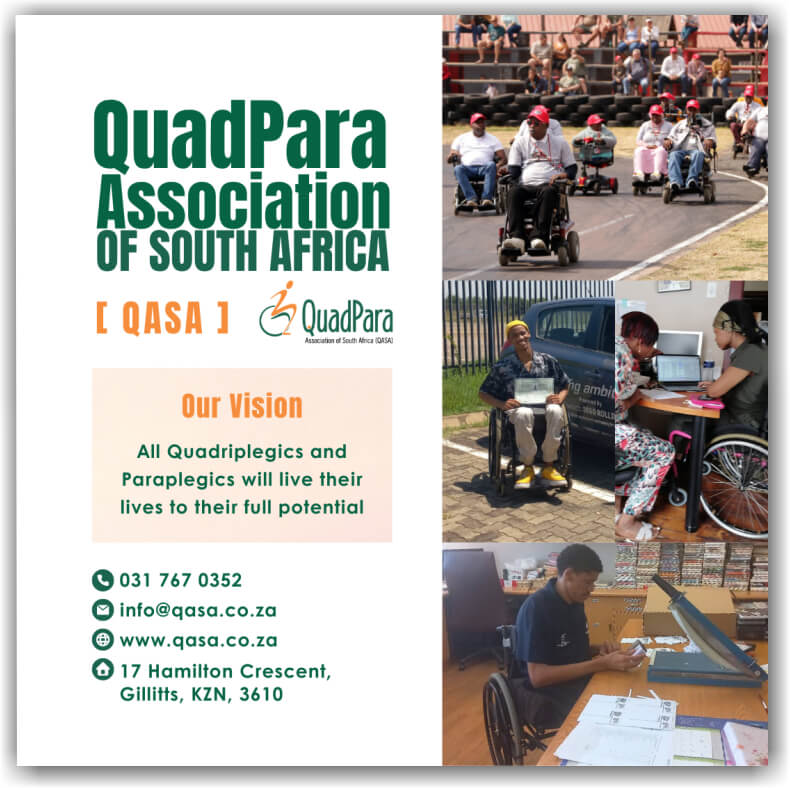
The QuadPara Association of South Africa (QASA) have a Sports Fund that supports disabled sports initiatives in South Africa.
To this end, QASA has set up a Sports Fund, to which any QASA member can apply for financial assistance for a sporting activity.
The Sports Fund has supported participants in quadriplegic rugby, the SABAT Power Wheelchair Race, the Outeniqua Challenge wheelchair race, table tennis, dancing and darts.
Any QASA member who wishes to access funding from the QASA Sports Fund must first apply to their regional association for approval, from where the application will be referred to the QASA National Office.
Please Click the link below to find out more or contact QASA to get the Criteria and Conditions for the Sports Fund, as well as to download the “Sports Fund Assistance Form.” Click Here to Read More:
Sports, Exercise, Rehabilitation & Equipment| What do you need?
An increasing number of persons with disabilities are participating in sports and activities, leading to the development of new assistive technology that enable more sports enthusiasts with physical disabilities to play and enjoy a variety of sports and to participate in various activities. More complex assistive technology devices have been developed over time, and as a result, sports for persons with disabilities has evolved from being a therapeutic tool to competition activities.

1. Sports Equipment
Various types of Sports Equipment such as blade prostheses and hand cycles empowers athletes with disabilities to participate in high-performance and recreational activities. They are specifically designed for each sport and adapted for each athlete to enhance mobility, precision, and open the door to an inclusive, competitive sporting experiences.
Click here to learn more.

2. Sports Wheelchairs
Sports wheelchairs are specially engineered for speed, agility and stability, allowing athletes to perform at their highest level.
With lightweight frames and sport-specific designs, they enhance mobility, safety, and precision for both competitive and recreational players.
Click here to learn more.
3. Exercise, Therapy & Rehabilitation
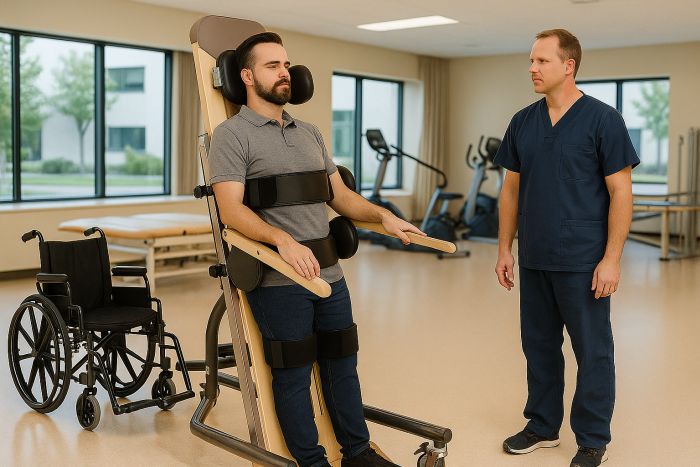
Supports strength-building, mobility improvement, and overall physical well-being for people recovering from injury or with disabilities.
From therapeutic tools to adaptive exercise machines, this equipment helps individuals reach their rehabilitation goals safely and effectively.
Click here to learn more.
1. Sports Equipment
An increasing number of persons with disabilities are participating in sports and activities, leading to the development of new assistive technology that enable more sports enthusiasts with disabilities to play and enjoy a variety of sports and to participate in various activities.
Assistive technology can be found in Adaptive Sports Clothing and sports ranging from local community recreational activities to elite Paralympic games. More complex assistive technology devices have also been developed over time, and as a result, sports for persons with disabilities “have changed from being a therapeutic tool to competition activities.
Unfortunately some of this equipment can get pricey but there ore companies and organisations that can assist.
This equipment includes:
1. Sports Prosthesis
The term Sport Prosthesis cover a large range of socket design and components, you may need different equipment and different designs for different sports, whether you are going for the occasional jog, a friendly game of golf, or are a seasoned Paralympian sprinter.
You will require the correct type of Prosthesis fitted to you to insure that at the end your day you do not end up with blisters or pressure sores, leaving you unable to put your limb on or barely able to walk for a few days.
In short you must prepare properly for sports or activities that you intend participating in.
There are a various types of prosthesis available for various sports, which are available from various companies around South Africa.

For more information visit our Walking Aids & Prosthesis – Prosthesis/Prosthetic page or Contact DiSA and we will point you in the right direction.
2. Hand Cycles
A Handcycle/Handbike is a type of tricycle powered by the arms rather than the legs, as with a bicycle. Handcycles are steered & powered by the front wheel, with two coasting rear wheels. Despite this equipment usually having three wheels, they are also known as handbikes. The handcyclists use their torso to help propel & steer the cycle simultaneously and some designs use two front wheels and a single rear wheel, while others use lean-steer designs.
Handcycles are not wheelchairs, they have cranks and gears, while a wheelchair has push-rims directly on the main wheels. Handcycles come in a variety of styles, making them accessible to persons with a wide variety of disabilities. There are also hybrids which are a cross between a handcycle, a recumbent bike and a tricycle.
There are 2 main types of Handcyles, they include The Fork Steer Handcycle and The Lean Steer Hancycles. The Fork steer handcycles represent the majority of handcycles sold. They work well for both low and high-level spinal injuries, and most have adjustable footrests, seat angle, and come with a variety of gearing, wheel and tire configurations depending on intended use, such as racing, recreation or touring.
Lean Steer Riders turn lean steer handcycles by leaning into the turn, there is a longer learning curve with lean steer handcycles and they are significantly less stable at high speeds. Lean steer handcycles can work well for lower-level injuries; although, some athletes with high-level disability use them as well. There are different types of Handcycles that are available to purchase throughout South Africa from various companies, they include products such as:

The Invacare Top End Accelerator Handcycle features a mountain drive option which adds seven low gears. With a reverse drum brake, athletes can manoeuvre without having to take their hands off the crank.
Features include:
– Fast, durable cruiser tires work great on either dirt or paved surfaces
– Quick release axles allow for easy removal of rear wheels
– Adjustable crank height and chain tension idler
These Handcycles are available to purchase from various companies around South Africa including Sitwell, contact them to find out more about this product that they sell, or visit our Handcycling page to find out more about Handcycling and the rules and regulations.

The Quickie Shark Handbike is a high-performance hand bike engineered for power, precision, and adjustability. The Quickie Shark handbike sets a new standard in hand-powered mobility with its lightweight frame, aerodynamic design, and fully adjustable components. Whether you’re a recreational rider or a competitive athlete, the Shark offers unmatched customisation and comfort.
Built for performance, made for you
The Quickie Shark is the ultimate in handcycling technology. This state-of-the-art handbike is engineered for performance, comfort, and style. Its innovative frame construction enhances rigidity while minimising weight. At the heart of its design is a 3-way adjustable crank system that adapts to your body geometry and riding style, improving your reach, cadence, and control.
The Shark is suitable for both recreational and professional users, with high levels of adjustability to meet various positioning and propulsion needs. Its lightweight and streamlined design ensure efficient riding with minimal energy expenditure, making it perfect for fitness, sports, or casual use.
These Handcycles are available to purchase from various companies around South Africa including CE Mobility, contact them to find out more about this product that they sell, or visit our Handcycling page to find out more about Handcycling and the rules and regulations.
There are various other types of Handbikes available, if you cannot find what you are looking for, please feel free to
Contact DiSA to find out more.
2. Sports Wheelchairs
There are a variety of different types of wheelchairs that can used in different sports & activities for persons in wheelchairs, these include Basketball Wheelchairs, Rugby Wheelchairs, Dancing Wheelchairs and Racing Wheelchairs, as well as various Off-Road and All-terrain wheelchairs with rugged frames and big wheels for rolling over unpaved surfaces, like hiking trails, snow, or beach sand.
There are also various Handcycles, or recumbent bicycles, which are used for cycling and Paramobile devices such as specialized golf carts, which have support for standing to assist players with Mobility Impairments. Persons with Mobility Impairments who use these types of wheelchairs & devices also sometimes use other equipment to assist them, such as Bowling balls with hand grips to assist bowlers with limited use of their hands, one-handed fishing rods to assist fisherman, who have limited mobility, etc.
Each of these wheelchairs or pieces of equipment are designed in a specific way, which differs from a normal wheelchair, but makes it easier to handle and participate in the sport. Read the article below to find out more about these differences, the different types and styles of equipment and the companies that provide them in South Africa.
i. Basketball Wheelchairs
Basketball Wheelchairs are designed for enhanced stability, the centre of gravity is where the chair and the athlete’s mass are equally distributed in all directions. A wheelchair with a higher seat is more likely to tip, so Basketball Wheelchairs have lower seats and wheels that are angled outward so that the centre of gravity is lower to help prevent the chair from tipping.
The wheelchairs are classified in two groups based on position:
There are wheelchairs for forwards and centres and there are also wheelchairs for guards. Forwards and centres are typically under the net, so their wheelchairs have higher seats and therefore less mobility, but the height increases the player’s reach for shots at the hoop and for rebounds. Guards have lower seats and therefore greater stability for ball handling and getting down the court as quickly as possible.
There are various types of these Basketball Wheelchairs that are available to purchase from companies throughout South Africa and includes products such as:

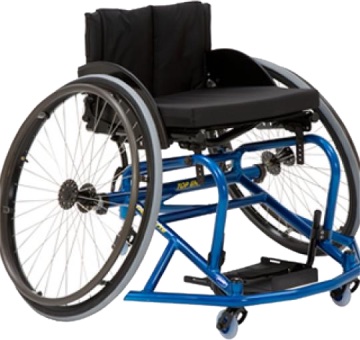
The Invacare Top End Pro Basketball Wheelchair is designed for aspiring athletes who want durability and quick, easy adjustments. Adjustments that can take up to four hours in other chairs, take only 15 minutes in the new Pro Basketball Wheelchair.
The Pro Basketball Wheelchair is available in both a tall and short frame to accommodate any aspiring athlete.
You can adjust it between games or at half time with the exclusive quick release rear seat height adjustment system.
This chair also has adjustable front seat height, center of gravity, back height/angle, back upholstery and footrest positioning.
These Basketball Wheelchairs are available from: be-Able Solutions, contact them to find out more.
Available from: be-Able Solutions or contact DiSA for more information.
You can also visit our Wheelchair Basketball page to find out more about Wheelchair Basketball, including the rules and classifications.
ii. Quad Rugby Wheelchairs
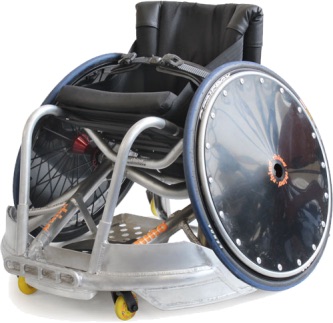
Quad Rugby is played in a Manual Wheelchair that has been specially custom-manufactured for the sport.
The rules include detailed specifications for the wheelchair. This include a Front Bumper, designed to help strike and hold opposing wheelchairs, and Wings, which are positioned in front of the main wheels to make the wheelchair more difficult to stop and hold.
All wheelchairs must be equipped with spoke protectors, to prevent damage to the wheels, and an anti-tip device at the back. New players and players in developing countries sometimes play in wheelchairs that have been adapted for wheelchair rugby by the addition of temporary bumpers and wings.
There are various types of Rugby Wheelchairs available in South Africa, including:
Quad Rugby players also use a regulation volleyball typically of a ‘soft-touch’ design, with a slightly textured surface to provide a better grip. These balls are normally over-inflated compared to a volleyball, to provide a better bounce. Players also use a variety of other personal equipment, such as gloves and applied adhesives to assist with ball handling due to their usually impaired gripping ability, as well as various forms of strapping to maintain a good seating position.
Contact DiSA to find out what is available and where to purchase it, or visit our Wheelchair Rugby page to find out more about Wheelchair Rugby.
iii. Table Tennis Wheelchairs
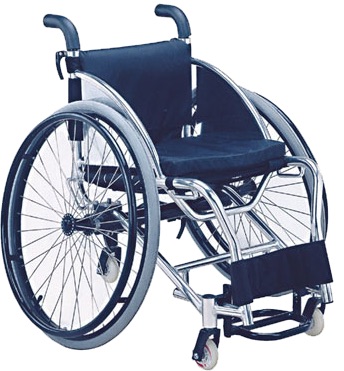
Table Tennis, also known as ping pong, is a sport in which two or four players hit a lightweight ball back and forth across a table using a small paddle. The game takes place on a hard table divided by a net.
Wheelchair Table Tennis or Para Table Tennis is a sport played by a disabled sportsman who use wheelchairs to participate. Athletes receive classifications, so that they can be grouped for competition purposes according to their impairment.
Table Tennis Wheelchairs must have at least two large wheels and one small wheel. If the wheels on the player’s wheelchair become dislodged and the wheelchair has no more than two wheels, then the rally must be stopped immediately and a point awarded to his or her opponent.
The height of one or maximum two cushions is limited to 15 cm in playing conditions with no other addition to the wheelchair. In team and class events, no part of the body above the knees may be attached to the chair as this could improve balance
There are various types of these Table Tennis Wheelchairs available on the market today.
Contact Us to find out where to purchase these Table Tennis Wheelchairs, or visit our Table Tennis page to find out more.
iv. Tennis Wheelchairs
Wheelchair Tennis is one of the official Paralympic sports and is also played at Grand Slams where there are three categories; Men, Ladies, and Quads, each category has singles and doubles tournaments.
Quads is the category for those with quadriplegia and it is sometimes called Mixed especially at Paralympic Games. Quads players can use electric-powered wheelchairs and hold rackets taped to the hand with Ace wrap which can be used to secure the racquet to one’s hand if there is a lack of grip strength.
Adaptive equipment is also used, including special socket devices with rings that attach to prostheses which enable players to hold, toss, and serve the tennis balls, this has also made tennis a popular sport among amputees.
In Wheelchair Tennis, the wheelchair is considered part of the body and all applicable Rules which apply to a player’s body shall apply to the wheelchair. One buttock must remain in contact with the wheelchair seat when contacting the ball and beginners can play in their everyday chairs, including power chairs, but the more serious player can use a sports chair specifically made for tennis.
There are various types of Tennis Wheelchairs available in South Africa including:

These Tennis Wheelchairs are available to purchase from various companies around South Africa including be-Able Solutions, contact them to find out more –
For more information: Contact DiSA or visit our Wheelchair Tennis page to find out more.
iv. Racing Wheelchairs
Racing Wheelchairs are a necessary piece of equipment for athletes in wheelchairs competing in Wheelchair Racing and in Triathlons. These chairs are available in various makes and styles and are normally very lightweight & have pneumatic tires. The dimensions and features on the wheelchairs are clearly specified in the IPC Athletics rules.
There are rules for each event regarding the athletes’ equipment such as the Wheelchair, these rules therefore dictate how the wheelchair shall look and include the following specifications:
4. Golf Wheelchairs and ParaGolfers
Golf is a precision club and ball sport, in which competing players (or golfers) use different types of clubs to hit a ball into a series of holes on a golf course using the fewest number of strokes. Disability golf classification is used to guarantee that no matter your disability, you can compete on an even footing, it is used for deaf golf, blind golf, amputee golf, golf for the mentally challenged, paraplegic golf and other forms of golf involving persons with disabilities. There are also a variety of different types of equipment which can be used to assist persons with disabilities to be able to compete in Golf.
Some of this equipment which was designed to assist persons with Mobility Impairments to play golf, is available to purchase from companies in South Africa such as Steenkamp Orthotics and Prosthetics Inc., this equipment includes products such as:
3. Exercise, Therapy and Rehabilitation Equipment
Rehabilitation is a step-by-step process that helps persons to recover and to function as effectively as possible after a life-changing event. For persons with Mobility Impairments, this may include getting them moving again, helping them regain their strength, relearning old skills, or finding new and different ways of doing tasks that they used to be able to do.
There are a wide variety of Standing and Walking equipment, as well as therapy, exercise and strengthening equipment that is available to purchase in South Africa from various companies such as Sitwell Technologies, WHASCP Fitness and ShonaquipSE.
This equipment includes:
1. Standing and Walking Equipment
Rehabilitation is a step-by-step process that helps persons to recover and to function as effectively as possible after a life-changing event. For persons with Mobility Impairments, this may include getting them moving again, helping them regain their strength, relearning old skills, or finding new and different ways of doing tasks that they used to be able to do.
There are a wide variety of Standing and Walking equipment, as well as therapy, exercise and strengthening equipment that is available to purchase in South Africa from various companies such as Sitwell Technologies, WHASCP Fitness and ShonaquipSE.
This equipment includes:
Are available as both Manual and Motorized Wheelchairs. Visit our Standing Wheelchairs section below to find out more
Parallel Bars can be used with or without a walking harness. Visit our Parallel Bars section below to find out more

Body Weight Supported Trainers used for the rehabilitation of gait training, motor function and the strengthening of the muscular system. Visit our Body Weight Supported Trainer section below to find out more
Is a free standing vertical stander, designed to enable people to be safely raised from sitting to a standing position and then be positively supported during their standing rehab program. Visit our Standing Frames section below to find out more
Tilt Tables: are used by those who need support to re-adjust to standing, from the lying position, thus giving multiple physical and psychological health benefits. Visit our Tilt Tables section below to find out more
Standing Wheelchairs are available as both Manual and Motorized Wheelchairs and can also be known as a Standing Chair. They are similar to a Standing Frame and allows a wheelchair user to raise the chair from a seated to a standing position.
The standing wheelchair supports the person in a standing position and enables interaction with people and objects at eye level, as well as supplying pressure relief and the other benefits that other standing equipment supplies.
Standing wheelchairs can be either manually operated, have power-operated wheels but a manual lifting mechanisms or be fully powered. They are used to achieve regular mobility and to stand the person up using hydraulics or other power sources.
Visit our Wheelchairs & Scooters page – Manual Standing Wheelchairs Section to find out more about these Manual Wheelchairs and where you can purchase them from, or visit our Wheelchairs & Scooters page – Motorized Standing Wheelchairs Section to find out more about these Motorized Standing Wheelchairs and where you can purchase them from.
Parallel Rehabilitation Bars are supplied by various companies in South Africa including be-Able Solutions and are made from very strong steel with a wooden base, so that the patient can rest with ease on the bars and know that the bars will keep them up. These parallel bars are height adjustable, so are suitable for persons of different ages and sizes, contact be-Able Solutions to find out more about this and other products that they sell.

The Ergo Trainer (pictured right) is used for the rehabilitation of gait training, motor function and the strengthening of the muscular system. When used in conjunction with a treadmill it is possible for patients with impaired walking ability to train the correct physiological gait.
Documented results show that a progressive training regime of repetition of movement combined with controlled speed and elevation adjustment of the treadmill, are key factors to successful and lasting patient rehabilitation.
It can be used with a comprehensive range of walking harnesses and slings and has a capacity of up to 200 kg. It has a compact attractive design, is easy and safe to use and is available in 2 sizes.
The Ergo Trainer is available to buy in South Africa from companies such as Sitwell, contact them to find out more or to receive a quote.
The Rifton Supine Standing Frame allows patients to stand at eye level with their peers. The adjustable supports on the standing aid allow for functional alignment, with the client’s arms, leaving them free for activities.
Positioning someone with disabilities in a standing position is the first step to facilitating bone and muscle development and maintaining range of motion in addition to encouraging better functioning of the body’s internal systems. Optional accessories are available to tailor the standing frame to the patient’s positioning needs. Supine standing provides many therapeutic benefits, including head support with partial weight-bearing.
This product is available to buy in South Africa from companies such as Sitwell, contact them to find out more about this or other products, or to receive a quote..

The Rifton Supine Stander (pictured right) has adjustable supports on the standing aid to allow for functional alignment, with the client’s arms left free for activities.
Positioning someone with disabilities in a standing position is the first step to facilitating bone and muscle development and maintaining range of motion in addition to encouraging better functioning of the body’s internal systems.
The Rifton Supine Stander offers two sizes for a wide range of users and was formerly called the TranStander.
This product is available to buy in South Africa from companies such as Sitwell, contact them to find out more or to receive a quote.
2. Therapy Equipment
Therapy equipment encompasses a wide range of tools and devices used by healthcare professionals, psychologists, counsellors, and other therapists to assist in the assessment, treatment, and support of individuals dealing with various physical, mental, emotional, or behavioural issues.
These tools are designed to promote the well-being, recovery, or personal Therapy Equipment growth of individuals and are available to purchase in South Africa from various companies such as ShonaquipSE and includes:

Rollers, Balls & Wedges (pictured right) are available to improve a child’s control and aid in positioning the child for optimum participation in daily activities, games and learning.
Contact ShonaquipSE to find out more or to receive a quote.
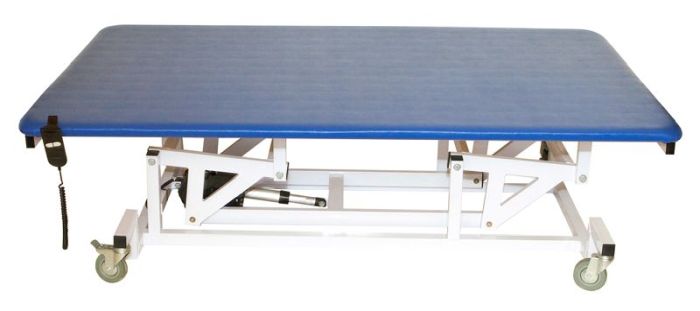
The Therapy Plinth is a padded table for a person to sit or lie on whilst receiving physical therapy. The plinth is motorised and the height of the plinth can be adjusted with a press of a button. The adjustable height makes it useful for therapists, parents and care givers to facilitate exercises, positioning and transfers and reduces the strain on the care giver’s back.
Features & Specifications:
– The Plinth is only available in one size.
– Frame: The frame is made of strong durable tubular steel, which is powder coated to offer long term protection.
– Castor Wheels: Four lockable industrial steel castors enable the plinth to easily be manoeuvred into place.
– Padded top surface: The therapy surface is covered in a durable vinyl.
– Electric Height Adjustment: An electric actuator enables the therapist to easily adjust the height of the plinth with the push of a button.
– Maximum Height Adjustment: 800mm; Minimum Height Adjustment: 400mm; Size of padded top surface: 2080mm x 1260mm
This product is available to purchase in South Africa from companies such as ShonaquipSE, contact them to find out more or to receive a quote.

TThe Ndinogona “I Can” Stimulation Programme (pictured right) provides full intensive training, experience and resources to empower parents, caregivers, ECD practitioners and teachers at even the least Ndinogona Kit equipped centres to interact with and promote play and learning for all children across the spectrum of abilities and needs.
All children are unique, and both these programmes equip parents, caregivers, ECD practitioners and teachers with the ability to adapt ECD concepts, structured stimulation and play to create learning programmes that are fun, safe and empowering for each child within their care.
Play is vitally important to all children’s development, as play is the way that children learn about their world and practice important life skills enabling children to play and participate more in daily activities.
This product is available to purchase in South Africa from companies such as ShonaquipSE, contact them to find out more or to receive a quote.

The Ndinogona “I Can” Inclusive Play for ECD’s programme provides the training, experience and resources to empower parents, caregivers, ECD practitioners and teachers at even the least equipped centres to interact with and promote play and learning for all children across the spectrum of abilities and needs. This is a simpler more economical version of the full Ndinogona “I Can” Stimulation programme.
All children are unique and both these programmes equip parents, caregivers, ECD practitioners and teachers with the ability to adapt ECD concepts, structured stimulation and play to create learning programmes that are fun, safe and empowering for each child within their care.
Play is vitally important to all children’s development, as play is the way that children learn about their world and practice important life skills enabling children to play and participate more in daily activities.
This product is available to purchase in South Africa from companies such as ShonaquipSE, contact them to find out more or to receive a quote.
3. Exercise Equipment
There is a wide variety of exercise equipment that you can purchase in South Africa from companies such as WHASCP Fitness, so that you can exercise in the comfort of your own home.
This equipment includes products such as: WHASCP Adaptive Hands; WHASCP Adaptive Kettle Bags; WHASCP Rage Rope and WHASCP Sandbags; Medicine Balls; Stretch ropes (TheraBand’s); WHASCP Fitness Dumbbells and Wrist or Ankle Weights.
View the Accordion Menus below to find out more:
Dumbbells are a popular and effective way for anybody to exercise their arms and hands. Exercises can be carried out while dumbbells are held in the hands, and the arms are stretched and lifted away from the body. Various types of Dumbbells are available in South Africa including soft ones or those made from materials such as neoprene.
This equipment is also available to be purchased from WHASCP Fitness, whose Dumbbells have a Steel Handle and Rubber Hexagon. These Dumbbells are ideal for overall strength conditioning training. Contact WHASCP Fitness to find out more including lengths, sizes and weights which are dependent on availability.

WHASCP Adaptive Hands (pictured right) is a Mobility Grip which is ideal for persons with physical impairments such as Quadriplegics who have limited use of their hands, so battle to grip Dumbbells or other equipment.
Possible Applications include Weight Training and Fitness; Fishing; Playing Pool/Snooker and ADL’s. Contact WHASCP Fitness to purchase this product or find out more..
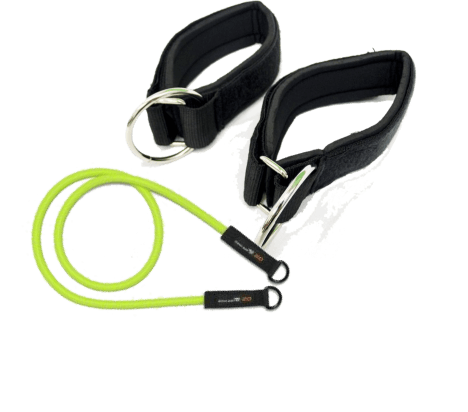
The WHASCP Rage Rope collection is manufactured in partnership with www.ruggedfit.co.za, it is available in various sizes including: 16mm, 20mm, 36mm, 50mm. Material: Black Rope and Rubber covered Steel Handles.
Possible Applications include Cardio; Shoulder Stability; External Shoulder Rotation; Postural Improvement; Upper Body Endurance improvement; General Arm strength and endurance; Sitting Balance and Coordination.
Contact WHASCP Fitness to purchase this product or find out more.
WHASCP Sand Bags are proudly made in South Africa, extremely easy to clean and have 4/6 accessible lifting handles. Available Weights include 15kg, 10kg and 5kg. Possible Applications with this equipment include Chest Press; Shoulder Press; Bicep Curls; Russian Twists and many more.
Please feel free to contact Victor Buitendag from WHASCP Fitness on Tel: 084 308 5856 or via email on: whascpfit@gmail.com or visit their website at: www.whascp.com. Contact WHASCP Fitness to purchase this product or to find out more.
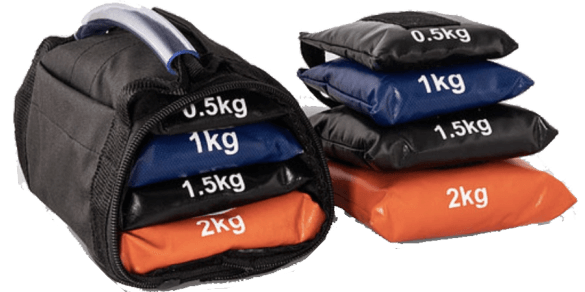
The WHASCP Kettle Bags (pictured right) have adjustable weight capabilities ranging from 0.5 Kg to 6.0 Kg. This is made possible by removing the inner weight bags that the kettle bag is purchased with.
The WHASCP kettle bags are proudly South African and manufactured in partnership with www.smergos.com. Possible Applications include Tri/Bicep Training; Shoulder Presses; Adaptive Deadlifts; Lat/Front/ Raises and Kettle Bag Swings.
Contact WHASCP Fitness to purchase this product or find out more.
4. Cardiovascular Equipment
Cardiovascular exercises raise your heart rate and breathing rate into the moderate-to-vigorous intensity level for 10 minutes or more. Common cardio exercises include brisk walking, running, cycling, swimming, rowing, and cross-country skiing. This however is not always possible for persons with Mobility Impairments, especially those who use wheelchairs.
There are however different activities that persons in wheelchairs can participate in that offers good Cardiovascular activities, including Sports such as Handcycling, Wheelchair Basketball, Swimming, Wheelchair Rugby and Wheelchair Racing, as well as activities such as Pushing yourself in the wheelchair, Rowing and Handcycling on a Handcycle machine.
There are various types of these Handcycle machines that are available to be purchased from companies throughout South Africa and includes products such as:

Pedal Exerciser – Drive Medical – With Digital Display: These Pedal Exercisers (pictured right) are ideal for users with limited mobility allowing exercise which is low impact and easy on the joints.
This portable upper and lower body, pedal exerciser is a superb accessory to get the blood flowing through the upper and lower body and to stay active without the impact problems that can occur through other exercise. They are ideal for users when sitting in your rise recliner chair, the pedal exerciser has a wide leg spread and rubber non-marring feet that keep the exerciser stable even when the user has little muscle control.
The pedal exerciser has wrap around adjustable foot-straps for use both with or without shoes. Pedals come complete with toe-straps & includes a Five function digital display indicating exercise time, revolution count, revolutions per minute (rpm) and calories burned. The Pedal Exerciser is ideal for use around the home or in the office and it easily folds so is portable and easy to store. The four anti-slip rubber pads prevent sliding and protect surfaces. The resistance is easily adjusted with the tension screw & it has an attractive silver finish.
This product is available to purchase in South Africa from companies such as Mr Mobility and Sitwell, contact them to find out more or receive a quote.

The MS350 Stepper (pictured right) has an adjustable seat which not only provides a customized fit but is also removable for wheelchair access. Patients can experience a full body exercise through coordinated, linear, and natural 1:1 leg and arm motion.
The self-adjustable stroke length accommodates patients’ specific range of motion capabilities, providing low impact movement for knees, ankles, and hips in a safe semi-recumbent position. It is versatile for different training emphasis, the MS350’s unique quadrilateral exercise pattern allows users to selectively distribute different extent of exercise efforts across their four limbs. Limbs that input more force can efficiently lead less involved limbs to functional movements and maintain a elevated heart rate. A low inertia starting at 5 watts translates to smoothness; the work rate can increase up to 750 watts, accompanied by different step & speeds of the user’s choice.
Typical applications for this product include Patient warm up before physical therapy session; Have the patient pedal to improve range of motion after knee / hip / ankle / shoulder or wrist surgery & Allow patients to perform cardiovascular exercise. The Self adjustable step length allows patients to pedal in smaller range of knee motion, from 5 degrees to full range. The arms are linked with a 1 to 1 ratio to the foot pedals for ease of coordination & arms can also be used alone without stepping with feet. The symmetry program measures the balance between left and right pedal and/or arm stroke.
The Graphical Bio-feedback display motivates patients to maintain an even power symmetry between left and right legs. If measuring arms only the graph and power readings will be reversed. Other features of the MS350 include a work range of up to 750 watts; the indexed seat positioning accommodates users from 4′ 10″ to 6′ 7″ & Heart Rate monitoring using the hand grips or optional heart rate chest-strap.
This product is available to buy in South Africa from companies such as Sitwell, contact them to find out more or to receive a quote.
Disclaimers and References
Simplified Summary
Sports, exercise, and rehabilitation aids page provides details of products that help people with physical impairments build strength, improve mobility, and support recovery through safe, adaptive physical activity.