


Athletics and Swimming
Both Athletics & Swimming are available for the blind at the Paralympic Games, where the classification process is used.
Both sports are enjoyed at social, club and Provincial level, as well as at International level.
Both Athletics and Swimming in South African is governed by SASCOC ” South Africa’s Sports Confederation and Olympic Committee.”
They not only help look after all our various National Federations who are affiliated to them, but are responsible for the awarding for National Protea Colours to athletes who have met the criteria to represent South Africa in these different sporting codes.
Both sports are open to anyone who wishes to participate.
What assistance are you looking for?
A. Athletics
i. About Sight Guides
ii. Classification and Classes
iii. International Paralympic Committee
iv. Rules
B. Swimming
i. About Swimming
ii. Paralympic Swimming
iii. Classification
iv. Swimming Classes
v. Rules

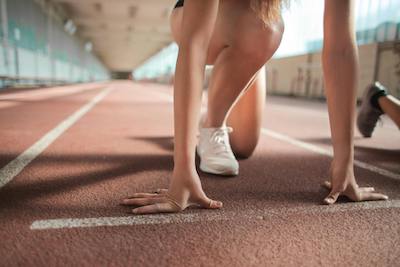
Athletics
Paralympic athletics is a disabled sport practiced by athletes with a physical disability or Visual Disabilities. It is governed by IPC Athletics, and is one of the sports at the Summer Paralympic Games since 1960.
At the national level, there are a wide range of organizations that take responsibility for Paralympic sport, including National Paralympic Committees, which are members of the IPC, and many others.
The Role of Sight Guides
Visually Impaired Athletes compete with a guide.
When a runner is looking for a guide, they are encouraged to find one with a gait similar to their own. A rope or tether may be used to connect the runner to the guide. For field events such as the long jump triple jump, or discus, a caller may be used. Voice commands can also be used in 100 meter events.
At the 2012 Summer Paralympics, it was the first time guides in athletics were awarded medals. At the elite level, guides are treated the same as the blind runner. Guides and runners must both use blocks for any race shorter than 400 meters.
In 200 meter races, the guide runs on the right side of the runner. For races 800 meters or longer, a runner may use up to two guides but the course officials must be informed of any decision to use more than one guide in advance of the race.
In the marathon, the runner may use up to four different guides. The runner must finish ahead of the guide.
In running, the guide should attempt to match the running pattern of the runner, not the other way around.
There are some rule differences for the B3 classification in competition that are sport specific.
In athletics, T13 runners may get assistance at water stations in longer races.
Classification and Classes
South Africa has and is regularly represented in the Paralympic Games in Athletics which has a wide variety of disciplines. Thanks to its classification system, athletes with similar disabilities compete together. Athletics classification is undertaken by the IPC.
The prefix T stands for “Track,” and the prefix F stands for “Field.”
The numbering system indicates the class of athlete, which is determined by their type or severity of disability.
Competitors at elite level competitions, are classified by disability, to arrange athletes with a similar disability in the same event.
A classified T12 athlete for example, is a track athlete with a visual impairment.
F = Field athletes
T = Track athletes
11–13 – Visual impairment. Compete with a sighted guide.
Classes
Athletes compete in various classes which group them according to their impairments and abilities.
These classes are for athletes with different levels of visual impairment, with 11 being the most severe.
T11 athletes are blindfolded and must run with a guide runner, and T12 athletes may choose to run with a guide.
CLASS
CONDITIONS
T/F11
Class 11 Athletes in T11 or F11 will either have no light perception at all in either eye or may have some light perception but an inability to recognize the shape of a hand at any distance or in any direction; inability to recognize objects or contours in any direction and at any distance.
This classification is equivalent to the B1 classification of the IBSA.
T/F12
Class 12 Athletes in class T12 or F12 can recognize the shape of a hand and perceive clearly up to 2/60.
Ability to recognise objects up to a distance of 2 metres.
The visual field of the athlete is less than 5 degrees.
This classification is equivalent to the B2 classification of the IBSA.
T/F13
Class 13 Athletes in class T13 or F13 can recognize the shape of a hand and can recognise contours between 2 and 6 metres away i.e. 2/60 Or 6/60 and visual field of more than five (5) degrees and less than twenty (20) degrees.
This class is equivalent to the B3 classification of the IBSA.
International Paralympic Committee
Globally, the International Paralympic Committee is recognized as the leading organization, with direct governance of nine sports, and responsibility over the Paralympic Games and other multi-sport, multi-disability events. Other international organizations, notably the International Blind Sports Federation (IBSA) govern some sports that are specific to certain disability groups.
Athletics has been contested at every Summer Paralympics since the first games in 1960. Men and women from all disability groups compete in the sport.
Athletics for individuals who are blind or visually impaired is part of Para Athletics, the organised form of track and field competition for athletes with eligible impairments. Athletes compete in events that are adapted from mainstream athletics, with modifications such as the use of sighted guides, acoustic devices, and rope tethers for safety and fair competition. The fundamental rules of athletics for Para athletes generally follow the standard World Para Athletics rules, which are based on those of World Athletics with appropriate modifications for impairment groups and equipment.
Visually impaired athletes compete in events such as sprint races, middle-distance races, relay races, long jump, shot put, and other track or field events. For those with vision impairment requiring assistance, guides may run beside an athlete (e.g., T11 sprint races), and tethering is permitted to maintain coordination between athlete and guide.
Rules
To be eligible, athletes must have a permanent visual impairment with specific criteria for visual acuity and/or visual field as defined in the World Para Athletics rules and regulations. Medical documentation and classification evaluation are required.
The full rules governing classification are contained in the World Para Athletics Classification Rules and Regulations, which set out the assessment criteria, evaluation methods, sport class allocation, and minimum impairment criteria.
Para Athletics competitions are conducted according to the rules overseen by World Para Athletics, which align closely with able-bodied athletics but include adapted provisions for:
– Use of guides for visually impaired runners
– Tethers connecting athlete and guide
– Acoustic devices for field event orientation
– Modifications to starting procedures and lane usage
– Eligibility and equipment standards
These rules ensure that athletes with visual impairments can compete fairly and safely.
Where to Find Rules: World Para Athletics: Official Rulebooks: https://www.paralympic.org/athletics/rules-regulations
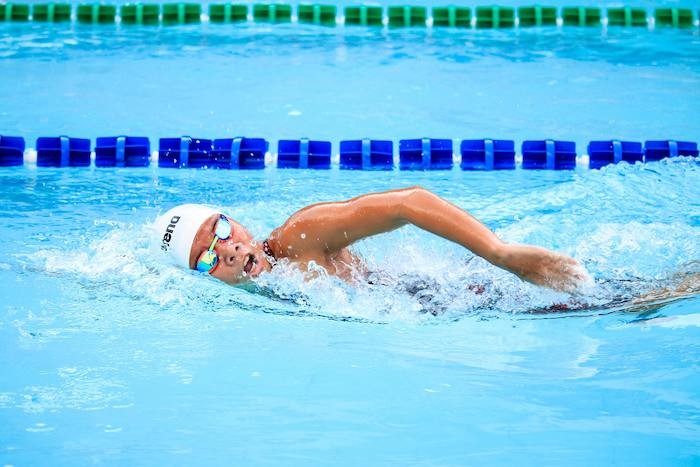
Swimming can be an excellent sport for individuals who are blind or visually impaired.
The sports has a wide variety of disciplines, and caters to a large spectrum of Visual Impairments. It has been practiced for many years by individuals of all ages, for competition, fitness, and fun.
Swimming for exercise can be achieved through swim exercises, water aerobics, and lap swimming.
On a competitive level, South Africa is regularly represented in the Para Olympic Games in Swimming – thanks to its classification system, athletes with similar disabilities compete together.
Paralympic Swimming
Paralympic swimming or swimming for disabled is an adaptation of the sport of swimming for athletes with disabilities. Paralympic swimming is contested not only at the Summer Paralympic Games, but at disabled sports competitions throughout the world. Swimming was one of the first organised sports for people with disabilities, and was contested at the first Summer Paralympics in 1960. Both the rules for the sport and approval of classifications were the responsibility of the Fédération International de Natation Amateur (FINA) until 1992, when the International Paralympic Committee took over the governance of classification.
As of 2012, people with visual, physical and intellectual disabilities are eligible to compete in the sport. The classification system was originally based on medical criteria, but has since moved to one largely based on functional disability to make para-swimming more competitive. The sport is currently moving towards an evidence-based classification system. The sport is governed by the International Paralympic Committee, hence the name of “Paralympic” swimming.
Rules for the sport are adapted from those set forth by the International Swimming Federation (FINA). The majority of rules for Paralympic swimming are the same as those for able-bodied competitions. Significant differences include the starting position. Competitors may start a race by standing on a platform and diving into the pool, as in able-bodied swimming, or by sitting on the platform and diving in, or they may start the race in the water.
Classification
To ensure competition is fair and equal, all Paralympic sports have a system in place which ensures that winning is determined by skill, fitness, power, endurance, tactical ability and mental focus, the same factors that account for success in sport for able bodied athletes.
This process is called classification and its purpose is to minimise the impact of impairment on the activity (sport discipline). Classification is sport-specific because an impairment affects the ability to perform in different sports to a different extent. As a consequence, an athlete may meet the criteria in one sport, but may not meet the criteria in another sport.
Classification Process
During the classification process, classifiers evaluate factors including whether a swimmer’s physical limitations require him or her to start in the water, and how the swimmer enters the water in competition. A two-person panel that includes at least one person with a medical background handles classification at international competitions. Classifiers are required to be familiar with the type of disability they are classifying, whether physical, visual or intellectual. Classification by national sports bodies mirrors the international classification process, conducted by nationally-recognised IPC classifiers.
Swimmers are required to disclose any medications they regularly use, and provide detailed records of their medical history if a classifier deems them relevant. They are allowed to have someone familiar with their swimming limitations present during the process. The process includes a physical assessment, observation assessment, and a functional assessment that may include performance in the pool, but swimmers with visual impairment do not require the functional and observational components of assessment. If a swimmer intentionally misrepresents his or her disability, he or she is barred from the classification process for a minimum of two years, and is unable to compete.
If swimmers do not agree with their classifications, they can appeal through the IPC Board of Appeal on Classification, which is the body recognised by IPC Swimming. Formal processes exist for how to do this in both non-competition and competition periods.
Swimming Classes
IPC Swimming caters for three impairment groups – physical, visual and intellectual.
Swimmers are classified according to the type and extent of their disability.
The classification system allows swimmers to compete against others with a similar level of function.
Numbers are combined with a letter prefix depending on the event type.
An “S” prefix corresponds to freestyle, backstroke and butterfly, while “SB” corresponds to breaststroke and “SM” to the medley.
Hence, a blind swimmer in the medley would compete in class SM11.
Normal swimming rules are modified to allow the swimmer to be closer to the lane line when executing a turn.
Swimming Classes S/SB11-13
CLASS
CONDITIONS
S/SB11
These athletes have a very low visual acuity and/ or no light perception. (have little or no vision) Swimmers in this class are required to wear black out goggles to ensure competitors are on an even level and are also required to use tappers. These tappers may use a pole to tap the swimmer to warn them they are approaching the end of a length. The swimmer has to bring their own tapper.
S/SB12
Athletes have a higher visual acuity than athletes competing in the S/SB11 sport class and/ or a visual field of less than 5 degrees radius.2. they have a greater degree of vision than S11. They have an option to use tappers. These tappers may use a pole to tap the swimmer to warn them they are approaching the end of a length.
S/SB13
Athletes have the least severe visual impairment eligible for Paralympic sport. They have the highest visual acuity and/or a visual field of less than 20 degrees radius. (Swimmers have severe but not total visual impairment) They have a greater degree of vision than S11 or S12 athletes, but will still have less than 20 degrees of vision. They have an option to use tappers. These tappers may use a pole to tap the swimmer to warn them they are approaching the end of a length.
Rules
Rules for the sport are adapted from those set forth by the International Swimming Federation (FINA). The majority of rules for Paralympic swimming are the same as those for able-bodied competitions. Significant differences in events for the blind and visually impaired, people called “tappers” stand at the end of the pool and use a pole to tap the swimmers when they approach the wall, indicating when the swimmer should turn or end the race. Competitors in these events are required to wear blackened goggles, so that partially sighted swimmers compete at an even level with those who are totally blind.
There are some rule differences for the B3 classification in competition that are sport specific. For S13 swimmers, a tapper may stand on the pool deck to tap the swimmer as they approach the wall. The swimmer has to bring their own tapper. Having a tapper is optional. In swimming, outside the use of a tapper, the swimmer competes under the normal rules governing FINA swimming competitions.
Where Tappers are used, tappers must synchronize their tap with the swimmer’s stroke movement and momentum to enable the blind swimmer to swim at top speed without fear of colliding with the end of the pool. Swim tappers must synchronize their tap with the swimmer’s stroke movement and momentum to enable the blind swimmer to swim at top speed without fear of colliding with the end of the pool. Tappers are also permitted to help blind swimmers execute a racing turn without losing time during a race.