


Deaf Rugby
Deaf rugby is a fast-paced, full-contact version of traditional rugby, adapted to ensure full inclusion for athletes who are deaf or hard of hearing. The rules and physical demands mirror the conventional game, with visual cues and communication systems replacing auditory signals.
Played across South Africa by skilled and committed athletes, deaf rugby emphasises physicality, tactical awareness, and seamless teamwork, relying heavily on visual communication, trust, and discipline on the field.
More than an adapted sport, deaf rugby is a powerful platform for representation, resilience, and excellence — showcasing that elite rugby performance transcends hearing ability and continues to thrive within South Africa’s rich rugby culture.
What Assistance are you Looking for?
1. About Deaf Rugby
2. How is Deaf Rugby played?
3. SA Deaf Rugby Union
4. Women’s Rugby
5. Benefits to Players
About Deaf Rugby
Deaf rugby has been played since the earliest days of the sport, with deaf athletes competing at a high level long before formal structures were established. In South Africa, deaf rugby has a proud and competitive history, marked by the national team’s first international participation in 1995, when they toured New Zealand and defeated the hosts 2–1 in a three-match series — a milestone achievement that established South Africa as a force in deaf rugby.
The sport is governed nationally by the South African Deaf Rugby Union (SADRU), which oversees development, competition, and international representation. Like their able-bodied counterparts, South Africa’s deaf rugby players proudly represent the Springbok emblem and share the same ambition: to compete at the highest level and be the best in the world.
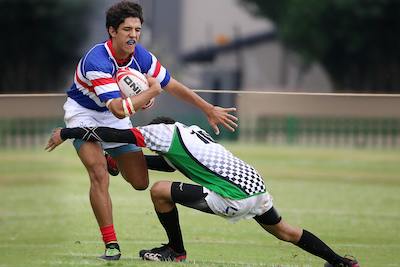
South African deaf rugby teams compete in major international events such as the Deaf Rugby World Cup and the World Deaf Rugby Championship, and regularly participate in international tours and test matches against leading deaf rugby nations including England, Wales, and New Zealand. These competitions provide a platform for elite performance, international exposure, and the continued growth of deaf rugby both locally and globally.
2. How is Deaf Rugby played?
In order to qualify as an official deaf player, you need to have 25 decibels (DB) bilateral hearing loss across the major frequencies. Essentially, this is a moderate to severe hearing loss in one or both ears. A normal conversation takes place at a level of around 60DB, so if you struggle to hear regular conversations, it’s worth getting tested.
There are only a few minor law structures in place to accommodate deaf rugby players. The flow of the game remains the same. They rely on body language and visual cues when it comes to refereeing calls, but often, all it takes is one player seeing the referee stopping play. The rest pick up on it very quickly.
The major difference from a refereeing perspective will come in the scrum calls as the official uses hand signals. An open palm below the front row signals crouch. A closed fist signals bind, while a pull of the arm from under the scrum signals engage, and completes the sequence. Most deaf players can lip-read, so communication isn’t a major problem.
The player’s play on instinct, so switch passes and dummy runs require an innate degree of trust and perception that don’t think exists at the same level in the hearing game.
3. SA Deaf Rugby Union
Despite having a history stretching back to 1998, when South Africa was one of five countries to form the International Deaf Rugby Organisation, SADRU only started to establish itself in 2007, when Tim Stones and Vernon Vice took over the leadership of the organisation. It was founded by Tim Stones and Vernon Vice in September 2007 in Worcester.
Together, they updated and compiled the constitution, made contact with various role players within the South African Rugby Union (SARU), including CEO Jurie Roux, and generally laid the administrative groundwork that the union required to exist and gain official recognition.
In March 2014, all 14 provincial unions voted to recognise SADRU as South Africa’s official deaf rugby union. Together with the assistance from the England Deaf Rugby Union, deaf rights activist Braam Jordaan and former Miss Deaf South Africa Shelley Buckle, SADRU managed to grow a player base.
The South African Deaf Rugby Union (SADRU), a rugby squad that celebrates rugby as a sport and encourages those with hearing impairments to take part in the game, their vision is to bring awareness to the deaf community as a whole through sport and to provide opportunities to those who have been suppressed due to a misconception of ability.
The South African Deaf Rugby Union is focused on becoming World Deaf Rugby Champions. “Our long term aim is to have rugby available to all deaf schools. Presently SADRU is the only active team in South Africa and the hope of thousands of deaf individuals in South Africa rests on our shoulders.
We welcome anyone who would like to participate and offer coaching and guidance in terms of competing in the deaf sport world as a whole.
“National trials are held prior to the tests. Verified club players from across the country are invited to attend. We’re now in the process of setting up provincial squads with an aim to setting up an interprovincial competition so that the national coaches and selection panel can get a better idea of how players perform over time.”
To join SADRU contact the Rachelle at rachelle@deafsportinstitutesa.co.za or 063 174 2568.
You can also follow them on www.facebook.com/SADeafRugby/ or Twitter: https://twitter.com/sadeafrugby
Their website www.sadru.co.za is currently under construction, so contact them on the details above if you have any questions.
4. Women’s Rugby
5. Benefits to Players
Quad rugby offers far more than athletic competition — it provides a powerful platform for physical, social, and emotional growth. Physically, the sport helps players build strength, endurance, coordination, and improved wheelchair handling skills, all of which translate into greater independence in daily life. The fast-paced nature of the game also boosts cardiovascular fitness and overall mobility.
Socially, deaf rugby creates a sense of belonging and camaraderie. Players become part of a supportive community that understands their challenges and celebrates their achievements. Teamwork, communication, and shared goals help build lasting friendships and a strong support network.
Emotionally, the sport fosters confidence, resilience, and a renewed sense of purpose. Competing, improving, and achieving personal milestones can be deeply empowering, helping players redefine what is possible. For many, deaf rugby is not just a sport — it’s a pathway to greater self-esteem, motivation, and quality of life.