Golf and Bowls

Para-Golf and Para-Bowls are highly accessible, inclusive sports that offer people with Visual Impairments the opportunity to compete, socialise, and stay active.

The classification process is used to guarantee that no matter your disability, everyone can compete on an even footing.

Both sports are played at social, club and Provincial level, as well as at International level with modified equipment, supportive rules, and structured classification systems,

Para-Golf and Para-Bowls provide meaningful pathways for participation—from recreational play to high-level competition—while fostering confidence, independence, and a strong sense of community.

About Blind-Golf

Blind golf is a version of the sport of golf adapted for blind and partially sighted players.

Blind golf is outstanding in the area of disabled sports in that it includes only minor modifications to the standard rules of golf. The principle of playing is that blind or partially sighted golf players have a sighted coach who assists the golfer in describing distance, direction and characteristics of the hole, and helps with club head alignment behind the ball, prior to the stroke. From that point, the golfer is on his own, and it is her/his skill that determines the resulting stroke.

Other than the coach, there is only one relaxation to the standard rules: blind or partially sighted golfers are allowed to ground their club in a hazard.
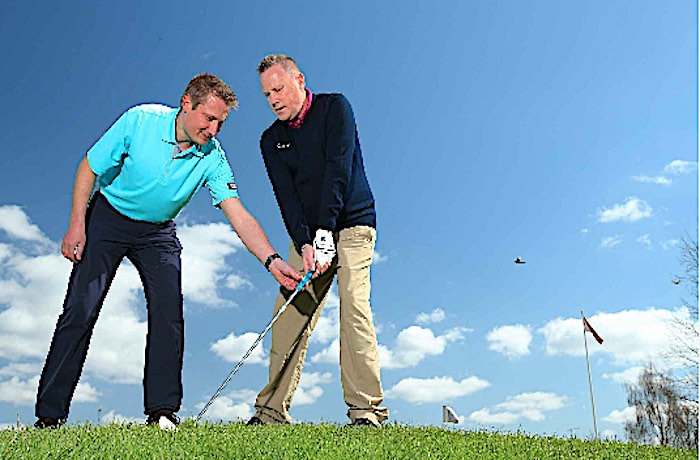
Blind golfer with a golf coach

Blind Golf Classes

Blind golf competitions are set in classes determined by the golfer’s level of sight (see above) using the same categories as in other branches of sports played by the visually impaired.

The International Blind Golf Association overseas blind golf. The sport is not played at the Paralympics.
In some cases, non-Paralympic, non-IBSA affiliated sports have developed their own classification systems. This is the case with blind golf, where a classification existed by 1990 and was used at the Australian Open Golf Tournament for the Blind and Visually Impaired. At that time, four classifications existed and were the same as the IBSA for this class.

Disability golf classification is used for deaf golf, blind golf, amputee golf, golf for the mentally challenged, paraplegic golf and other forms of golf involving the disabled.

Classification

The Blind golf classification existed by 1990 and was used at the Australian Open Golf Tournament for the Blind and Visually Impaired. The four classifications were B1, B2, B3 and B4. Classifications in use at the time included B1, B2 and B3.

– Visualisation of functional vision for a B1 competitor
– Visualisation of functional vision for a B2 competitor
– Visualisation of functional vision for a B3 competitor

The blind classifications are based on medical classification, not functional classification.
The classification process for blind golf is governed by the International Blind Golf Association.

CLASS

CONDITIONS

B1

defined as “No light perception in either eye, up to some light perception but inability to recognize the shape of a hand at any distance or in any direction.”

B2

defined as “the ability to recognize the shape of a hand up to visual acuity of 2/60, or a visual field of less than 5 degrees.”

B3

defined as “visual acuity above 20/60, up to visual acuity of 6/60 and/or visual field of above 5 degrees and less than 20 degrees.”

B4

defined as “visual acuity of 6/60 up to visual acuity of 6/46.”

Governance

The International Blind Golf Association (IBGA) was established in 1997 at a meeting held in Perth, Western Australia.

The International Blind Golf Association overseas blind golf. The sport is not played at the Paralympics.

The IBGA conducts a world championship every two years. The 2004 world championship tournament was held in Australia. Other tournaments sanctioned by the IBGA include National Open events in Australia, Great Britain, Canada, Japan and the USA.
There are currently nine member countries in the IBGA: Australia, Canada, England, Germany, Ireland, Japan, Northern Ireland, Scotland and the United States of America. Disabled golf in South Africa is run by the South African Disabled Golf Association (SADGA)

South African Disabled Golf Association

South African Disabled Golf Association (SADGA) helps people regardless of your disability, to take part in golf, in doing so it also builds your character. This includes those with Intellectual Disabilities.

SADGA was incorporated as a Section 21 Company in July 2004.Through golf they pride themselves on being a unique community that produce strong & courageous persons that can effectively handle adversity and face any challenge that comes before them.

Their aims include:
Encourage every South African with a permanent disability to play golf.
Promote golf as a viable form of rehabilitation and recreation for the disabled.
Bring together able and disabled golfers to share their love for the game, in the spirit of friendship and competition.
Create public awareness of challenges facing disabled golfers, and to highlight their achievements.

History

The earliest record of blind golf is from the 1920s in the USA: Clint Russell of Duluth, Minnesota, who lost his sight when a tire exploded in his face, began playing blind golf in 1925. Gradually increasing his scores, Clint managed to shoot an 84 for 18 holes in the early 1930s. A match between two blind Englishmen and two Americans took place before the Second World War.

Organized blind golf tournaments have taken place in America since the United States Blind Golf Association (USBGA) was established in 1947. The International Blind Golf Association (IBGA) was established in 1997 at a meeting held in Perth, Western Australia.

The American Blind Golf organization was established in 2001 to promote the game of golf to blind and vision impaired persons.

Blind-Bowls
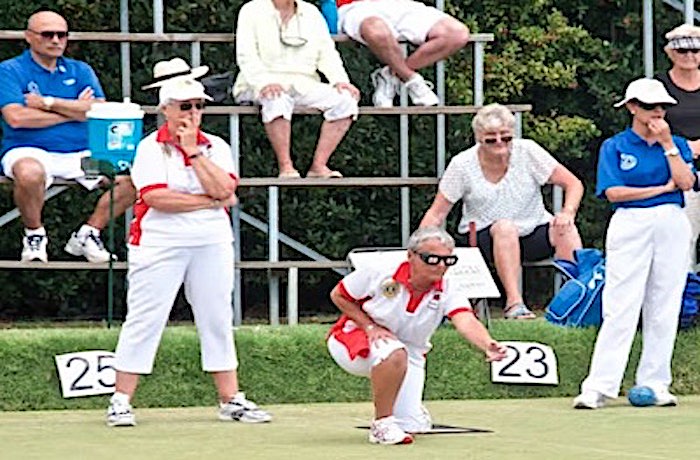
Bowls for the Blind

Lawn bowls is a precision-based sport that is highly accessible to persons who are blind or visually impaired.
With the use of tactile guidance, verbal direction, and adapted coaching techniques, visually impaired bowlers are able to participate safely and competitively at social, club, provincial, and international levels.

International Bowls for the Disabled has its origins in the family of the International Paralympic Committee (IPC), one of the largest sporting organisations in the world and the peak international body governing sport for athletes with a disability.

The sport emphasises focus, consistency, and strategy rather than speed or strength, making it an inclusive activity that promotes independence, confidence, and social connection.

Bowls was dropped at the 1992 Summer Paralympics, returning in 1996 Summer Paralympics, Dropped again in 2000 Summer Paralympics,
Blind, wheelchair and amputee disability types were eligible to participate, with classifications being run through the International Paralympic Committee, with classification being done based on wheelchair and blindness.

Disability Classification in Lawn Bowls

Bowls has rules that were designed specifically with people with disabilities in mind. Classifications for this sport are based on functional mobility.
The blind classifications are based on medical classification, not functional classification.
Bowls classification is the classification system for lawn bowls where players with a disability are classified into different categories based on their disability type.

Classifications exist for blind bowlers.
– Visualisation of functional vision for a B1 competitor
– Visualisation of functional vision for a B2 competitor
– Visualisation of functional vision for a B3 competitor

Bowls for the Disabled South Africa (BDSA)

BDSA is the body that represents bowlers with disabilities — including physically disabled and visually impaired bowlers — at national and provincial levels across South Africa.
It operates under Bowls South Africa (BSA), which governs bowls generally. The BSA’s “Disability” Standing Committee oversees the needs and representation of disabled bowlers through BDSA.

BDSA organizes a national championship for disabled bowlers each year. This brings together participants from across the country — including people using wheelchairs, people with visual impairment, amputees, and those with mobility impairments.
Through the committee system, BDSA helps manage classification, tournament organization, and integration of disabled bowls within broader bowls club networks across South Africa. They also support inclusion efforts: many regular bowls clubs and districts in South Africa welcome disabled players, offering coaching, adapted facilities, and social/competitive opportunities.

For more information, about Bowls for the Disabled in South Africa visit their website: https://www.dbza.co.za/

Disclaimers and References

DiSA is committed to promoting the rights, dignity, and inclusion of persons with disabilities as outlined in the White Paper on the Rights of Persons with Disabilities. We strive to ensure that all content on our website reflects appropriate, respectful, and inclusive language in alignment with these principles.

However, we also provide a platform for companies and organisations to advertise their services and products. While we encourage advertisers to adhere to correct terminology and inclusive practices, DiSA cannot guarantee the accuracy or appropriateness of the language used by external parties in their content.

Please note: Any views, language, or terminology used in advertisements, promotional material, or external links do not necessarily represent the views of DiSA.

DiSA disclaims any responsibility for inaccuracies or language that may not align with the White Paper or best practices for disability terminology.

Should you however encounter language or content that you believe is inappropriate or offensive, we encourage you to contact us at info@disa.org.za, so that we can address the issue.

DiSA remains dedicated to fostering a respectful and inclusive environment for all individuals. We appreciate your understanding and collaboration in supporting our mission.


While we strive for accuracy and clarity, AI-generated visuals may not always reflect real-life conditions or representations.
In addition, we feature authentic images and videos of actual instances, events, circumstances that have occurred, as well as products and services supplied by companies who advertise with us.

These authentic visuals are intended to accurately depict our content or the offerings of our advertising partners.
If you have any questions or concerns about the content displayed on this site, please feel free to contact us.

DiSA provides a platform for companies and organisations to advertise their products and services to assist persons with disabilities and their families. While we make every effort to list reputable and credible service providers, the inclusion of any company, organisation, product, or service on our website does not constitute an endorsement or guarantee by DiSA.

Please note the following: DiSA is not involved in the delivery, quality control, or customer service of any product or service offered by advertisers listed on our platform.

Any agreements, purchases, or arrangements made between users of this website and advertisers are solely between those parties. DiSA is not responsible for the outcome of such interactions.

DiSA disclaims any liability for dissatisfaction, damages, or disputes arising from products or services supplied by companies or organisations listed on our website.

We encourage users to thoroughly research and verify any service provider or product before engaging with them. If you have concerns or encounter issues with an advertiser listed on our platform, please let us know at: info@disa.org.za. We value your feedback to help maintain the integrity of our platform.


While we strive for accuracy and clarity, AI-generated visuals may not always reflect real-life conditions or representations.
In addition, we feature authentic images and videos of actual instances, events, circumstances that have occurred, as well as products and services supplied by companies who advertise with us.

These authentic visuals are intended to accurately depict our content or the offerings of our advertising partners.
If you have any questions or concerns about the content displayed on this site, please feel free to contact us.

DiSA is committed to providing accurate and up-to-date information to assist persons with disabilities and their families. However, the nature of online content and external resources means that information can change frequently.

Please note the following: DiSA cannot guarantee the accuracy, completeness, or reliability of all information on our website, particularly information obtained from external sources or links to third-party websites.
External websites may update or remove content without notice, which can result in broken links or outdated information. DiSA is not responsible for the content, accessibility, or functionality of external websites.

While we make every effort to keep our information current, some content may become outdated over time.
We encourage users to verify information directly with the relevant third parties or organisations before making any decisions based on the information found on our platform.

If you encounter a broken link or outdated content, please notify us at: info@disa.org.za and we will address it as soon as possible.
Thank you for understanding and helping us maintain a reliable and accessible platform.


While we strive for accuracy and clarity, AI-generated visuals may not always reflect real-life conditions or representations.
In addition, we feature authentic images and videos of actual instances, events, circumstances that have occurred, as well as products and services supplied by companies who advertise with us.

These authentic visuals are intended to accurately depict our content or the offerings of our advertising partners.
If you have any questions or concerns about the content displayed on this site, please feel free to contact us.

The Information services and website that we offer free of charge, is privately run and funded and is not run or funded by the government. We rely on advertising, paid services and donations to supply and improve this Free information service that we do provide.

The Companies, Clubs, Schools and Organisations that are listed on this site, have advertised or made donations to the Website and have therefore assisted us be able to provide this free Service.
Please support them as they have supported Us and please contact us via info@disa.org.za, if you can advertise with us or would like to make a donation. Alternatively, visit our “Support Us” page to find out how you can support us or acquire our services. – Thank You.

If you encounter a broken link or outdated content, please notify us at: info@disa.org.za and we will address it as soon as possible.
Thank you for understanding and helping us maintain a reliable and accessible platform.

Please Note: We do assist with inquiries via email but may need to send or copy your details and inquiry to various other organisations, companies or government departments, that we sometimes consult, so that we can help you in the best way possible.
If you have any objection to us sharing your query or contact details, please notify us in your email. We will only share your information to assist you and will never sell or use your personal information for any other purposes.

DiSA waivers any liability for what happens if information is shared or used for marketing or other purposes by other organisations who do have consent to view such information.


While we strive for accuracy and clarity, AI-generated visuals may not always reflect real-life conditions or representations.
In addition, we feature authentic images and videos of actual instances, events, circumstances that have occurred, as well as products and services supplied by companies who advertise with us.

These authentic visuals are intended to accurately depict our content or the offerings of our advertising partners.
If you have any questions or concerns about the content displayed on this site, please feel free to contact us.

Please note that this website uses images and videos that are AI-generated and created to visually represent certain information, concepts or scenarios for illustrative purposes.


While we strive for accuracy and clarity, AI-generated visuals may not always reflect real-life conditions or representations.
In addition, we feature authentic images and videos of actual instances, events, circumstances that have occurred, as well as products and services supplied by companies who advertise with us.

These authentic visuals are intended to accurately depict our content or the offerings of our advertising partners.
If you have any questions or concerns about the content displayed on this site, please feel free to contact us.

Disability Info South Africa (DiSA) is committed to protecting your personal information in compliance with the Protection of Personal Information Act (POPIA), Act No. 4 of 2013. By using our free information service, you acknowledge and agree to the following:

Collection of Personal Information:
DiSA may collect and process your personal information (such as name, contact details, and inquiries) solely for the purpose of assisting you with your requests and providing relevant information or support.

Use and Storage:
Your personal information will only be used for the purpose it was collected for, we may need to send or copy your details and inquiry to various organisations, companies or government departments, that we sometimes consult, so that we can assist you in the best way possible.
If you have any objection to us sharing your query or contact details, please notify us in your email. We will only share your information to assist you and will never sell or use your personal information for any other purposes.
DiSA implements appropriate measures to secure your personal information against unauthorized access or loss.

Consent:
By submitting your details through our Contact Form, or contacting us via our email address, you consent to allow DiSA to process your information as outlined in this disclaimer. If you are not comfortable with DiSA sharing your information for the above purposes, please contact us directly at info@disa.org.za.

Access and Updates:
You have the right to request the deletion of your personal information at any time.
To do so, please contact us at: info@disa.org.za.

Third-Party Websites:
DiSA is not responsible for the privacy practices of external websites linked on our platform. Users are encouraged to review the privacy policies of third-party sites before sharing personal information.
For any queries or concerns regarding the handling of your personal information, please contact us at: info@disa.org.za.
Thank you for trusting DiSA to support you with accessible, inclusive, and reliable information.