Deaf Golf and Bowls

Deaf Golf and Deaf Bowls are highly accessible and inclusive sports that enable individuals with hearing impairments to participate, compete, and remain socially and physically active. Both sports are particularly well suited to deaf athletes, as they rely on visual awareness, precision, strategic thinking, and controlled execution rather than auditory cues.

Communication and gameplay are adapted through visual signals and agreed protocols, ensuring fair and effective participation.

Deaf Golf and Deaf Bowls both offer meaningful participation pathways – from recreational and club-level play to national and international competition.
But beyond performance, on a purely enjoyment level, both sports promote confidence, independence, and a strong sense of belonging within the deaf sporting community

Golf

Golf is a precision-based club-and-ball sport in which players use a variety of clubs to strike a ball into a series of holes on a golf course, completing each hole in as few strokes as possible.
Courses are typically configured with either nine or 18 holes, each presenting unique strategic and technical challenges.
The sport’s emphasis on concentration, accuracy, and consistency makes it particularly well suited to deaf and hard-of-hearing athletes to participate on even keel.

Disability golf classifications simply ensure that athletes with specific impairments are able to compete on an equitable basis. This system applies across several disciplines, including deaf golf, blind golf, amputee golf, paraplegic golf, and golf for players with intellectual disabilities, ensuring competition is alwaysconducted on a level playing field.

Blind and Deaf Golf for persons with sensory impairments

2. South African Disabled Golf Association (SADGA)

Deaf golf in South Africa is administered by the South African Disabled Golf Association (SADGA), which provides national governance, competition structures, and operational support. Deaf golf functions within this framework while addressing the specific requirements of deaf and hard-of-hearing golfers.

SADGA focuses specifically on the development and promotion of golf among deaf and hard-of-hearing players. Its key objectives include:
– Increasing the popularity of golf within the deaf community
– Educating the public and golf stakeholders about the specific needs of deaf golfers
– Addressing barriers faced by deaf golfers and advocating for accessible, user-friendly golf facilities nationally and internationally
– Raising funds to support organisations of and for the Deaf, as well as other charitable initiatives

SADGA was incorporated as a Section 21 Company in July 2004 and prides itself on fostering an inclusive and resilient golfing community. Through golf, the organisation aims to develop confident, capable individuals who can manage adversity and meet challenges both on and off the course.

The broader aims of SADGA include:
– Encouraging every South African with a permanent disability to participate in golf
– Promoting golf as a viable form of rehabilitation, recreation, and competitive sport
– Bringing together able-bodied and disabled golfers in the spirit of shared participation, respect, and competition
– Raising public awareness of the challenges faced by disabled golfers while celebrating their achievements

The South African Deaf Golf Association is currently coached by Elsabe Hefer, based at Swartkops Country Club, who supports athletes through structured training camps and development programmes in preparation for international competition, including the World Deaf Golf Championships.

3. Eligibility

To qualify for deaf golf competition, players must submit an official audiogram confirming a hearing loss of 55 decibels or greater.
All golfers participating in deaf golf championships must compete without the use of hearing aids, in line with international deaf sport regulations.

4. International Competition

At international level, the World Deaf Golf Championship is held every two years and brings together elite deaf golfers from around the world.
The most recent championship referenced was held at St Andrews, Scotland, in August 2010.

Qualification standards for this event require a maximum handicap of 12 for men, 22 for women, and 16 for seniors, reflecting the high competitive standard of international deaf golf.

Deaf Bowls
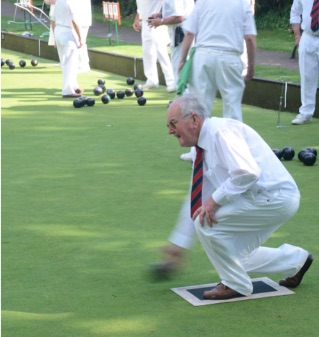
Deaf Bowls

Bowls is a precision-based sport that requires accuracy, control, tactical awareness, and consistency. Players aim to roll biased bowls as close as possible to a smaller target ball (the jack), with matches played on carefully prepared grass or synthetic greens.

The sport’s reliance on visual judgement, measured delivery, and strategy rather than speed or strength makes it highly accessible to deaf and hard-of-hearing athletes.

International Bowls for the Disabled has its origins within the family of the International Paralympic Committee (IPC).

Historically, disability bowls formed part of the international disability sport movement and was governed under IPC structures during its inclusion in the Paralympic Games.
Bowls is not currently part of the Paralympic profile.

Disability Bowls Classification

Disability bowls uses a structured classification system to ensure fair competition among athletes with different impairments. Classifications are designed to group players based on the functional impact of their disability on performance. While visual impairment classifications are medically defined, other disability classifications—including those relevant to mobility and hearing impairment—focus on ensuring equitable participation rather than performance advantage.

Deaf bowlers compete under recognised deaf sport eligibility criteria and rely on visual communication systems and adapted protocols rather than auditory signals during play. This ensures that competition is conducted fairly and without disadvantage.

Rules and Accessibility

Bowls is governed by rules that have been adapted to accommodate athletes with disabilities, including considerations for communication, delivery methods, and match procedures. For deaf players, the sport naturally lends itself to inclusion, as gameplay is visually driven and easily adapted through visual signals, hand signs, and agreed officiating processes.

Benefits of Bowls as a Sport

Deaf bowls provides meaningful participation opportunities across recreational, club, provincial, national, and international levels. Athletes benefit from a structured competitive environment that promotes skill development, consistency, and tactical excellence, while remaining accessible to players across a wide age range and ability spectrum.

Beyond competition, deaf bowls plays an important role in fostering confidence, independence, and social connection within the deaf community. The sport encourages lifelong participation, supports physical and mental wellbeing, and creates inclusive environments where deaf athletes can compete on equal footing while representing their communities with pride.

Disclaimers and References

DiSA is committed to promoting the rights, dignity, and inclusion of persons with disabilities as outlined in the White Paper on the Rights of Persons with Disabilities. We strive to ensure that all content on our website reflects appropriate, respectful, and inclusive language in alignment with these principles.

However, we also provide a platform for companies and organisations to advertise their services and products. While we encourage advertisers to adhere to correct terminology and inclusive practices, DiSA cannot guarantee the accuracy or appropriateness of the language used by external parties in their content.

Please note: Any views, language, or terminology used in advertisements, promotional material, or external links do not necessarily represent the views of DiSA.

DiSA disclaims any responsibility for inaccuracies or language that may not align with the White Paper or best practices for disability terminology.

Should you however encounter language or content that you believe is inappropriate or offensive, we encourage you to contact us at info@disa.org.za, so that we can address the issue.

DiSA remains dedicated to fostering a respectful and inclusive environment for all individuals. We appreciate your understanding and collaboration in supporting our mission.


While we strive for accuracy and clarity, AI-generated visuals may not always reflect real-life conditions or representations.
In addition, we feature authentic images and videos of actual instances, events, circumstances that have occurred, as well as products and services supplied by companies who advertise with us.

These authentic visuals are intended to accurately depict our content or the offerings of our advertising partners.
If you have any questions or concerns about the content displayed on this site, please feel free to contact us.

DiSA provides a platform for companies and organisations to advertise their products and services to assist persons with disabilities and their families. While we make every effort to list reputable and credible service providers, the inclusion of any company, organisation, product, or service on our website does not constitute an endorsement or guarantee by DiSA.

Please note the following: DiSA is not involved in the delivery, quality control, or customer service of any product or service offered by advertisers listed on our platform.

Any agreements, purchases, or arrangements made between users of this website and advertisers are solely between those parties. DiSA is not responsible for the outcome of such interactions.

DiSA disclaims any liability for dissatisfaction, damages, or disputes arising from products or services supplied by companies or organisations listed on our website.

We encourage users to thoroughly research and verify any service provider or product before engaging with them. If you have concerns or encounter issues with an advertiser listed on our platform, please let us know at: info@disa.org.za. We value your feedback to help maintain the integrity of our platform.


While we strive for accuracy and clarity, AI-generated visuals may not always reflect real-life conditions or representations.
In addition, we feature authentic images and videos of actual instances, events, circumstances that have occurred, as well as products and services supplied by companies who advertise with us.

These authentic visuals are intended to accurately depict our content or the offerings of our advertising partners.
If you have any questions or concerns about the content displayed on this site, please feel free to contact us.

DiSA is committed to providing accurate and up-to-date information to assist persons with disabilities and their families. However, the nature of online content and external resources means that information can change frequently.

Please note the following: DiSA cannot guarantee the accuracy, completeness, or reliability of all information on our website, particularly information obtained from external sources or links to third-party websites.
External websites may update or remove content without notice, which can result in broken links or outdated information. DiSA is not responsible for the content, accessibility, or functionality of external websites.

While we make every effort to keep our information current, some content may become outdated over time.
We encourage users to verify information directly with the relevant third parties or organisations before making any decisions based on the information found on our platform.

If you encounter a broken link or outdated content, please notify us at: info@disa.org.za and we will address it as soon as possible.
Thank you for understanding and helping us maintain a reliable and accessible platform.


While we strive for accuracy and clarity, AI-generated visuals may not always reflect real-life conditions or representations.
In addition, we feature authentic images and videos of actual instances, events, circumstances that have occurred, as well as products and services supplied by companies who advertise with us.

These authentic visuals are intended to accurately depict our content or the offerings of our advertising partners.
If you have any questions or concerns about the content displayed on this site, please feel free to contact us.

The Information services and website that we offer free of charge, is privately run and funded and is not run or funded by the government. We rely on advertising, paid services and donations to supply and improve this Free information service that we do provide.

The Companies, Clubs, Schools and Organisations that are listed on this site, have advertised or made donations to the Website and have therefore assisted us be able to provide this free Service.
Please support them as they have supported Us and please contact us via info@disa.org.za, if you can advertise with us or would like to make a donation. Alternatively, visit our “Support Us” page to find out how you can support us or acquire our services. – Thank You.

If you encounter a broken link or outdated content, please notify us at: info@disa.org.za and we will address it as soon as possible.
Thank you for understanding and helping us maintain a reliable and accessible platform.

Please Note: We do assist with inquiries via email but may need to send or copy your details and inquiry to various other organisations, companies or government departments, that we sometimes consult, so that we can help you in the best way possible.
If you have any objection to us sharing your query or contact details, please notify us in your email. We will only share your information to assist you and will never sell or use your personal information for any other purposes.

DiSA waivers any liability for what happens if information is shared or used for marketing or other purposes by other organisations who do have consent to view such information.


While we strive for accuracy and clarity, AI-generated visuals may not always reflect real-life conditions or representations.
In addition, we feature authentic images and videos of actual instances, events, circumstances that have occurred, as well as products and services supplied by companies who advertise with us.

These authentic visuals are intended to accurately depict our content or the offerings of our advertising partners.
If you have any questions or concerns about the content displayed on this site, please feel free to contact us.

Please note that this website uses images and videos that are AI-generated and created to visually represent certain information, concepts or scenarios for illustrative purposes.


While we strive for accuracy and clarity, AI-generated visuals may not always reflect real-life conditions or representations.
In addition, we feature authentic images and videos of actual instances, events, circumstances that have occurred, as well as products and services supplied by companies who advertise with us.

These authentic visuals are intended to accurately depict our content or the offerings of our advertising partners.
If you have any questions or concerns about the content displayed on this site, please feel free to contact us.

Disability Info South Africa (DiSA) is committed to protecting your personal information in compliance with the Protection of Personal Information Act (POPIA), Act No. 4 of 2013. By using our free information service, you acknowledge and agree to the following:

Collection of Personal Information:
DiSA may collect and process your personal information (such as name, contact details, and inquiries) solely for the purpose of assisting you with your requests and providing relevant information or support.

Use and Storage:
Your personal information will only be used for the purpose it was collected for, we may need to send or copy your details and inquiry to various organisations, companies or government departments, that we sometimes consult, so that we can assist you in the best way possible.
If you have any objection to us sharing your query or contact details, please notify us in your email. We will only share your information to assist you and will never sell or use your personal information for any other purposes.
DiSA implements appropriate measures to secure your personal information against unauthorized access or loss.

Consent:
By submitting your details through our Contact Form, or contacting us via our email address, you consent to allow DiSA to process your information as outlined in this disclaimer. If you are not comfortable with DiSA sharing your information for the above purposes, please contact us directly at info@disa.org.za.

Access and Updates:
You have the right to request the deletion of your personal information at any time.
To do so, please contact us at: info@disa.org.za.

Third-Party Websites:
DiSA is not responsible for the privacy practices of external websites linked on our platform. Users are encouraged to review the privacy policies of third-party sites before sharing personal information.
For any queries or concerns regarding the handling of your personal information, please contact us at: info@disa.org.za.
Thank you for trusting DiSA to support you with accessible, inclusive, and reliable information.