


Deaf Tennis and Table Tennis
Deaf table tennis and deaf tennis are both accessible and inclusive sports that enable deaf and hard-of-hearing athletes to participate and compete without any disadvantage. Both sports are predominantly visual and skill-based, relying on coordination, anticipation, precision, and tactical awareness rather than auditory cues. Allowing hearing impaired athletes to engage fully in training and competition, either within deaf-specific structures or alongside hearing athletes in mainstream environments.
Both sports offer clear and progressive pathways, from social and club-level through to provincial, national, and international competition, including the Deaflympic Games and world championship events.
Beyond competition, deaf table tennis and deaf tennis contribute significantly to personal development and wellbeing. Participation promotes physical fitness, mental agility, focus, confidence, and independence, while fostering social connection and inclusion within the deaf sporting community. Collectively, these sports demonstrate that hearing impairment is not a barrier to high performance, but rather an opportunity for adaptation, resilience, and sporting excellence.
What Assistance are you Looking for?
A. Deaf Tennis
1. About Deaf Tennis
2. Rules
3. Eligibility
4. Major Deaf Tennis Competitions
5. Benefits
B. Deaf Table Tennis
1. About Deaf Table Tennis
2. South African Table Tennis
3. Governance and Rules
4. Disability Classification
5. Major Tournaments
6. Equipment and Playing Conditions
7. Benefits
About Deaf Tennis
While hearing impairment is not a significant barrier to playing tennis, hearing athletes often rely on sound to assist with timing, judging ball speed and spin, and responding to crowd energy.
Deaf and hard-of-hearing players adapt to these elements through heightened visual awareness, anticipation, and refined technique, enabling them to compete successfully in both deaf-specific and mainstream tennis environments.
Tennis remains one of the most accessible sports for deaf athletes, as its core skills—hand–eye coordination, movement, strategy, and concentration—are largely visual. As a result, many deaf players compete seamlessly alongside hearing athletes at club, national, and international levels.
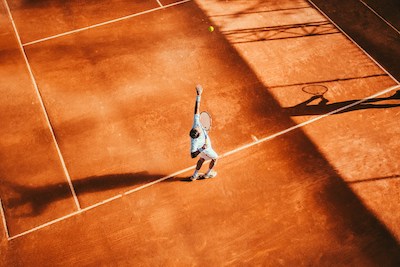
A notable example of deaf excellence in tennis is Lee Duck-hee, born on 29 May 1998 in Jecheon, South Korea. Despite being born deaf, Lee achieved significant success on the international junior circuit, winning eight ITF Junior titles, including Grade 2 tournaments in Nanjing and Sarawak. He reached a career-high ranking of No. 3 in the ITF Junior Combined Rankings, demonstrating that hearing impairment is not a limitation to elite performance.
On court, Lee relies on vibrations and visual cues, though communication with umpires—particularly line calls—can present challenges. These are addressed through hand signals and visual officiating. Lee has spoken positively about the experience, noting that the absence of crowd noise allows for greater focus during matches, reinforcing how deaf athletes can turn adaptation into competitive advantage.
2. Rules
Deaf tennis is played under the same rules as mainstream tennis. Court dimensions, rackets, balls, and scoring systems remain unchanged, ensuring full integration and parity with hearing competition.
Competition is typically structured into men’s and women’s categories, with singles and doubles events offered in each. Adaptations relate primarily to officiating and communication, where visual signals replace auditory cues such as verbal calls or announcements.
3. Eligibility
To compete in sanctioned deaf tennis events, athletes must have a permanent hearing loss of at least 55 decibels in the better ear, as verified by an audiogram. In accordance with international deaf sport regulations, hearing aids, cochlear implants, and assistive listening devices are not permitted during competition, ensuring an equal playing field for all participants.
4. Major Deaf Tennis Competitions
The Deaflympics
The Deaflympics (formerly known as the World Games for the Deaf or International Games for the Deaf) is an International Olympic Committee (IOC)-sanctioned multi-sport event for elite deaf athletes. Governed by the International Committee of Sports for the Deaf (ICSD), the Deaflympics represents the highest level of international competition for deaf sport, with tennis included as a core discipline.
Unlike other IOC-sanctioned events such as the Olympics or Paralympics, Deaflympic competitions rely exclusively on visual officiating. Starter pistols, whistles, and verbal commands are replaced with visual signals, flags, and gestures. Spectators traditionally show support by waving rather than clapping or cheering, ensuring an inclusive environment for deaf athletes.
Deaf Tennis World Championships
The Deaf Tennis World Championships is an elite international event sanctioned by the ICSD. The championships complement the Deaflympic cycle and strengthen the global competitive calendar for deaf tennis. In addition to men’s and women’s singles and doubles events, the championships also include a World Youth Championships, providing a development pathway for junior players.
These championships build upon established regional competitions in Europe, Asia-Pacific, and the Pan Americas, as well as the Dresse and Maere Cups, which serve as world team championships for deaf tennis. Collectively, these events ensure consistent high-level competition across the four-year Deaflympic cycle.
5. Benefits
Deaf tennis offers meaningful participation opportunities from grassroots to elite international level.
Beyond physical fitness and technical skill development, the sport fosters independence, confidence, focus, and resilience. It also provides a powerful platform for inclusion, demonstrating that deaf athletes can compete, excel, and lead within both deaf-specific and mainstream sporting environments.
Deaf Table Tennis
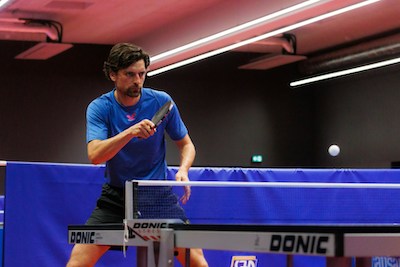
Table tennis, also known as ping pong, is a fast-paced sport played by two or four players who strike a lightweight ball back and forth across a table using small paddles.
The table is divided by a net, and, except for the serve, players must allow the ball to bounce once on their side before returning it so that it lands on the opponent’s side.
Points are scored when a player fails to return the ball in accordance with the rules. The sport demands quick reflexes, precise hand–eye coordination, and sharp tactical awareness. The use of spin plays a critical role, as it alters the ball’s trajectory and restricts an opponent’s response options.
Hearing impairment presents no barrier to participation in table tennis.
The sport is inherently visual and reaction-based, allowing deaf and hard-of-hearing athletes to compete without disadvantage.
The primary distinction between deaf table tennis and mainstream competition relates to auditory environment and eligibility criteria rather than gameplay itself.
For sanctioned deaf competition, athletes must meet recognised deaf sport eligibility requirements, typically defined as a permanent hearing loss of 55 decibels or greater. Competition environments are adapted to minimise reliance on sound, with visual cues and standardised officiating procedures ensuring fair play. Deaf table tennis is contested at social, club, provincial, national, and international levels, including participation in the Deaflympic Games.
2. South African Table Tennis
The South African Deaf Sports Federation (SADSF) currently promotes 10 sport codes, including Table Tennis. Most of these codes have their own structures and constitutions and are, as provided for in the SADSF Constitution, affiliated to the SADSF which is a National controlling body that facilitates the administration and coordination of each of these 10 Sport Codes to the highest level of excellence.
SADSF further has 9 constituted Provincial structures that are responsible for the identification and development of sporting talent for Deaf at grassroots level and also for the administering and coordination of sport for the Deaf at a Provincial level.
To find out more about the SADSF Click Here
3. Governance and Rules
Table tennis is governed internationally by the International Table Tennis Federation (ITTF), founded in 1926 and comprising over 220 member associations worldwide. The official rules of the sport are outlined in the ITTF Handbook and apply equally to deaf and hearing athletes, with only minor officiating adaptations for deaf competition.
The rules can be found at: http://www.ittf.com/ittf_handbook/2014/2014_EN_HBK_CHPT_2.pdf
4. Disability Classification
Table tennis uses a structured classification system to ensure equitable competition among athletes with different disabilities.
Players are classified into categories 1 to 11, based on functional ability. Within each grouping, a higher class number indicates greater functional ability.
Deaf athletes compete under deaf sport eligibility criteria rather than the physical impairment classification system,
allowing for fair and appropriate competition structures.
CLASS
CONDITIONS
CLASS 1-5
Wheelchair athletes
CLASS 6-10
Standing athletes with physical impairments
CLASS 11
Athletes with an intellectual disability
5. Major Tournaments
There are a variety of tournaments held for Deaf table tennis players around World, they include: The Deaflympics and The World Deaf Table Tennis Championships. Each National Association may enter a maximum number of four (4) men and four (4) women for all events; one team for the team events, four players for the singles, two pairs for the men’s and women’s doubles, and four pairs for the mixed doubles.
6. Equipment and playing conditions
A player may not normally wear any part of a tracksuit during play. A player with a physical disability, either in a wheelchair or standing, may wear the trousers portion of a tracksuit during play, but jeans are not permitted.
Table Tennis equipment consists of a Ball; 1 x bat per player, a Table with a Net
7. Benefits
Deaf table tennis provides accessible pathways from grassroots participation to elite international competition.
The sport promotes physical fitness, mental agility, concentration, and confidence, while offering deaf athletes opportunities for inclusion, representation, and high-level achievement within both deaf-specific and mainstream sporting environments.