


Weight Lifting
Para powerlifting, often referred to as Paralympic weightlifting, is one of the most intense and inspiring strength sports on the Paralympic programme.
Open to athletes with lower-limb impairments, the sport focuses on the bench press, where competitors lift as much weight as possible with exceptional control, technique, and upper-body power.
Athletes compete in bodyweight categories, using adapted benches and standardised rules to ensure fairness and safety. Para powerlifting showcases extraordinary strength, determination, and resilience, giving athletes from around the world the opportunity to compete at social, national, and elite international levels — including the Paralympic Games.
What Assistance are you Looking for?
1. About Weight Lifting
2. Para-Weightlifting in South Africa
3. Classification
4. Benefits of Para Powerlifting
5. Background
1. About Weight Lifting
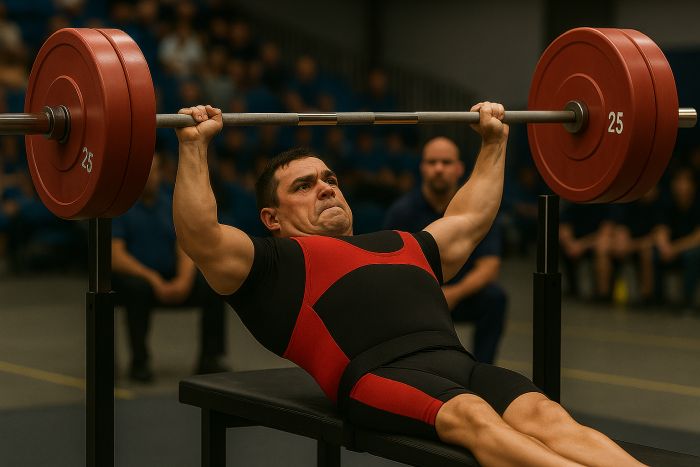
Weightlifting previously known as Power lifting, is open to all athletes from those with spinal cord injuries, to those with cerebral palsy, amputees (lower limb amputees only) as well as those who meet the minimal disability criteria.
It is the only individual strength sport where there is no contact with an opponent and has similarities with bench pressing. Its distinguishing characteristics are maximum strength and resilience, as well as observing opponents, techniques and tactics.
Each individual fights for himself or herself within a team structure. “Help and be helped” is the motto. Measuring your strength, everyone competes against each other in ten weight classes, regardless of disability level.
Weight lifting is one of the few sports that not only promotes integration between the able-bodied and people with disabilities, it also opens up national and international competitions to both men and women.
2. Para-weightlifting in South Africa
Information and training debriefings for newcomers to the sport takes place once a year and provide an opportunity for beginners to receive tips from top athletes.
The South African national team has successfully taken part in the European/world championships and the Paralympics for many years.
Weightlifting for the Disabled falls under SASAPD (South African Sports Association for Physically Disabled)
The focus of the organization is to develop and promote the sporting codes offered at Paralympics level for athletes with physical disabilities, visual impairment and blindness. This includes Weightlifting.
They offer pathways through their affiliations with international bodies towards Paralympics Games qualification for Weightlifting and a variety of sports.
The sport is active in most provinces and it is convened by Moekie Grobelaar.
She can be contacted by email: moekiegrob@mweb.co.za or you can visit the SASAPD website at www.sasapd.org.za.
3. Classification
Para powerlifting uses a minimal-classification system, making it one of the most inclusive Paralympic sports.
Athletes are classified based on eligible physical impairments rather than functional performance, and all eligible athletes compete together in bodyweight categories
To compete, athletes must have an impairment that affects their lower limbs and prevents them from safely performing a traditional Olympic weightlifting squat.
Eligible impairments include:
– Limb deficiency (congenital or acquired)
– impaired muscle power (e.g., spinal cord injury, spina bifida)
– Impaired passive range of movement
– Short stature
– Leg-length difference
– Hypertonia, ataxia, or athetosis (depending on functional impact)
Because all athletes lift from the bench in the same position, classification does not divide athletes further by impairment type. Instead, athletes are grouped strictly by sex and bodyweight, ensuring fair competition based on strength alone
4. Benefits of Para-Powerlifting
Para powerlifting offers significant physical, psychological, and social benefits for athletes with disabilities:
Physical Benefits
– Builds exceptional upper-body and core strength
– Improves muscle tone, balance, and stability
– Enhances cardiovascular fitness and overall conditioning
– Promotes safe movement patterns and proper lifting technique
Psychological Benefits
– Boosts confidence and self-esteem through measurable progress
– Encourages discipline, focus, and mental resilience
– Reinforces a strong sense of personal achievement
– Provides clear goal-setting and a pathway from beginner to elite levels
Social Benefits
– Connects athletes with a supportive and motivating community
– Creates opportunities for teamwork, mentorship, and shared experience
– Increases visibility and empowerment for people with disabilities
– Enables participation at club, national, and Paralympic levels
Para powerlifting is more than a strength sport — it’s a platform for athletes to challenge themselves, grow, and push the boundaries of what’s possible.
5. Background
Power lifting for athletes with a disability made its first appearance in 1964 at the second Paralympics Games in Tokyo.
Only men with spinal injuries participated with slightly different rules than are used today.
Later it changed from Power lifting to Weightlifting and is now open to all athletes.
Women competed in this sport for the first time in Sydney in 2000.