


Accessible Housing


Making Your Home Accessible: Who can Help?
There are now various Organizations and Companies that specialize in Universal Design and Access and can advise you on how to adapt your building and environment to make sure that persons with disabilities have equal rights and no loss of dignity. These Organisations and Companies specialise in Universal Design and Access will follow those standards set by “The National Building Regulations and Building Standards Act” to make sure that persons with disabilities are not excluded from any events, services, information, communication, products and venues:
National Council of and for Persons with Disabilities (NCPD), Bradshaw LeRoux Consulting, Universal Access Collective and Disability info South Africa (DiSA)
NCPD believe that this can be prevented by applying Universal Design Principals during the design phase and they therefor offer the following services to assist:
– Workshops for architects, developers and other building professionals to develop an understanding of universal design and access.
– Facilitating access audits for new or existing buildings; echo e-access for the natural and communication environment. Audits are followed by a report indicating shortfalls and recommendations.
– Marketing of facilities that are accessible to persons with disabilities
Contact: Fanie Swanepoel or Danie Marais Tel: +27 11 452 2774 Email: fanies@ncpd.org.za or danie@ncpd.org.za

Bradshaw LeRoux Consulting conduct Environmental Accessibility Audits designed to identify environmental barriers that could hinder access for Persons with a Disability.
Our consultants will review your site, note potential barriers from a functional and safety perspective, and propose cost-effective solutions which can be actioned within short, medium and longer term time frames. Our reports are practical in nature, specific in the solutions offered, and allow for ease of use by all. Relevant to all environments, from corporate offices, manufacturing or industry sites, education facilities or hospitality environments, we can assist.
For more information, please feel free to send any queries to lesa@bradshawleroux.co.za or take a look at our website: www.bradshawleroux.co.za. You can contact us via our Contact number: 031 765 2547.
Turn accessibility challenges into opportunities with inclusive design that actually works.
Whether you’re a business owner, facility manager, or someone navigating personal accessibility needs, most environments still create barriers instead of being accessible and welcoming.
Universal Access Collective (UAC) solves the accessibility puzzle for businesses and individuals across Africa, turning compliance requirements and personal challenges into practical solutions that work.
For Businesses: We assist to create a Universal Access environment including National Building regulations as well as International Best practices spaces that welcome more customers. Our built environment audits, digital accessibility reviews, and staff training don’t just tick boxes—they unlock new revenue streams and reduce liability risks.
For Families, Individuals and the Elderly: Adapting your home or navigating new accessibility needs shouldn’t feel overwhelming. Our coaching and universal design advisory services provide practical guidance that transforms challenges into confidence.
What makes us different? We are a women-led consultancy founded and led by Mandy Latimore, a globally recognised Universal Design specialist. Our team brings together technical expertise, lived experience, in-depth compliance knowledge, and real-world understanding to deliver inclusive, practical, and forward-thinking solutions for every project.
Our comprehensive services include:
– Built environment and digital access audits
– Universal design advisory for residential and commercial spaces
– Family coaching and caregiver support
– Staff disability confidence training
– Inclusive communication and content development
– Assistive technology recommendations
Beyond consulting, we’re building a supportive community where businesses, families, and professionals share knowledge and drive change together.
Ready to transform accessibility from obstacle to opportunity? Contact us to discover how inclusive design creates better outcomes for everyone—and better business results for you.
You can contact Universal Access Collective:
Tel: +27 83 283 3370
E mail: info@ua-collective.com,
Website: www.universalaccesscollective.com, LinkedIn: https://www.linkedin.com/company/universal-access-collective.

Igor Rix, is a qualified access consultant and co-founder of Disability Info South Africa (DiSA). He specialises in conducting Accessibility Audits and providing detailed reports on barriers within physical spaces and services.
Igor develops practical Implementation Plans to address these challenges, ensuring compliance with both national accessibility standards and international best practices. While focusing on fostering inclusivity for all individuals.
Ensuring all people of diverse needs and preferences, can fully participate and contribute to society in a meaningful way.
Read More about Igor Rix and the Accessibility Audits, Reporting and Implementation plans that he can provide
1. Designing An Accessible Home
The National Building Regulations and Building Standards Act requires that all new public buildings be designed and constructed according to accessible design principles, ensuring they are usable by all persons.
This includes restrooms and covers features such as elevators, automatic doors, wide doors and corridors, wheelchair ramps, curb cuts, and the removal of unnecessary steps where ramps or lifts are not available.
In short, any modification that allows wheelchairs and other assistive devices to navigate public spaces and transport systems more easily, safely.
These elements are known as Accessible Features and are covered in detail on our Accessible Features page.
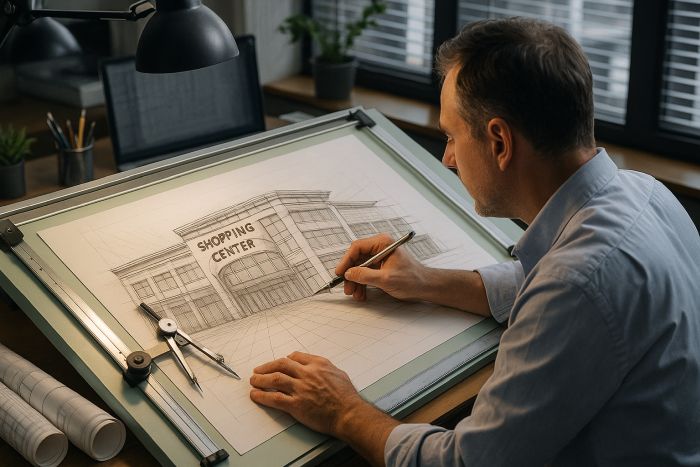
Despite existing legislation, many public spaces and buildings remain non-compliant with accessibility regulations and are being designed and constructed without consulting a Universal Access Consultant. This oversight inevitably leads to costly alterations after completion, and even then, the results are rarely ideal.
If you are planning to alter or construct a new residence or business, do the right thing—engage a Universal Access Consultant from the start. It’s the best way to ensure your building is fully compliant, inclusive, and future-ready. If you are not sure where to find one, Contact DiSA directly. We have a network of accessibility specialist in place who would love to help you make the world just a little more accessible.
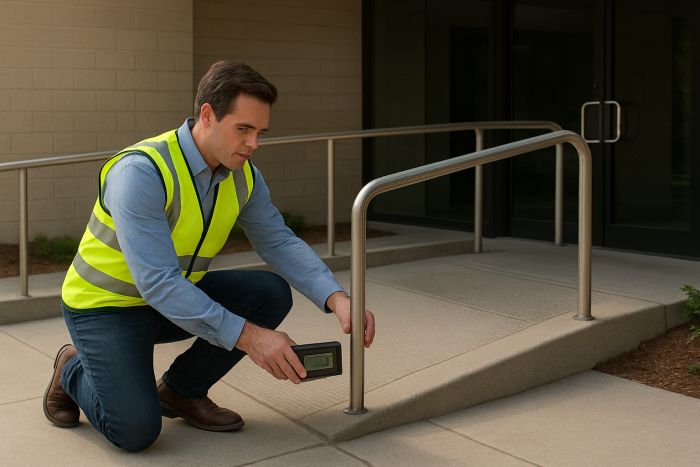
A significant part of providing Reasonable Accommodation is making physical spaces accessible, by Implementing changes such as ramps, elevators, accessible bathrooms and wider doorways and spacious bedrooms to ensure mobility and comfort.
To ensure that this is done correctly, it is important to use Organisations and Companies that specialise in Universal Design and Access and follow standards set by “The National Building Regulations and Building Standards Act”.
By contacting Organisations and Companies such as those listed below that are qualified in Universal Design, you ensure that you are not only on the right side of the law, but also don’t exclude anyone.
2. Equipment to Create an Accessible Home

Disability can affect anyone at any time, especially as we age. This often creates the need for accessible, hazard-free homes.
Many senior citizens wish to retain their independence by staying at home for as long as possible. To achieve this, accessible design features such as ramps, handrails, and grab bars are essential. These additions improve accessibility and reduce the risk of falling.
In your own home, you are not limited to the government standards set for public buildings, but these regulations exist for your safety. Before making any adaptations, consult Universal Access Consultants and builders who specialize in accessibility to ensure the changes will meet your needs effectively. You may also need plans or permits for the adaptations you wish to make.
There are a variety of areas where adaptations and assistive devices can improve accessibility for persons with mobility impairments, especially for those in wheelchairs, they include: Ramps; Gates, Doors and Doorways; Light switches and other controls; Multi-Story Homes; Accessible Bedrooms and Accessible Bathrooms.
i. Ramps
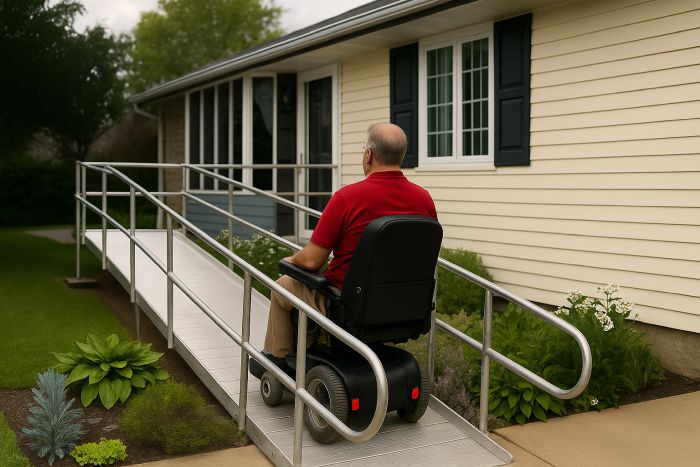
Depending on your home’s design, the type of wheelchair you use, and your physical abilities, ramps can take on different sizes and shapes. They can be custom-built from wood, cement, or metal – or purchased pre-manufactured in a variety of sizes. Including small rubber or metal threshold ramps used to navigate a half-step, slightly longer ramps designed for a full step, and longer metal ramps, which can be permanent or temporary and can be removed at a later stage, if no longer necessary.
To find out more about these types of ramps and the companies that sell them Visit our Hoists, Lifts, Ramps and Transferring Aids Page.
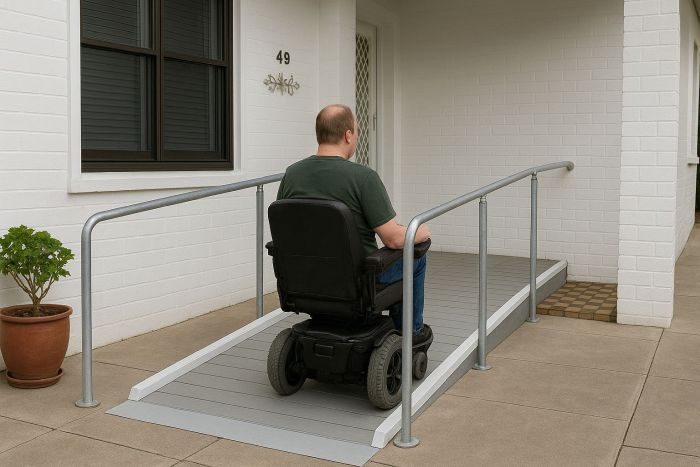
If You Choose to Build a Ramp
If you choose to build a ramp, the government standard for ramps is currently 1:12.
in your own home you are not necessarily limited to the government standard. Depending on space limitations and your needs, you might opt for a longer, gentler ramp—ideal for manual wheelchair users—or a slightly steeper ramp if space is tight. But standards are set for your own safety, so before you commence always seek advice from a Universal Access Consultant, to ensure any adaptations are safe.
Ramps should be slip-resistant and safe for pedestrians, with handrails installed where possible.
For Safety Tips and to read the regulations for ramps, stairs, and handrails, click here: Ramp Regulations
To find out more about the types of ramps available to purchase in South Africa, click here: Hoists, Lifts, Ramps & Transferring Aids – Ramps
If you need the advice of a Universal Access Consultant who can help you design a ramp that is safe and meets your particular needs, visit our Accessible Features Page: Universal Access Consultants, or Contact DiSA
ii. Gates, Doors & Doorways Ramps
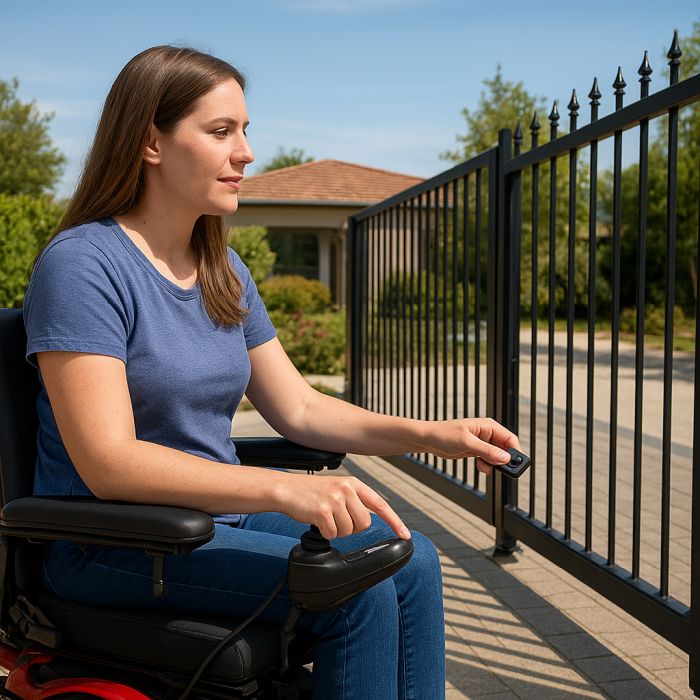
Gates
Due to the high crime rate, many people choose to have automatic security gates installed, which are not only handy to keep you safe, but can also provide you with easy access to your property and house.
You can attach a control for your front gate to your wheelchair, so that you can come and go as you please. These controls can also be fitted to the security gate or on your front door.
Please Contact DiSA if you require any further information.
Doorways & Hallways
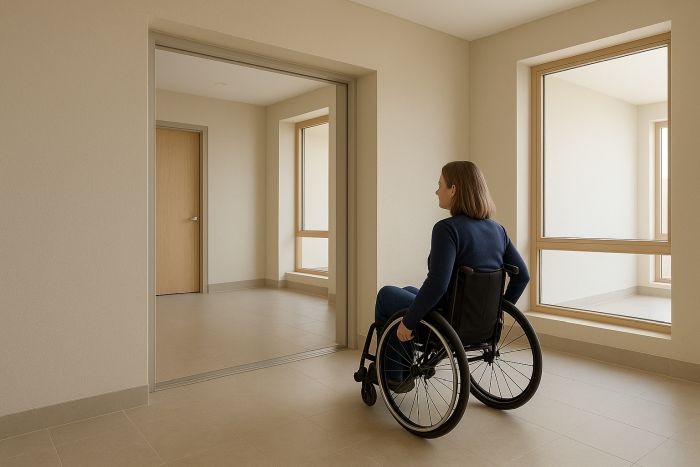
Most wheelchairs are built narrower than the width of a doorway, so you should have no problem getting through a standard South African doorway with a wheelchair – unless you are required to turn around sharp corners directly on entry.
Security gates however, can pose a problem. Often attached to the front door, they make the doorway narrower making it difficult for some wheelchairs to exit or enter. You may need to adapt these gates to give you more space, or use special off-set hinges to allow the door to open further.
As mentioned above, going around sharp corners can also prove difficult, especially for off-road Motorized wheelchairs, so you should take this into consideration when choosing the type of wheelchair to buy – or where you are going to live if you use a wheelchair. You may have to do some remodeling, if you want to be able to drive directly into a room.
To ensure you get the maximum benefit from your alterations contact a Universal Access Consultant. To learn more about the different types of wheelchairs that are available in South Africa, visit our Wheelchairs and Scooters page.
Unlocking and Opening Doors
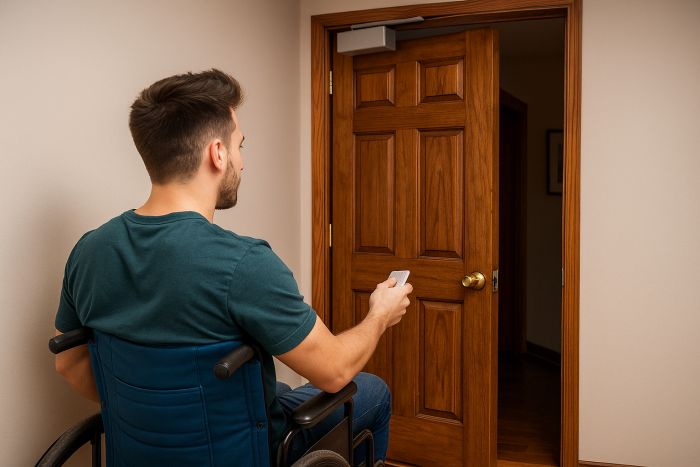
When it comes to unlocking and opening doors, there are a variety of options to choose from, depending on the degree of your disability and the amount of money you have available to spend. These include:
– Lowering the door handle:
Door handles can be lowered or changed, so that they are easier reach and open. Straps can also be fitted to the door handle that can assist with this.
– Installing number-code locks with key pads on your doors:
They are easier to negotiate than keys and can allow you to provide access to the house to people if you can’t get to the door. You can tell them the code over the phone.
– Automatic door openers:
There are a wide variety of different types of door openers available.
Visit our Home Automation Page – Door Openers section for more information.
iii. Home Automation
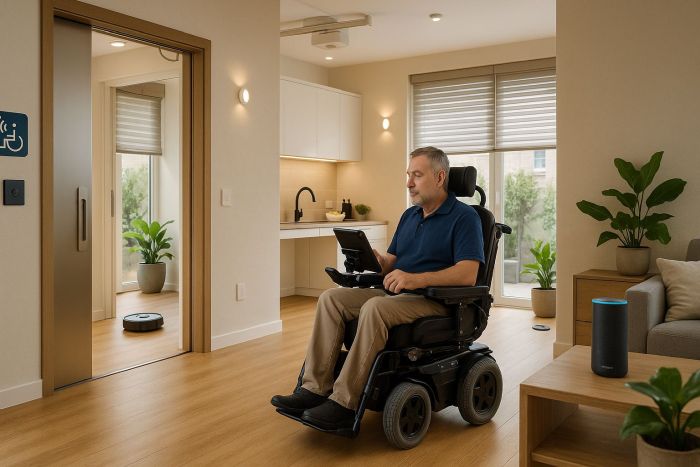
Light switches, alarm systems, music, heating, air conditioning, etc. should all be easily accessible and within easy reach of a person who uses a wheelchair. Home Automation is the answer – allowing older adults and persons with disabilities to control their environment. More commonly called Smart Homes, they offer a wide variety of benefits to the elderly and persons with disabilities.
There are a variety of companies that specialize in the supply and installation of Home Automation products in South Africa. To learn more about these systems, and the companies who install them visit our Home Automation page.
iv. Multi-Story Homes

Life is not always convenient. And, it happens that people who stay in a home or apartment that has 2 or more floors (Multi-story home) get a disability, or develop a Mobility Impairment as they get older. If this is the case, it often becomes difficult or impossible for them to maneuver from one floor to the next. Sometimes moving homes is not an option and the only alternative is the installation of some type of lift.
In these instances, there are 3 options to consider:
– A stair lift
– Elevator or Lift
– Platform Lift
There are several companies in South Africa that supply, install, and service this type of equipment.
It’s important to get expert advice on which elevator or lift best suits your building and specific mobility needs.
To learn more about these products and the companies that provide them visit our Hoists, Lifts and Transfer Aids page.
v. Accessible Bedrooms
Creating an accessible bedroom is an important part of creating a safe and comfortable home environment – and plays an essential role in retaining your independence, especially for those who use wheelchairs to move about.
Many persons with mobility Impairments do not have the luxury of a lot of space, but with just a little extra thought you can set-up and create a comfortable, accessible bedroom, using the right assistive devices to improve your accessibility and help you become a lot more independent.

vi. Accessible Bathrooms

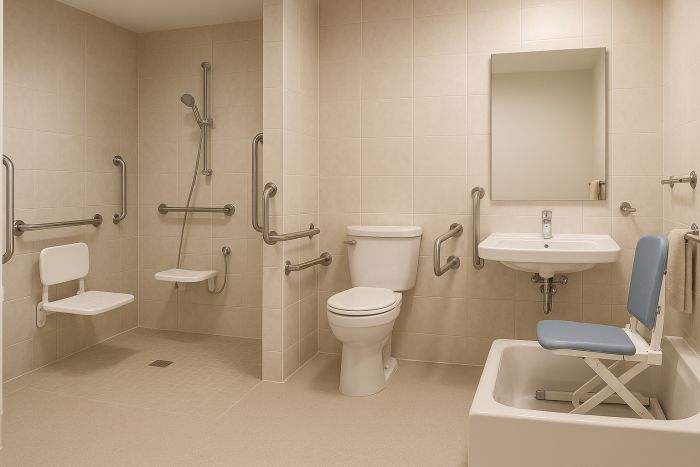
Most persons with Mobility Impairments require an Accessible Bathroom. While en-suite is first prize, any accessible bathroom will do. Accessible bathrooms are specifically designed to accommodate persons with physical disabilities.
While public bathrooms are required to follow The National Standard for Building Regulations – private bathrooms, obviously do not. The only consideration in this case – is your personal lifestyle needs and preferences. To learn more about the equipment that goes into making an accessible bathroom in the home, please visit our: Accessible Bathrooms Page
Accessible Public Toilets and Bathrooms can present accessibility challenges for people who use Wheelchairs. Wheelchairs come in different sizes and accessible Toilets are designed to address these issues by providing more space and Grab Rails for users to be able to grab onto and hold during transfers.
The National Standard for Building Regulations makes laws that insure that new buildings are designed and built with Disabled Toilets – and that these toilets are accessible for persons with various disabilities. All bathrooms are required to meet the prescribed regulations and be accessible to all persons with disabilities.
If you are planning on altering or building a new complex, shopping centre, public building or business, you are required to contact a Universal Access Consultant to ensure your plans are compliant, please Contact Us if you need any assistance, or Click Here to find out more about the National Standard for Building Regulations and other companies and organisations that can assist you.
Accessible Bathrooms for Your Home
Accessible Bathrooms in the home do not need to meet the same regulations, as public Accessible Toilets and Bathrooms.
When it comes to your own home, everybody is different. Some people are happy to “Bed Bath”, while others prefer to bath or shower. The type of Mobility Impairment you have, and your preference in your bathroom routines, will determine what type of Bathroom Aids you will require, which will in turn determine what type of bathroom adaption’s need to be done.
There are several options available. If you are interested in learning more please click here, to find out more about these types of products available in South Africa and the companies that sell them.
3. Housing Subsidies and Adaptions.
South Africa’s main housing support is through the National Housing Subsidy Scheme administered by the Department of Human Settlements, which provides several Subsidies to not only buy or build a new home but also improve, adapt or extend an existing home.
These Subsidies include:
1. Individual Subsidy Programme: Helps individuals to buy or build a home on a serviced site.
2. Project-Linked Subsidy Programme: Developers get subsidies to build houses for qualifying beneficiaries.
3. Consolidation Subsidy: Helps improve or extend existing housing.
4. Institutional & Relocation Subsidies: For specific situations like repossession or institutional redevelopments.
5. Disability-Specific Subsidy Adjustments: People with disabilities (and households including persons with permanent disabilities) are recognised as needing special housing adaptations. The subsidy scheme allows additional funding to accommodate these accessibility needs — such as ramps, bathroom handrails, widened doorways, door kick plates, and visible bells for people with hearing impairments. This is often referred to as a variation for extraordinary conditions and requires an application with proof of disability.
Disclaimers and References
Simplified Summary
Discover accessible housing solutions for comfort, safety & independence through universal design experts and services, inclusive layouts & featured assistive devices.