


Guillain–Barré Syndrome|GBS
Guillain–Barré syndrome (GBS) is an autoimmune disease caused by the body’s immune system mistakenly attacking the peripheral nerves and damaging their myelin insulation.
It starts with changes in sensation or pain, followed by muscle weakness beginning in the feet and hands. The symptoms develop over a period of half a day to two weeks.
Various classifications exist, depending on the areas of weakness, results of nerve conduction studies, and the presence of antiganglioside antibodies.
It is classified as an acute polyneuropathy, but prompt treatment with supportive care, leads to good recovery in the majority of people.
What Are You Looking For?
1. Guillain-Barre Syndrome | GBS
2. Signs and Symptoms
3. Causes
4. Diagnosis
5. Treatment
6. Rehabilitation
7. Prognosis
8. Epidemiology
1. About Guillain-Barre Syndrome
Guillain–Barré syndrome (GBS) is a rapid-onset muscle weakness caused by the immune system damaging the peripheral nervous system. It starts with changes in sensation or pain, followed by muscle weakness beginning in the feet and hands. The symptoms develop a period of half a day to two weeks.
During the acute phase, the disorder can be life-threatening with about a quarter developing weakness of the breathing muscles and requiring mechanical ventilation. Some are affected by changes in the function of the autonomic nervous system, which can lead to dangerous abnormalities in heart rate and blood pressure.
This autoimmune disease is caused by the body’s immune system mistakenly attacking the peripheral nerves and damaging their myelin insulation. This immune dysfunction can be triggered by an infection. The diagnosis is usually made based on the signs and symptoms, through the exclusion of alternative causes, and supported by tests such as nerve conduction studies and examination of the cerebrospinal fluid. Various classifications exist, depending on the areas of weakness, results of nerve conduction studies, and the presence of antiganglioside antibodies. It is classified as an acute polyneuropathy.
In those with severe weakness, prompt treatment with intravenous immunoglobulins or plasmapheresis, together with supportive care, will lead to good recovery in the majority. Some may experience ongoing difficulty with walking, painful symptoms, and some require long-term breathing support. Guillain–Barré syndrome is rare, at one to two cases per 100,000 people every year.
2. Signs and Symptoms
The first symptoms of Guillain–Barré syndrome are: tingling, numbness and pain. These occur alone or in combination.
Followed by weakness of the legs and arms that affects both sides equally and worsens over time. This can take half a day to over two weeks to reach maximum severity, then becomes steady.
One in five people, experience this weakness for as long as four weeks. The muscles of the neck may also be affected, and about half experience involvement of the cranial nerves which supply the head and face. This may lead to weakness of the muscles of the face, difficulties in swallowing and sometimes weakness of the eye muscles. In 8%, the weakness affects only the legs and the muscles that control the bladder and anus. In total, about a third of people with Guillain–Barré syndrome continue to be able to walk.
Once the weakness has stopped progressing, it persists at a stable level before improvement occurs. This is known as the plateau phase and usually takes a week, but can take between two days and six months. Pain-related symptoms affect more than half, and include back pain, painful tingling, muscle pain and pain in the head, neck. This is due to irritation of the lining of the brain.
3. Causes
Two thirds of people with Guillain–Barré syndrome have experienced an infection before the onset of the condition. Most commonly these are episodes of gastroenteritis or a respiratory tract infection. In many cases, the exact nature of the infection can be confirmed.
Approximately 30% of cases are provoked by Campylobacter jejuni bacteria, which cause diarrhea.
A further 10% are attributable to cytomegalovirus (CMV, HHV-5).
Despite this, only very few people with Campylobacter or CMV infections develop Guillain–Barré syndrome (0.25–0.65 per 1000 and 0.6–2.2 per 1000 episodes, respectively). The strain of Campylobacter involved may determine the risk of GBS.
Different forms of the bacteria have different lipopolysaccharides on their surface, and some may induce illness (see below) while others will not.
Links between other infections and GBS are less certain.
4. Diagnosis
The diagnosis of Guillain–Barré syndrome depends on findings such as rapid development of muscle paralysis, absent reflexes, absence of fever, and a likely cause. Cerebrospinal fluid analysis (through a lumbar spinal puncture) and nerve conduction studies are supportive investigations commonly performed in the diagnosis of GBS. Testing for antiganglioside antibodies is often performed, but their contribution to diagnosis is usually limited. Blood tests are generally performed to exclude the possibility of another cause for weakness, such as a low level of potassium in the blood. An abnormally low level of sodium in the blood is often encountered in Guillain–Barré syndrome. This has been attributed to the inappropriate secretion of antidiuretic hormone, leading to relative retention of water.
In many cases, magnetic resonance imaging of the spinal cord is performed to distinguish between Guillain–Barré syndrome and other conditions causing limb weakness, such as spinal cord compression. If an MRI scan shows enhancement of the nerve roots, this may be indicative of GBS. In children, this feature is present in 95% of scans, but it is not specific to Guillain–Barré syndrome, so other confirmation is also needed.
5. Treatment
Plasmapheresis and intravenous immunoglobulins (IVIg) are the two main immunotherapy treatments for GBS.
Plasmapheresis attempts to reduce the body’s attack on the nervous system by filtering antibodies out of the bloodstream. Similarly, administration of IVIg neutralizes harmful antibodies and inflammation. These two treatments are equally effective and a combination of the two is not significantly better than either alone. Plasmapheresis speeds recovery when used within four weeks of the onset of symptoms.
IVIg works as well as plasmapheresis when started within two weeks of the onset of symptoms, and has fewer complications. IVIg is usually used first because of its ease of administration and safety. Its use is not without risk; occasionally it causes liver inflammation, or in rare cases, kidney failure. Glucocorticoids alone have not been found to be effective in speeding recovery and could potentially delay recovery.
6. Rehabilitation
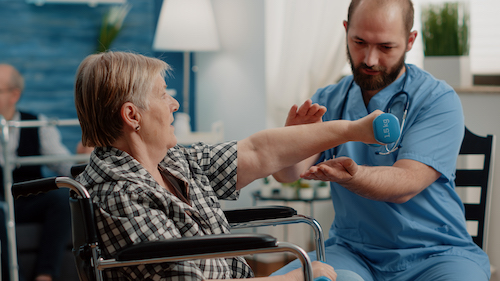
Following the acute phase, around 40% of people require intensive rehabilitation with the help of a multidisciplinary team to focus on improving activities of daily living (ADLs).
Studies into the subject have been limited, but it is likely that intensive rehabilitation improves long-term symptoms.
Teams may include physical therapists, occupational therapists, social workers, psychologists, other allied health professionals and nurses. The team usually works under the supervision of a neurologist or rehabilitation physician directing treatment goals.
7. Prognosis
Guillain–Barré syndrome can lead to death as a result of a number of complications: severe infections, blood clots, and cardiac arrest likely due to autonomic neuropathy. Despite optimum care this occurs in about 5% of cases.
There is a variation in the rate and extent of recovery. The prognosis of Guillain–Barré syndrome is determined mainly by age (those over 40 may have a poorer outcome), and by the severity of symptoms after two weeks. Furthermore, those who experienced diarrhea before the onset of disease have a worse prognosis. On the nerve conduction study, the presence of conduction block predicts poorer outcome at 6 months.
In those who have received intravenous immunoglobulins, a smaller increase in IgG in the blood two weeks after administration is associated with poorer mobility outcomes at six months than those whose IgG level increased substantially. If the disease continues to progress beyond four weeks, or there are multiple fluctuations in the severity (more than two in eight weeks), the diagnosis may be chronic inflammatory demyelinating polyneuropathy which is treated differently.
In research studies, the outcome from an episode of Guillain–Barré syndrome is recorded on a scale from 0–6, where 0 denotes completely healthy, 1 very minor symptoms but able to run, 2 able to walk but not to run, 3 requiring a stick or other support, 4 confined to bed or chair, 5 requiring long-term respiratory support, 6 death.
The health-related quality of life (HRQL) after an attack of Guillain–Barré syndrome can be significantly impaired. About a fifth are unable to walk unaided after six months, and many experience chronic pain, fatigue and difficulty with work, education, hobbies and social activities. HRQL improves significantly in the first year.
8. Epidemiology
In Western countries, the number of new episodes per year has been estimated to be between 0.89 and 1.89 cases per 100,000 people.
Children and young adults are less likely to be affected than the elderly: the risk increases by 20% for every decade of life. Men are more likely to develop Guillain–Barré syndrome than women; the relative risk for men is 1.78 compared to women.