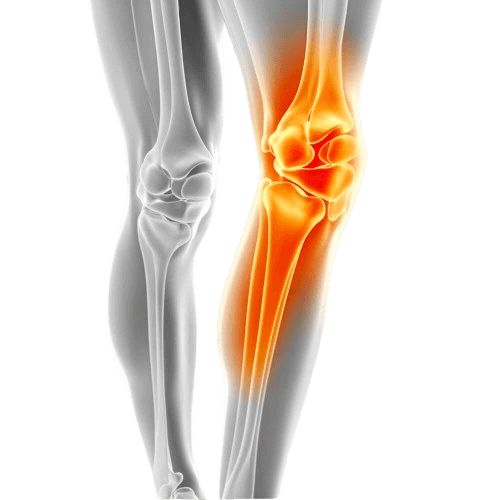
Arthritis

Arthritis is a form of joint disorder that involves inflammation in one or more joints. There are over 100 different forms of arthritis.

The most common form of arthritis is osteoarthritis, other forms of Arthritis are rheumatoid arthritis, Septic arthritis, psoriatic arthritis, & related autoimmune diseases.

The major complaint by individuals who have arthritis is joint pain. Pain is often constant, and may be localized to the joint affected.

The pain from arthritis is due to inflammation that occurs around the joint.

Damage to the joint from disease, daily wear and tear of joint, muscle strains caused by forceful movements against stiff painful joints and fatigue

1. Osteoarthritis
Osteoarthritis is a degenerative joint disease, & is a result of trauma to the joint, infection of the joint, or old age.

2. Rheumatoid Arthritis (RA)
Rheumatoid Arthritis (RA) is an autoimmune disease that causes chronic inflammation of the joints

3. Septic Arthritis
Septic Arthritis is also known as infectious arthritis, and is usually caused by bacteria, or fungus.

4. Psoriatic Arthritis
Psoriatic Arthritis is a form of arthritis that affects some people who have psoriasis, a condition that features red patches of skin topped with silvery scales. 

5. Autoimmune Diseases
Autoimmune Diseases are a broad range of related diseases in which a person’s immune system produces an inappropriate response against its own cells, tissues and/or organs, resulting in inflammation and damage. 
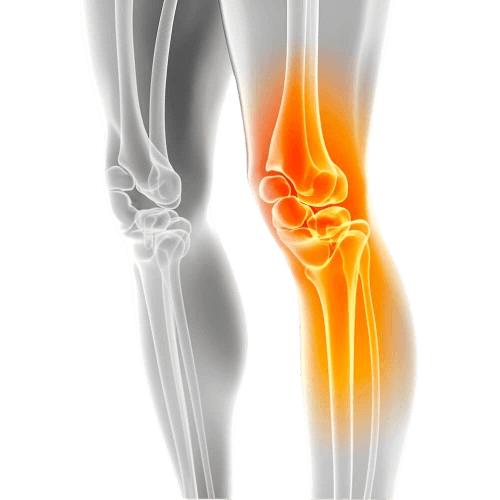
image of a knee with arthritis
image of a hand with arthritis
image of a knee joint with arthritis

1. Osteoarthritis

Osteoarthritis (OA) is a type of joint disease that results from breakdown of joint cartilage and underlying bone.
Unlike other types of arthritis, only the joints are typically affected. OA is the most common form of arthritis.
Arthritis of the knee and hip affecting about 3.8% of people as of 2010. Among those over 60 years old about 10% of males and 18% of females are affected.

Before 45 years of age it is more common in men, while after 45 years of age it is more common in women. It becomes more common in both sexes as people become older. 

Initially, symptoms may occur only following exercise, but over time may become constant. Other symptoms may include joint swelling, decreased range of motion, and when the back is affected weakness or numbness of the arms and legs.

The most commonly involved joints are those near the ends of the fingers, at the base of the thumb, neck, lower back, knee, and hips. Joints on one side of the body are often more affected than those on the other. Usually the symptoms come on over years. It can affect work and normal daily activities.

Osteoarthritis is believed to be caused by mechanical stress on the joint and low grade inflammatory processes. It develops as cartilage is lost and the underlying bone becomes affected. As pain may make it difficult to exercise, muscle loss may occur.

Diagnosis is typically based on signs and symptoms, with medical imaging and other tests occasionally used to either support or rule out other problems. In contrast to rheumatoid arthritis, which is primarily an inflammatory condition, in OA, the joints do not typically become hot or red.

Causes include:
– previous joint injury
– abnormal joint or limb development
– inherited factors
– Risk is greater in those who are overweight
– Risk is greater in those who have one leg of a different length
– Risk is greater in those who have jobs that result in high levels of joint stress.

Damage from mechanical stress with insufficient self repair by joints is believed to be the primary cause of osteoarthritis.

Sources of this stress may include misalignments of bones caused by:
– congenital or pathogenic causes
– mechanical injury
– excess body weight
– loss of strength in the muscles supporting a joint
– impairment of peripheral nerves, leading to sudden or uncoordinated movements.

 Exercise, including running in the absence of injury, has not been found to increase the risk. Nor has cracking one’s knuckles been found to play a role.

Damage from mechanical stress with insufficient self repair by joints is believed to be the primary cause of osteoarthritis.

Sources of this stress may include misalignments of bones caused by:
– congenital or pathogenic causes
– mechanical injury
– excess body weight
– loss of strength in the muscles supporting a joint
– impairment of peripheral nerves, leading to sudden or uncoordinated movements.

 Exercise, including running in the absence of injury, has not been found to increase the risk. Nor has cracking one’s knuckles been found to play a role.

Primary Osteoarthritis

A number of studies have shown that there is a greater prevalence of the disease among siblings and especially identical twins, indicating a hereditary basis. Although a single factor is not generally sufficient to cause the disease, about half of the variation in susceptibility has been assigned to genetic factors.

The development of OA is correlated with a history of previous joint injury and with obesity, especially with respect to knees. Since the correlation with obesity has been observed not only for knees but also for non-weight bearing joints and the loss of body fat is more closely related to symptom relief than the loss of body weight, it has been suggested that there may be a metabolic link to body fat as opposed to just mechanical loading.

Changes in sex hormone levels may play a role in the development of OA as it is more prevalent among post-menopausal women than among men of the same age.

Navy Arrow

Secondary Osteoarthritis


Secondary osteoarthritis (due to an old injury with fracture) of the ankle in a woman of 82 years old
This type of osteoarthritis is caused by other factors but the resulting pathology is the same as for primary osteoarthritis:

– Diabetes doubles the risk of having a joint replacement due to OA and people with diabetes have joint replacements at a younger age.
– Alkaptonuria
– Congenital disorders of joints
– Ehlers-Danlos Syndrome
– Hemochromatosis and Wilson’s disease
– Inflammatory diseases (such as Perthes’ disease and Lyme disease).
– All chronic forms of arthritis (e.g., costochondritis, gout, and rheumatoid arthritis).
in gout, uric acid crystals cause the cartilage to degenerate at a faster pace.
– Injury to joints or ligaments (such as the ACL), as a result of an accident or orthopedic operations.
– Ligamentous deterioration or instability may be a factor.
– Marfan syndrome
– Obesity
– Joint infection
– Pathophysiology

While OA is a degenerative joint disease that may cause gross cartilage loss and morphological damage to other joint tissues, more subtle biochemical changes occur in the earliest stages of OA progression. The water content of healthy cartilage is finely balanced by compressive force driving water out and hydrostatic and osmotic pressure drawing water in. Collagen fibres exert the compressive force, whereas the Gibbs–Donnan effect and cartilage proteoglycans create osmotic pressure which tends to draw water in.

However, during onset of OA, the collagen matrix becomes more disorganized and there is a decrease in proteoglycan content within cartilage. The breakdown of collagen fibers results in a net increase in water content.
This increase occurs because whilst there is an overall loss of proteoglycans (and thus a decreased osmotic pull), it is outweighed by a loss of collagen.

Without the protective effects of the proteoglycans, the collagen fibers of the cartilage can become susceptible to degradation and thus exacerbate the degeneration. Inflammation of the synovium (joint cavity lining) and the surrounding joint capsule can also occur, though often mild (compared to the synovial inflammation that occurs in rheumatoid arthritis).
This can happen as breakdown products from the cartilage are released into the synovial space, and the cells lining the joint attempt to remove them.

Other structures within the joint can also be affected. The ligaments within the joint become thickened and fibrotic and the menisci can become damaged and wear away. Menisci can be completely absent by the time a person undergoes a joint replacement.
New bone outgrowths, called “spurs” or osteophytes, can form on the margins of the joints, possibly in an attempt to improve the congruence of the articular cartilage surfaces in the absence of the menisci.
The subchondral bone volume increases and becomes less mineralized (hypomineralization). All these changes can cause problems functioning. The pain in an osteoarthritic joint has been related to thickened synovium and subchondral bone lesions.

Diagnosis is made with reasonable certainty based on history and clinical examination. X-rays may confirm the diagnosis. The typical changes seen on X-ray include: joint space narrowing, subchondral sclerosis (increased bone formation around the joint), subchondral cyst formation, and osteophytes.

Treatment includes:
– exercise
– efforts to decrease joint stress
– support groups
– pain medications

Efforts to decrease joint stress include resting and the use of a cane.
Weight loss may help in those who are overweight.
Pain medications. Contact your Doctor
Joint replacement surgery may help. An artificial joint, however, only lasts a limited amount of time.
Outcomes for most people with osteoarthritis are good.

2. Rheumatoid Arthritis (RA)

Rheumatoid arthritis (RA) is the most common type of autoimmune arthritis. It is triggered by a faulty immune system (the body’s defense system) and affects the wrist and small joints of the hand, including the knuckles and the middle joints of the fingers.

People have long feared rheumatoid arthritis as one of the most disabling types of arthritis. The good news is that the outlook has greatly improved for many people with newly diagnosed (detected) RA. It still however remains a serious disease, and one that can vary widely in symptoms and outcomes.

Even so, treatment advances have made it possible to stop or at least slow the progression of joint damage. Rheumatologists now have many new treatments that target the inflammation that RA causes. They also understand better when and how to use treatments to get the best effects.

3. Septic Arthritis

Septic arthritis is also known as infectious arthritis, and is usually caused by bacteria, or fungus. The condition is an inflammation of a joint that’s caused by infection. Typically, septic arthritis affects one large joint in the body, such as the knee or hip. Less frequently, septic arthritis can affect multiple joints.

Septic arthritis is also known as infectious arthritis, and is usually caused by bacteria, or fungus. The condition is an inflammation of a joint that’s caused by infection. Typically, septic arthritis affects one large joint in the body, such as the knee or hip. Less frequently, septic arthritis can affect multiple joints.

In adults and children, common bacteria that cause acute septic arthritis include Haemophilus influenza, staphylococcus, and streptococcus. These foreign invaders enter the bloodstream and infect the joint, causing inflammation and pain.

Other infections, such as those caused by viruses and fungi, can also cause arthritis. Viruses include:
– Mumps
– Hepatitis A, B, and C
– Parvovirus B19
– Herpes viruses
– HIV (AIDS virus)
– HTLV-1
– Adenovirus
– Coxsackie viruses

Fungi that can cause arthritis include histoplasma, coccidiomyces, and blastomyces. These infections are usually lslower to develop than bacterial infections.

Young children and elderly adults are most likely to develop septic arthritis.

People with open wounds are also at a higher risk for septic arthritis. In addition, people with a weakened immune system and those with pre-existing conditions such as cancer, diabetes, intravenous drug abuse, and immune deficiency disorders have a higher risk of septic arthritis.

In addition, previously damaged joints have an increased likelihood of becoming infected.

Symptoms of septic arthritis usually come on rapidly with intense pain, joint swelling, and fever. Septic arthritis symptoms may include:

– Chills
– Fatigue and generalized weakness
– Fever
– Inability to move the limb with the infected joint
– Severe pain in the affected joint, especially with movement
– Swelling (increased fluid within the joint)
– Warmth (the joint is red and warm to touch because of increased blood flow)

A procedure called arthrocentesis is commonly used to make an accurate diagnosis of septic arthritis. This procedure involves a surgical puncture of the joint to draw a sample of the joint fluid, known as synovial fluid. Normally, this fluid is sterile and acts as a lubricant.

4. Psoriatic Arthritis

Psoriatic arthritis is a form of arthritis that affects some people who have psoriasis — a condition that features red patches of skin topped with silvery scales. Most people develop psoriasis first and are later diagnosed with psoriatic arthritis, but the joint problems can sometimes begin before skin lesions appear.

Joint pain, stiffness and swelling are the main symptoms of psoriatic arthritis. They can affect any part of your body, including your fingertips and spine, and can range from relatively mild to severe. In both psoriasis and psoriatic arthritis, disease flares may alternate with periods of remission.

No cure for psoriatic arthritis exists, so the focus is on controlling symptoms and preventing damage to your joints.
Without treatment, psoriatic arthritis may be disabling.

Both psoriatic arthritis and psoriasis are chronic diseases that get worse over time, but you may have periods when your symptoms improve or go into remission alternating with times when symptoms become worse.

Psoriatic arthritis can affect joints on just one side or on both sides of your body. The signs and symptoms of psoriatic arthritis often resemble those of rheumatoid arthritis. Both diseases cause joints to become painful, swollen and warm to the touch.

However, psoriatic arthritis is more likely to also cause:
Swollen fingers and toes. 
Psoriatic arthritis can cause a painful, sausage-like swelling of your fingers and toes. You may also develop swelling and deformities in your hands and feet before having significant joint symptoms.
Foot pain. 
Psoriatic arthritis can also cause pain at the points where tendons and ligaments attach to your bones — especially at the back of your heel (Achilles tendinitis) or in the sole of your foot (plantar fasciitis).
Lower back pain. 
Some people develop a condition called spondylitis as a result of psoriatic arthritis. Spondylitis mainly causes inflammation of the joints between the vertebrae of your spine and in the joints between your spine and pelvis (sacroiliitis).

If you have psoriasis, be sure to tell your doctor if you develop joint pain. Psoriatic arthritis can come on suddenly or develop slowly, but in either case it can severely damage your joints if left untreated.

Psoriatic arthritis occurs when your body’s immune system begins to attack healthy cells and tissue. The abnormal immune response causes inflammation in your joints as well as overproduction of skin cells.

It’s not entirely clear why the immune system turns on healthy tissue, but it seems likely that both genetic and environmental factors play a role. Many people with psoriatic arthritis have a family history of either psoriasis or psoriatic arthritis. Researchers have discovered certain genetic markers that appear to be associated with psoriatic arthritis.

Physical trauma or something in the environment — such as a viral or bacterial infection — may trigger psoriatic arthritis in people with an inherited tendency.

Several factors can increase your risk of psoriatic arthritis, including:

Psoriasis. 
Having psoriasis is the single greatest risk factor for developing psoriatic arthritis.
People who have psoriasis lesions on their nails are especially likely to develop psoriatic arthritis.

Your family history. 
Many people with psoriatic arthritis have a parent or a sibling with the disease.

Your age. 
Although anyone can develop psoriatic arthritis, it occurs most often in adults between the ages of 30 and 50.

A small percentage of people with psoriatic arthritis develop arthritis mutilans — a severe, painful and disabling form of the disease. Over time, arthritis mutilans destroys the small bones in your hands, especially the fingers, leading to permanent deformity and disability.

5. Autoimmune Diseases

Autoimmune Diseases are a broad range of related diseases in which a person’s immune system produces an inappropriate response against its own cells, tissues and/or organs, resulting in inflammation and damage. There are over 80 different autoimmune diseases, and these range from common to very rare diseases.

An autoimmune disease develops when your immune system, which defends your body against disease, decides your healthy cells are foreign. As a result, your immune system attacks healthy cells. Depending on the type, an autoimmune disease can affect one or many different types of body tissue. It can also cause abnormal organ growth and changes in organ function.

There are as many as 80 types of autoimmune diseases. Many of them have similar symptoms, which makes them very difficult to diagnose. It’s also possible to have more than one at the same time. Autoimmune diseases usually fluctuate between periods of remission (little or no symptoms) and flare-ups (worsening symptoms). Currently, treatment for autoimmune diseases focuses on relieving symptoms because there is no curative therapy.

Autoimmune diseases often run in families, and 75 percent of those affected are women.

The following are some of the more common autoimmune diseases:

Rheumatoid arthritis: inflammation of joints and surrounding tissues
Systemic lupus erythematosus: affects skin, joints, kidneys, brain, and other organs
Celiac sprue disease: a reaction to gluten (found in wheat, rye, and barley) that causes damage to the lining of the small intestine
Pernicious anemia: decrease in red blood cells caused by inability to absorb vitamin B-12
Vitiligo: white patches on the skin caused by loss of pigment
Scleroderma: a connective tissue disease that causes changes in skin, blood vessels, muscles, and internal organs
Psoriasis: a skin condition that causes redness and irritation as well as thick, flaky, silver-white patches
Inflammatory bowel diseases: a group of inflammatory diseases of the colon and small intestine
Hashimoto’s disease: inflammation of the thyroid gland
Addison’s disease: adrenal hormone insufficiency
Graves’ disease: overactive thyroid gland
Reactive arthritis: inflammation of joints, urethra, and eyes; may cause sores on the skin and mucus membranes
Sjögren’s syndrome: destroys the glands that produce tears and saliva causing dry eyes and mouth; may affect kidneys and lungs
Type 1 diabetes: destruction of insulin producing cells in the pancreas

The cause of autoimmune disease is unknown. There are many theories about what triggers autoimmune diseases, including:
– bacteria or virus
– drugs
– chemical irritants
– environmental irritants

Also, you may be more susceptible to developing an autoimmune disease if you have a family member with one.

Because there are so many different types of autoimmune disease, the symptoms vary. However, common symptoms are fatigue, fever, and generally feeling ill. Symptoms worsen during flare-ups and lessen during remission.

Autoimmune diseases affect many parts of the body. The most common organs and tissue affected are:
– endocrine glands
– joints
– muscles
– skin
– red blood cells
– blood vessels
– connective tissue

Ordinarily, your immune system produces antibodies (proteins that recognize and destroy specific substances) against harmful invaders in your body. These invaders include:
– viruses
– bacteria
– parasites
– fungi

When you have an autoimmune disease, your body produces antibodies against some of your own tissues. Diagnosing an autoimmune disease involves identifying the antibodies your body is producing.

The following tests are used to diagnose an autoimmune disease:
Autoantibody tests: any of several tests that look for specific antibodies to your own tissues
Antinuclear antibody tests: a type of autoantibody test that looks for antinuclear antibodies, which attack the nuclei of cells in your body.
Complete blood count: measures the numbers of red and white cells in your blood;
C-reactive protein (CRP): elevated CRP is an indication of inflammation throughout your body
Erythrocyte sedimentation rate: this test indirectly measures how much inflammation is in your body

Autoimmune diseases are chronic conditions with no cure. Treatment involves attempts to control the process of the disease and to decrease the symptoms, especially during flare-ups.

The following is a list of things you can do to alleviate the symptoms of an autoimmune disease:
– eat a balanced and healthy diet
– exercise regularly
– get plenty of rest
– take vitamin supplements
– decrease stress
– limit sun exposure
– avoid any known triggers of flare-ups

Medical interventions include:
– hormone replacement therapy, if necessary
– blood transfusions, if blood is affected
– anti-inflammatory medication, if joints are affected
– pain medication
– immunosuppressive medication
– physical therapy

The following alternative therapies have provided relief for some people:
– hypnosis
– herbs
– chiropractic therapy
– acupuncture

Disclaimers and References

DiSA is committed to promoting the rights, dignity, and inclusion of persons with disabilities as outlined in the White Paper on the Rights of Persons with Disabilities. We strive to ensure that all content on our website reflects appropriate, respectful, and inclusive language in alignment with these principles.

However, we also provide a platform for companies and organisations to advertise their services and products. While we encourage advertisers to adhere to correct terminology and inclusive practices, DiSA cannot guarantee the accuracy or appropriateness of the language used by external parties in their content.

Please note: Any views, language, or terminology used in advertisements, promotional material, or external links do not necessarily represent the views of DiSA.

DiSA disclaims any responsibility for inaccuracies or language that may not align with the White Paper or best practices for disability terminology.

Should you however encounter language or content that you believe is inappropriate or offensive, we encourage you to contact us at info@disa.org.za, so that we can address the issue.

DiSA remains dedicated to fostering a respectful and inclusive environment for all individuals. We appreciate your understanding and collaboration in supporting our mission.


While we strive for accuracy and clarity, AI-generated visuals may not always reflect real-life conditions or representations.
In addition, we feature authentic images and videos of actual instances, events, circumstances that have occurred, as well as products and services supplied by companies who advertise with us.

These authentic visuals are intended to accurately depict our content or the offerings of our advertising partners.
If you have any questions or concerns about the content displayed on this site, please feel free to contact us.

DiSA provides a platform for companies and organisations to advertise their products and services to assist persons with disabilities and their families. While we make every effort to list reputable and credible service providers, the inclusion of any company, organisation, product, or service on our website does not constitute an endorsement or guarantee by DiSA.

Please note the following: DiSA is not involved in the delivery, quality control, or customer service of any product or service offered by advertisers listed on our platform.

Any agreements, purchases, or arrangements made between users of this website and advertisers are solely between those parties. DiSA is not responsible for the outcome of such interactions.

DiSA disclaims any liability for dissatisfaction, damages, or disputes arising from products or services supplied by companies or organisations listed on our website.

We encourage users to thoroughly research and verify any service provider or product before engaging with them. If you have concerns or encounter issues with an advertiser listed on our platform, please let us know at: info@disa.org.za. We value your feedback to help maintain the integrity of our platform.


While we strive for accuracy and clarity, AI-generated visuals may not always reflect real-life conditions or representations.
In addition, we feature authentic images and videos of actual instances, events, circumstances that have occurred, as well as products and services supplied by companies who advertise with us.

These authentic visuals are intended to accurately depict our content or the offerings of our advertising partners.
If you have any questions or concerns about the content displayed on this site, please feel free to contact us.

DiSA is committed to providing accurate and up-to-date information to assist persons with disabilities and their families. However, the nature of online content and external resources means that information can change frequently.

Please note the following: DiSA cannot guarantee the accuracy, completeness, or reliability of all information on our website, particularly information obtained from external sources or links to third-party websites.
External websites may update or remove content without notice, which can result in broken links or outdated information. DiSA is not responsible for the content, accessibility, or functionality of external websites.

While we make every effort to keep our information current, some content may become outdated over time.
We encourage users to verify information directly with the relevant third parties or organisations before making any decisions based on the information found on our platform.

If you encounter a broken link or outdated content, please notify us at: info@disa.org.za and we will address it as soon as possible.
Thank you for understanding and helping us maintain a reliable and accessible platform.


While we strive for accuracy and clarity, AI-generated visuals may not always reflect real-life conditions or representations.
In addition, we feature authentic images and videos of actual instances, events, circumstances that have occurred, as well as products and services supplied by companies who advertise with us.

These authentic visuals are intended to accurately depict our content or the offerings of our advertising partners.
If you have any questions or concerns about the content displayed on this site, please feel free to contact us.

The Information services and website that we offer free of charge, is privately run and funded and is not run or funded by the government. We rely on advertising, paid services and donations to supply and improve this Free information service that we do provide.

The Companies, Clubs, Schools and Organisations that are listed on this site, have advertised or made donations to the Website and have therefore assisted us be able to provide this free Service.
Please support them as they have supported Us and please contact us via info@disa.org.za, if you can advertise with us or would like to make a donation. Alternatively, visit our “Support Us” page to find out how you can support us or acquire our services. – Thank You.

If you encounter a broken link or outdated content, please notify us at: info@disa.org.za and we will address it as soon as possible.
Thank you for understanding and helping us maintain a reliable and accessible platform.

Please Note: We do assist with inquiries via email but may need to send or copy your details and inquiry to various other organisations, companies or government departments, that we sometimes consult, so that we can help you in the best way possible.
If you have any objection to us sharing your query or contact details, please notify us in your email. We will only share your information to assist you and will never sell or use your personal information for any other purposes.

DiSA waivers any liability for what happens if information is shared or used for marketing or other purposes by other organisations who do have consent to view such information.


While we strive for accuracy and clarity, AI-generated visuals may not always reflect real-life conditions or representations.
In addition, we feature authentic images and videos of actual instances, events, circumstances that have occurred, as well as products and services supplied by companies who advertise with us.

These authentic visuals are intended to accurately depict our content or the offerings of our advertising partners.
If you have any questions or concerns about the content displayed on this site, please feel free to contact us.

Please note that this website uses images and videos that are AI-generated and created to visually represent certain information, concepts or scenarios for illustrative purposes.


While we strive for accuracy and clarity, AI-generated visuals may not always reflect real-life conditions or representations.
In addition, we feature authentic images and videos of actual instances, events, circumstances that have occurred, as well as products and services supplied by companies who advertise with us.

These authentic visuals are intended to accurately depict our content or the offerings of our advertising partners.
If you have any questions or concerns about the content displayed on this site, please feel free to contact us.

Disability Info South Africa (DiSA) is committed to protecting your personal information in compliance with the Protection of Personal Information Act (POPIA), Act No. 4 of 2013. By using our free information service, you acknowledge and agree to the following:

Collection of Personal Information:
DiSA may collect and process your personal information (such as name, contact details, and inquiries) solely for the purpose of assisting you with your requests and providing relevant information or support.

Use and Storage:
Your personal information will only be used for the purpose it was collected for, we may need to send or copy your details and inquiry to various organisations, companies or government departments, that we sometimes consult, so that we can assist you in the best way possible.
If you have any objection to us sharing your query or contact details, please notify us in your email. We will only share your information to assist you and will never sell or use your personal information for any other purposes.
DiSA implements appropriate measures to secure your personal information against unauthorized access or loss.

Consent:
By submitting your details through our Contact Form, or contacting us via our email address, you consent to allow DiSA to process your information as outlined in this disclaimer. If you are not comfortable with DiSA sharing your information for the above purposes, please contact us directly at info@disa.org.za.

Access and Updates:
You have the right to request the deletion of your personal information at any time.
To do so, please contact us at: info@disa.org.za.

Third-Party Websites:
DiSA is not responsible for the privacy practices of external websites linked on our platform. Users are encouraged to review the privacy policies of third-party sites before sharing personal information.
For any queries or concerns regarding the handling of your personal information, please contact us at: info@disa.org.za.
Thank you for trusting DiSA to support you with accessible, inclusive, and reliable information.