


Daily Living and Independence Aids
Daily living and independence aids support people with intellectual impairments to manage everyday tasks more safely, confidently, and independently. These aids are designed to simplify routines, reduce cognitive load, and provide clear prompts or structure for activities such as personal care, meal preparation, time management, and home safety.
Examples include visual schedules and step-by-step cue cards, talking clocks, watches, and reminder devices, colour-coded or simplified kitchen tools, pill organisers with alarms, safety aids such as automatic shut-off devices, and money management tools. Product categories often include personal care aids, home and kitchen supports, time and task management tools, safety and supervision devices, and communication supports, all of which help promote autonomy and participation in daily life.
Readers can explore the products listed on the right, or view them further below for more information and details about suppliers.
What Are You Looking For?
Companies and Organisations that can assist
Household and Cooking Aids
1. Household Aids
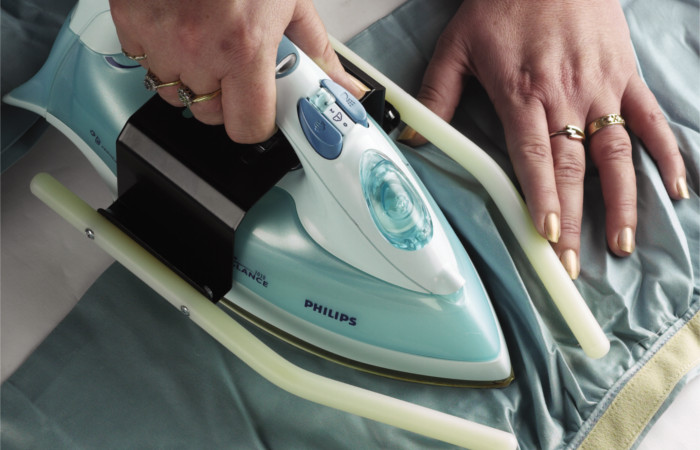
a. Electronic Iron Guard
2. Cooking Aids
a. Kettle Tippers and Pourers
b. Liquid Level Indicators
c. Talking Combination Oven
d. Talking Measuring Jug
e. Talking Timer
f. Talking Kitchen Scales

Companies and Organisations That Can Assist
There are a variety of these Household and Cooking Aids sold in South Africa, which range from simple adaptions such as Iron Guards to more advanced equipment such as Talking Ovens.
DiSA does not supply these Assistive Devices but do introduce relevant suppliers listed below and provide direct links to these products on their website, while also providing an overview of the different products available in South Africa.

Edit Microsystems (Pty) Ltd is an award-winning company that is devoted to finding alternative and state-of-the-art technical solutions to improve curriculum delivery in educational institutions and effective communication in business with a focus on high-speed functional connectivity and on-going support.
They have a proud tradition of innovation and are on the cutting edge of technological advances in education. Many of their products are designed to enhance interactivity in a classroom or lecture theatre. Edit Microsystems are also a leader in finding and providing specially adapted hardware and software for Learners with Special Educational Needs throughout South Africa.
Contact: 086 111 3973
Head Office: 13 Boy De Goede Circle, Table View, Cape Town, 7441.
They also have branches in KwaZulu-Natal, Mpumalanga, Gauteng.
Website at: www.editmicro.co.za
Email them at: info@editmicro.co.za
Blind SA is a national disabled People’s Organisation (DPO) of the blind and for the blind. Established in 1946 as the South African Blind Workers Organisation (SABWO) and became Blind SA in 2004. Head office is situated at 5 Fuchs Street, Alrode, Alberton, however our services are rendered to blind and visually impaired in all provinces in South Africa.
The vision of Blind SA is to do whatever is necessary or conducive to empower visually impaired people to become economically self-supporting and to live a full and meaningful life as citizens of South Africa.
The biggest challenges faced in our communities are the shortage of financial resources to enable our blind and visually impaired beneficiaries to reach their full potential as independent members of society.
The impact that Blind SA has had on the community is a more informed, empowered and enabled blind and visually impaired community. Because we have so many such people who are in serious need of our assistance, we would welcome the opportunity and resources to be able to reach more people with the view of creating a self-supporting, independent and informed blind and visually impaired community throughout South Africa.
“Our Purpose is to end the cycle of poverty for Blind South Africans, empowering them with knowledge and information through education, braille and developmental services and to break down barriers, provide opportunities and create answers that improve the quality of life for the blind community so that they can live the life they choose.”
Blind SA also stock and sell a variety of Assistive Devices to assist persons who are Blind, these include the Mali-Bhala, Tatrapoint Mechanical Brailler and Braille-Me. For any other requirements, contact Blind SA on: Tel: +27 11 839 1793/4 or Email: ceo@blindsa.org.za, Jennine Pare – sales@blindsa.org.za, or visit us at: Address: 5 Fuchs Street, Alrode, Gauteng, South Africa. Website: www.blindsa.org.za.
Sensory Solutions: Sensory Solutions is a South African company with considerable experience in the field of accommodating persons who are visually impaired, blind or partially sighted. We specialise in the field of providing Access Technology solutions for individuals, schools, universities, government departments and more, in order to make the environment more accessible for the visually impaired.
Sensory Solutions is at the forefront of the world’s leading Access Technology products and are in some cases the exclusive distributors. Sensory Solutions is a responsible employer which employs people from previously disadvantaged backgrounds as well as those who are disabled. Part of our mission is to advise individuals and institutions on the best solutions available for particular environments, to design such solutions and finally to implement them on site. As such, we are approved African distributors for a wide range of Access Technology products selected specifically for their suitability to the African environment and our specific situation.
We are proud to be appointed exclusive and preferred dealerships for some of the world’s most leading Access Technology manufacturers. Our mission and ethos revolve around our fellow man, empowering them and making the playing fields level as far as we can make a difference.
Whether you are an individual, institution or company in need of information regarding Access Technology, we are ready to assist you. Please feel free to contact us at our Head Office on +27 12 664 7704 or at 226 Kruger Avenue, Lyttelton Manor, Centurion, 0157. Email: info@sensorysolutions.co.za, khan@sensorysolutions.co.za or visit our website at: www.sensorysolutions.co.za.
Types of Daily Living and Independence Aids
An increasing number of persons with disabilities are participating in sports and activities, leading to the development of new assistive technology that enable more sports enthusiasts with physical disabilities to play and enjoy a variety of sports and to participate in various activities. More complex assistive technology devices have been developed over time, and as a result, sports for persons with disabilities has evolved from being a therapeutic tool to competition activities.

1. Home Automation & Safety Aids
Mobility aids are designed to enhance safe, independent movement and confident navigation in everyday environments, both indoors and outdoors. From white canes and long canes to electronic travel aids and guide dogs, mobility aids help detect obstacles, identify pathways, and improve orientation. Together, they promote independence, dignity, and full participation in community life.
Click Here to Find out more about Mobility Aids.
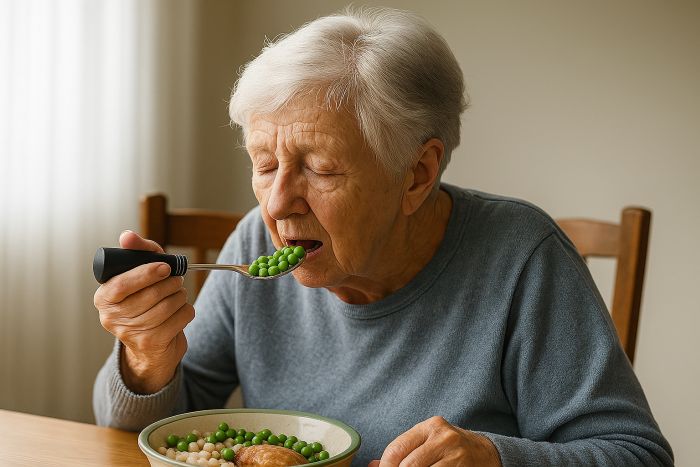
2. Accessories
Orientation techniques teach people with visual impairments how to understand and mentally map their surroundings using sensory information such as sound, touch, movement, and spatial awareness.
These skills help individuals identify landmarks, judge distances, and maintain direction, enabling safer and more confident navigation in both familiar and unfamiliar environments.
Click Here to Find out more about Orientation Techniques.
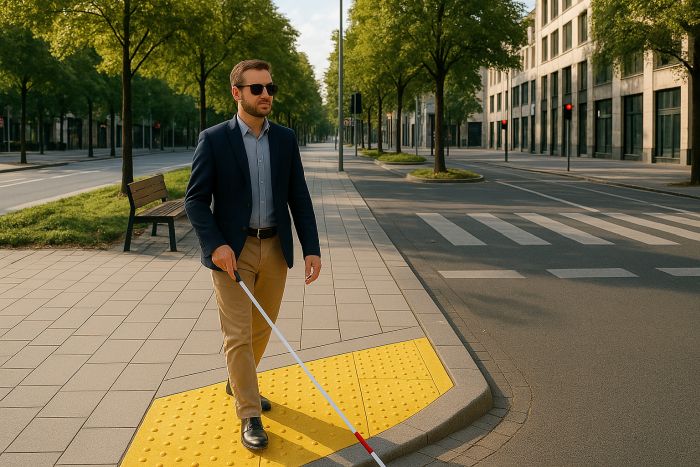
3. Enhancement & Protective
In South Africa, a range of accessible features has been introduced to help people with visual impairments navigate public spaces more safely and independently. These features focus on providing clear sensory cues such as tactile and audible information—that support orientation, wayfinding, and safe movement in everyday environments such as streets, transport hubs, public buildings, and shopping areas.
Click Here Find out more about Accessible Features.
1. Home Automation & Safety Aids
Corrective Glasses or lenses are used to correct refractive errors by bending the light entering the eyes to alleviate the effects of conditions such as near-sightedness, farsightedness or astigmatism. As most people get older, they can develop a condition which makes it difficult for them to focus on objects close to the eyes. Corrective lenses bring the image back into focus on the retina. Most persons that have these types of Visual Impairments can visit an Optometrist or Ophthalmologist for an examination which indicates what corrective lenses are appropriate for that patient. At the conclusion of the exam, the Optometrist or Ophthalmologist will order and/or assemble the frames and appropriate lenses, which are then dispensed and sold to the patient.
Corrective Glasses can significantly improve the quality of life of the wearer, as they not only enhance the wearer’s visual experience, but can also reduce problems that result from eye strain, such as headaches or squinting. If you feel that you may need Glasses, you should contact an Optometrist for an eye test. There are Optometrists throughout the country, and you can visit: “Optometrist Directory.co.za” to find an Optometrist in your area:
Anti-Glare Wrap-Around & Fit Over Glasses
There are a variety of different types of these Anti-Glare Wrap-Around Glasses and Fit Over Glasses which are available in South Africa, some of these are sold by Companies such as Edit Microsystems, who sell products such as the:
The Sunu band (pictured right) The 16” grip handle is designed and built for both golf and ski pole grips, with room to choke up/down when climbing. The high-performance roller ball tip connects you to all terrains and surfaces.
Whether you’re taking a stroll down the block, at the beach, on snowy sidewalks, your grandchild’s playground, or on the trails, the ATC gives you the power to explore where other mobility canes wouldn’t dream to go.
Originally designed for the back country trails of Sedona, Arizona, the All-Terrain Cane (ATC) excels everywhere life takes you.
High-strength design and innovation with lightweight super-strong titanium alloy, the ATC supports you as you walk or hike, giving you the support and stability of a reinforced mobility cane: terrain, obstacles, navigation and more… The 16” grip handle is designed and built for both golf and ski pole grips, with room to choke up/down when climbing. The high-performance roller ball tip connects you to all terrains and surfaces. The ATC features traditional white and red reflective materials as users are accustomed to.
Please feel free to contact Edit Microsytems to find out more, or to receive a quote.
The Ambutech aluminium mobility cane with hook on marshmallow tip is made from heavy-gauge aluminium and new conical joint design, the canes fold and unfold with ease.
This cane has 5 folding sections an is available in the following sizes:
White cane 36” = Person length 133 to 136cm
White cane 38” = Person length 137 to 142cm
White cane 40” = Person length 143 to 146cm
White cane 42” = Person length 147 to 152cm
White cane 44” = Person length 153 to 156cm
White cane 46” = Person length 157 to 162cm
White cane 48” = Person length 163 to 166cm
White cane 50” = Person length 167 to 172cm
White cane 52″ = Person length 173 to 176cm
White cane 54” = Person length 177 to 182cm
White cane 56” = Person length 183 to 186cm
White cane 58” = Person length 187 to 192cm.
Please feel free to contact Edit Microsytems to find out more, or to receive a quote.