Skip to content
Email Phone YouTube
  • Information Desk
  • Access SolutionsExpand
    • Universal Access
    • Accessibility SpecialistsExpand
      • Bamboo Rock
      • Bidii Yetu
      • Bradshaw LeRoux
      • Happy Factory
      • Nickys Drive
      • Paws4Life
      • Stratfin Medical Tax-Back
    • Awareness Training
    • DNN | Media
    • Discrimination Complaints
  • DiSA Services
  • News And Media
  • Blogs
  • About UsExpand
    • Alan Downey
    • Igor Rix
  • Advertise | Support DiSA
  • Contact
  • Search for InfoExpand
    • Assistive Devices, Products & Equipment
    • Disability Organisations
    • Educational Service Providers
    • Health Care Services
    • Services and Service Providers
    • Sports Organisations and Clubs

DISA New logo

Intelligence is not the ability to store information, but to know where to find it.

Now You Know Where To Find It

Albert Einstein

DISA New logo

Lighting the Way to an Inclusive Society

Accessible Cities SA
DISA New logo

Sometimes, we all just need a helping hand
from someone who gets it!

Anonymous

  • Home
  • Physical ImpairmentsExpand
    • Physical Impairments

      • Types of Physical Impairments
      • Assisted Living & Self Help Centres
      • Accessible Features – Parking Discs
      • Accessible Housing
      • Assistive Devices
      • Disability Grants
      • Disability Tax
      • Education For All
      • Healthcare & Rehabilitation
      • Looking For a Job
      • Organisations
      • Travel, Accommodation & Vehicle Hire
      • Service and Assistance Dogs
      • Sports and Hobbies
      • Universal Access
      • Vehicles, Driving and Equipment

      Search For Info

      • Assistive Devices and Equipment
      • Disability Organisations
      • Educational Service Providers
      • Health Care Services
      • Services and Service Providers
      • Sports Organisations and Clubs

  • Sensory ImpairmentsExpand
    • Sensory Impairments

      • Types of Sensory Impairments
      • Blind
      • Deaf
      • DeafBlind
      • Taste, Smell, Touch, Spatial Awareness
      • Accessible Features
      • Assisted Living / Self Help
      • Assistive Devices
      • Disability Grants
      • Disability Tax
      • Education For All
      • Looking For a Job
      • Organisations
      • Parking Discs
      • Service and Assistance Dogs
      • Sports and Hobbies
      • Transport and Travel Services
      • Universal Access

      Search For Info

      • Assistive Devices and Equipment
      • Disability Organisations
      • Educational Service Providers
      • Health Care Services
      • Services and Service Providers
      • Sports Organisations and Clubs
  • Neurological ImpairmentsExpand
    • Neurological Impairments

      • Types of Neurological Impairments
      • Assistive Devices
      • Care Centres and Homes of Safety
      • Disability Grants
      • Disability Tax
      • Education For All
      • Looking for a Job
      • Organisations
      • Service and Assistance Dogs
      • Transport and Travel Services
      • Sports and Hobbies
      • Universal Access

      Search For Info

      • Assistive Devices and Equipment
      • Disability Organisations
      • Educational Service Providers
      • Health Care Services
      • Services and Service Providers
      • Sports Organisations and Clubs

  • Intellectual ImpairmentsExpand
    • Intellectual Impairments

      • Types of Intellectual Impairments
      • Assistive Devices
      • Care Centres and Homes of Safety
      • Disability Grants
      • Disability Tax
      • Education For All
      • Looking for a Job
      • Organisations
      • Service and Assistance Dogs
      • Sports and Hobbies
      • Universal Access

      Search For Info

      • Assistive Devices and Equipment
      • Disability Organisations
      • Educational Service Providers
      • Health Care Services
      • Services and Service Providers
      • Sports Organisations and Clubs

  • Psychosocial ImpairmentsExpand
    • Psychosocial Impairments

      • Types of Psychosocial Impairments
      • Care Centres and Homes of Safety
      • Disability Grants
      • Disability Tax
      • Education For All
      • Looking for a Job
      • Organisations
      • Service and Assistance Dogs
      • Universal Access

      Search For Info

      • Assistive Devices and Equipment
      • Disability Organisations
      • Educational Service Providers
      • Health Care Services
      • Services and Service Providers
      • Sports Organisations and Clubs

DISA New logo

Intelligence is not the ability to store information, but to know where to find it.

Now You Know Where To Find It

Albert Einstein

DISA New logo

Lighting the Way to an Inclusive Society

Accessible Cities SA
DISA New logo

Sometimes, we all just need a helping hand
from someone who gets it!

Anonymous

Association of Assistance Dogs SA

Service Dog Training Courses

Therapy Dog Training

Contact Paws4Life

The Association of Assistance Dogs SA is a key initiative created under DiSA’s Accessible Cities platform. It is dedicated to promoting the use of professionally trained Assistance Dogs to enhance the independence and quality of life of individuals with disabilities.

Assistance Dogs are life-changing partners that empower individuals with disabilities to navigate daily challenges with confidence. By setting training standards, registering Assistance Dogs, and collaborating with leading training organisations, the Association of Assistance Dogs seeks to ensure that these dogs are trained, respected, recognised, and able to perform their vital roles effectively.

To this end, the “Association” works closely with various “qualified Training Facilities” to set the standards for Assistance Dog Training and to ensure that all Assistance Dogs registered through the “Association meet strict ethical and professional guidelines.

What Are You Looking For?

1. Paws4life & DiSA Partnership
2. Paws4life Training Academy
3. Paws4life Courses
i. People with Physical Impairments or Diabetes
ii. People with Intellectual, Psychosocial or Neurological Impairments
iii. Persons who are Deaf or have Hearing Impairments
iv. Therapy Dogs/Pets
4. Contact Paws4life
5. Current and Future Plans
6. How Can We Help You?

The Association of Assistance Dogs SA is dedicated to advancing the rights and recognition of Assistance Dogs in South Africa by:

1. Educating the public, businesses, and service providers about the rights of Assistance Dogs.
2. Advocating for equal access to public spaces for individuals with Assistance Dogs.
3. Addressing discrimination and misconceptions regarding Assistance Dogs and public accessibility.
4. Collaborating with airlines, travel operators, tourism agencies and transport services to ensure Assistance Dog handlers receive equal treatment with dignity and respect.

For more information about the Association of Assistance Dogs South Africa, please read the information directly below.

  • logo for Paws 4 Life which provides specialised K9 Training facility in the Western Cape. This link takes you to their website
  • Smart Service Dog - Changing lives one dog at a time
  • SA Dog Training Academy logo
  • Honey's Garden For Medical Alert Dogs and task trained service dogs for persons with disabilities
  • Logo for the Association for Assistance Dogs

What are Assistance Dogs?

Assistance Dog is a generic term for a Guide, Hearing, or Service Dog specifically trained to do three or more tasks to mitigate the effects of an individual’s disability. Assistance Dogs are covered under legislative access laws for public access rights when working with their handler. Emotional Support Dogs and Therapy Dogs. Each category of training services a different need. With one exception, Assistance Dogs can be trained to fulfill specific tasks, whilst also functioning as emotional support dogs.
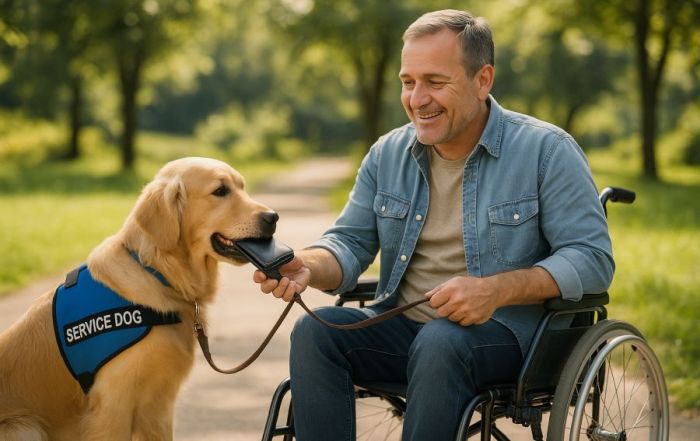
Mobility Assistance Dog

1. Mobility Assistance Dogs

Assistance Dog is generic term for a Guide, Hearing, or Service Dog specifically trained to do three or more tasks to mitigate the effects of an individual’s disability.

Assistance Dogs are covered under legislative access laws for public access rights when working with their handler.

View information below about:
– Types of Assistance Dogs
– Accredited Training Facilities
– Laws and Regulations
– Equipment Required
Mobility Assistance Dog

2. Multipurpose Service Dogs

Assistance Dog is generic term for a Guide, Hearing, or Service Dog specifically trained to do three or more tasks to mitigate the effects of an individual’s disability.

Assistance Dogs are covered under legislative access laws for public access rights when working with their handler.

View information below about:
– Types of Assistance Dogs
– Accredited Training Facilities
– Laws and Regulations
– Equipment Required

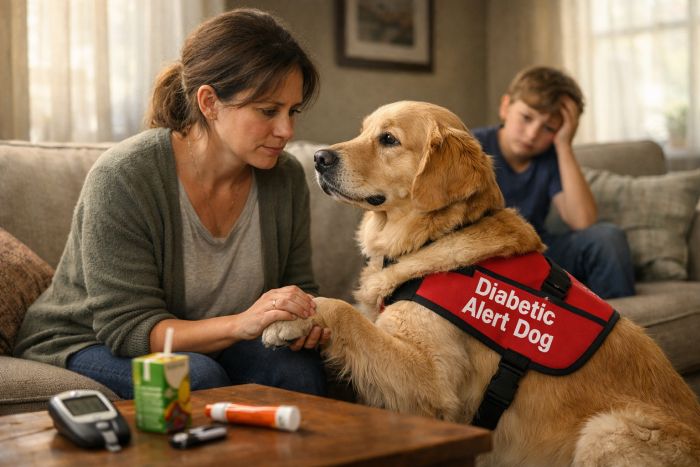
Diabetic Alert Dogs

2. Diabetic Alert Dogs

Emotional Support Dogs are companion animals that provide emotional or therapeutic support to an individual with a mental health condition or emotional disorder simply by being present.

Emotional Support Dogs do not have the same right to public access as an Assistance Dog.

View information below about:
– Training of Emotional Support Dogs
– Training Facilities that are available to assist you.

Psychiatric Service Dog providing Deep Pressure Therapy to a woman in a shopping centre

3. Psychiatric Service Dogs

A Therapy Dog is a pet dog trained to provide affection, comfort, and love in both personal and/or professional settings.
Therapy dog owners visit facilities, with their dogs, by invitation only, either as guests or practitioners. Using the dog in a professional setting. They are not covered under the legislative public access laws, and do not have the same public access rights as an Assistance Dog.

View information below about:
– Training of Therapy Dogs, and
– Training Facilities are available to assist you.
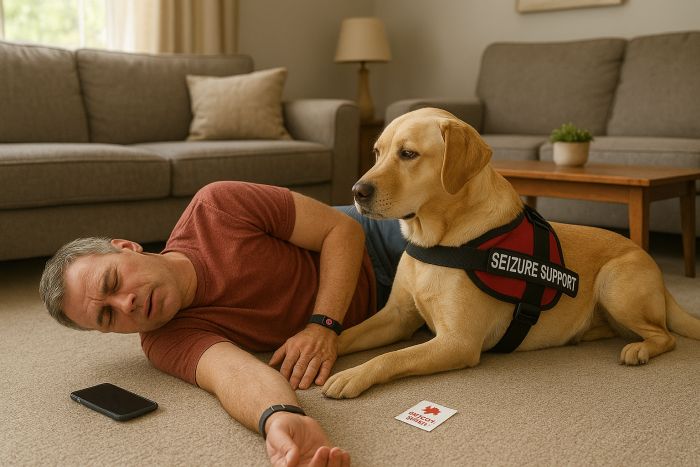
Seizure support dog providing support to man having seizure

4. Seizure Alert Dogs

Assistance Dog is generic term for a Guide, Hearing, or Service Dog specifically trained to do three or more tasks to mitigate the effects of an individual’s disability.

Assistance Dogs are covered under legislative access laws for public access rights when working with their handler.

View information below about:
– Types of Assistance Dogs
– Accredited Training Facilities
– Laws and Regulations
– Equipment Required
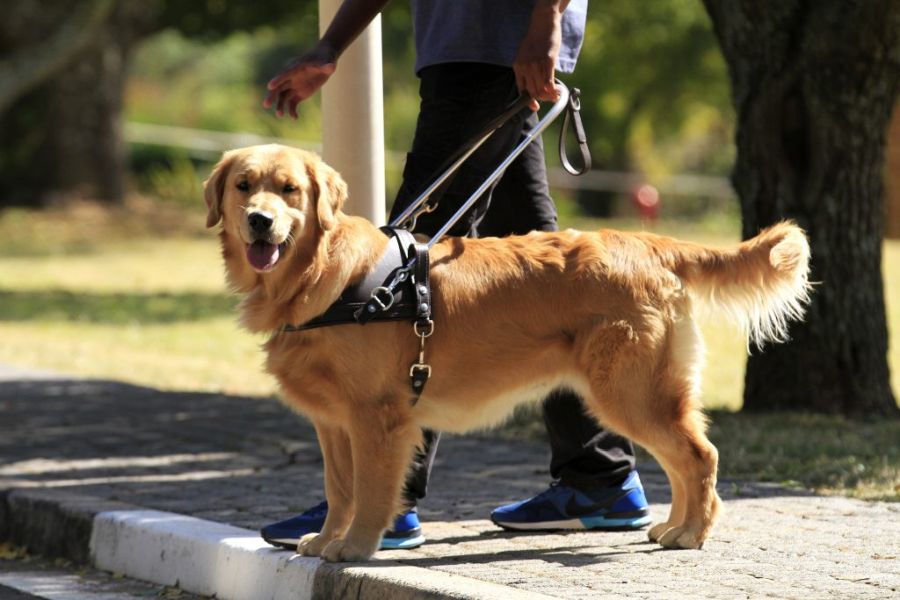
Guide Dogs

4. Guide Dogs

Assistance Dog is generic term for a Guide, Hearing, or Service Dog specifically trained to do three or more tasks to mitigate the effects of an individual’s disability.

Assistance Dogs are covered under legislative access laws for public access rights when working with their handler.

View information below about:
– Types of Assistance Dogs
– Accredited Training Facilities
– Laws and Regulations
– Equipment Required

Hearing Dog alerting owner not to cross the road as emergency car speeds past.

5. Hearing Alert Dogs

Emotional Support Dogs are companion animals that provide emotional or therapeutic support to an individual with a mental health condition or emotional disorder simply by being present.

Emotional Support Dogs do not have the same right to public access as an Assistance Dog.

View information below about:
– Training of Emotional Support Dogs
– Training Facilities that are available to assist you.
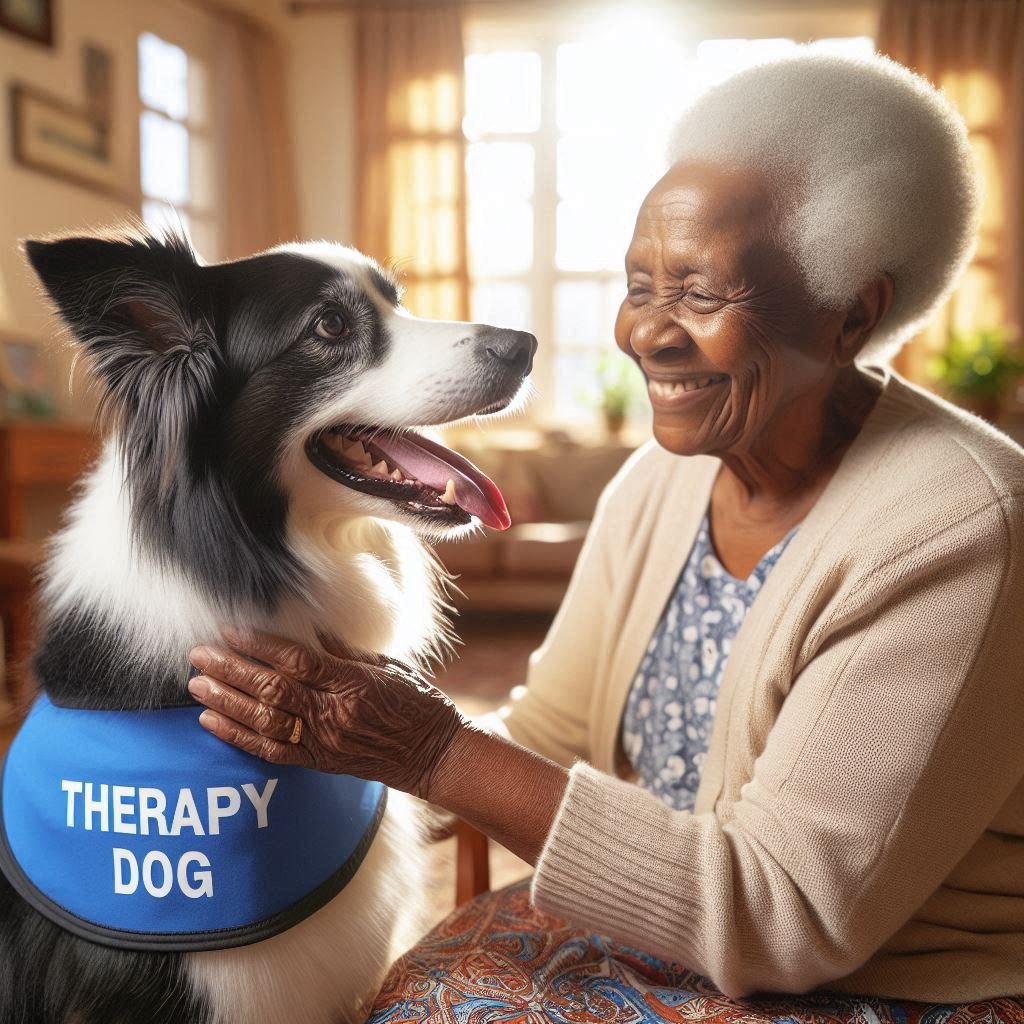
Image of an older african lady sitting with a Therapy Dog

6. Autism Support Dogs

A Therapy Dog is a pet dog trained to provide affection, comfort, and love in both personal and/or professional settings.
Therapy dog owners visit facilities, with their dogs, by invitation only, either as guests or practitioners. Using the dog in a professional setting. They are not covered under the legislative public access laws, and do not have the same public access rights as an Assistance Dog.

View information below about:
– Training of Therapy Dogs, and
– Training Facilities are available to assist you.

Advocacy & Public Awareness

AADSA aims to advocate for the inclusion and accommodation of Assistance Dog teams in various aspects of society, by:
– Educating the public, businesses, and service providers on the rights and benefits of Assistance Dogs.
– Promoting equal access to public spaces, workplaces, and transportation for Assistance Dogs and their users.
– Addressing discrimination and misconceptions about Assistance Dogs.

* Assistance Dog Registration and Ethical Standardisation

To establish and uphold ethical standards for the training, handling, and care of Assistance Dogs, ensuring their well-being and the safety of individuals with disabilities. AADSA is committed to promoting best practices that prioritise the welfare of both dogs and handlers.
– The Association establishes and maintains standards for Assistance Dog training by the companies registered with the Association.
– All Assistance Dogs trained by associated organisations are registered under the association,
– All dogs trained by associated members are compliant with ethical and professional training guidelines.
– Registration provides official recognition by the Association, granting Assistance Dog users support by the Association.

* Collaboration and Networking: – Partnered Training Organisations


To facilitate collaboration and networking opportunities among Assistance Dog organisations, trainers, handlers, healthcare professionals, and other stakeholders. AADSA aims to create a supportive environment for sharing experiences, expertise, and innovative ideas.

The association works with leading Assistance Dog training facilities in South Africa to uphold these high standards, including:
– Smart Service Dog – Specializing in training Assistance Dogs for various disabilities.
– Paws4life Training Academy – Focused on obedience, therapy, and Assistance Dog training.
– Honey’s Garden for Medical Alert Dogs SA – Dedicated to training dogs for medical alert purposes, including seizure and diabetic alert dogs.

These organisations collaborate with DiSA as part of its Accessible Cities Initiative to ensure that:
– High training standards are maintained across all registered Assistance Dogs.
– Airlines, businesses, and public spaces recognize, and respect Assistance Dogs trained by companies within the association.
– Assistance Dog users experience greater accessibility and acceptance in society.

* Support & Resources for Individuals
– Providing guidance on acquiring and training an Assistance Dog through recognised training programs.
– Offering peer support to individuals integrating Assistance Dogs into their daily lives.
– Educating workplaces, businesses, and the public on how to accommodate Assistance Dogs.

* Education and Training
To provide educational resources, workshops, seminars, and training programs that empower Assistance Dog handlers, trainers, and the public. AADSA aims to foster a knowledgeable community that understands the roles and responsibilities of Assistance Dog teams.

* Legislation and Policy Advocacy
To advocate for the development and enforcement of laws and policies that recognise Assistance Dogs as valuable service animals and safeguard the rights of individuals with disabilities. AADSA is dedicated to promoting equal access and eliminating discrimination.

* Research and Innovation
To support research initiatives that contribute to the advancement of Assistance Dog training techniques, the understanding of the human-animal bond, and the overall impact of Assistance Dogs on the well-being of people with disabilities.

* Public Outreach and Partnerships
To engage with communities, schools, healthcare institutions, and other relevant organisations to promote the positive impact of Assistance Dogs. AADSA aims to build partnerships that foster inclusivity and enhance the lives of individuals with disabilities.

* Empowerment and Support
To empower individuals with disabilities and their families by providing resources, guidance, and emotional support throughout their journey with Assistance Dogs. AADSA is committed to working with the Training Facilities to help handlers realise their full potential and lead independent lives.

* Continuous Improvement
To continuously assess and improve the standards, practices, and effectiveness of Assistance Dog training, accreditation, and support services in South Africa. AADSA aims to adapt to evolving needs and advancements in the field.

* International Collaboration
To collaborate with international organisations and experts in the field of Assistance Dogs to exchange knowledge, share best practices, and stay informed about global developments. AADSA aims to contribute to the advancement of Assistance Dog programs worldwide.

By pursuing these aims, the Association of Assistance Dogs South Africa seeks to create a society where individuals with disabilities have equal opportunities, improved mobility, and enhanced well-being through the partnership with their trained Assistance Dogs.

How can we help you?

At Disability Info South Africa (DiSA), we are committed to breaking down barriers and creating a more inclusive society.
One of the most life-changing forms of support for individuals with disabilities is an Assistance Dog —
a highly trained companion that provides mobility support, medical alerts, and emotional assistance. 

Guidance And Support

We provide information on eligibility, application processes, and legal rights regarding assistance dogs. 

Accessibility Audits

Ensuring businesses and public spaces are ‘assistance-dog friendly’ and compliant with accessibility standards. 
Educating organizations and individuals on the importance and rights of assistance dog users. 

Image of a young man in a wheelchair, on a phone call. Seated neat to him is a mobility assistance dog.
Let’s Chat. We Can Help.

Advocacy And Resources

Connecting individuals with the right support networks, including AADSA, to help them on their journey. 

Assistance Dogs Change Lives –
Let’s Make South Africa More Accessible

If you or someone you know could benefit from an assistance dog, or if you’re a business wanting to improve accessibility, get in touch with us today!  Together, we can create a world where independence has no limits!

Disclaimers and References

DiSA is committed to promoting the rights, dignity, and inclusion of persons with disabilities as outlined in the White Paper on the Rights of Persons with Disabilities. We strive to ensure that all content on our website reflects appropriate, respectful, and inclusive language in alignment with these principles.

However, we also provide a platform for companies and organisations to advertise their services and products. While we encourage advertisers to adhere to correct terminology and inclusive practices, DiSA cannot guarantee the accuracy or appropriateness of the language used by external parties in their content.

Please note: Any views, language, or terminology used in advertisements, promotional material, or external links do not necessarily represent the views of DiSA.

DiSA disclaims any responsibility for inaccuracies or language that may not align with the White Paper or best practices for disability terminology.

Should you however encounter language or content that you believe is inappropriate or offensive, we encourage you to contact us at info@disa.org.za, so that we can address the issue.

DiSA remains dedicated to fostering a respectful and inclusive environment for all individuals. We appreciate your understanding and collaboration in supporting our mission.


While we strive for accuracy and clarity, AI-generated visuals may not always reflect real-life conditions or representations.
In addition, we feature authentic images and videos of actual instances, events, circumstances that have occurred, as well as products and services supplied by companies who advertise with us.

These authentic visuals are intended to accurately depict our content or the offerings of our advertising partners.
If you have any questions or concerns about the content displayed on this site, please feel free to contact us.

DiSA provides a platform for companies and organisations to advertise their products and services to assist persons with disabilities and their families. While we make every effort to list reputable and credible service providers, the inclusion of any company, organisation, product, or service on our website does not constitute an endorsement or guarantee by DiSA.

Please note the following: DiSA is not involved in the delivery, quality control, or customer service of any product or service offered by advertisers listed on our platform.

Any agreements, purchases, or arrangements made between users of this website and advertisers are solely between those parties. DiSA is not responsible for the outcome of such interactions.

DiSA disclaims any liability for dissatisfaction, damages, or disputes arising from products or services supplied by companies or organisations listed on our website.

We encourage users to thoroughly research and verify any service provider or product before engaging with them. If you have concerns or encounter issues with an advertiser listed on our platform, please let us know at: info@disa.org.za. We value your feedback to help maintain the integrity of our platform.


While we strive for accuracy and clarity, AI-generated visuals may not always reflect real-life conditions or representations.
In addition, we feature authentic images and videos of actual instances, events, circumstances that have occurred, as well as products and services supplied by companies who advertise with us.

These authentic visuals are intended to accurately depict our content or the offerings of our advertising partners.
If you have any questions or concerns about the content displayed on this site, please feel free to contact us.

DiSA is committed to providing accurate and up-to-date information to assist persons with disabilities and their families. However, the nature of online content and external resources means that information can change frequently.

Please note the following: DiSA cannot guarantee the accuracy, completeness, or reliability of all information on our website, particularly information obtained from external sources or links to third-party websites.
External websites may update or remove content without notice, which can result in broken links or outdated information. DiSA is not responsible for the content, accessibility, or functionality of external websites.

While we make every effort to keep our information current, some content may become outdated over time.
We encourage users to verify information directly with the relevant third parties or organisations before making any decisions based on the information found on our platform.

If you encounter a broken link or outdated content, please notify us at: info@disa.org.za and we will address it as soon as possible.
Thank you for understanding and helping us maintain a reliable and accessible platform.


While we strive for accuracy and clarity, AI-generated visuals may not always reflect real-life conditions or representations.
In addition, we feature authentic images and videos of actual instances, events, circumstances that have occurred, as well as products and services supplied by companies who advertise with us.

These authentic visuals are intended to accurately depict our content or the offerings of our advertising partners.
If you have any questions or concerns about the content displayed on this site, please feel free to contact us.

The Information services and website that we offer free of charge, is privately run and funded and is not run or funded by the government. We rely on advertising, paid services and donations to supply and improve this Free information service that we do provide.

The Companies, Clubs, Schools and Organisations that are listed on this site, have advertised or made donations to the Website and have therefore assisted us be able to provide this free Service.
Please support them as they have supported Us and please contact us via info@disa.org.za, if you can advertise with us or would like to make a donation. Alternatively, visit our “Support Us” page to find out how you can support us or acquire our services. – Thank You.

If you encounter a broken link or outdated content, please notify us at: info@disa.org.za and we will address it as soon as possible.
Thank you for understanding and helping us maintain a reliable and accessible platform.

Please Note: We do assist with inquiries via email but may need to send or copy your details and inquiry to various other organisations, companies or government departments, that we sometimes consult, so that we can help you in the best way possible.
If you have any objection to us sharing your query or contact details, please notify us in your email. We will only share your information to assist you and will never sell or use your personal information for any other purposes.

DiSA waivers any liability for what happens if information is shared or used for marketing or other purposes by other organisations who do have consent to view such information.


While we strive for accuracy and clarity, AI-generated visuals may not always reflect real-life conditions or representations.
In addition, we feature authentic images and videos of actual instances, events, circumstances that have occurred, as well as products and services supplied by companies who advertise with us.

These authentic visuals are intended to accurately depict our content or the offerings of our advertising partners.
If you have any questions or concerns about the content displayed on this site, please feel free to contact us.

Please note that this website uses images and videos that are AI-generated and created to visually represent certain information, concepts or scenarios for illustrative purposes.


While we strive for accuracy and clarity, AI-generated visuals may not always reflect real-life conditions or representations.
In addition, we feature authentic images and videos of actual instances, events, circumstances that have occurred, as well as products and services supplied by companies who advertise with us.

These authentic visuals are intended to accurately depict our content or the offerings of our advertising partners.
If you have any questions or concerns about the content displayed on this site, please feel free to contact us.

Disability Info South Africa (DiSA) is committed to protecting your personal information in compliance with the Protection of Personal Information Act (POPIA), Act No. 4 of 2013. By using our free information service, you acknowledge and agree to the following:

Collection of Personal Information:
DiSA may collect and process your personal information (such as name, contact details, and inquiries) solely for the purpose of assisting you with your requests and providing relevant information or support.

Use and Storage:
Your personal information will only be used for the purpose it was collected for, we may need to send or copy your details and inquiry to various organisations, companies or government departments, that we sometimes consult, so that we can assist you in the best way possible.
If you have any objection to us sharing your query or contact details, please notify us in your email. We will only share your information to assist you and will never sell or use your personal information for any other purposes.
DiSA implements appropriate measures to secure your personal information against unauthorized access or loss.

Consent:
By submitting your details through our Contact Form, or contacting us via our email address, you consent to allow DiSA to process your information as outlined in this disclaimer. If you are not comfortable with DiSA sharing your information for the above purposes, please contact us directly at info@disa.org.za.

Access and Updates:
You have the right to request the deletion of your personal information at any time.
To do so, please contact us at: info@disa.org.za.

Third-Party Websites:
DiSA is not responsible for the privacy practices of external websites linked on our platform. Users are encouraged to review the privacy policies of third-party sites before sharing personal information.
For any queries or concerns regarding the handling of your personal information, please contact us at: info@disa.org.za.
Thank you for trusting DiSA to support you with accessible, inclusive, and reliable information.

1. www.paws4life.co.za

ABOUT US
DiSA is a non-profit organisation (NPO) dedicated to empowering persons with disabilities by providing easy access to information, advocating for inclusion, and supporting equitable access to both the built and digital environments.

CONTACT
Email: info@disa.org.za
Cell: 084 504 9176
WA: 084 504 9176

SUPPORT DiSA

- Donate Now
-
Advertise

INFORMATION DESK

Physical Impairments
Sensory Impairments
Neurological Impairments
Intellectual Impairments
Psychosocial Impairments

QUICK LINKS

About Us
DiSA Services
Access Solutions
Quick Search
Support Us

Facebook Facebook Group YouTube Linkedin

Terms and Conditions | Disclaimer | POPI | © 2026

Scroll to top
  • Home
  • Information Desk
    • Physical Impairments
    • Sensory Impairments
    • Intellectual Impairments
    • Neurological Impairments
    • Psychosocial Impairments
  • Access Solutions
  • DiSA Services
  • About Us
  • Support DiSA
  • Contact